Wallpaper tells the story of who we are and what we value. From the post-war optimism of 1940s bold florals and geometric patterns to the psychedelic swirls of the 1960s, each era’s wallpaper choices reveal genuine cultural priorities—what people hoped for, feared, and envisioned for their futures.
Think about the walls of your childhood home. Those boomerang motifs in the 1950s, textured vinyl coverings in the 1970s, or prairie florals in the 1980s weren’t random picks from a catalog. They were deliberate statements about who your family was and how they saw the world. Wallpaper transformed intimate rooms into expressions of personal identity and aspirational living.
When you walk into a home from any era, the wallpaper functions as an instant time capsule—communicating not just aesthetic preferences but also economic conditions, technological capabilities, and the psychological needs of that moment. Understanding these patterns offers us a mirror to ourselves and our recent past, revealing how design is shaped by cultural forces and consumer behavior.
The Pattern That Defined Your Era (And Why It Matters)
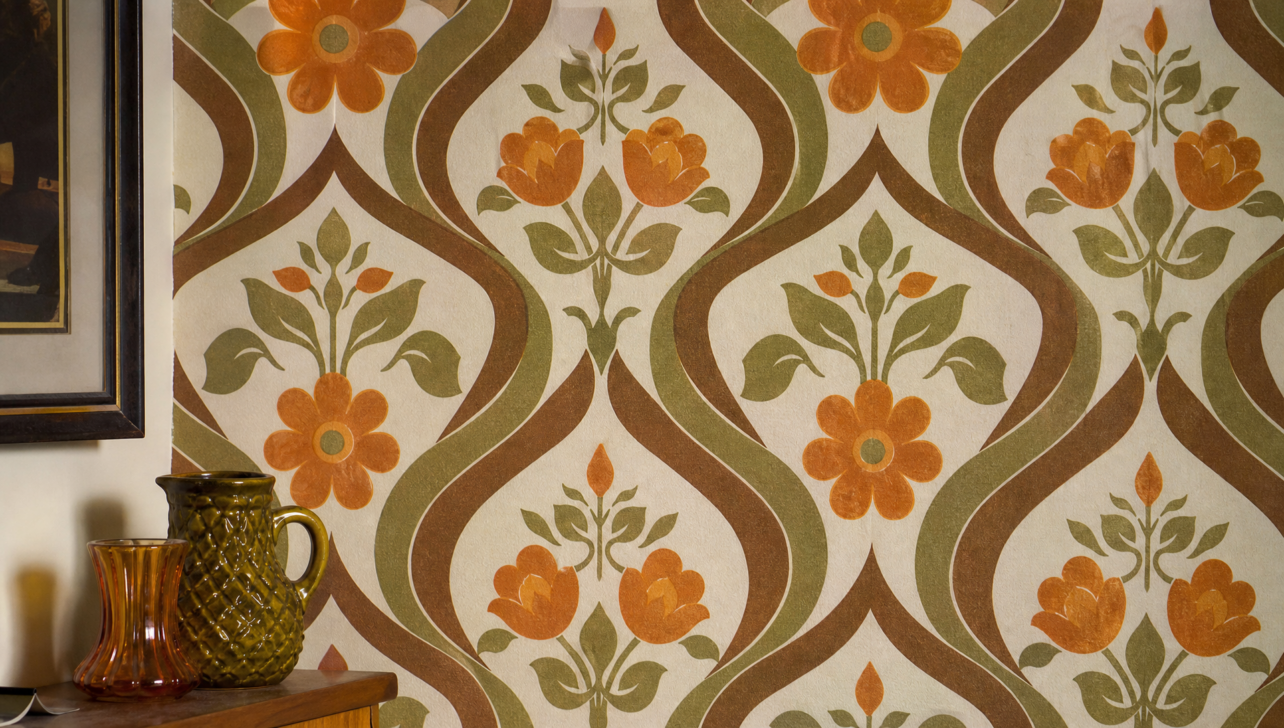
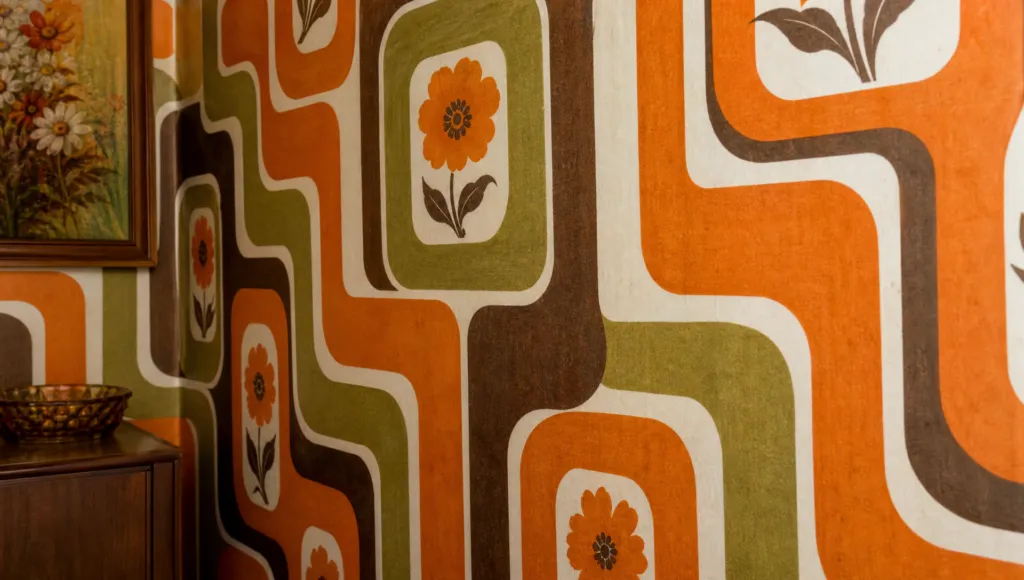
Every generation’s wallpaper choices embodied something far deeper than decoration. The 1950s celebrated whimsical novelty—aquarium scenes and playful patterns reflecting post-war joy and emerging consumer culture. The 1960s brought mod style with electric geometric patterns and graphic florals in oranges, browns, and greens. The 1970s intensified everything with large-scale botanical designs and textured grasscloths and vinyls.
The 1980s presented bold contradictions: dramatic chintz and prairie florals alongside Memphis Group-inspired vibrant abstracts, often layered with multiple decorative borders that seem impossibly ambitious today.
Each aesthetic choice captured a specific moment in time—how your decade interpreted beauty, envisioned progress, and defined home itself. These were cultural statements encoded in fiber and adhesive. Today, recognizing this helps us understand that contemporary design decisions often reflect deeper psychological needs rather than superficial trend-chasing, a distinction increasingly important as social media accelerates trend cycles.
The Great Shift: From Graphic Perfection to Raw, Textured Authenticity
For nearly a century, wallpaper pursued flawless realism. Manufacturing improved, computers enabled precision, digital design created perfectly repeated patterns. Then something fundamental shifted.
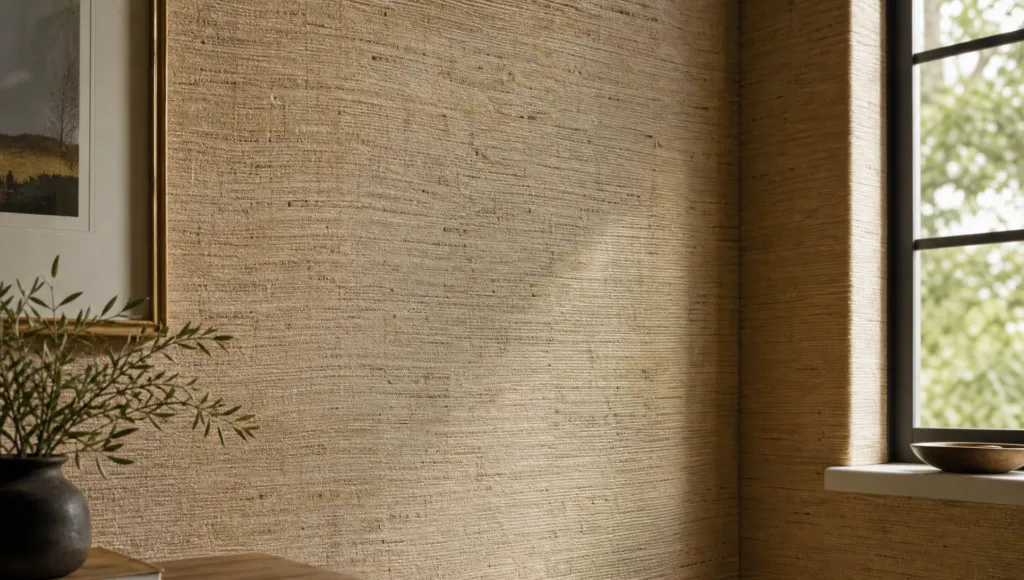
Today, designers deliberately abandon digital perfection for grasscloths, hemp-textured fabrics, and hand-painted details that celebrate imperfection. This signals a profound cultural hunger for authenticity—we’re reconsidering what beauty actually means in spaces where we live, work, and rest.
Textured materials that add warmth and gently diffuse light now replace the precise, hyper-graphic designs of previous decades. Hand-crafted aesthetics compete favorably against computer-perfected patterns. This shift is particularly visible in younger generations sourcing estate sale finds and appreciating materials with visible character—a trend amplified by social media documenting these authentic design choices. The question has fundamentally changed: it’s no longer about what a surface depicts, but what that surface *feels* like when you’re present in the room with it.
Why Green Is the New Neutral (And What It Says About Us Now)
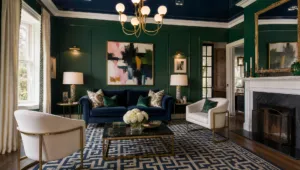
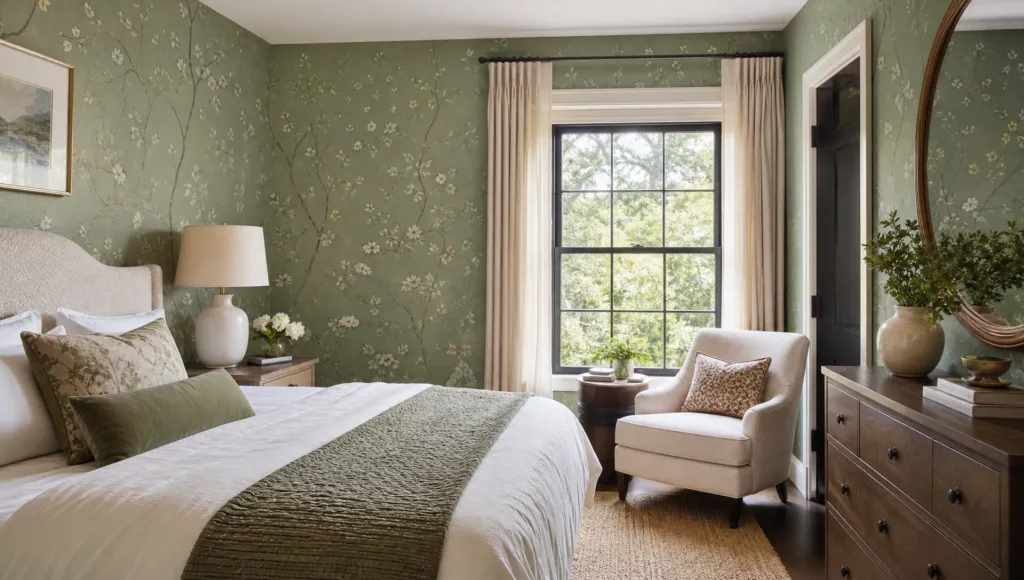
In 2026, green wallpapers have emerged as the sophisticated, calming neutral—replacing the whites, grays, and beiges that dominated for decades. This shift reflects biophilic design: our fundamental human need to connect with nature, even within our homes.
Unlike bold accent colors demanding attention or stark whites creating clinical atmospheres, green functions differently. It provides a grounding backdrop that feels both deeply personal and timelessly elegant. When used as a neutral, green creates emotional atmosphere rather than merely serving as backdrop.
This choice reveals something important about contemporary values. We’re increasingly aware of our disconnect from natural environments and seeking to bridge that gap through our immediate surroundings. Green isn’t decoration—it’s direct communication with our need for balance and restoration in spaces where we spend our most intimate hours.
The Maximalism Revolution: How Wallpaper Became About Feeling, Not Fashion
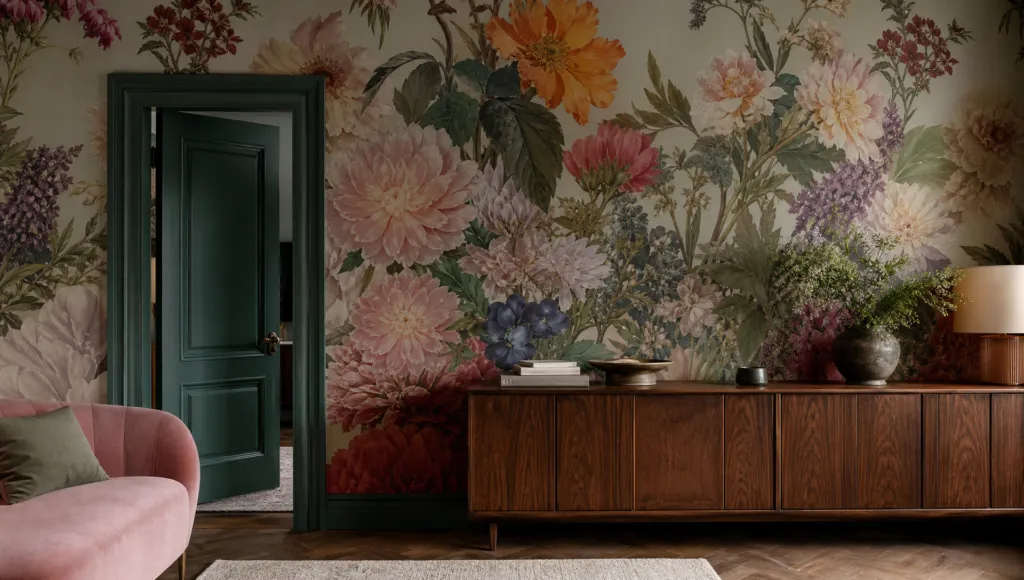
Today’s wallpaper trends prioritize emotional resonance over graphic impact or trend-following. Oversized florals, richly hued botanicals, and wallpaper murals dominate 2026, but they operate by entirely different rules. Colors blend and soften; patterns suggest organic growth rather than perfect repetition. Designers deliberately work against the clinical precision that computer design made possible.
The question has fundamentally shifted from ‘Will this match my existing décor?’ to ‘How does this surface make me feel when I’m standing in this room?’ Maximalism succeeds not through visual busyness but through emotionally nourishing environments tied to who we authentically are.
A worthwhile caution: Research shows over 61% of Americans regret impulse purchases influenced by social media trends, with 70% of Gen-Z and millennial homeowners experiencing buyer’s remorse within six months. While pursuing emotionally resonant designs rooted in authenticity, approach even meaningful trends strategically. Ensure what draws you today remains genuinely satisfying long into the future.