Most homeowners approaching a renovation with $50,000 assume it’ll deliver similar results everywhere. The reality? Your location is basically a multiplier that determines whether your budget feels generous or frustratingly tight.
From the Pacific Northwest to Brooklyn, from suburban Texas to coastal California, geographic variation isn’t random—it’s driven by real differences in labor costs, material availability, and local market competition. That same $50,000 bathroom renovation looks completely different in Portland versus Phoenix versus New York. You’re not just accounting for prices; you’re making strategic choices about which materials and design elements matter most in your specific region.
The Smart Budget Question: Which renovations actually pay off financially and aesthetically in your area? Understanding your regional market helps you prioritize what to splurge on and where to find smart savings. For bathroom and kitchen projects especially, this means getting informed about materials—wood, stone, engineered quartz, and tile each carry different costs and durability profiles depending on your location.
Forward-thinking homeowners also recognize that energy-efficient upgrades and sustainable materials often deliver double benefits: better functionality right now, plus reduced utility costs and measurable resale value increases over time. These investments can reduce energy costs by 10-60% while genuinely improving your home’s market appeal.
The Coastal Premium: Why East Coast Dollars Stretch Differently Than Midwest Money
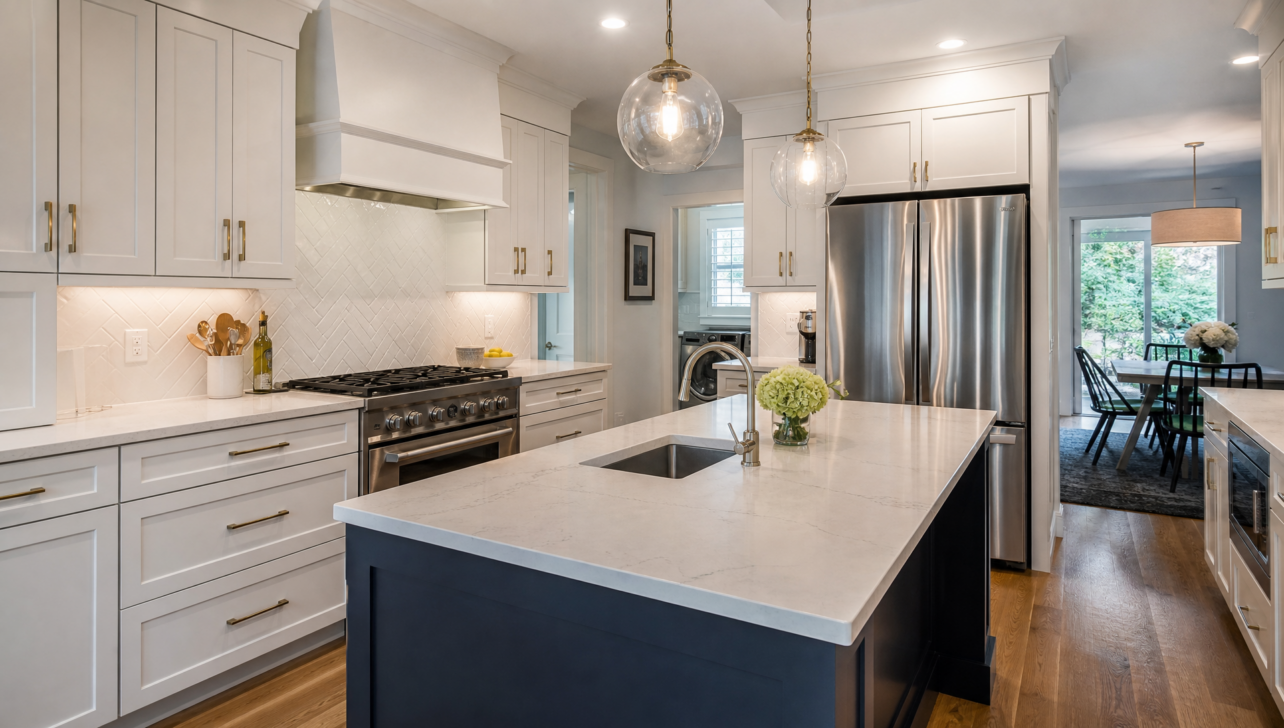
Here’s where geography really matters: In East Coast markets like Brooklyn or Boston, your $50,000 typically covers a 150–200 square-foot kitchen renovation featuring semi-custom cabinetry, engineered quartz countertops, and solid midrange appliances. These aren’t stripped-down finishes—they’re thoughtfully chosen selections that look and perform beautifully without luxury pricing.
Move to the Midwest? That same $50,000 stretches dramatically further. You might tackle a complete primary bathroom renovation, add a spacious outdoor entertaining area, or overhaul a mudroom and laundry room—often all with higher-quality finishes than the coastal equivalent. The difference isn’t quality; it’s regional economics. Labor costs run lower, and material competition keeps prices reasonable.
Breaking Down Coastal Kitchen Costs (Typical $50K Project)
– Design and planning: 5–10%
– Cabinetry: 25–35%
– Countertops: 10–15%
– Appliances: 15–20%
– Installation and fixtures: 20–25%
– Contingency reserve: 5–10%
Smart allocation strategy: Choosing semi-custom cabinetry over fully custom options typically frees up 8–12% of your budget for premium countertops or higher-end appliances—where guests actually notice the difference. Thoughtful lighting design, cohesive color palettes, and smart storage solutions amplify visual impact without expensive custom work.
Learning From a $128K Brooklyn Renovation: How Strategic Choices Changed Everything
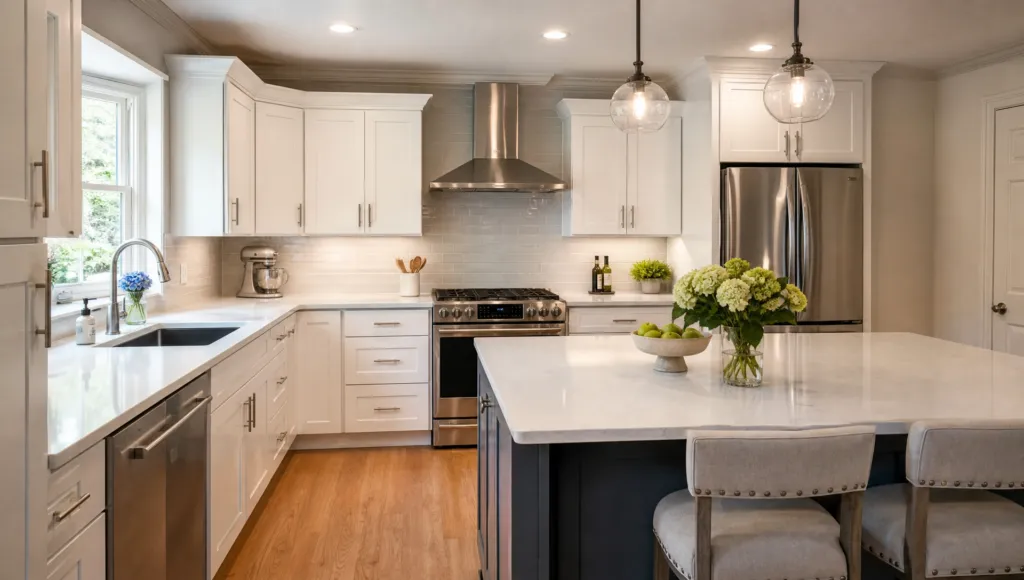
In Brooklyn’s famously expensive market, a couple—one an SNL prop master, the other an architect—completed a $128,000 renovation that achieved approximately $175 per square foot. That metric matters because typical Brooklyn projects often exceed $250–300 per square foot, especially with structural work or premium finishes.
Their success came from surgical precision: they prioritized where dollars created maximum impact, made pragmatic trade-offs everywhere else, and brought professional expertise to every decision. They researched appliances thoroughly, negotiated material pricing, and made confident choices aligned with their actual priorities.
Their strategic approach: High-impact appliances where guests see them (kitchen), semi-custom cabinetry for function without premium costs, and durable wall tile that worked beautifully without custom pricing. This category-by-category scrutiny compressed their per-square-foot costs well below market averages.
They also applied design principles strategically: thoughtful color palettes, modular storage solutions, and integrated design elements created sophisticated ambiance while preserving budget for functionality and quality. The lesson? High-cost markets remain navigable for homeowners willing to think like architects—careful spatial planning, material research, and informed trade-offs make all the difference.
The Hidden Variables That Silently Inflate Your Final Bill
Beyond geography, several invisible factors reshape what $50,000 actually accomplishes. Here’s what catches most homeowners off guard:
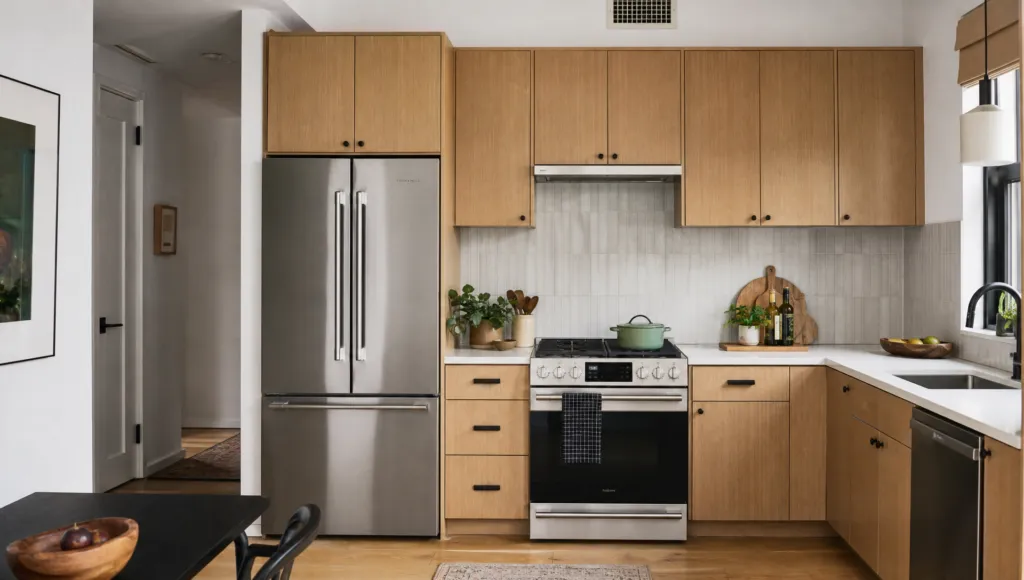
Material selection: Choosing between stock, semi-custom, and custom cabinetry can swing your budget by thousands while looking nearly identical. Countertop materials—laminate versus engineered stone versus natural quartz—each tier represents significant price jumps with different real-world performance.
Home age and condition: A century-old brownstone involves entirely different structural considerations than a twenty-year-old suburban home. Layout modifications—removing walls, relocating plumbing, repositioning electrical systems—instantly consume tens of thousands. What looks like simple cosmetic work often requires foundational changes.
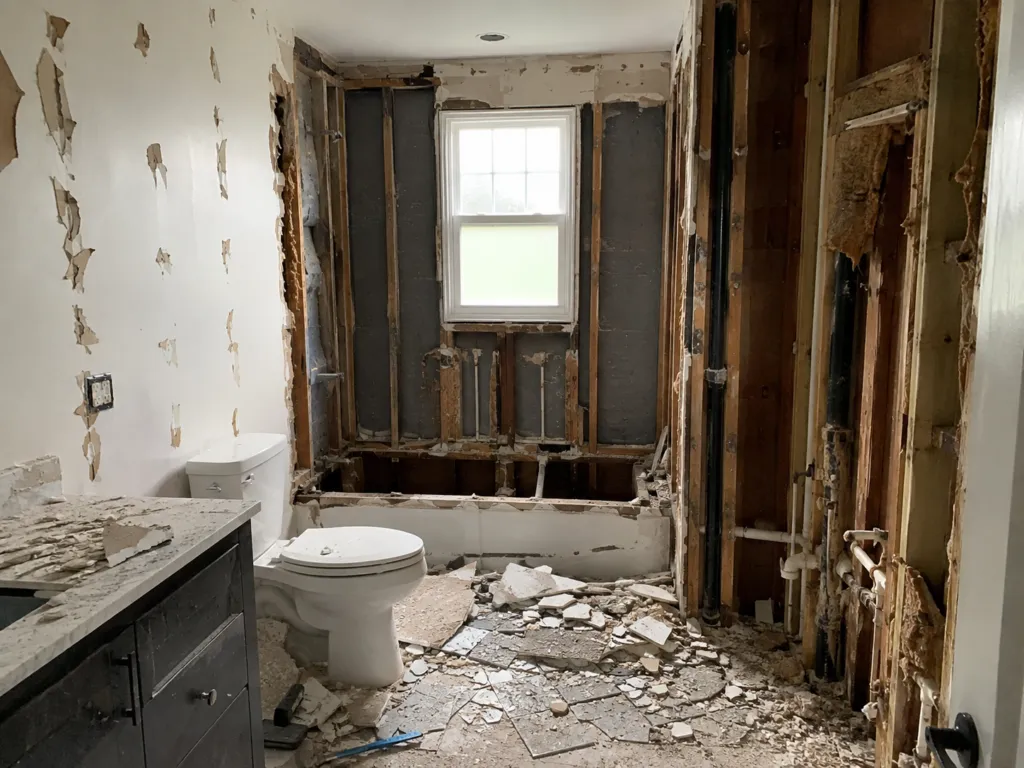
Labor complexity: A bathroom vanity swap differs radically from a full gut renovation with tile, plumbing relocation, and ventilation upgrades. Demolition reveals often uncover mold, outdated wiring, or structural issues demanding mid-project budget shifts.
Building a protective contingency reserve (10–20% of total budget) is crucial for protecting against discovered complexities. When hidden variables intersect with materials like waterproof finishes, premium fixtures, and moisture-resistant components—especially combined with structural modifications—costs compound quickly.
Smart move: Even modest allocations toward energy-efficient HVAC systems, improved insulation, and LED lighting upgrades reduce operational costs by 10-60% over time while increasing resale value. These aren’t just expenses; they’re long-term investments.