Interior spaces have long been dominated by the pursuit of pristine aesthetics and magazine-worthy arrangements. However, a growing movement in home design is challenging this polished approach by embracing something far more personal and inviting. This emerging trend, known as burrowcore, represents a shift toward creating living spaces that prioritize genuine comfort and individual character over carefully curated appearances that exist primarily for visual consumption.
Why Your ‘Perfect’ Home Might Be Making You Uncomfortable
The pressure to maintain picture-perfect living spaces has created an unexpected problem for many homeowners. Rooms designed to look flawless often sacrifice the very qualities that make a house feel like an actual home, leaving residents feeling like guests in their own spaces rather than comfortable inhabitants.
This disconnect between appearance and livability has become increasingly apparent as people spend more time within their domestic environments. The realization that beautifully styled rooms can feel cold and unwelcoming has prompted many to reconsider what they truly want from their living spaces.
The emphasis on pristine surfaces and coordinated color schemes often means that homes lack the warmth and personality that comes from lived experience. Objects with history and imperfections get hidden away, replaced by items chosen solely for their visual appeal rather than their meaning or comfort.
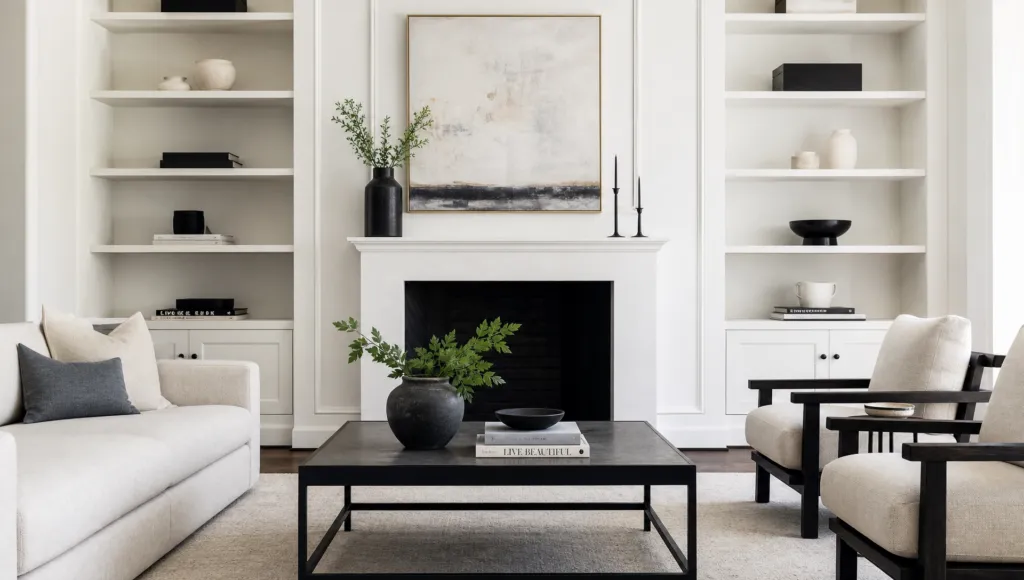
A sophisticated living room centers around a black metal coffee table styled with a ceramic vase, greenery, and stacked books. The fireplace features a minimalist black opening beneath abstract artwork in a gold frame. Flanking built-in shelving displays curated black and white accessories against crisp white cabinetry. Beige linen seating with gray accent pillows and a black wooden chair create contrast. This contemporary design employs a neutral palette—soft beiges, whites, and bold black accents—with natural materials including wood, ceramic, and textiles for warmth.
Designers Are Finally Embracing Burrowcore
Designers are increasingly acknowledging what many have suspected all along: the most inviting spaces are those that show signs of actual life. This honest approach to interior design marks a departure from the sterile perfection that has dominated home decor magazines and social media feeds for years.
Burrowcore represents this philosophy in practice, focusing on elements that create genuine refuge rather than visual spectacle. The trend incorporates features like dimmed lighting from table and floor lamps instead of harsh overhead fixtures, along with furniture that shows the gentle wear of regular use rather than showroom condition.
Designers have become vocal advocates for this approach, emphasizing that homes should reflect personal narratives and provide authentic comfort. Wanting the things around us to tell a story and reflect how we live has become particularly pronounced during periods of uncertainty, when people are seek stability and warmth in their immediate surroundings.
This movement away from rigid design rules allows for the incorporation of vintage discoveries, layered fabrics, and collected treasures that might not match perfectly but create a cohesive sense of belonging.
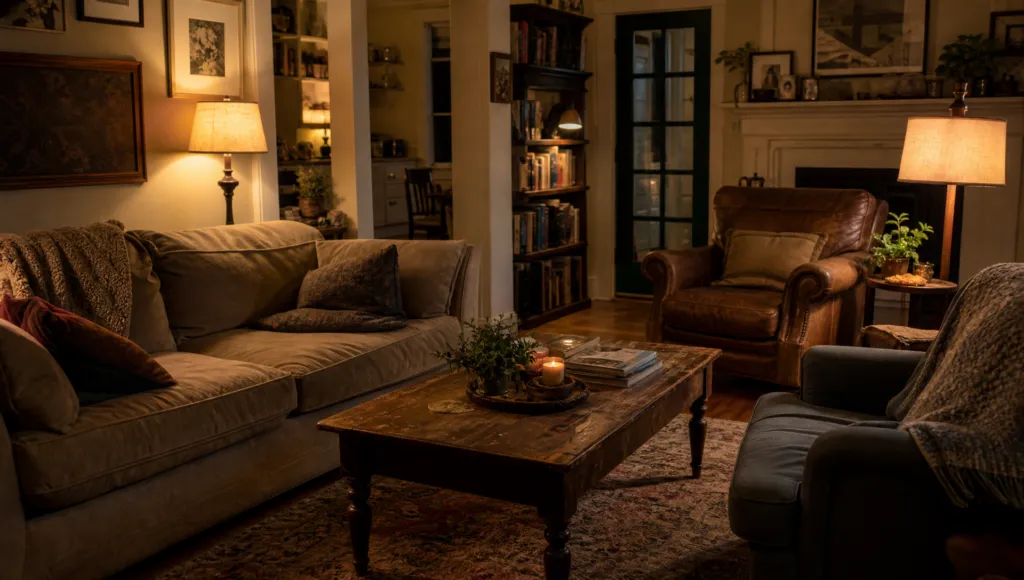
A warmly lit living room embodies authentic comfort through layered textures and lived-in elegance. The beige velvet sofa, distressed leather armchair, and woven seating create an inviting arrangement around a rustic wooden coffee table. Soft amber light from linen-shaded table lamps replaces harsh overhead lighting, casting a gentle glow across the space. The color palette features warm earth tones—taupe, cognac brown, olive green—complemented by cream walls and natural wood finishes. This interior reflects burrowcore principles through its unpretentious charm: stacked books, candlelight, throw blankets casually draped, and an oriental rug grounding the arrangement. Black-framed glass doors and bookcases add structure without formality, while framed artwork and personal objects create narrative depth rather than curated perfection.
What Makes a Space Feel Like Home?
The elements that transform a house into a sanctuary are often the opposite of what conventional design wisdom suggests. Rather than sleek surfaces and minimalist arrangements, true comfort comes from abundance and texture that engages multiple senses simultaneously.
Burrowcore distinguishes itself from related movements like cottagecore by focusing less on pastoral nostalgia and more on the immediate tactile experience of a space. While cottagecore emphasizes rural aesthetics and outdoor connections, burrowcore turns inward, creating cocoon-like environments that feel protective and nurturing.
The key components include overstuffed seating that invites prolonged relaxation, worn wooden surfaces that carry the patina of time, and multiple layers of textiles that add both visual and physical warmth. These elements work together to create spaces that feel inhabited and welcoming rather than staged.
Natural materials play a crucial role in achieving this atmosphere, with wool, linen, and ceramic objects providing organic textures that synthetic alternatives cannot replicate. The imperfections in these materials contribute to their appeal rather than detracting from it.
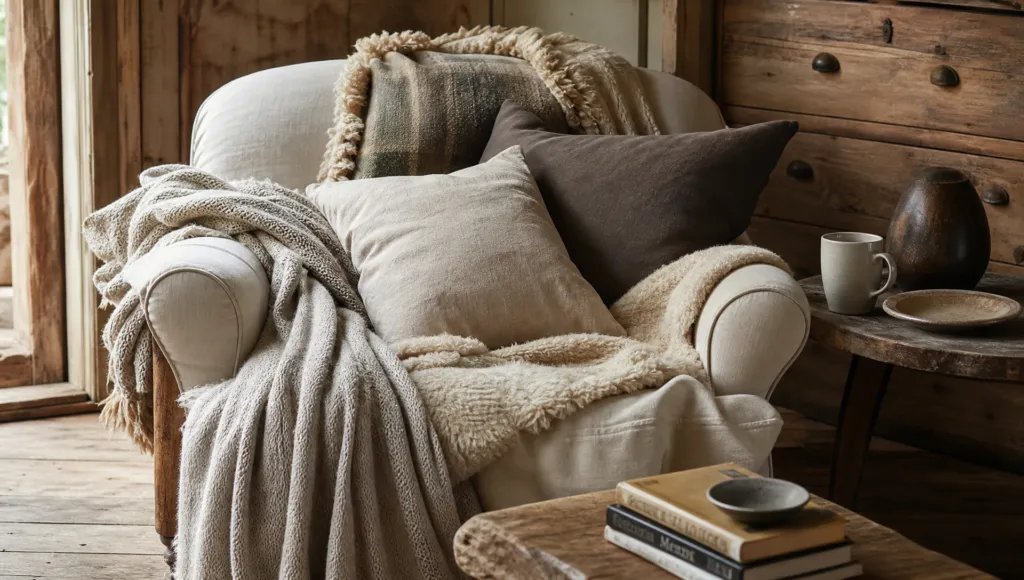
A plush armchair in creamy beige linen becomes the focal point of this tactile sanctuary, adorned with multiple cushions in sage green, warm taupe, and charcoal gray. Chunky knit throws and textured blankets cascade over the rounded arms, creating abundant layers that embody rustic comfort design. The setting features weathered wood elements—a distressed chest of drawers and rough-hewn side table holding handmade ceramic dishes and a simple mug. The color palette centers on earthy neutrals with olive undertones against aged timber surfaces.
Where Burrowcore Comes to Life
Achieving the burrowcore aesthetic requires looking beyond traditional retail environments to spaces where objects with history and character naturally accumulate. Antique markets and secondhand shops become treasure troves for those seeking pieces that carry stories and show the gentle marks of previous lives.
These venues offer furniture and decorative items that new retailers simply cannot provide: objects with authentic wear patterns, unique construction methods, and the kind of character that only develops through years of use. The hunt for these pieces becomes part of the appeal, as each discovery adds another layer to the home’s narrative.
The approach celebrates everyday objects that might be overlooked in pursuit of perfection. A slightly faded armchair, a table with surface scratches, or mismatched ceramic pieces all contribute to the overall atmosphere of comfortable authenticity that defines the trend.
This emphasis on secondhand and vintage items also aligns with growing awareness about sustainable living practices, as it extends the life of existing objects rather than constantly consuming newly manufactured goods.
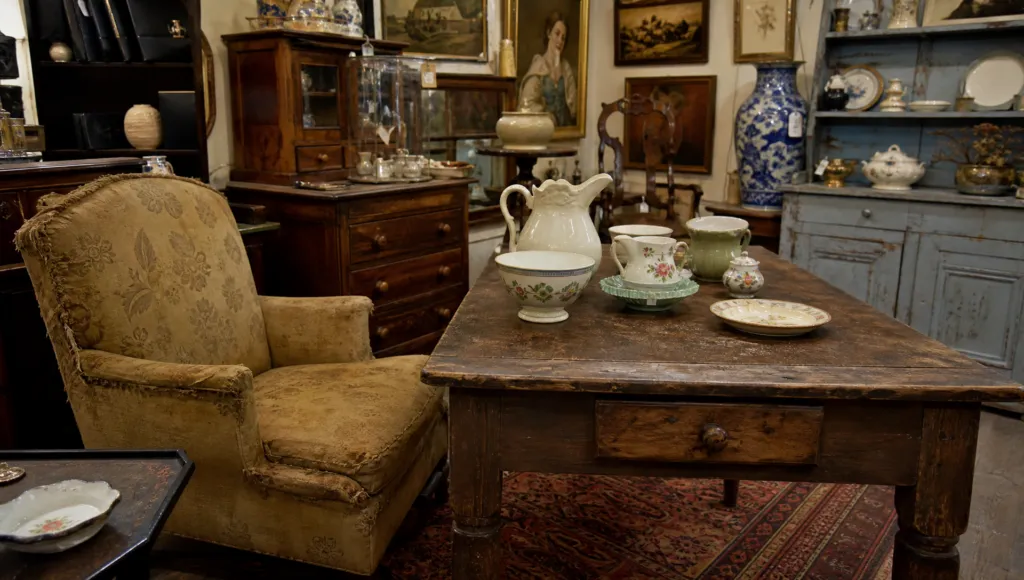
An aged wooden table with a visible drawer anchors this antique shop vignette, displaying mismatched ceramic pieces including floral-patterned bowls, a cream pitcher, and decorative cups. A worn velvet armchair in golden damask fabric shows frayed edges and authentic patina. The rustic, vintage-inspired interior features dark wood furniture, a distressed blue-gray cabinet holding blue-and-white porcelain, and oil paintings in gilded frames. Warm earth tones dominate—honey browns, faded golds, soft creams—complemented by aged wood surfaces and textiles.
How to Know If Your Home Has Already Embraced This Without You Realizing
Many people may discover they have been practicing burrowcore principles without knowing the term existed. If your living space features collections of meaningful objects rather than carefully curated displays, you are already aligned with this philosophy.
Spaces that have naturally accumulated layers of textiles, where lighting comes primarily from lamps rather than ceiling fixtures, and where comfort takes precedence over coordination likely embody burrowcore values. The presence of well-loved furniture that shows signs of use rather than pristine condition is another indicator.
The beauty of this approach lies in its rejection of strict decorating rules in favor of personal comfort and authenticity. Rather than following a prescribed formula, burrowcore encourages inhabitants to trust their instincts about what makes them feel at ease.
Ultimately, the trend validates what many have always known: that homes should serve the people living in them rather than existing as showpieces. The warmth and texture that develop naturally over time through daily life create the most inviting environments, proving that imperfection and comfort are not just compatible but inseparable.