Design experts have spotted a pattern in bathroom renovations that fail: homeowners blend contradictory aesthetic movements—cool grays paired with warm, organic materials, trendy oversized tiles mixed with dated finishes.
What looks cohesive in a single Instagram post often clashes dramatically in your actual space.
This happens because the endless scroll of social media inspiration doesn’t translate to real life.
Interior designers rely on fundamental principles—scale, proportion, and harmony—to create spaces where elements communicate intentionally rather than compete.
The secret separating stunning renovations from regrettable ones is surprisingly simple: commit to ONE cohesive design direction.
This isn’t about rigidity; it’s about making deliberate choices that reinforce a unified vision instead of chasing viral trends. Restraint—the ability to say no—actually defines sophisticated bathroom design.
When you’re selective rather than scattered, your renovation budget stretches further and creates impact.
Great news for 2026: emerging design trends actually reward this restraint-focused philosophy.
Sculptural stone tubs as focal points, exposed fixtures in aged metals, and architectural detailing emphasizing craftsmanship are making powerful comebacks.
These aren’t retreats to outdated styles—they represent intentional material honesty and longevity that keeps bathrooms feeling fresh when trends shift.
The Visual Chaos Your Brain Can’t Handle (Even If You Don’t Realize It)
Bathroom design operates at a neurological level most homeowners never consider.
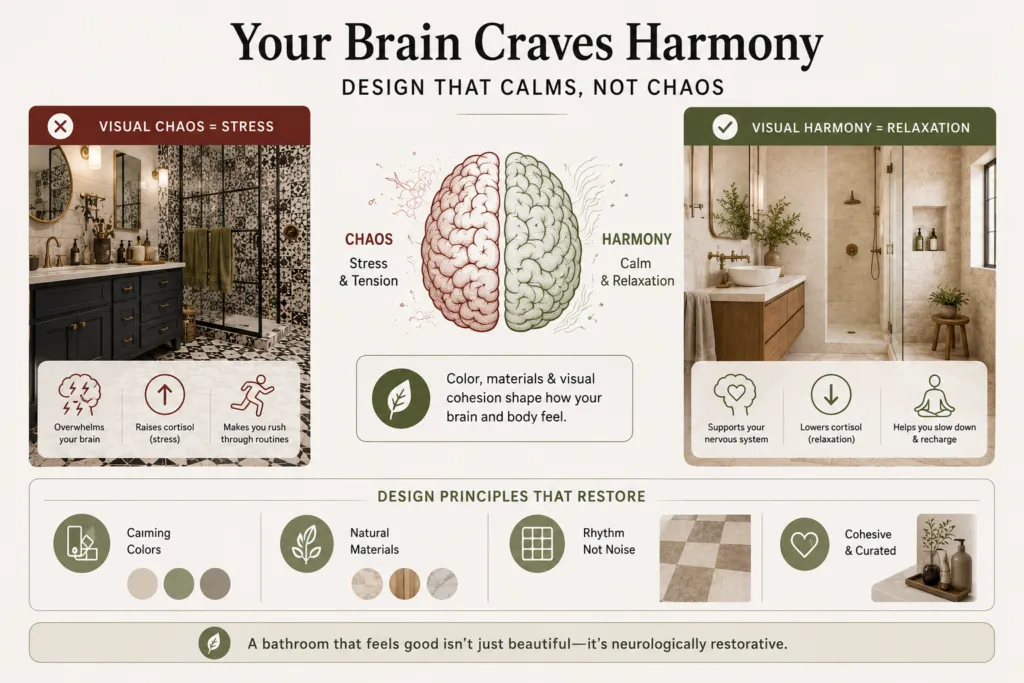
Overly busy tile patterns, mismatched metal finishes, and cluttered arrangements create subtle stress—your nervous system registers the chaos as mildly uncomfortable, even if you can’t quite articulate why.
Design professionals call this ‘visual noise’: competing elements forcing your brain to work harder in a space designed for relaxation.
Color theory confirms this isn’t abstract—cool grays and clinical whites can feel sterile, while warm tones and organic materials work with your psychology to create genuine comfort.
Your cortisol levels actually respond to these choices. In a visually cohesive bathroom with harmonious colors and unified materials, your nervous system genuinely relaxes.
Conversely, busy bathrooms trigger persistent, subtle tension that makes you want to rush through your routine rather than linger. This reshapes renovation priorities entirely: expensive finishes matter far less than visual harmony.
Interestingly, muted checkerboard flooring and natural stone—gaining renewed prominence in 2026—exemplify this principle perfectly.
Their geometric precision creates visual rhythm without overstimulation, calming rather than jarring your eye. The result? A bathroom that feels genuinely restorative, not just expensively decorated.
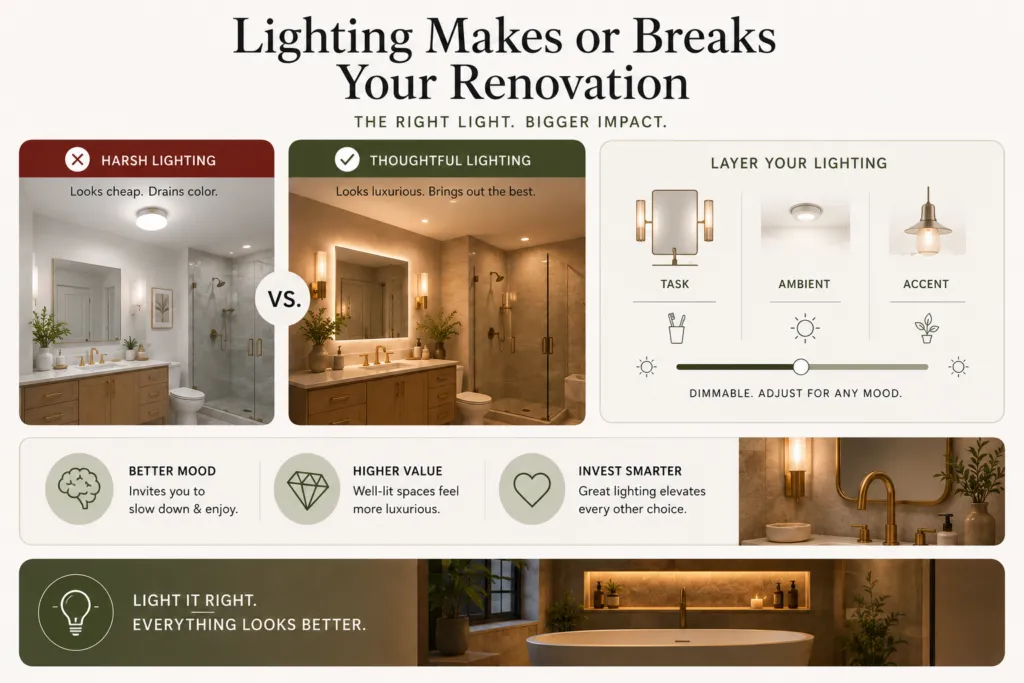
Why Harsh Lighting Is Sabotaging Your Entire Renovation Budget
Here’s a cruel irony: premium fixtures and high-end materials can appear decidedly mediocre under unflattering overhead lighting.
A five-thousand-dollar renovation feels cheap under a single harsh fluorescent fixture, while a modest two-thousand-dollar design transforms into something genuinely luxurious under thoughtful lighting.
This lighting mistake is so common it’s become almost invisible—homeowners invest heavily in materials then unknowingly sabotage the entire project with inadequate illumination planning.
The solution isn’t complicated: layer your lighting with softer, dimmer options that transform the entire atmosphere. Combine task lighting near mirrors with ambient light from softer sources, allowing you to adjust intensity based on time of day and mood.
Warm-toned, dimmable lighting makes everything appear more expensive and inviting—including you. Harsh overhead options drain color and vitality from even premium materials.
The psychological impact is substantial: you’re more likely to linger in and genuinely enjoy a well-lit bathroom, which directly increases the perceived value of your investment.
Make lighting a priority from day one rather than an afterthought. When paired with sophisticated material choices—like exposed metal fixtures that require nuanced illumination to showcase their character—thoughtful lighting design becomes the secret ingredient separating bathrooms you tolerate from ones you actually love.
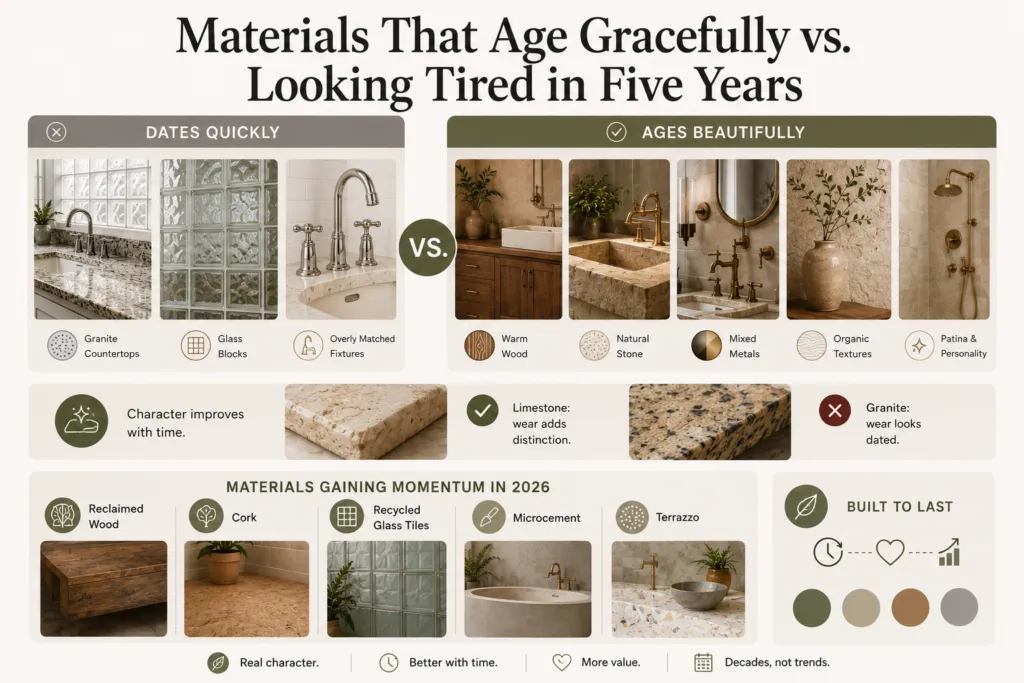
Materials That Age Gracefully vs. Looking Tired in Five Years
Granite countertops, glass blocks, and perfectly coordinated fixtures once seemed like safe, timeless choices—until they collectively became dated almost simultaneously.
This timing reveals something important: true longevity isn’t about choosing what feels safe today; it’s about selecting materials with inherent character that improve rather than deteriorate with time.
Expert designers increasingly prioritize materials that develop patina and personality: warm woods deepening with exposure, natural stone showcasing geological variation, mixed metal finishes feeling collected rather than matched, organic textures suggesting authenticity.
These materials don’t photograph as pristinely as sterilized, coordinated designs—yet they retain appeal across decades while uniform bathrooms fade quickly.
Here’s the counterintuitive insight: imperfection and patina aren’t design flaws—they’re indicators of intentional, lasting quality. A limestone countertop showing subtle wear looks distinguished; the same wear on granite looks tired. The difference is inherent character and how it’s framed.
Materials gaining momentum in 2026:
- Reclaimed wood with unique history.
- Cork that resists mold while aging beautifully.
- Recycled glass tiles with distinctive variation.
- Seamless microcement finishes.
- Terrazzo that accumulates visual interest.
These sustainable choices all share one quality: they become more interesting, not less, as time passes. Direct your renovation budget toward materials with soul rather than those selected for trendiness or safety.
The Luxury Secret Hidden in Heated Floors and Forgotten Details
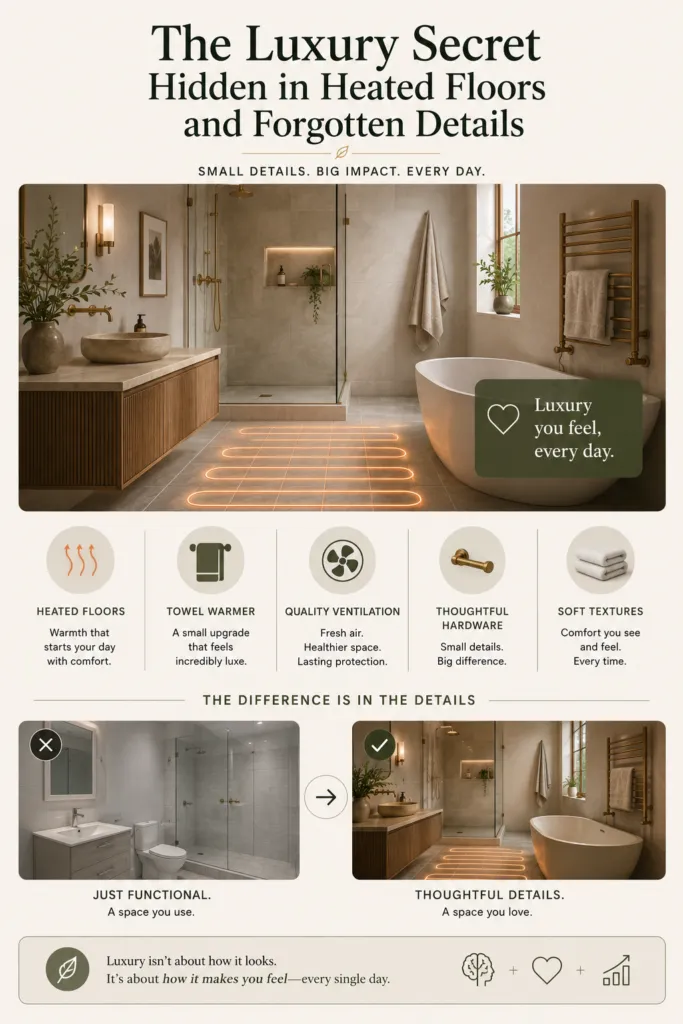
While coordinating tile colors and selecting fixtures, homeowners overlook the subtle indulgences that transform bathrooms from functional spaces into genuine sanctuaries: heated floors warming your feet on cold mornings, towel warmers making post-shower rituals luxurious, excellent ventilation, quality hardware, and soft textures throughout.
These details aren’t expensive add-ons requiring massive budgets—they’re psychological game-changers that fundamentally alter how you experience the space daily.
This distinction separates merely renovated bathrooms from genuinely loved sanctuaries.
Why these details matter:
- Heated floors create a small moment of genuine luxury each morning—your nervous system registers this as care and thoughtfulness.
- Towel warmers cost modestly yet make your post-shower experience noticeably more pleasant.
- Quality ventilation prevents moisture problems while creating a fresher environment.
- Thoughtful hardware and soft textures accumulate into an overall feeling of intention.
These forgotten touches transform your bathroom from utilitarian space into somewhere you actually want to linger.
The financial investment remains reasonable, yet the psychological return far exceeds the cost. This insight reshapes what ‘luxury’ actually means in bathroom design.
Truly sophisticated spaces prioritize how they make you feel over how they photograph—a principle reinforced by returning architectural detailing, furniture-style vanities, and sculptural focal pieces that invite genuine engagement rather than mere aesthetic appreciation.