Selecting between solid hardwood and engineered wood flooring goes way beyond picking a pretty color—it’s a strategic investment that shapes your home’s value, durability, and maintenance demands for decades to come.
Most homeowners approach this decision reactively, drawn to a particular look without considering the real implications. Then years later, they’re facing unexpected maintenance costs or premature wear that demands expensive replacement.
Here’s what matters: each flooring type responds differently to humidity, ages distinctly, and requires different care throughout its life. That’s what makes this decision so important.
Solid hardwood has real staying power—original floors in New England, Eastern Canada, and Europe prove it’s still performing beautifully after generations when properly maintained. Both options leverage wood’s timeless appeal, but they solve fundamentally different functional challenges through their distinct construction.
The care you commit to—whether that’s refinishing or moisture management—is just as critical as your initial choice. Before you decide, you need to understand these distinctions between temporary solutions and lasting investments that can enhance your home for generations.
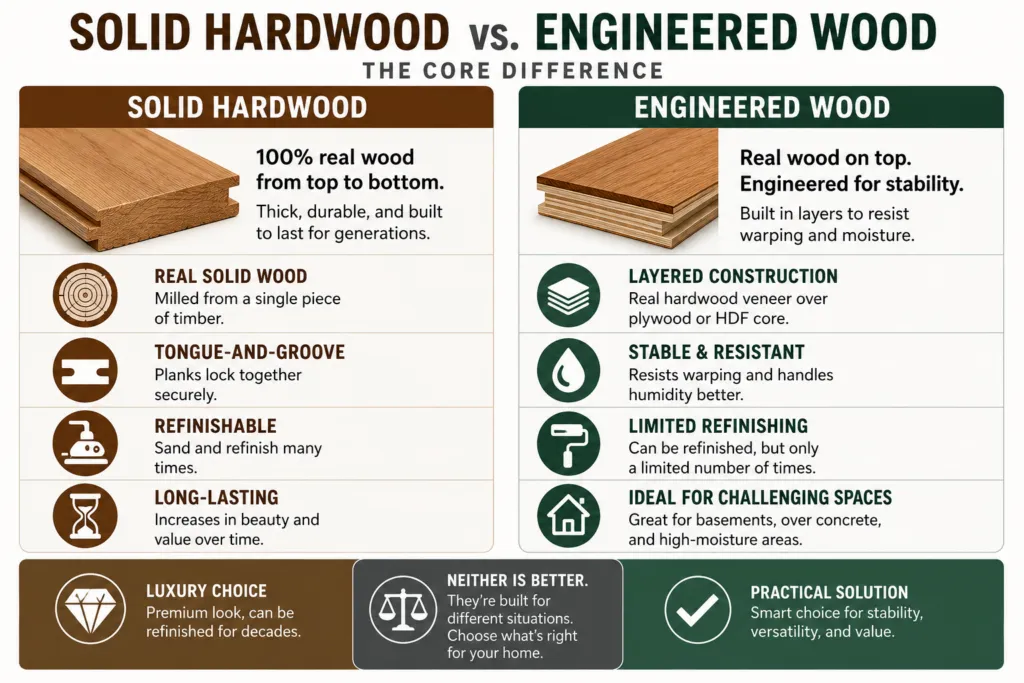
Solid Hardwood vs. Engineered Wood: Understanding the Core Difference
Here’s what interior designers know that makes their recommendations so effective: these aren’t just style choices—they’re fundamentally different materials built for different jobs.
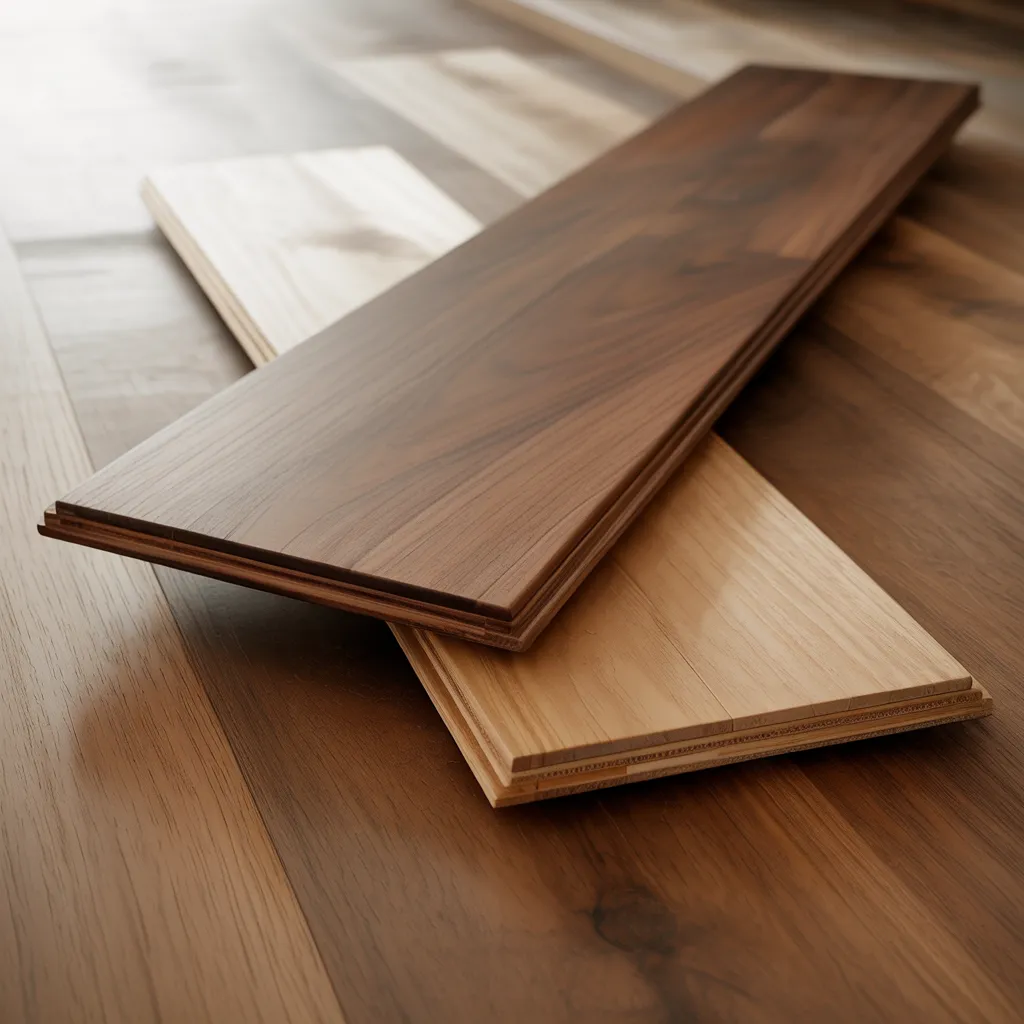
Solid hardwood is exactly what it sounds like: real wood planks, typically three-quarters to one inch thick, milled from a single piece of timber.
They’re kiln or air-dried before installation and feature tongue-and-groove construction that locks them securely together. The real superpower? You can sand and refinish solid hardwood repeatedly throughout its lifetime, essentially resetting its appearance whenever it shows wear.
Engineered wood takes a different approach: it’s a thin layer of authentic hardwood veneer bonded to a plywood or high-density fiberboard base, with multiple layers stacked at 90° angles for stability. This construction makes engineered wood resistant to warping and moisture issues, but it limits how much you can refinish it.
Think of it this way: solid hardwood is the luxury option that rewards long-term commitment with refinishing opportunities, while engineered wood is the practical problem-solver for challenging environments. Neither is ‘better’—they’re built for different situations, and understanding these differences helps you make a choice that actually works for your home.
Location and Moisture: The Real Decision-Maker
Here’s the secret that separates successful flooring installations from regrettable ones: moisture is everything.
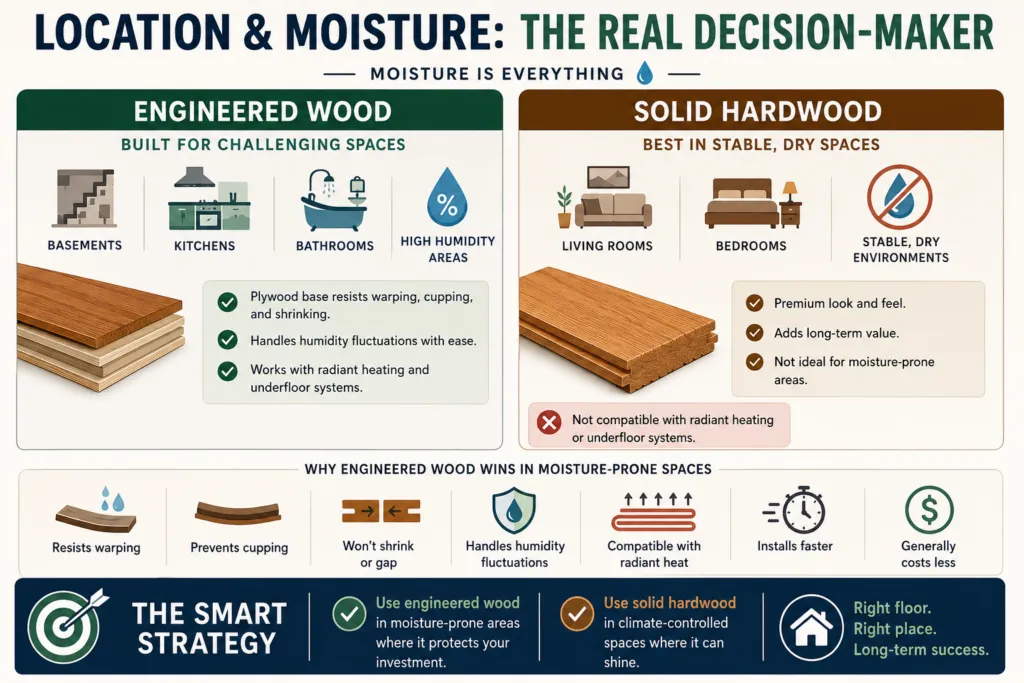
Engineered wood thrives in the spaces where solid hardwood struggles—basements, kitchens, bathrooms, and anywhere humidity fluctuates regularly.
The plywood base resists warping, cupping, and shrinking that plague solid hardwood in moist conditions.
Meanwhile, solid hardwood’s weakness becomes engineered wood’s strength. In stable, dry spaces like living rooms and bedrooms, engineered wood’s moisture-resistance advantage disappears, making the premium price of solid hardwood actually make sense.
One practical consideration: solid hardwood isn’t compatible with radiant heating or underfloor systems, while engineered wood handles these modern climate solutions beautifully.
Here’s the smart strategy: use engineered wood strategically where its moisture-resistance matters most, and save solid hardwood for climate-controlled spaces where it can shine.
This location-based approach prevents premature failure and ensures each flooring type works within its wheelhouse.
You’ll also find engineered wood generally costs less and installs faster, which makes it especially practical in moisture-prone areas where solid hardwood would eventually let you down.
2026 Design Trends: Patterns, Wide Planks, and Character
Flooring design is shifting dramatically toward distinctive looks that go way beyond simple board selection.
Wide-plank herringbone patterns, chevron designs, warm neutral tones with authentic wood grain, and textured finishes are creating personality underfoot in ways that feel both contemporary and timeless.
The challenge? Not every flooring type executes every design equally well. Wide-plank herringbone creates stunning visual impact, but it demands precision installation and material stability to maintain that pattern alignment over time as wood naturally expands and contracts.
The good news: both solid hardwood and engineered wood showcase patterned designs effectively, though each responds differently to seasonal movement and environmental changes.
Modern low-maintenance finishes have become equally important—protective coatings and textured surfaces deliver both durability and aesthetic appeal for contemporary living.
When you’re considering trendy flooring aesthetics, make sure your chosen material can actually pull off the look long-term while maintaining the performance you need for real-world living.
Sustainable Flooring: Performance and Environmental Responsibility Together
Sustainable flooring choices have evolved from niche preference into mainstream design—and the solutions are surprisingly sophisticated.
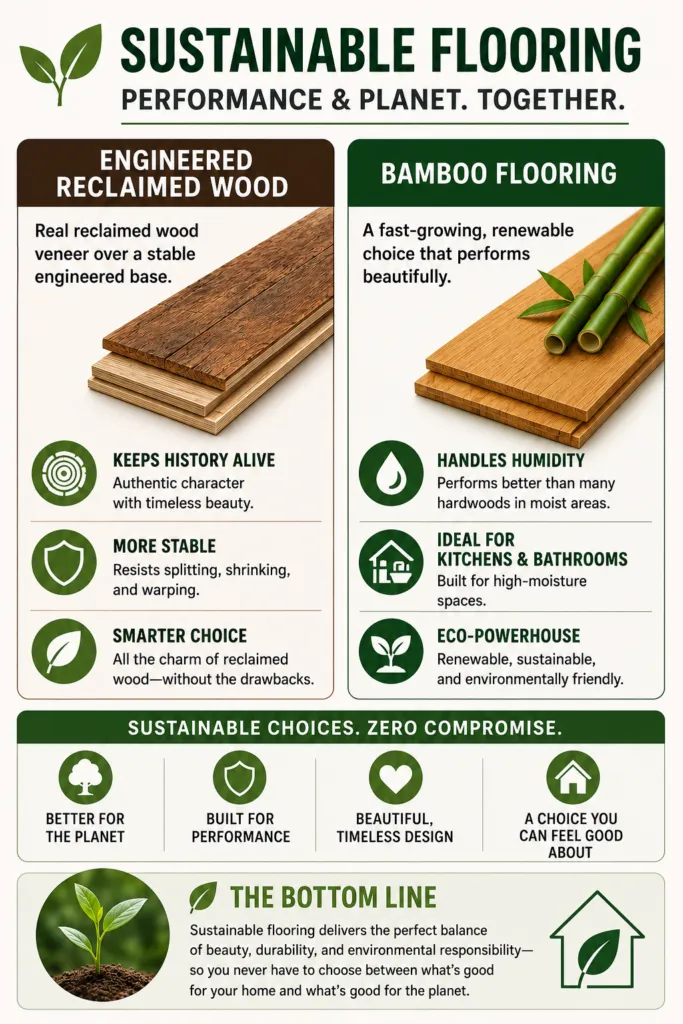
Engineered reclaimed wood is a particularly elegant option: it uses authentic reclaimed wood as a visible veneer over an engineered base, capturing the historical character and environmental benefits of reclaimed materials while avoiding the splitting, shrinking, and warping problems that plague traditionally installed reclaimed solid hardwood in variable moisture.
Bamboo represents another sustainable powerhouse gaining real designer traction. It actually handles humidity fluctuations better than conventional hardwoods, making it ideal for kitchens and bathrooms where environmental responsibility aligns perfectly with performance requirements.
The bottom line: sustainable flooring choices no longer demand compromise on beauty, durability, or practicality. You can invest in eco-conscious materials that perform beautifully and make you feel genuinely good about supporting environmental responsibility—without sacrificing real-world performance in your home.
The Real Cost: Initial Price vs. Long-Term Value
Smart flooring decisions require looking beyond the price tag to see the complete financial picture across the entire lifetime of your floor.
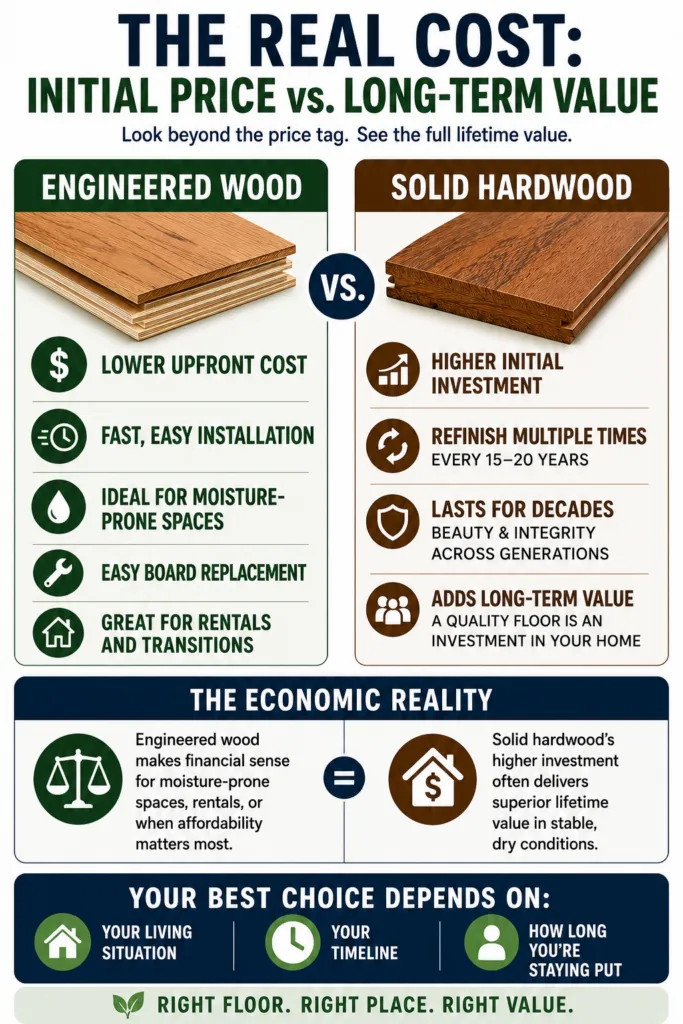
Engineered wood makes immediate financial sense: lower upfront costs, straightforward installation that doesn’t require specialized expertise, and genuine budget-friendliness for moisture-prone spaces where solid hardwood would eventually fail.
Its modern systems also allow faster installation and easy board replacement if damage occurs, making it especially practical for rentals or transitional living situations.
Solid hardwood tells a different financial story. It commands a higher installation price but unlocks real long-term value through multiple refinishing cycles—essentially renewing your floor’s appearance every 15-20 years without replacement.
A well-installed solid hardwood floor in appropriate conditions can maintain beauty and integrity across multiple generations. Here’s the economic reality: solid hardwood’s higher initial investment often generates superior lifetime value when properly installed and maintained in stable conditions.
Engineered wood makes clear financial sense for moisture-prone applications, rentals, or situations where immediate affordability outweighs decades-long longevity considerations. Your best choice depends on your timeline, living situation, and how long you’re staying put.
Maintenance: The Care That Makes Your Flooring Last
Here’s the honest truth: your flooring’s longevity depends entirely on the maintenance practices you actually follow. Both solid hardwood and engineered wood require proper care—and the stakes are high because mistakes can cause irreversible damage.
Avoid common killers like vinegar-and-water solutions, steam mops, and abrasive scrubbers, which compromise protective finishes and wood integrity.
Instead, use specialized cleaners designed for wood flooring, like Bona or Murphy Oil Soap, which clean effectively without damaging your investment. Solid hardwood benefits from professional buffing every 3-5 years to maintain luster—typically a one-day professional job that keeps the finish looking fresh.
Floors exceeding ten years usually need full refinishing, where minimal wood (sometimes just 1/32-inch) is sanded away to renew appearance. Water-based polyurethane finishes, which became standard around 1942, offer superior hardness compared to traditional oil-modified polyurethane.
Oil remains a globally popular finish option with thousands of years of track record. Engineered wood comes pre-finished from the factory and typically needs no buffing, though its more limited refinishing potential means prevention is especially important.
The key takeaway: your flooring choice is just the beginning. Real longevity depends on the ongoing relationship you commit to with informed, intentional care practices that protect your investment for years to come.