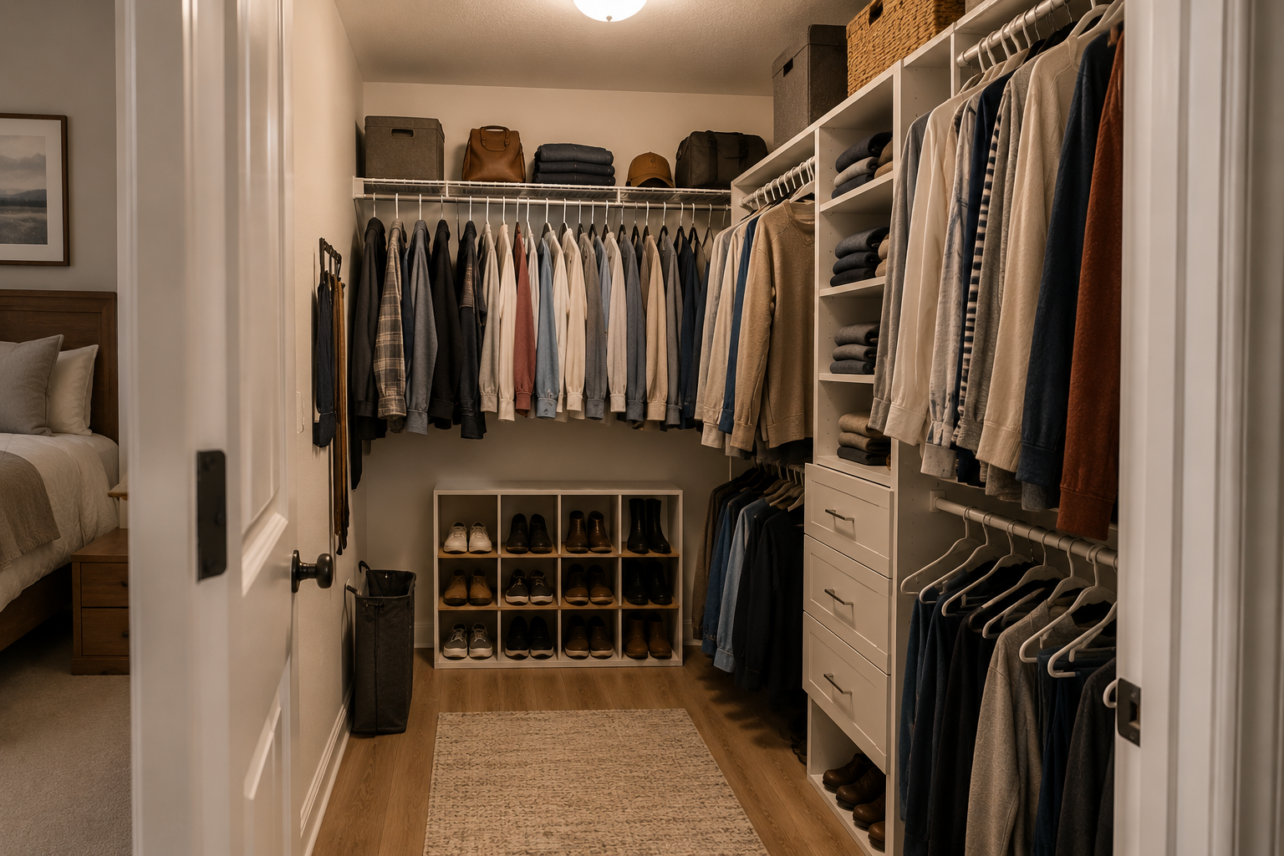
Your closet isn’t just storage—it’s a reflection of how you live. Most people approach closet design as an afterthought, stuffing items into poorly planned spaces that create frustration daily.
But what if the secret to your ideal closet starts with three strategic design decisions most people never consider?
Understanding these foundational elements transforms a cramped, chaotic space into a sanctuary of organization and style that actually works for your lifestyle.
Consider this: the average person spends roughly ten minutes daily deciding what to wear—time often complicated by disorganized, poorly designed storage.
When your closet works against you rather than for you, this simple daily task becomes a source of stress.
Yet here’s what’s important to know: this frustration rarely stems from having too many clothes.
Instead, it comes from having too few intentional design choices guiding how those clothes are stored and accessed.
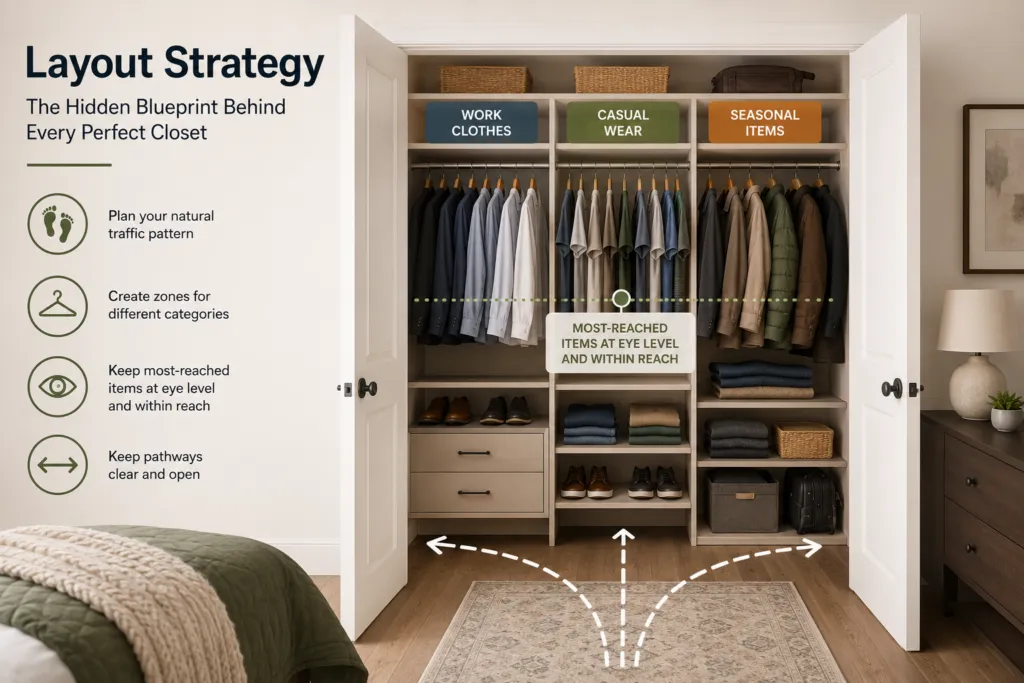
Layout Strategy: The Hidden Blueprint Behind Every Perfect Closet
Before choosing a single shelf or hook, your closet’s layout determines everything that follows.
Strategic space planning isn’t about cramming in more storage—it’s about understanding how you move through the space and what you actually reach for daily.
Start with these layout essentials:
- Identify your daily traffic pattern—how you naturally enter and move through the closet.
- Create designated zones for different clothing categories (work clothes, casual wear, seasonal items).
- Position your most-reached items at eye level and within arm’s reach.
- Allow clear pathways so you’re not squeezing around obstacles.
The right layout creates natural flow and puts frequently worn pieces front and center.
This foundational step is where most DIY closet designs fail—they maximize storage without considering how your body actually moves through the space.
When you design around your natural movement, your morning routine flows intuitively.
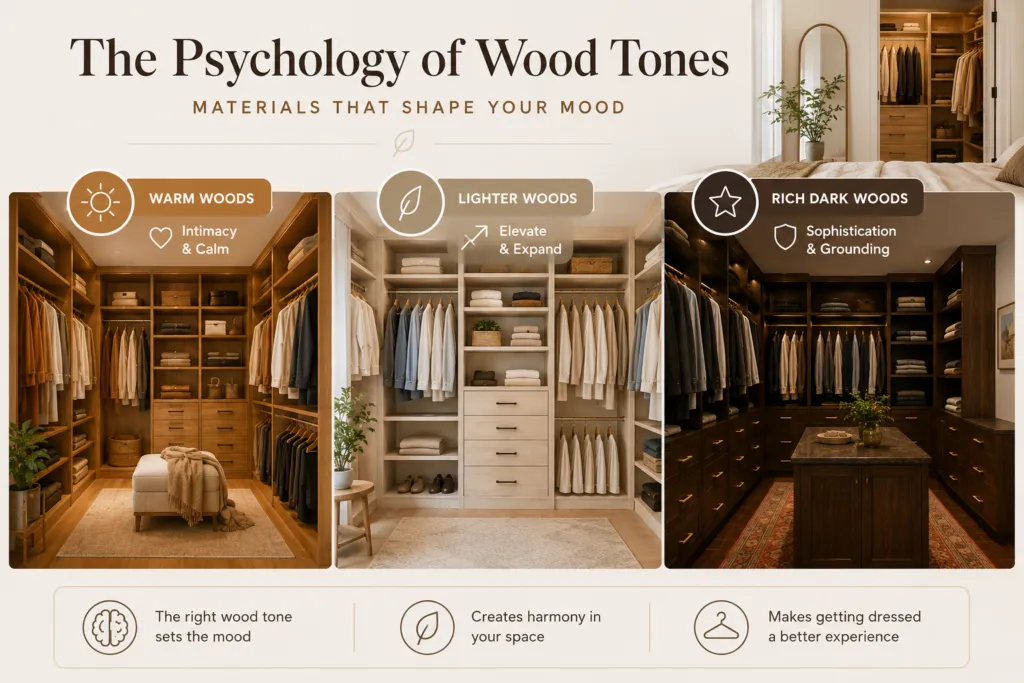
The Psychology of Wood Tones: Why Your Closet’s Material Matters More Than You Think
Here’s what separates an ordinary closet from an elevated one: materials. The wood tones you choose don’t just fill space—they set the entire mood of your room and create psychological harmony or discord.
Wood tone effects to consider:
- Warm honey and caramel tones create intimacy and calm, making your closet feel like a cozy retreat.
- Lighter woods (oak, ash, whitewashed finishes) elevate and refresh, creating visual expansion in smaller spaces.
- Rich dark woods (walnut, espresso) add sophistication and grounding weight to larger closets.
When materials work together cohesively, your closet becomes more than functional storage—it becomes a luxurious space that makes getting dressed a pleasure rather than a chore.
The materials you select directly influence mood and stress levels. Your closet’s visual language should reflect both your personal style and the emotional experience you want each morning.
The Final Touch: How Handles and Pulls Tie Your Dream Closet Together
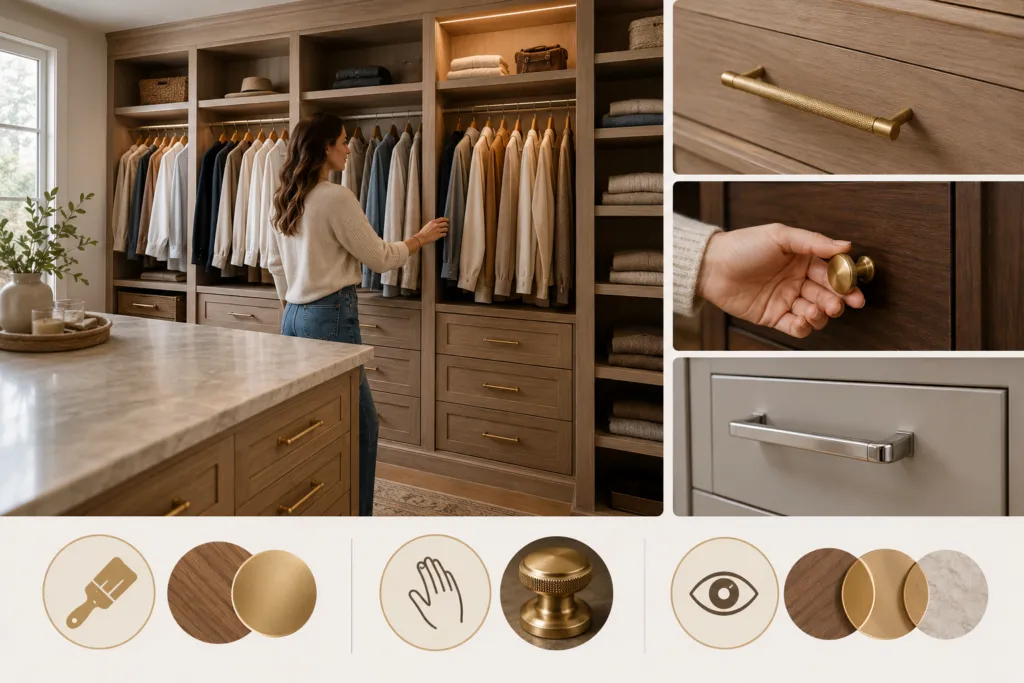
You’ve planned the layout and chosen your materials—but there’s one detail that completes the design narrative: hardware. Handles and pulls are the jewelry of your closet, the finishing touches that either polish everything together or leave it feeling incomplete.
When selecting hardware, think about:
- Finish coordination: Match hardware to your wood tones and overall design vision (brushed brass for warm woods, polished chrome for modern looks).
- Tactile quality: Premium hardware with thoughtful design feels luxurious under your fingertips, reinforcing the elevated experience.
- Visual coherence: When hardware coordinates with both your material palette and design scheme, it creates professional polish.
This attention to detail extends beyond aesthetics—it signals commitment to a system where every element works in concert. Quality handles make reaching for items satisfying, turning routine actions into small moments of pleasure.
From Vision to Reality: How Professional Design Brings Your Dream Closet to Life
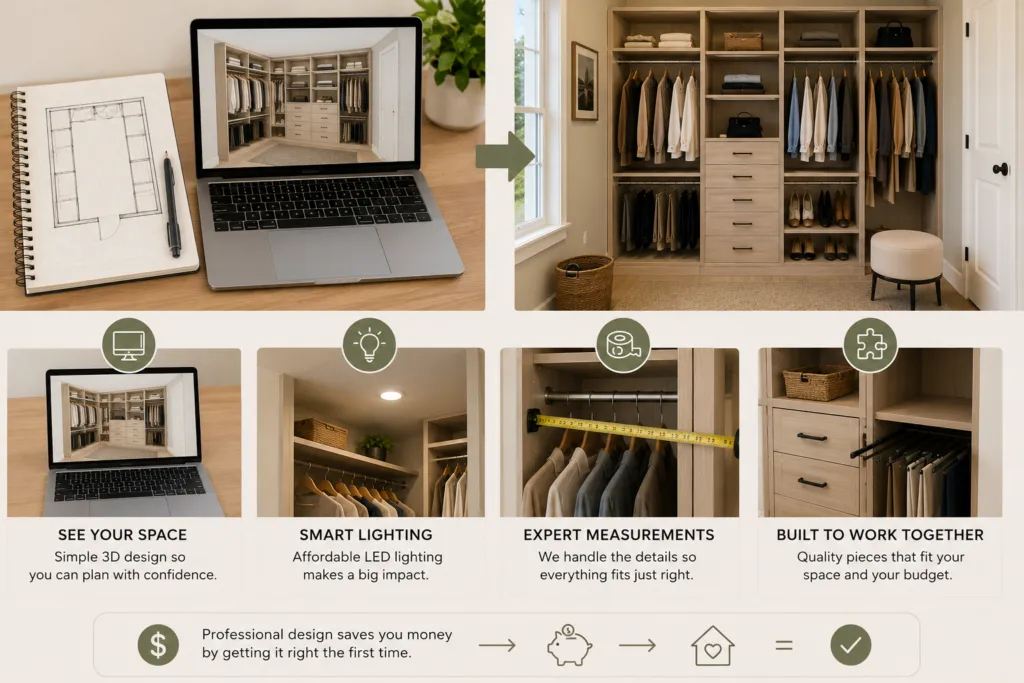
So you’ve imagined the perfect closet—but how do you bridge the gap between vision and reality? This is where professional design services make the difference.
Professional designers handle what DIY planning often misses:
- Advanced 2D and 3D renderings: let you see your dream closet before installation begins, eliminating guesswork and costly mistakes.
- Lighting design: fundamentally affects how your space is experienced. Strategic placement of natural and artificial light enhances features and improves both functionality and visual appeal.
- Architectural assessment: They measure dimensions, light patterns, wall angles, and architectural quirks that DIY planning overlooks.
- Systems integration: They ensure storage elements work together seamlessly rather than as isolated components.
When you work with a professional, you’re investing in expertise that prevents costly redesigns. They’ll also help you understand which upgrades offer the best return on investment for your specific situation, whether you’re in it for the long term or planning to move.