The kitchen renovation industry is experiencing a real shift in 2026. Designers are moving away from the old all-or-nothing mentality that demanded complete gut renovations, and instead championing something smarter: strategic upgrades that deliver outsized impact without the expense or waste.
Think of it as renovation surgery rather than demolition. Instead of ripping everything out, you’re making targeted improvements that transform your space. In smaller kitchens—even those tight 194-square-foot spaces—thoughtful moves like custom islands with hidden storage, strategic cabinet painting, and statement lighting fixtures can make everything feel larger and more inviting.
Painting quality cabinetry, upgrading key appliances, adding pendant lights above islands—these focused interventions deliver the transformation you want at a fraction of a full replacement budget. This approach resonates with both your wallet and your values. It reflects a growing awareness that maximum impact doesn’t require maximum expense or environmental waste.
Historically, this principle isn’t new. The Frankfurt Kitchen of 1926 proved that thoughtful design in tight spaces (just 1.9 by 3.4 metres) breeds real innovation. Contemporary designers are rediscovering that wisdom: thoughtful enhancement truly beats expensive demolition.
The Secret Behind Kitchens That Never Look Dated
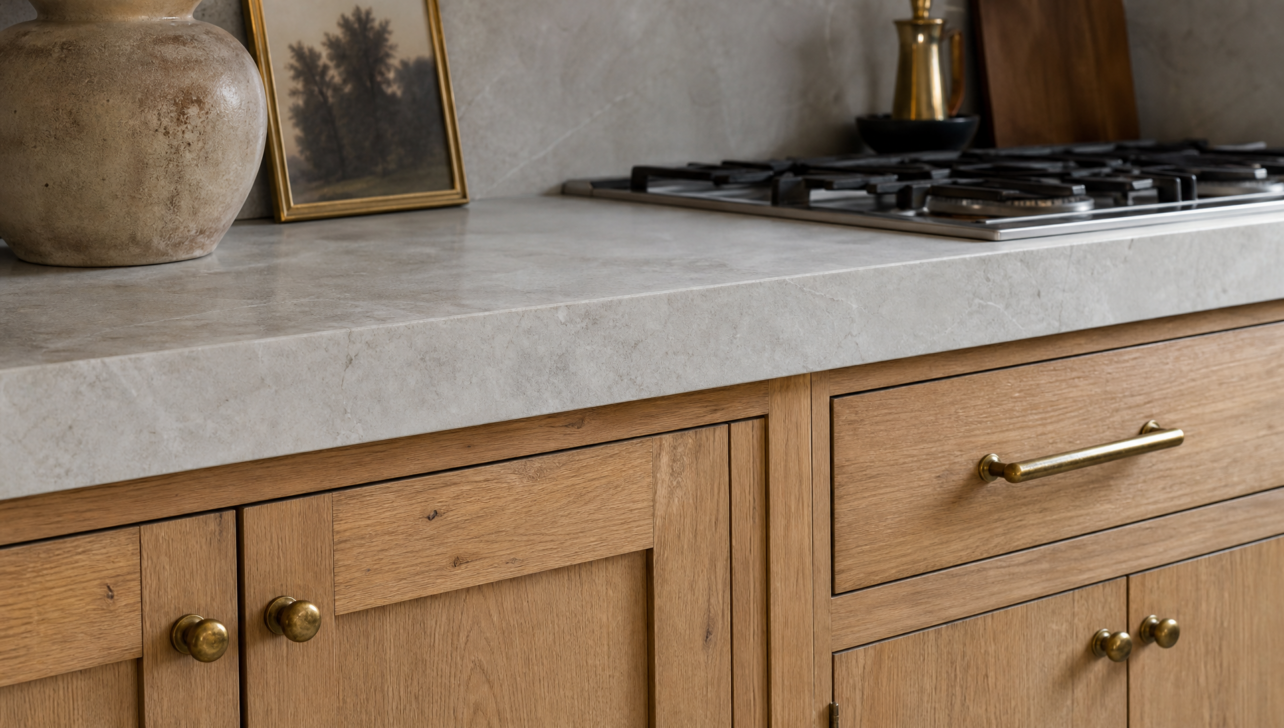
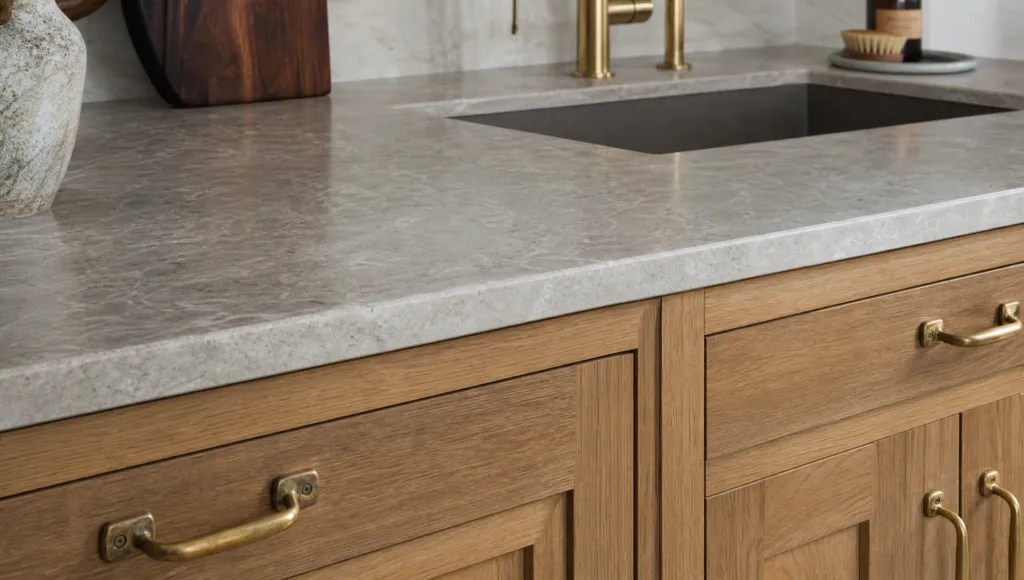
Here’s the counterintuitive truth: materials with genuine character actually age better than trendy choices. Professional designers consistently invest in quality materials that develop patina and warmth rather than looking frozen in time.
Honed quartzite countertops offer texture and depth that look sophisticated whether minimalism or maximalism dominates design trends. Solid oak cabinetry develops richness over time. Unlacquered brass hardware evolves into a beautiful living finish. Nickel hardware maintains elegance across decades. These aren’t Instagram-flashy choices—they’re deliberate investments in longevity.
Your cabinet material shapes everything: wood provides versatility (it stains or paints to evolve with your taste), while stainless steel or aluminum bring modern sophistication and amplify light. The key is selecting materials for durability, not novelty. When you choose for authenticity and longevity, your kitchen gains presence and beauty as it ages rather than becoming dated when trends shift.
This represents mature design thinking—recognizing that true sophistication involves selecting elements that get better with time, not ones that fade as design cycles move forward.
Why Your Kitchen Is Stealing Your Natural Light (And How to Get It Back)
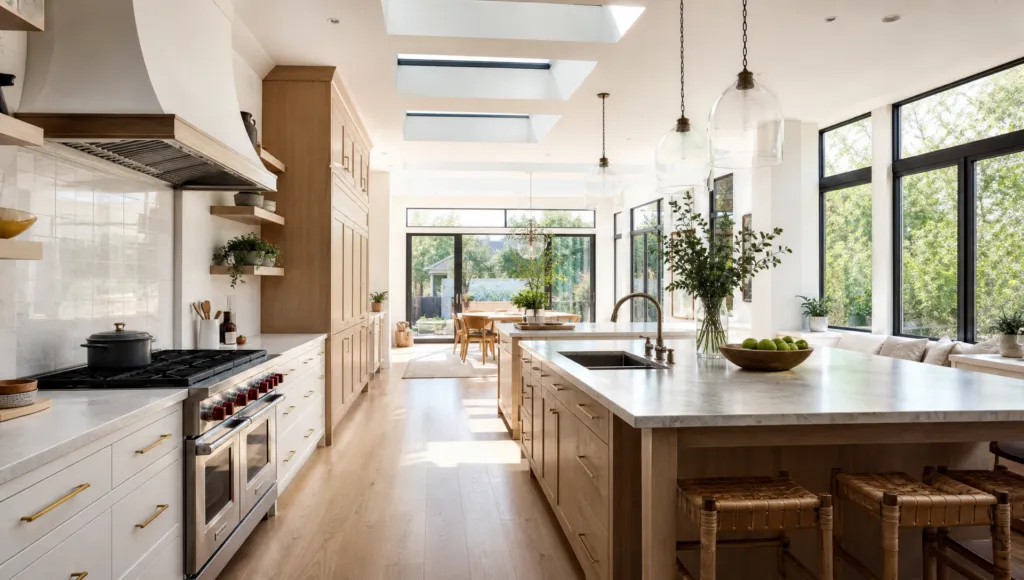
Natural light is the overlooked superstar of kitchen design, yet most kitchens trap daylight behind walls, closed cabinets, and storage systems. Designers are now prioritizing windows and daylight as primary decisions, not afterthoughts.
Consider enlarging existing windows, adding clerestory windows or skylights, and consolidating storage to let light travel deeper into your space. The results go beyond aesthetics: natural light improves visibility while cooking, elevates your mood, and transforms your kitchen from a purely functional work zone into a space where people genuinely want to gather.
This shift reflects a fundamental change in how we think about kitchens. They’re evolving from isolated preparation chambers into multifunctional family hubs. Natural light amplifies this transformation, creating environments that feel expansive and inviting—spaces that serve as living areas, not just cooking stations. If natural light is limited, strategic mirror placement and reflective surfaces can help maximize what you have.
The Color Explosion Nobody Saw Coming
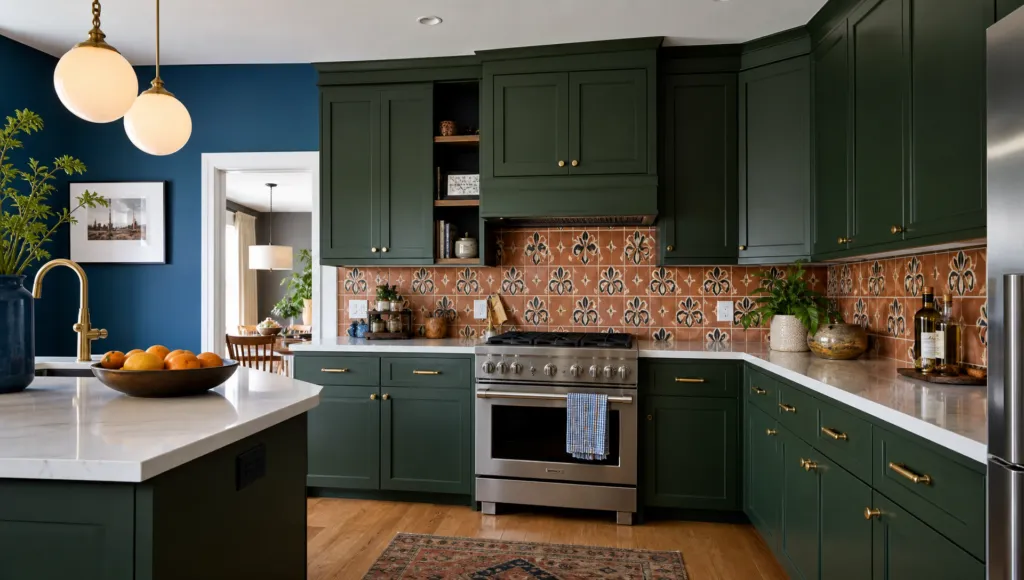
After years of neutral minimalism, kitchens are finally breaking free. Deep forest greens, warm terracottas, jewel-toned blues, patterned wallpaper, hand-painted backsplashes—bold choices that once felt risky now create truly memorable spaces.
Statement cabinet colors and distinctive patterns (think terra-cotta wave designs or cutout details) transform your entire kitchen narrative. When paired with refined hardware and sculptural lighting, these bold choices create layered sophistication and genuine visual interest.
Here’s what surprised many homeowners: kitchens don’t need neutral anonymity to feel timeless. Actually, personal expression creates lasting emotional resonance. A kitchen reflecting your authentic taste ages better psychologically than one designed to offend no one. Bold color choices reveal something important: kitchens are increasingly viewed as extensions of identity, not purely functional boxes requiring visual restraint. Your kitchen can be a canvas for self-expression while remaining sophisticated and grounded in quality materials and thoughtful design.
Four Design Elements Reshaping Kitchen Spaces
As we move through 2026, four pivotal elements are collectively redefining kitchen design:
Concealed Cabinetry creates clean, uncluttered visual fields through integrated appliances that disappear into seamless cabinet facades. This appeals if you prefer sophisticated minimalism.
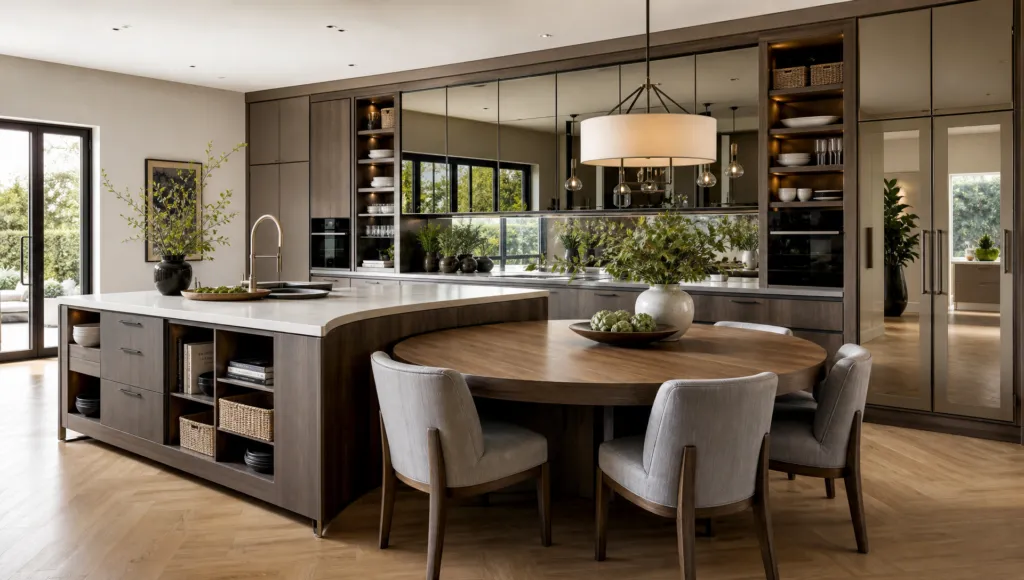
Mirrored Surfaces (mirror-polished finishes and reflective glass doors) amplify natural light and expand spatial perception—especially valuable in compact kitchens. The reflected light creates genuine depth and glamorous sophistication.
Tactile Textures introduce sensory richness through textured wood grains, stone finishes, and dimensional surfaces. These layered elements create emotionally engaging spaces that reward closer inspection while preventing visual monotony. The key is editing intentionally to enhance rather than overwhelm.
Multifunctional Islands evolve beyond prep surfaces into true social hubs combining preparation, storage, dining, and gathering. Diverse table shapes (round, oval, square, rectangular) paired with interesting seating create flexibility and encourage lingering rather than purely utilitarian work. Together, these elements create kitchens that function harder while feeling intentional and emotionally engaging.
How Top Designers Are Merging Indoor and Outdoor Living
Leading designers like Mandy Cheng are systematically blurring boundaries between interior kitchens and exterior spaces, creating seamless transitions that fundamentally expand your functional living area.
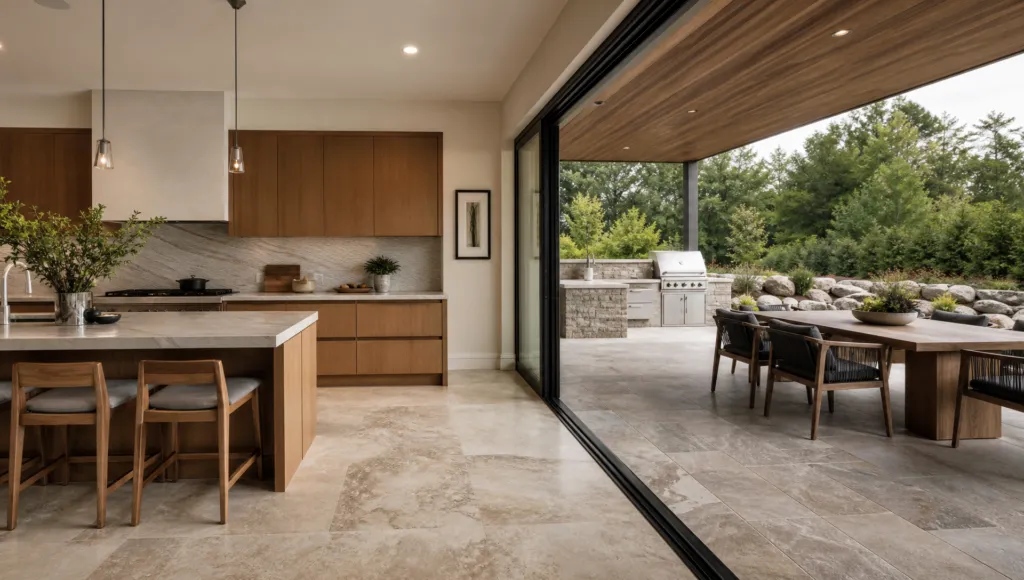
This goes beyond simply adding sliding doors. Designers incorporate natural materials (stone, wood, natural light) that flow visually between inside and outside. Flooring transitions smoothly. Color palettes echo landscape elements. This aesthetic coherence creates psychological continuity rather than jarring separation.
Functionally, your kitchen’s reach expands into adjacent outdoor zones. Counter space, dining surfaces, and preparation areas extend outside. Your kitchen becomes a hub connecting interior family space with exterior entertainment areas. Cooking and gathering naturally flow between environments.
This reflects fundamental shifts in how we live. Modern kitchens function as gathering hubs rather than purely utilitarian work zones—mirroring how living rooms evolved from formal parlours into comfortable spaces where families actively congregate. Contemporary kitchens are designed for active use and connection, accommodating multiple simultaneous activities (cooking, dining, socializing, working). By merging indoor-outdoor aesthetics, designers create environments where these diverse functions occur naturally across expanded spatial domains.
Technology Is Quietly Transforming How Kitchens Function
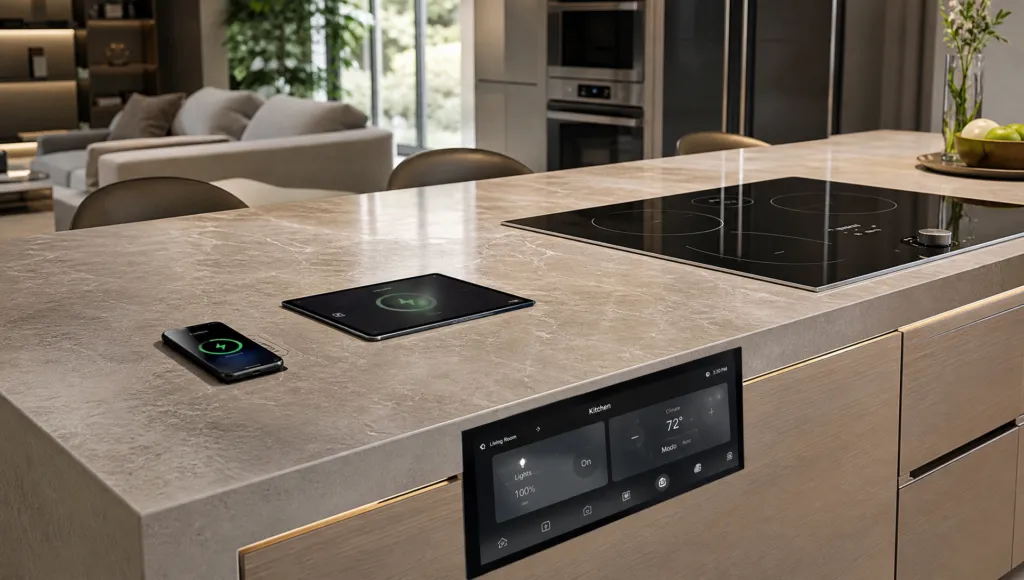
Beyond visible appliances, designers are systematically embedding technology that modernizes your kitchen’s fundamental role. Integrated charging stations (built into islands and countertop edges) acknowledge that kitchens function as digital command centers where families gather with phones, tablets, and laptops.
Smart technology integrates lighting, appliances, and climate control into unified systems that respond to your household rhythms and preferences. Sustainable solutions like induction cooktops provide precise temperature control and superior energy efficiency compared to traditional ranges. Heat pump technologies offer sustainable climate management.
These additions serve practical purposes while revealing a larger truth: kitchens are evolving beyond cooking-centric spaces into true command centers where families manage household operations, maintain digital connectivity, and coordinate daily activities. Your kitchen is no longer primarily a cooking zone but rather a multifunctional hub where culinary work, family management, digital engagement, and social connection converge into a single, sophisticated environment.
Growing up between Spain and the US, Monica grew up surrounded by skylines mixed with preserved centuries old building, and glittering, modern skyscrapers that pierced the sky. While all builds start with lines, themes, and materials, it's how they come together that an ornate painting that drew Monica into architecture. Her dream? To help build a world where both modern architecture and natural spaces can co-exist with eco-friendly, biophilic builds that draw the eye while being environmentally neutral.