Most bathroom renovations fail for a surprising reason: homeowners chase multiple design trends at once, creating visual chaos that feels dated within months.
Others swing to sterile all-white palettes, leaving personality behind. These conceptual missteps waste thousands on materials and labor, resulting in spaces that age poorly.
Here’s what actually works: interior designers know that intentional color application creates cohesive experiences rather than confusion.
Successful bathrooms balance thoughtful color layering with restraint—combinations that evoke specific moods and feelings.
The key is moving away from trend-driven styling toward timeless designs anchored in principles that outlast fleeting cycles. Traditional elements, when implemented thoughtfully, offer surprising longevity.
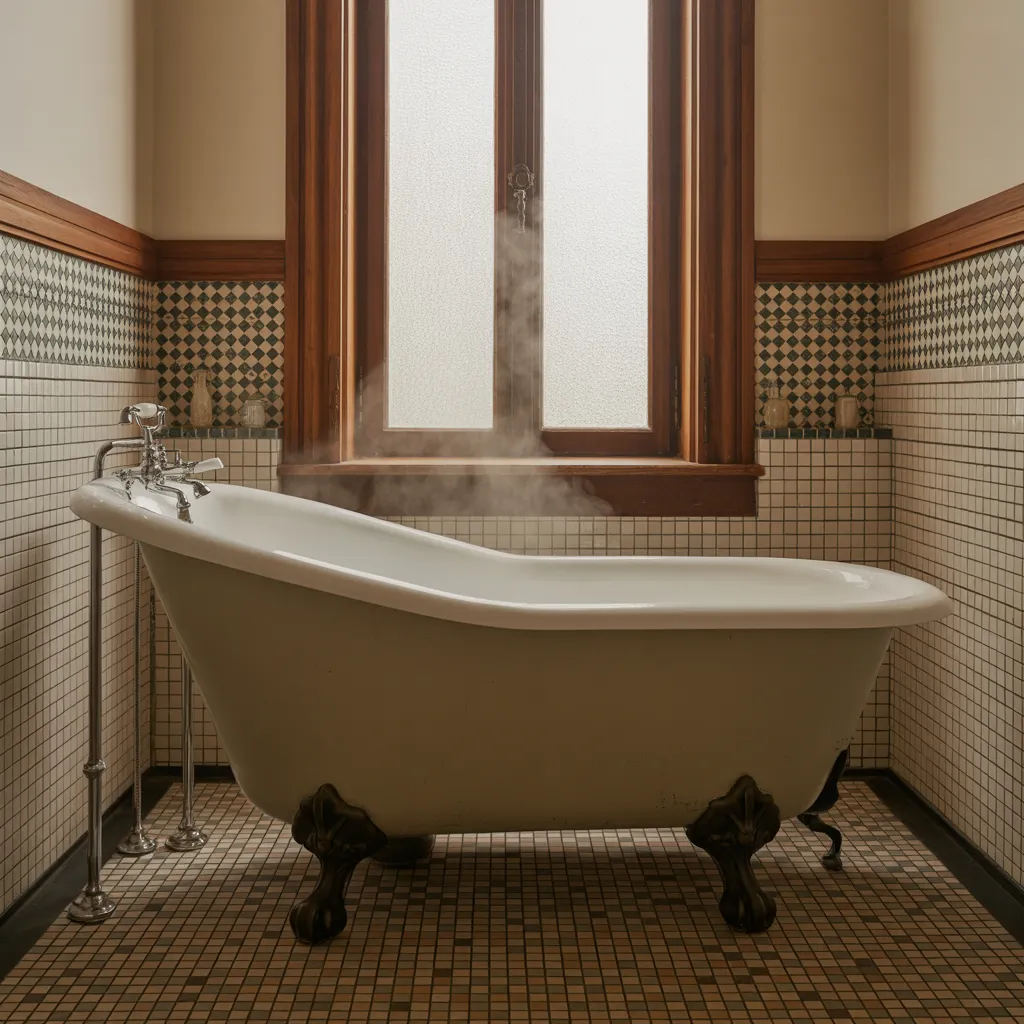
Think Art Deco details, classic subway tile patterns, or architectural features that reference established aesthetics rather than current Instagram trends.
The real opportunity isn’t following what’s popular—it’s creating bathrooms that genuinely improve your daily life while maintaining their appeal for years.
Why Your Gray-and-White Bathroom Is Already Looking Outdated
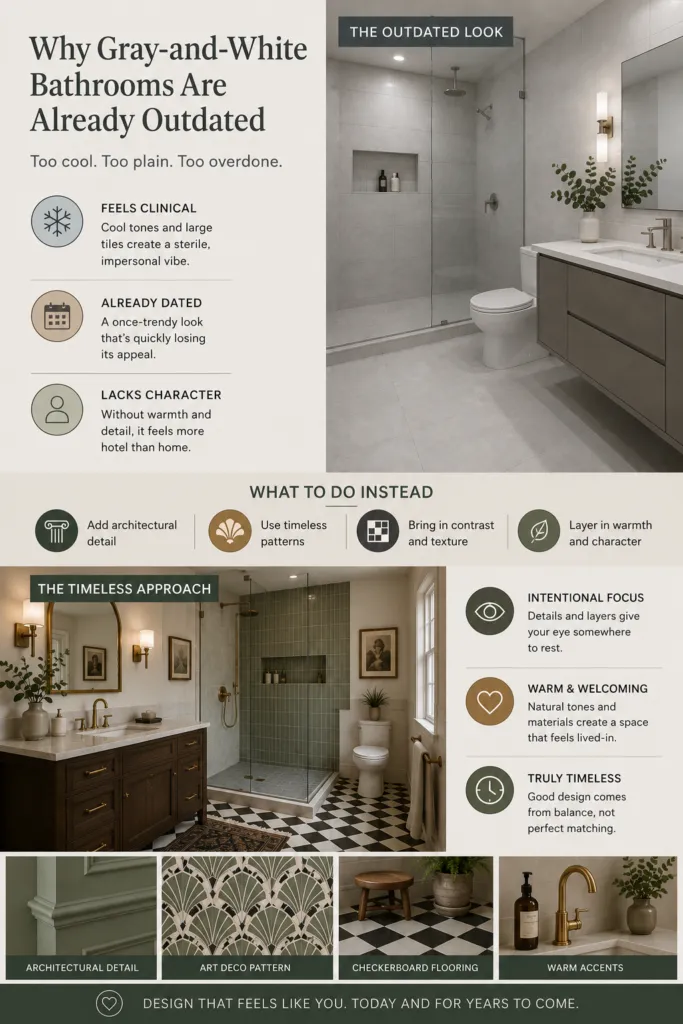
That cool-toned gray-and-white palette with oversized porcelain tile? It feels clinical, not sophisticated. Without warmth and character, these spaces end up resembling hotel bathrooms rather than personal sanctuaries.
Color theory explains why: excessive neutral tones trigger psychological responses of emptiness and disconnection. This trend, which dominated bathrooms five years ago, is already descending into dated territory.
Forward-thinking designers are reviving what works instead: architectural detailing, Art Deco geometric patterns, checkerboard flooring, and warm accents.
These approaches replace monotonous coordination with curated layering, allowing your eye to rest on intentional focal points rather than scanning an endless sea of neutrals.
The lesson homeowners are learning the hard way: timeless design rarely emerges from perfect coordination. It thrives on subtle complexity, warmth, and deliberate interplay between complementary details—those touches that make a space feel lived-in and refined.
Materials That Actually Improve With Age (Unlike What Dominated Last Decade)
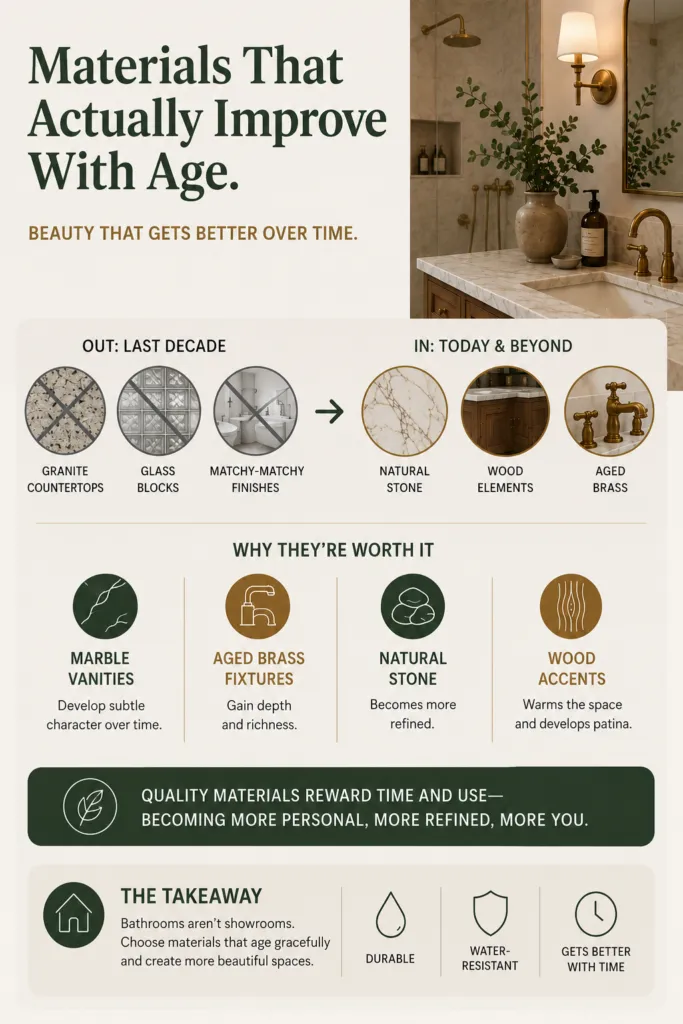
Design professionals are abandoning solutions that dominated the past decade—granite countertops, glass blocks, and perfectly coordinated finishes—in favor of materials that develop character over time.
The shift celebrates warm, organic materials with durability and water-resistance: natural stone with visible veining, wood elements, and aged brass.
Here’s what makes them special:
- Marble vanities develop subtle wear patterns that add authenticity and soul.
- Aged brass fixtures gain depth that polished chrome simply can’t achieve.
- Natural stone becomes increasingly refined with proper maintenance.
- Wood accents warm bathrooms while developing beautiful patina.
This philosophy challenges the perfectionism of earlier decades when spotless surfaces were paramount. Instead, quality materials reward time and use—they become more personal, more refined, more you.
The takeaway: bathrooms aren’t showrooms; they’re lived-in spaces that benefit from thoughtful maintenance. By choosing materials that age gracefully, you create increasingly sophisticated personal spaces where imperfection flourishes naturally.
Why Your Bathroom Feels Exhausting (Even When It Looks Perfect)
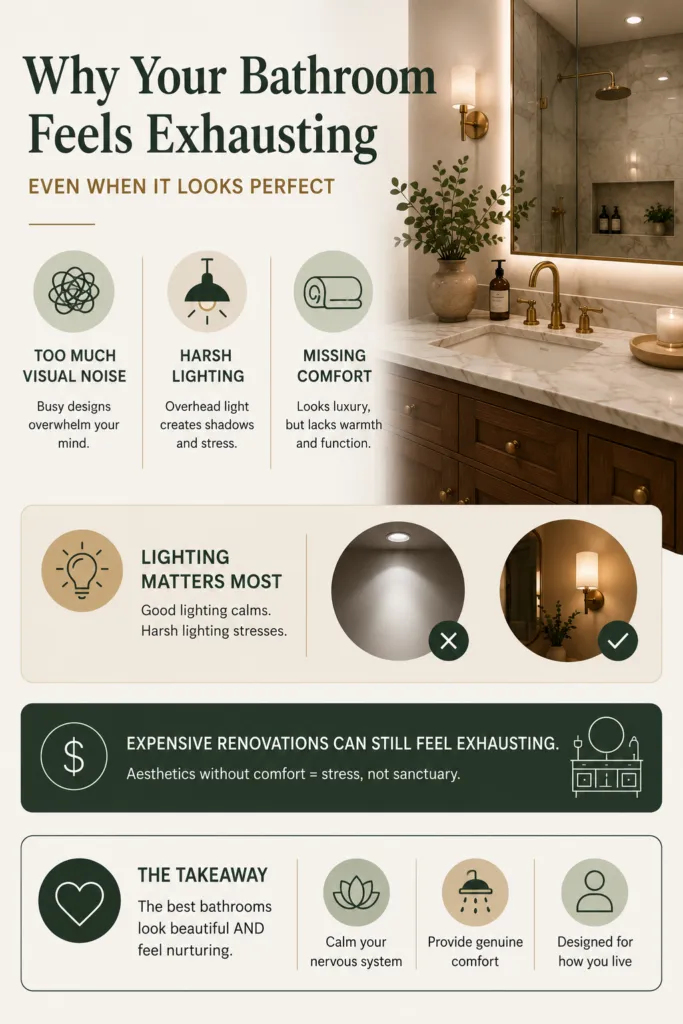
Here’s the disconnect: visual perfection doesn’t guarantee comfort or satisfaction. High-end bathrooms often feel uncomfortable despite their spectacular appearance because they overwhelm your senses rather than calm them. Three culprits emerge repeatedly:
- Visual noise: Too-busy designs demand constant mental engagement—your brain works to decide what to focus on.
- Harsh lighting: Overhead fixtures create unflattering shadows while activating stress responses.
- Missing comfort luxuries: Premium finishes without practical warmth and functionality Lighting deserves special attention. Strategic placement enhances aesthetics and sets mood.
Harsh fixtures? They create stress rather than relief. Even expensive renovations ($30,000–$50,000) with premium finishes and custom cabinetry) often feel exhausting because aesthetics were prioritized over sensory experience and practical comfort.
Truly successful bathrooms must accomplish both: they look beautiful and feel nurturing. They calm your nervous system rather than activating it, providing genuine comfort rather than visual excess.
Budget Breakdown: Small Investments, Profound Impact
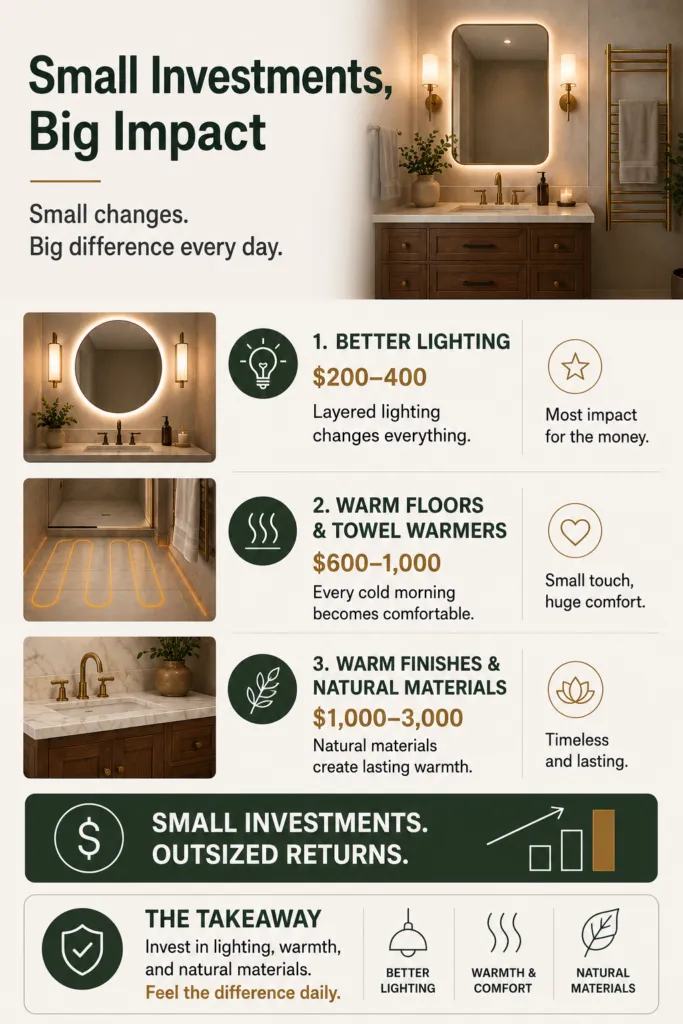
Here’s what experienced designers have learned: transformative bathroom improvements often involve subtle interventions rather than expensive overhauls. Invest modestly here and see outsized returns:
- Layered Lighting ($200–400): Task lighting around mirrors, ambient general illumination, and accent lighting fundamentally change how your space feels and functions. This single upgrade often matters more than finishes costing ten times as much.
- Heated Floors & Towel Warmers ($600 – 1000): These transform cold mornings into comfort moments—small touches that repeatedly remind you why this bathroom works.
- Warm Finishes & Natural Materials: ($1000 – 3000) Wood accents and warm-toned fixtures create spa-like atmospheres people genuinely crave.
These elements rarely appear in design portfolios, yet they generate profound impact on your daily experience. Most homeowners spend thousands on visible elements while overlooking transformative touches.
The expert consensus: successful renovations prioritize sensory experience and functional comfort alongside aesthetic appeal.
By investing modestly in lighting, temperature control, and tactile warmth—while avoiding outdated solutions—you create spaces delivering genuine value far beyond their initial cost.