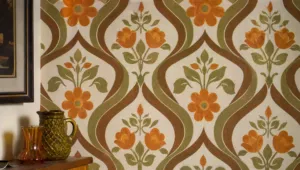
Walk into most contemporary kitchens and you’ll notice something unsettling: despite all the glossy finishes and premium appliances, the space feels oddly disconnected. The culprit? A design philosophy that prioritized efficiency and visual cleanliness over warmth and human comfort. Bright overhead fixtures flood kitchens with unflattering, sterile light, while streamlined cabinetry leaves walls looking sparse and uninviting.
This sterile aesthetic emerged from a decade-long trend celebrating minimalism and maximum illumination. Designers believed that brighter meant better—that abundant light would make kitchens feel more spacious and modern. What actually happened was far less appealing: kitchens transformed into functional boxes that looked impressive in magazine spreads but felt unwelcoming in real life.
Color is a powerful design tool that affects how humans think, feel, and perceive space. It can make a room feel calm, cheerful, comfortable, or even stressful. Contemporary kitchens often suffer from a monotonous color palette paired with harsh lighting, creating an environment that psychologically registers as uninviting despite its technical excellence. The combination of clinical light and neutral surfaces strips kitchens of emotional resonance—turning spaces that should be gathering hubs into something that feels more like a laboratory.
The shift is now undeniable. Forward-thinking designers are deliberately rejecting the “more is better” mentality. They’re recognizing that a kitchen’s emotional resonance matters just as much as its layout or appliance quality. Rather than pursuing full-scale renovations, many designers now advocate for strategic upgrades that transform existing spaces—upgrading statement lighting, refreshing cabinet finishes, and optimizing fixture details to achieve warmth without starting from scratch.
The result? A wholesale reimagining of how kitchens should feel, informed by the understanding that true modernity isn’t about stripping away comfort—it’s about creating spaces that blend function with genuine human warmth and personality.
The Tactile Revolution: Why Touch Is The New Visual in Cabinet Design
Kitchen cabinets have traditionally been treated as visual backdrops—surfaces you look at while cooking. Contemporary design is shattering that assumption by treating cabinetry as fully sensory experiences. Running your hand along a cabinet door is now as important as admiring its color from across the room. This tactile-first approach fundamentally changes how homeowners interact with their kitchens.
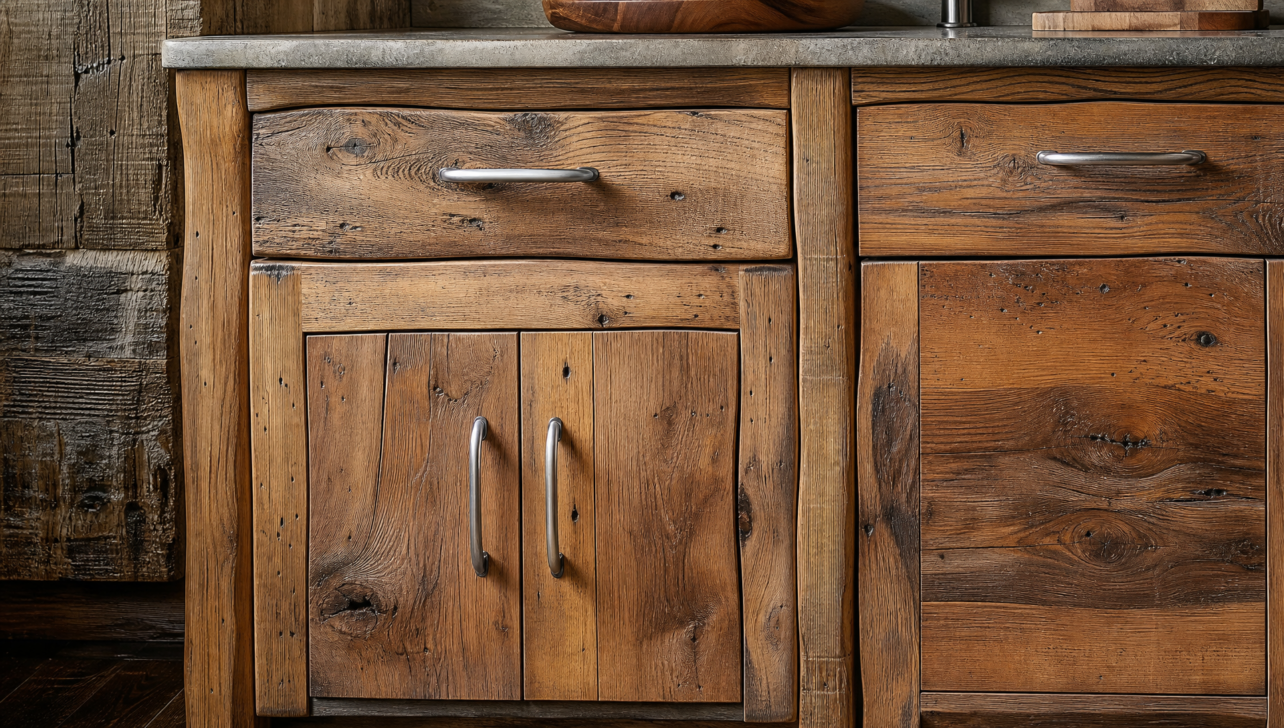
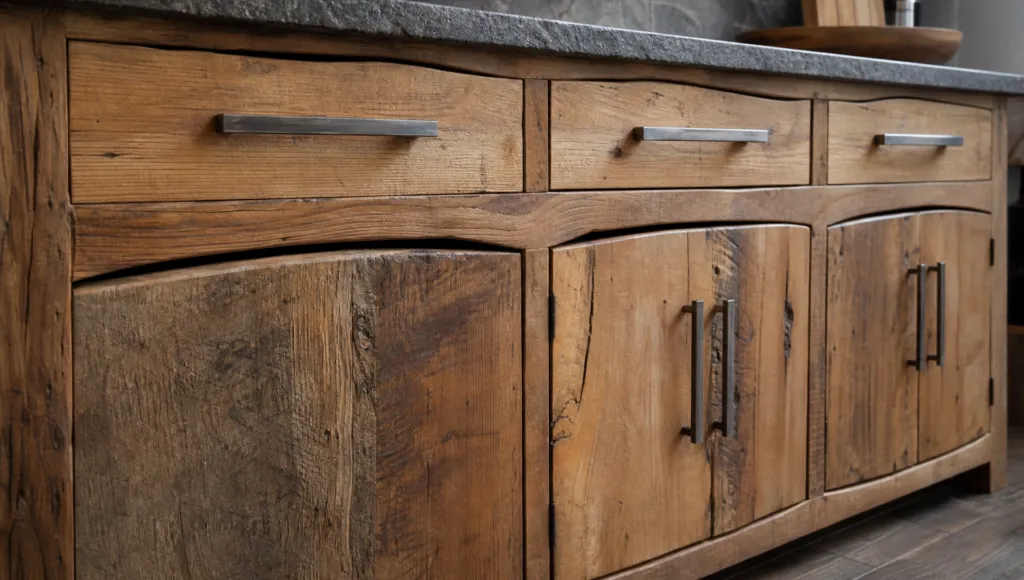
Natural wood patina, organic curved edges, and textured surfaces are becoming design statements rather than signs of aging or neglect. Materials like reclaimed wood, brushed metal, and hand-finished stone bring character and depth that smooth, perfectly uniform surfaces cannot achieve. These imperfections tell stories—they age beautifully and develop personality over time. Designers are increasingly celebrating textures like hammered wood finishes and hand-carved walnut, which offer sensory richness that mass-produced surfaces simply cannot match.
This tactile revolution aligns with how color and material selection influence human perception. Interior designers now understand that texture and finish aren’t merely aesthetic choices but emotional ones. A brushed metal hardware paired with warm wood doesn’t just look different—it feels different, engaging the senses in ways that support the kitchen’s transformation from purely functional to genuinely inviting.
Unconventional material pairings deepen this sensory experience. Mixing warm wood with cool concrete, pairing matte finishes with subtle sheen, or combining soft textured panels with sleek hardware creates visual interest and tactile discovery. This celebration of authenticity and imperfection marks a cultural shift away from perfection-obsession toward embracing natural aging. Your kitchen becomes more distinctly yours with every passing year.
Layered Lighting: The Design Secret That Makes Everything Look Better
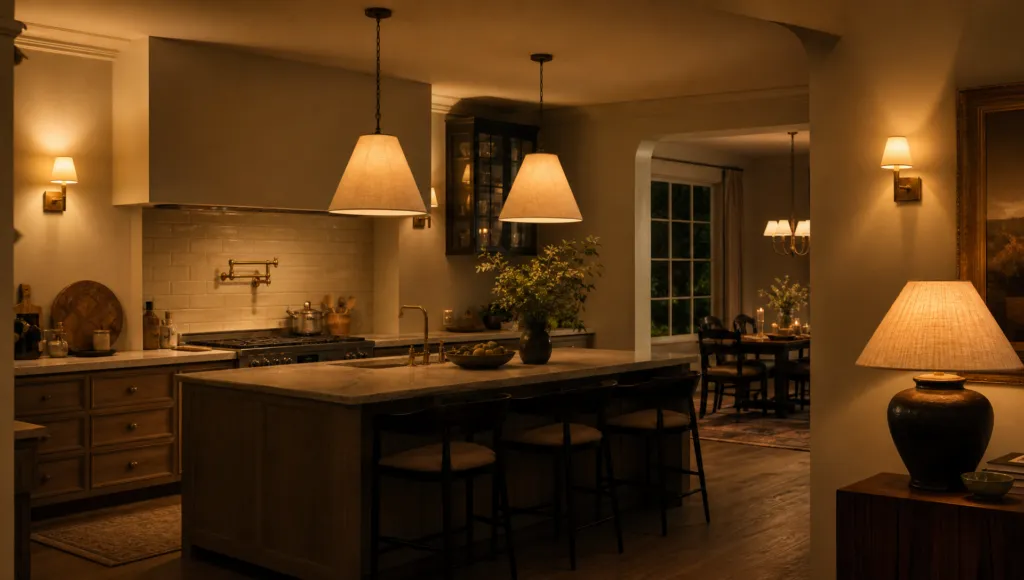
The breakthrough in kitchen design isn’t about cabinets or appliances—it’s about light. Specifically, it’s about abandoning the single overhead fixture and embracing a layered approach that creates warmth and flexibility. Contemporary kitchens now feature multiple light sources working in concert: ambient lighting, task lighting, and accent lighting all tuned to warm color temperatures around 2700K (the same warm glow as candlelight).
Warm 2700K light creates psychological comfort that brighter, cooler light simply cannot match. When combined with diffused illumination through frosted glass, soft linen shades, and artisanal fixtures, this layering transforms the kitchen into a series of inviting pockets rather than a uniformly bright box. Strategically placed table lamps, pendant lights with fabric shades, and dimmable wall sconces work together to create ambient pools of warmth throughout the space.
Dimmer switches are essential to this strategy. Cooking dinner at 6 PM might call for brighter, more focused task lighting, while evening relaxation demands softer ambient tones. You’re essentially creating a kitchen that adapts to your life rather than forcing you to adapt to the space.
For homeowners seeking to elevate existing kitchens, upgrading to statement lighting fixtures and introducing layered lighting systems represents one of the most transformative yet cost-effective improvements available. Strategic placement of windows and natural light sources further enhances this approach, reducing reliance on artificial lighting during daytime hours while maximizing the psychological benefits of natural illumination.
Color Blocking and Natural Patina: The Unexpected Comeback Everyone’s Getting Wrong
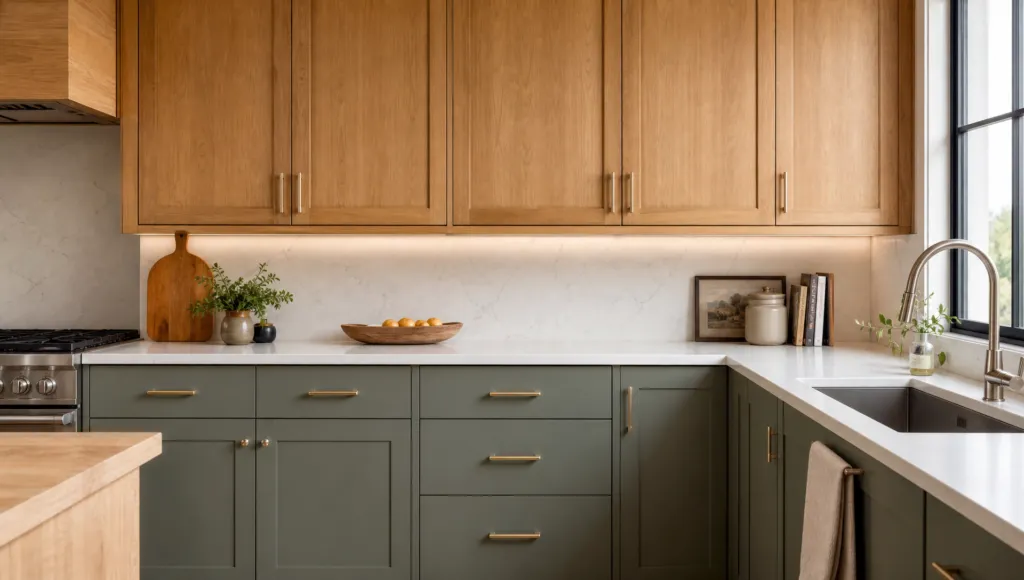
Many homeowners expect 2026 kitchen trends to mean bold, saturated cabinet colors dominating every surface. The reality is far more sophisticated and, ironically, more timeless. Contemporary design celebrates restrained color strategies that feel intentional rather than trendy. Monochromatic statements, warm neutrals, and strategic color blocking create kitchens that won’t feel dated in five years.
Color operates as a powerful design tool with significant psychological implications. Certain color combinations create calm, while others inspire energy or even stress. The trend toward unexpected warm accents demonstrates how strategic color choices can enhance design impact without requiring full-scale renovations. A carefully placed warm wood tone or subtle accent can completely shift a kitchen’s emotional resonance, proving that color psychology remains central to thoughtful design.
Natural wood aging plays a starring role in this aesthetic. Rather than hiding the patina that develops on wood over time, designers now showcase it as a feature. A cabinet that develops subtle color shifts and surface characteristics isn’t failing—it’s maturing gracefully. This philosophy extends to mixed finishes and materials within the same cabinetry system. You might pair warm natural oak with cool-toned concrete, or soft matte wood with brushed metal hardware, creating visual interest through intentional contrast.
Modular cabinet systems enable unprecedented personalization. Homeowners can select different materials, finishes, and colors for different sections, creating bespoke combinations that reflect genuine style preferences. A kitchen might feature natural wood for upper cabinets, matte finish for lower ones, and integrated glass panels in strategic locations—a combination that feels deliberately curated. Contemporary designers increasingly recommend investing in high-quality, timeless materials like solid oak cabinetry and honed quartzite countertops—materials that withstand trends and develop character organically over years of use.
How Fluid Forms and Glass Elements Are Redefining Kitchen Personality
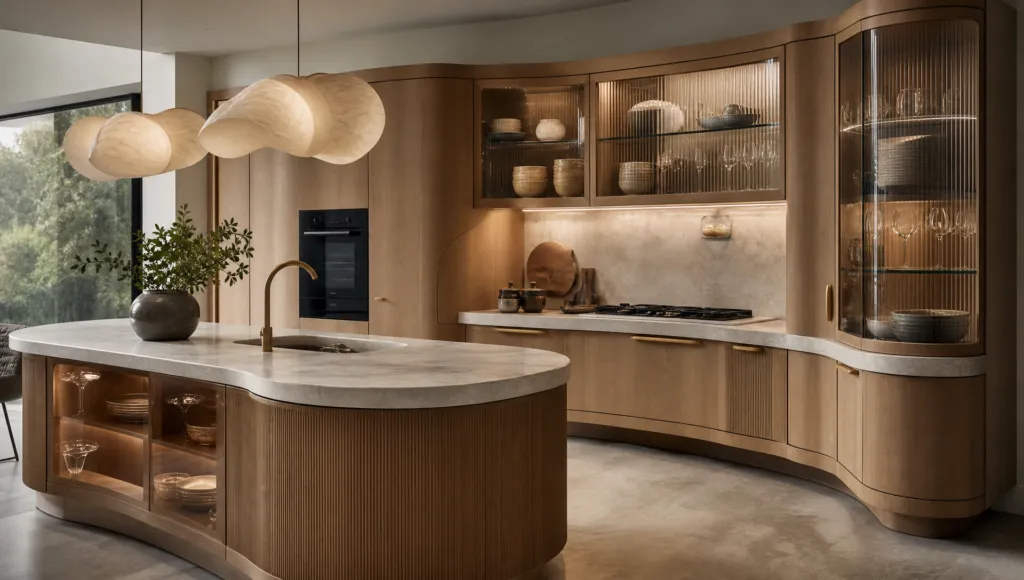
Kitchen cabinetry is abandoning rigid geometry. Organic curves, flowing edges, and soft angles are replacing the boxy, rectangular forms that dominated minimalist design. These fluid forms, combined with strategic glass design elements, create visual movement and personality that transforms kitchens from purely functional spaces into genuine expressions of personal style.
Glass elements have evolved far beyond simple cabinet doors. Contemporary kitchens feature glass panels integrated thoughtfully throughout cabinetry systems—sometimes forming geometric patterns, sometimes providing windows to showcase beautiful dishware or cookbooks. These elements invite you to display what you love while maintaining clean visual lines when closed.
Mixed materials create layered visual interest throughout the space. Wood combined with glass, metal paired with stone, and matte finishes contrasting with subtle sheen work together to prevent visual monotony. Reflective finishes and mirrored surfaces are increasingly incorporated to expand spatial perception and maximize how natural and artificial light travels throughout the kitchen.
Fluid lighting fixtures complement these architectural choices perfectly. Rather than rigid geometric pendant lights, contemporary kitchens feature soft, organic fixture shapes that echo the cabinet design. The entire kitchen becomes a cohesive artistic statement where form, material, light, and color work in concert. Your kitchen no longer feels like a collection of separate elements but rather a unified space that reflects your personality and values.
The Kitchen Island as Social Hub: Designing Spaces for Connection
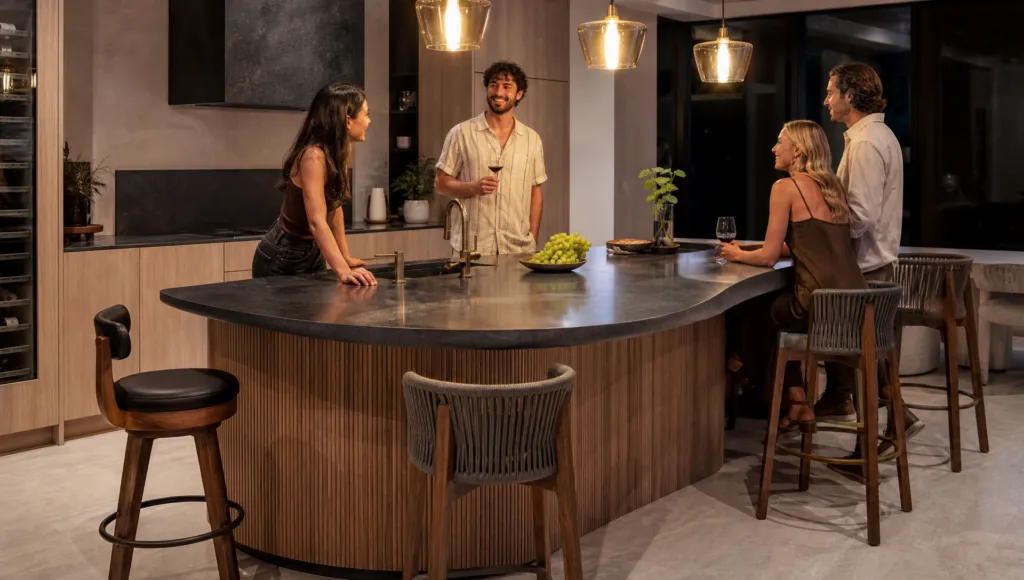
Beyond aesthetics, contemporary kitchen design recognizes that islands have evolved from purely functional preparation surfaces into genuine social gathering spaces. Multifunctional islands now combine workspace, storage, and dining in seamless configurations, enabling the kitchen to serve as the heart of home life. This shift reflects changing attitudes about how families and guests interact in residential spaces.
These social islands incorporate the same sensory and material principles driving the broader kitchen revolution. Organic edges, mixed material finishes, and layered textures make islands inviting spaces where people want to linger. Strategic seating arrangements, often featuring bar stools at varying heights, accommodate both quick meals and extended social gatherings. Lighting design becomes particularly crucial—ambient pendants positioned above the island create intimate gathering zones while allowing flexible brightness adjustment.
Concealed cabinetry integrated into island design maximizes functional storage while maintaining clean visual lines. Pocket doors, floor-to-ceiling timber panels, and hidden compartments allow islands to serve as organizational powerhouses without sacrificing the fluid, sculptural forms that define contemporary aesthetics. This balance between hidden functionality and beautiful form represents the maturation of modern kitchen design—spaces that work beautifully while supporting the genuine human connections that make houses into homes.