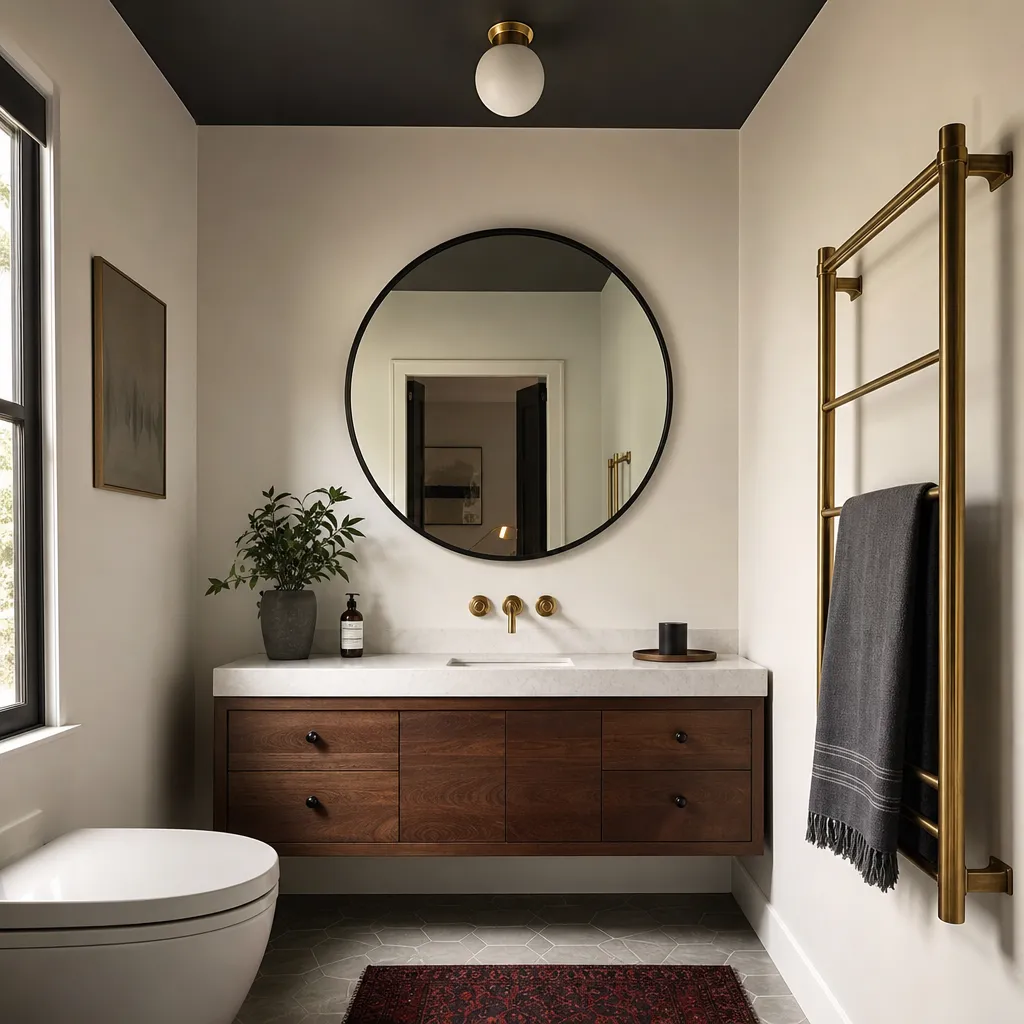
For decades, interior designers told us the same thing: keep small bathrooms minimal, light, and neutral. But today’s leading designers are completely reimagining this advice—and they’re discovering something remarkable. Bold, intentional design choices actually make tiny spaces feel larger and more luxurious than timid, whitewashed approaches ever could.
This shift challenges everything homeowners thought they knew about making cramped bathrooms feel spacious. When you look at the work of designers like Michelle Squire, Kathy Kuo, and Emily Spanos, a consistent pattern emerges: the most transformative small bathroom projects embrace confident color, strategic lighting, and deliberate fixture placement rather than attempting to minimize everything.
Here’s what’s fascinating: the old wisdom suggested that light colors would open up space and sparse furnishings would create breathing room. Yet in practice, this approach often produces the opposite effect—bathrooms that feel empty, uninviting, and actually smaller. According to contemporary interior design theory, color functions as a powerful compositional tool that fundamentally shapes how we perceive and emotionally respond to spaces.
The pattern in successful renovations is clear: restrained yet bold choices create spaciousness far more effectively than cautious minimalism. This realization has transformed how we think about small bathroom design.
Why Dark Colors Are About to Transform Your Bathroom
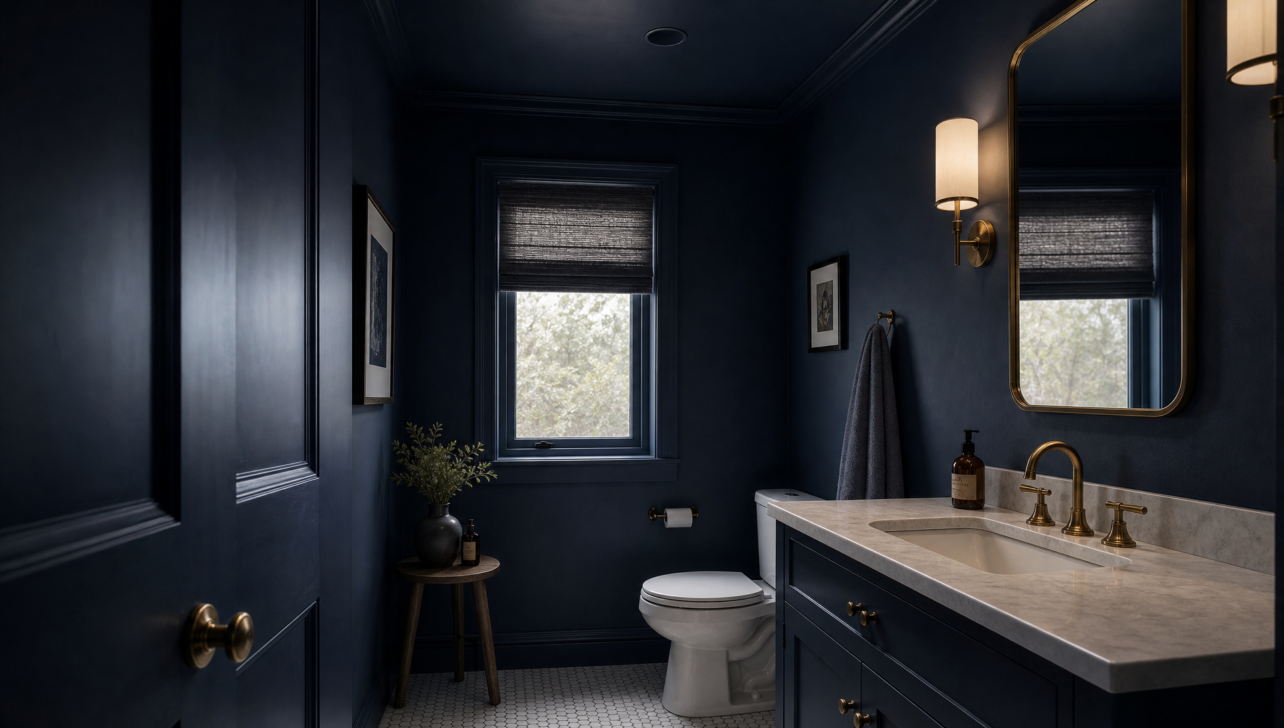
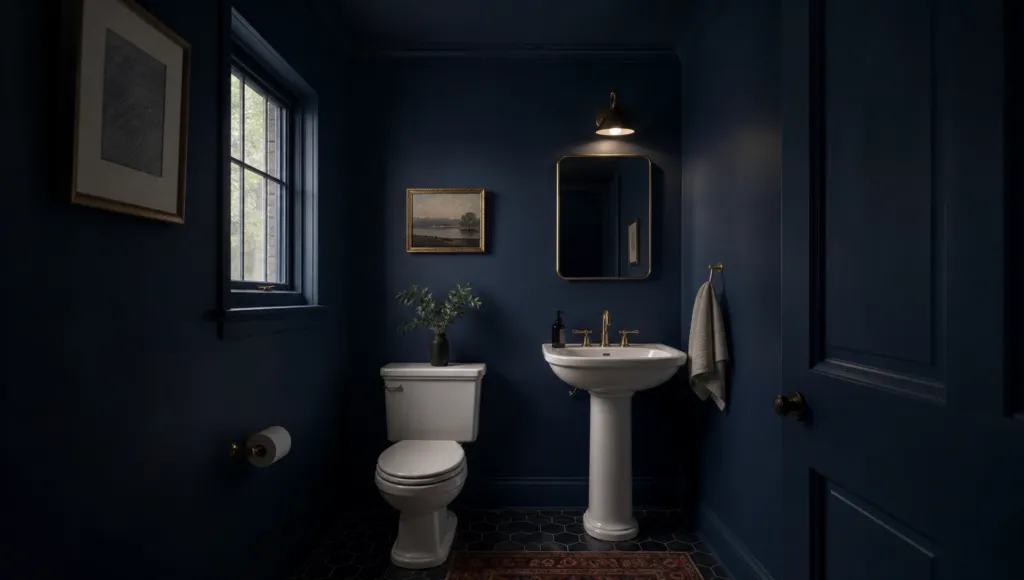
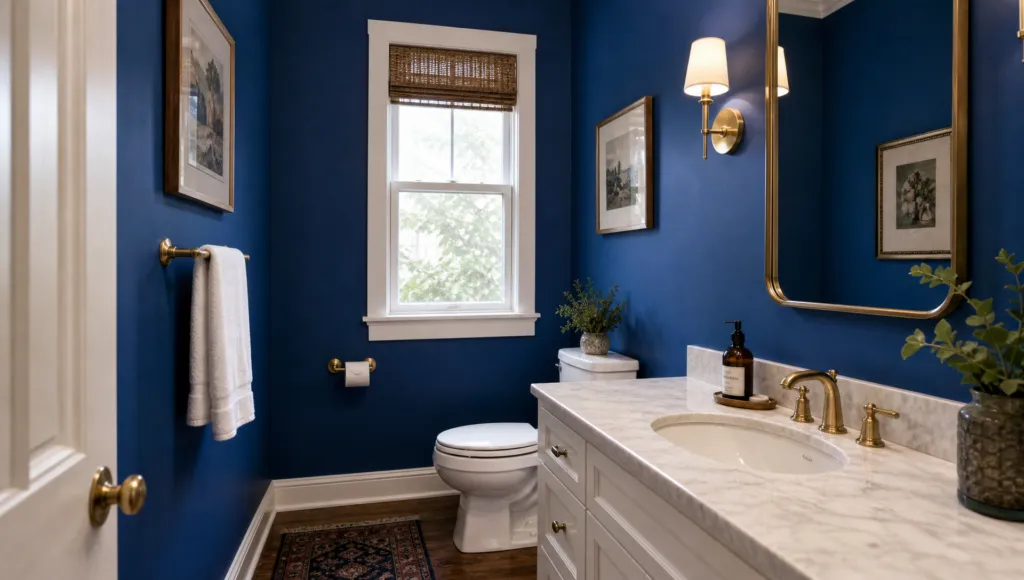
Here’s the counterintuitive part: painting walls, ceilings, and trim in deep hues like navy, burgundy, or charcoal doesn’t shrink a room—it actually expands it visually. Dark, cohesive colors blur room boundaries and create a cocooning effect that tricks the eye into perceiving depth.
The psychology is fascinating. Our eyes naturally search for visual boundaries and edges. In a small, neutral bathroom, your gaze lands on corners, seams, and the abrupt meeting points between walls and fixtures. These visual breaks make you acutely aware of the room’s smallness. Dark paint collapses these boundaries—your eye simply can’t detect where one surface ends and another begins.
When you paint walls, trim, and even the ceiling the same deep tone, something remarkable happens: the room no longer feels cramped. Instead, it feels intentional, luxurious, and paradoxically larger. Try this approach and you’ll notice the absence of visible edges creates an illusion of infinite depth.
For added sophistication, consider pairing rich wall colors with lighter ceilings to draw the eye upward, or incorporating patterned wallpaper with high-gloss finishes. This layered approach reinforces depth and intentionality, transforming small bathrooms into intimate sanctuaries rather than confined boxes.
The Mirror Trick That Architects Have Been Using for Centuries
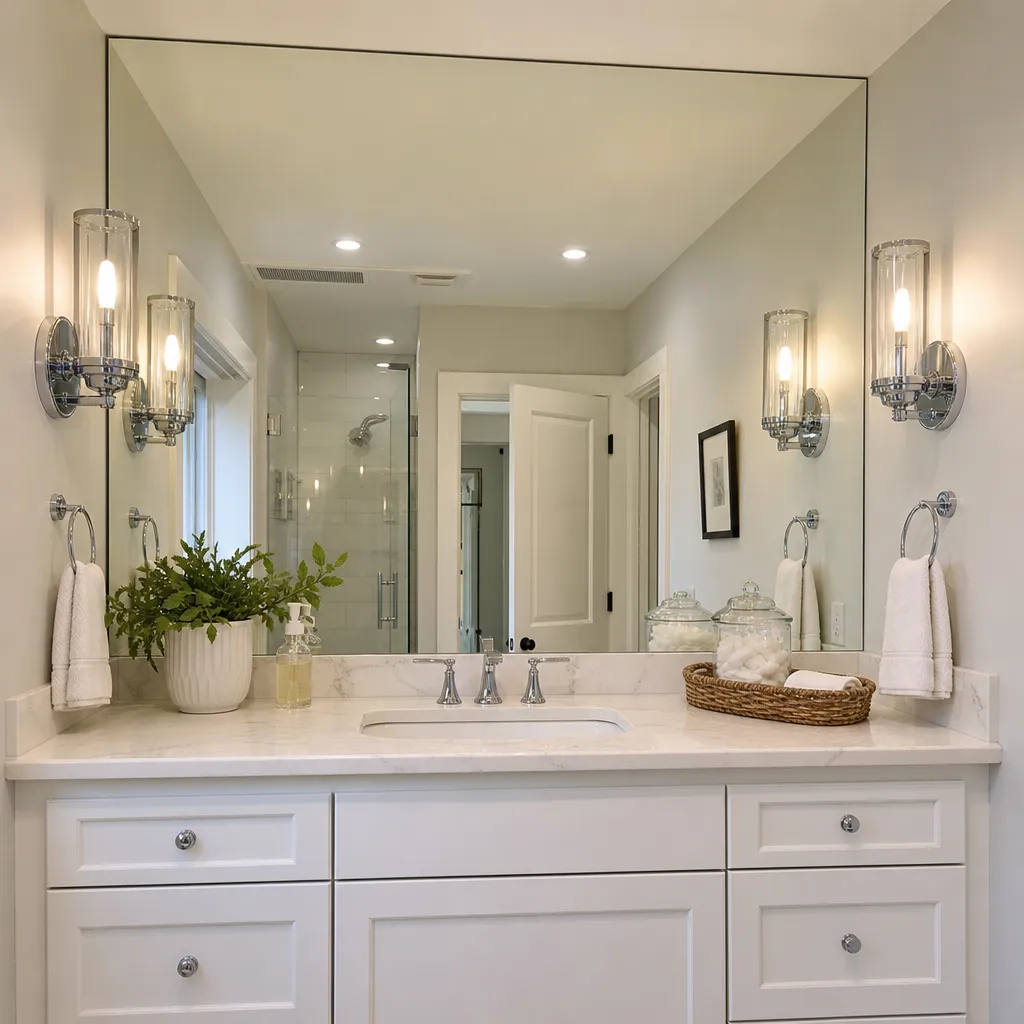
Oversized mirrors aren’t just reflective surfaces—they’re architectural tools that multiply light and space simultaneously. When you span a mirror across your entire vanity width or even an entire wall, it bounces light throughout the space while creating an illusion of doubled dimensions.
The key lies in scale and placement. A small, traditional mirror above a pedestal sink barely registers. But install a mirror extending from one wall to another—or spanning floor-to-ceiling behind the vanity—and something shifts. Your brain suddenly processes two versions of the bathroom simultaneously: the real space and its reflection. You perceive twice the volume.
Vanity sconces placed at eye level on either side of the mirror amplify this effect dramatically. Instead of overhead lighting that casts shadows and emphasizes edges, flanking sconces bounce light off the mirror surface and distribute it evenly throughout the space. This dual-purpose lighting enhances aesthetics while setting the mood for your bathing experience.
For added functionality, mirrored storage cabinets maintain visual expansion while providing hidden storage. Backlit mirrors with integrated LED lighting offer another sophisticated option, delivering both aesthetic appeal and practical illumination. This ancient principle remains one of the most effective small-space strategies available today.
How Frameless Glass Revolutionizes Tiny Bathroom Layouts
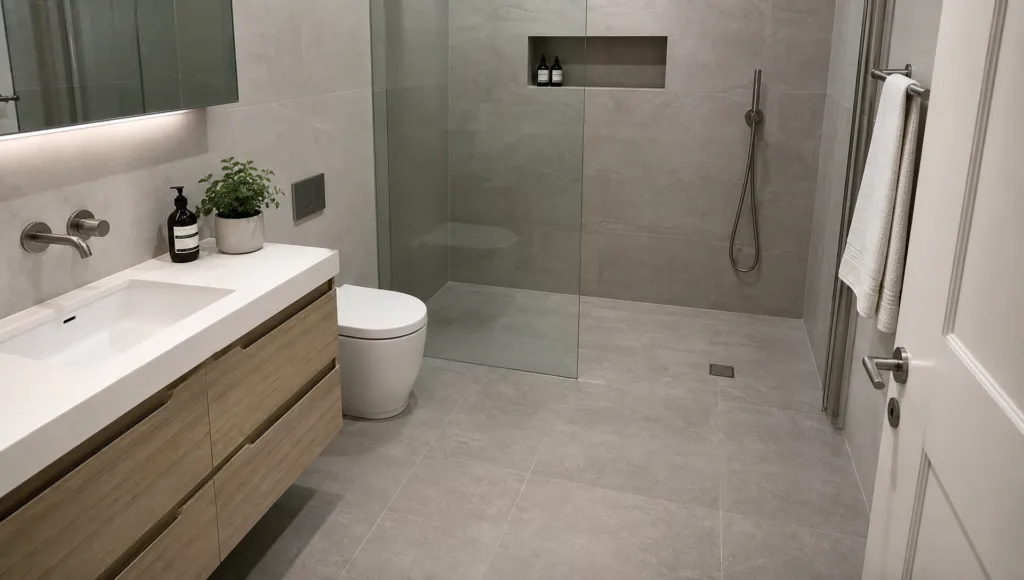
The shift from opaque shower curtains to frameless glass enclosures is transformative for small spaces. When combined with continuous floor tile extending into the shower, this approach eliminates visual stops and maintains the unbroken sight lines that make small bathrooms feel spacious.
Think about what happens visually with a traditional shower curtain: your eye encounters a visual barrier that effectively shrinks the usable space in your mind. With frameless glass, your sight lines continue uninterrupted through the entire bathroom. The shower becomes part of the overall space rather than a separate, enclosed chamber.
Continuing the same floor tile from the main bathroom into the shower amplifies this effect. When there’s no visual demarcation—no tile break or color change—the floor appears to flow seamlessly. Your brain processes the bathroom as one unified space rather than fragmented zones. Patterned tiles extending to the ceiling add dynamic visual interest while maintaining continuity.
On a practical level, sliding or bi-fold doors maximize available floor space by eliminating the swing radius of traditional hinged doors. These seemingly small details create profound spatial perception shifts that transform how you experience the entire room.
Seven Bold Color Palettes That Make Small Bathrooms Feel Luxurious
Forget pastels and soft neutrals. Today’s designers are championing rich, confident colors that make small bathrooms feel sophisticated and spacious. Here are the palettes driving the trend:
Cobalt Blue: Designer Jamie Bush uses fully color-drenched walls inspired by early modernism’s embrace of primary colors, creating transformative energy.
Deep Peach: Roman Alonso selected this warm tone for its flattering glow in brightly lit spaces—unexpected yet luxurious.
Burgundy: Cecilia Casagrande used burgundy shower tiles to create a rich, moody bathroom inspired by Art Deco aesthetics.
Black: Works beautifully in well-lit spaces. Try darker shades on lower walls to create visual depth through two-tone effects.
Layered Pink: Sophie Van Winden layers different shades of pink, creating nuanced interiors perfect for small bathrooms seeking softness.
Green: Connotes freshness and relaxation. Designers use strategic color blocking to create perceived depth.
Teal: Strikes a balance between blue and green—neither too dark nor too light—ideal for dynamic energy without overwhelming the space.
Each bold tone requires thoughtful lighting to truly shine. Combine natural and artificial light sources to enhance colors and let them appear vibrant. Monochromatic palettes—varying shades of a single color—offer another sophisticated approach, creating visual continuity that enhances spaciousness.
The Floating Vanity Secret That Changes Everything
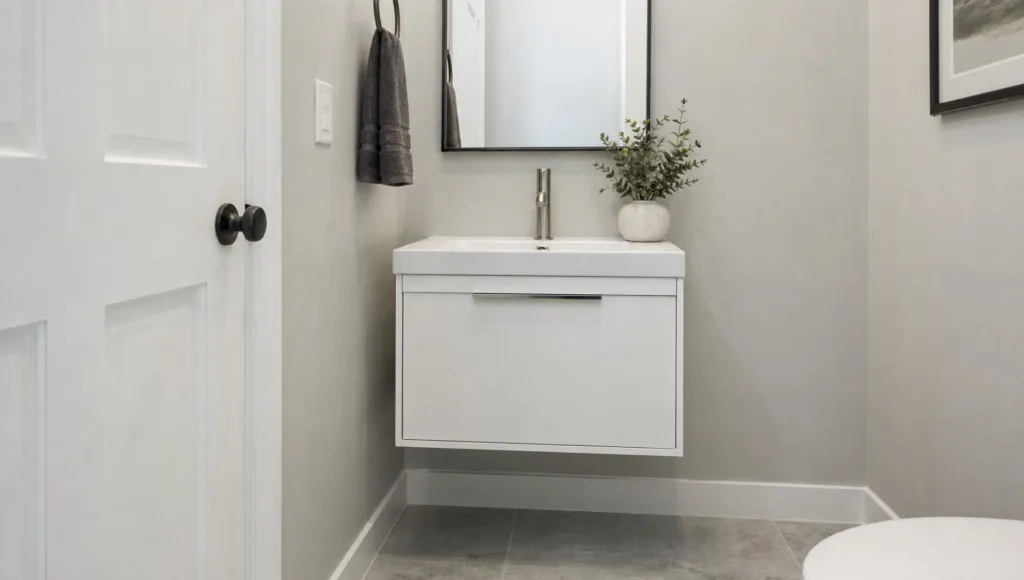
Here’s a straightforward but profound principle: when you see visible floor space, your brain processes that as spaciousness. A vanity that sits on the ground visually consumes floor area. A floating vanity, suspended inches or feet above the floor, allows sight lines to continue beneath it. That small visual gap signals openness to your brain.
Fixture scale matters equally. Large, ornate vanities with elaborate cabinetry overwhelm small spaces. Narrow floating units with minimal storage preserve the room’s visual center. When positioned toward walls rather than protruding into the space, they create a psychological anchor that establishes openness throughout the rest of your bathroom.
This approach fundamentally shifts how you move through and perceive your daily bathing space. By combining floating vanities with oversized mirrors and thoughtful lighting placement, you’re creating a comprehensive design system that maximizes every opportunity in your compact bathroom.
The result? Visible floor space becomes your most valuable design asset, making the entire room feel more open, welcoming, and intentionally designed.
Why Less—But Bolder—Is Actually More in Small Spaces
Here’s the counterintuitive truth designers have discovered: fewer, bolder elements feel larger than cluttered minimalism ever could. Rather than filling space with numerous small items, successful designers carefully select substantial, confident design moves.
Think about the impact of a single dramatic towel fixture positioned prominently compared to multiple small accessories scattered throughout. One feels more luxurious. That’s the principle at work.
Bold color on the ceiling, substantial mirrors, prominent lighting—these elements seem like they should overwhelm a small space, yet they do the opposite. By reducing visual noise and embracing intentional, larger-scale design choices, small bathrooms transform into intimate, sophisticated retreats.
You’ll notice the difference: a richly colored ceiling, strategic lighting, and confident fixture choices make your bathroom feel spacious precisely because they’re designed with deliberate clarity. Luxury doesn’t require square footage—it requires thoughtful, purposeful design choices that integrate aesthetics with practical functionality in every element.
The key is restraint combined with boldness: choose fewer pieces, but make each one count.