A bathroom can begin to feel old long before its fixtures wear out. The problem is rarely one particular color, tile size, or decorating style. More often, the room depends so heavily on a fashionable look that every permanent surface points to the same moment in time.
The best defense is not to eliminate personality. It is to separate long-term decisions from features that are relatively easy to change. Layout, waterproofing, ventilation, plumbing, flooring, and built-in cabinetry should earn their place through function and durability. Paint, towels, mirrors, sconces, and accessories can carry more expressive ideas because they can be updated without another major renovation.
That distinction matters when renovation costs are substantial. The 2026 U.S. Houzz Bathroom Trends Study, based on responses from 1,619 homeowners on Houzz, reported a national median spend of $15,000 for bathroom upgrades completed in 2025. The median reached $25,000 for major remodels in which at least the shower was upgraded. With that level of investment, a bathroom should work well beyond a single trend cycle.
Start With the Room’s Daily Problems
Before selecting finishes, identify what frustrates you about the existing bathroom. Poor storage, inadequate task lighting, an awkward door swing, limited counter space, insufficient ventilation, and difficult-to-clean surfaces will affect daily life more than whether a particular tile is currently fashionable.
This practical focus also reflects what renovating homeowners value. In the 2026 Houzz bathroom study, cleanliness, a spacious shower, and organized storage were the three features most commonly associated with a relaxing renovated bathroom. Those findings do not prescribe a style, but they suggest that ease of use has lasting value.
Plan storage around actual routines. A shallow medicine cabinet may be more useful for everyday items than a deep vanity drawer where small products disappear. Drawers generally make the back of a cabinet easier to reach, while enclosed storage can reduce visual clutter. Allow clear access to plumbing components that may require future maintenance.
Lighting should also support several tasks rather than depend on one decorative fixture. Ambient light helps people move safely through the room, well-positioned light near the mirror supports grooming, and optional dimming can soften the room at night. Fixed electrical work and wet-location fixtures should be selected and installed in accordance with manufacturer instructions and applicable local requirements, with qualified professional help where required.
Do Not Confuse Popularity With Permanence
The original assumption that neutral bathrooms are finished and vivid orange is taking over is too broad. The National Kitchen & Bath Association’s 2026 report, based on a survey of 688 industry respondents, found that 96% identified neutrals as popular bathroom colors. Off-white, light brown or tan, and white led the responses. Sage and olive were the most favored greens, while stronger jewel tones drew less support.
That does not mean every bathroom should be beige or white. It means there is no evidence that homeowners must choose between a sterile neutral room and a fully saturated orange one.
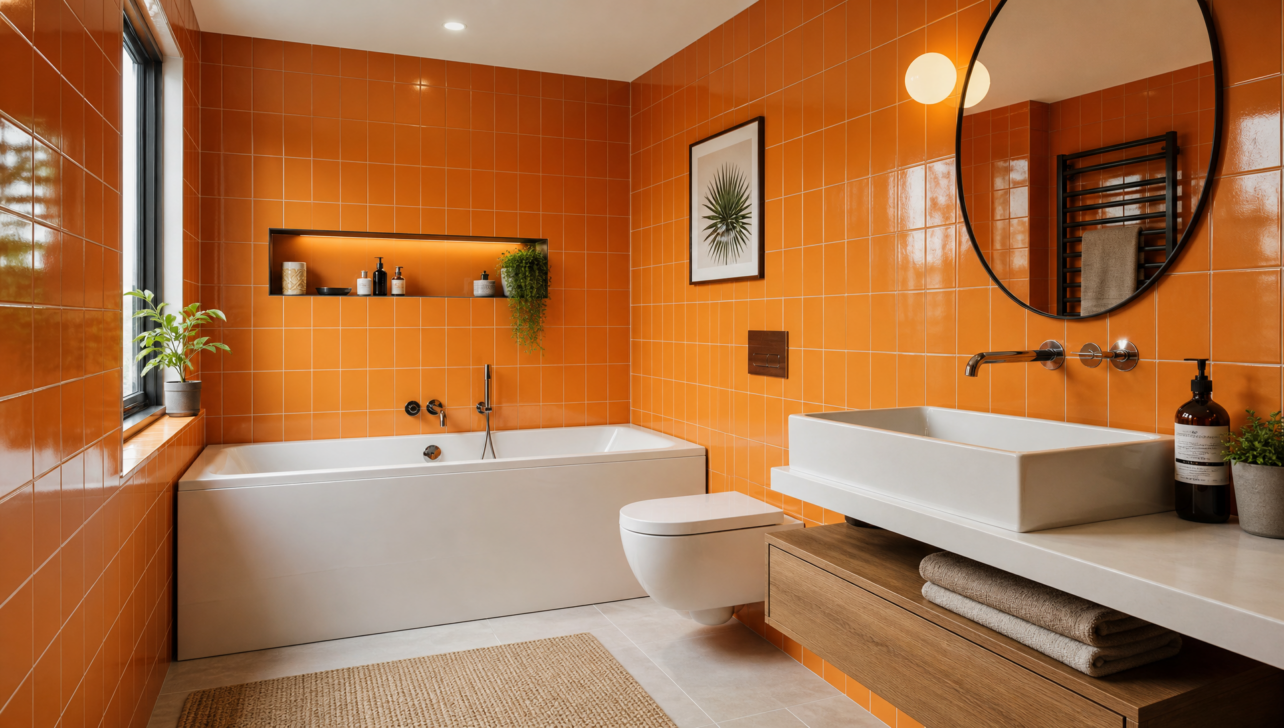
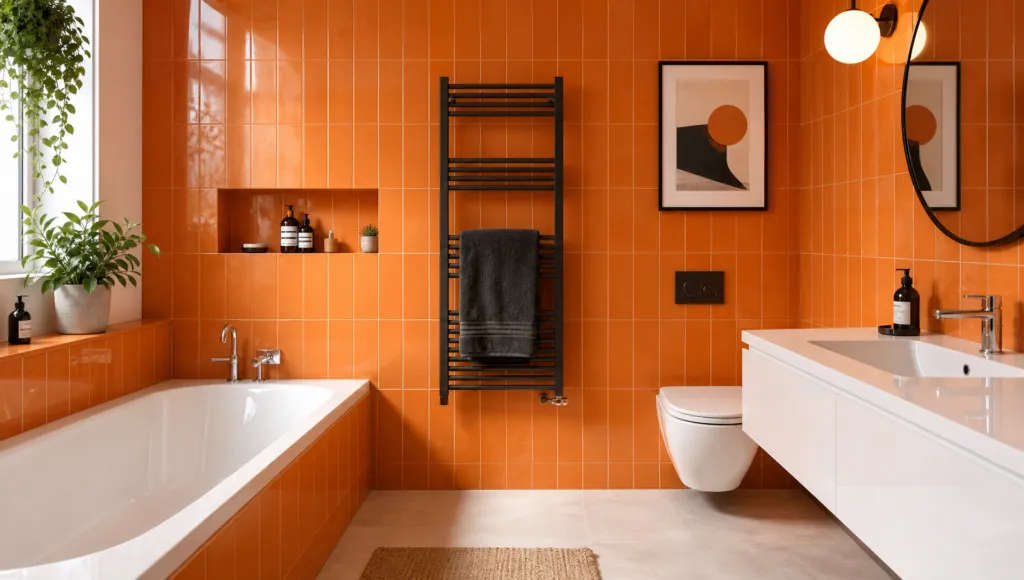
A better approach is to decide how much color commitment suits the project. Orange tile can be warm, energetic, and memorable, but a fully tiled orange shower is expensive to reverse. Homeowners who enjoy the color but are uncertain about a permanent installation can introduce it through paint, towels, artwork, a framed mirror, or a vanity finish. Those who genuinely want an immersive room can use orange tile confidently after reviewing samples in the bathroom’s natural and artificial light.
Neutral rooms need contrast, but color is only one way to provide it. Wood tones, varied surface sheen, visible grain, textured textiles, and warmer lighting can keep a pale bathroom from feeling flat. Conversely, a dark or colorful bathroom still needs visual relief so that mirrors, fixtures, storage, and circulation remain easy to read.
Use Tile for the Room You Have
No tile format is automatically timeless or dated. Large-format porcelain does not inherently make a bathroom look commercial, and small or handmade-looking tile does not guarantee character.
In fact, the NKBA survey found strong professional interest in large-format flooring, partly because respondents prioritized durability, practicality, and fewer grout lines. The right choice depends on the room’s scale, the tile’s intended use, the substrate, the installation pattern, maintenance expectations, and the installer’s ability to execute the design.
Large tile can create a quieter visual field and reduce the amount of grout to maintain. However, it requires a suitably prepared substrate and careful installation. The Tile Council of North America notes that larger tiles require appropriate mortar coverage and installation methods; voids beneath tile can contribute to loosening or breakage.
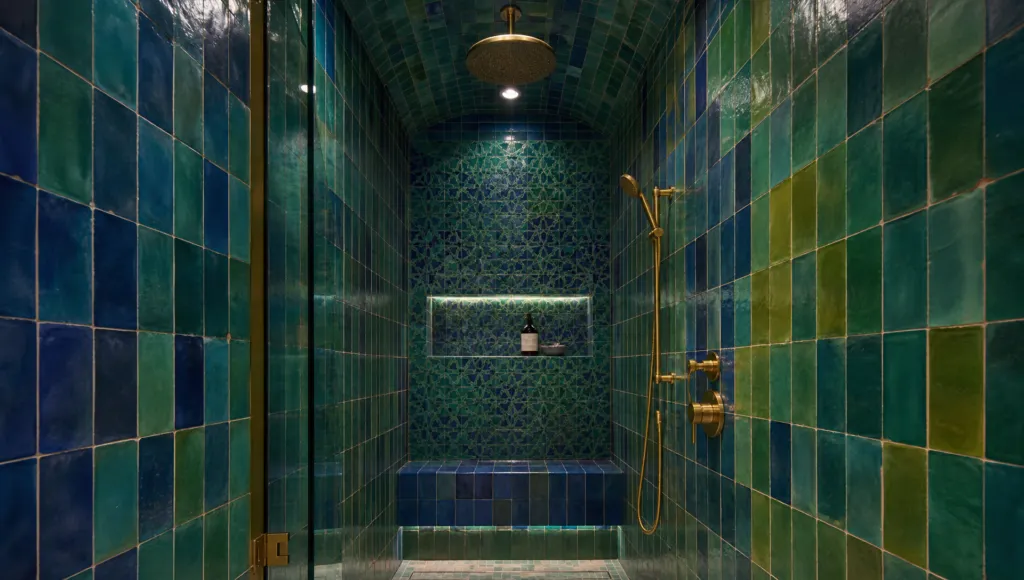
Irregular tiles such as zellige-style products and patterned encaustic tile can add depth, but their variation should be considered before purchase rather than treated as a universal advantage. Uneven surfaces, porous materials, patterned layouts, and additional grout joints may increase installation or maintenance demands. Confirm the product’s suitability for the intended wall or floor, its care requirements, and any sealing instructions with the manufacturer.
Full-room or ceiling tile can create an enveloping effect, but it also raises material and labor commitments. In a compact bathroom, one carefully chosen surface may have more impact than using a statement finish everywhere. Reserve complex patterns for a defined area if future flexibility, budget, or easier repair is a priority.
Most importantly, tile and grout are not a substitute for a complete wet-area assembly. The Tile Council states that grout joints are not waterproof. Shower protection depends on the specified substrate, waterproofing method, penetrations, transitions, and compatible installation products. Manufacturer requirements and local rules should guide the assembly, and concealed water damage or a new shower installation warrants qualified professional involvement.
Treat Glass Block as a Functional Material
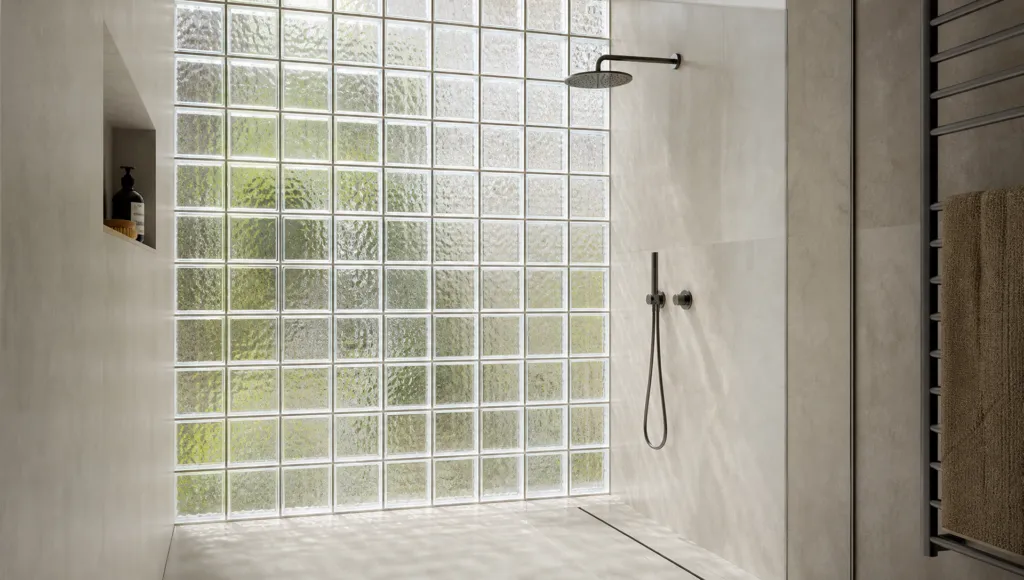
Glass block does not need to be framed as either an embarrassing 1980s relic or the next essential trend. Its useful quality is straightforward: it can admit and diffuse light while obscuring sightlines.
Manufacturer information from Nippon Electric Glass explains that pattern and installation affect how glass block transmits light and limits views. That makes it potentially useful for an interior partition or a bathroom that needs borrowed light.
Privacy should still be evaluated in the actual setting. A block’s texture, viewing distance, and the difference in light levels on either side can affect how much a person can see. Obtain samples or view an installed example before using glass block around a shower or toilet.
Installation details matter as much as appearance. A glass-block partition has weight, joints, edge conditions, and structural requirements that must be addressed. When it forms part of a shower enclosure or exterior wall, waterproofing, support, thermal performance, and applicable local requirements should be reviewed by the appropriate professionals.
Use Wood With Moisture in Mind
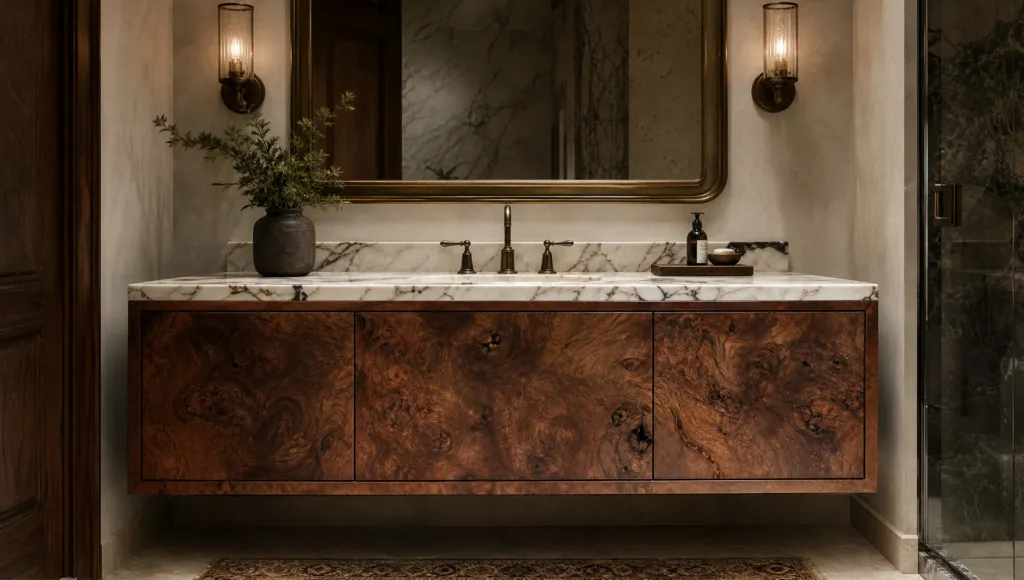
Wood can add warmth to a bathroom, and current industry research supports interest in wood-faced vanities. The NKBA survey reported that 62% of respondents expected wood-faced vanities to be popular, ahead of painted versions.
Highly figured burl, walnut, oak, and other wood finishes can make cabinetry distinctive, but visual richness is not proof of durability. Suitability depends on the product’s construction, finish, edge treatment, ventilation, and exposure to splashing or standing water.
Before specifying a wood or wood-veneer vanity, check the manufacturer’s care instructions and warranty conditions. Pay particular attention to seams near sinks, exposed edges, and floor contact. Wipe up standing water promptly and avoid placing a moisture-sensitive finish where it will receive repeated direct spray.
For a more attainable version of the look, use a wood-faced vanity as the main warm element and pair it with simpler tile and hardware. A convincing material does not need several other expensive finishes competing with it.
Let Materials Contrast Without Creating Chaos
A bathroom can combine wood, stone, metal, glass, and ceramic successfully, but each material should have a clear role. Repeating one or two attributes—such as a warm undertone, a restrained finish, or a consistent geometric line—can make contrasting materials feel related.
There is no sound basis for claiming that perfect coordination automatically looks cheap or that contrast automatically looks luxurious. Quality is more likely to come through proportion, installation, lighting, and editing.
Limit the sample board before ordering. View the tile, countertop, cabinet finish, grout, metal finish, and paint together under the lighting planned for the room. Remove any material that merely duplicates another element or introduces an unrelated undertone.
Aging also deserves consideration. Unsealed or unsuitable stone may stain or etch, some metal finishes develop visible changes, grout requires cleaning, and high-gloss surfaces show water spots readily. Patina can be attractive when it is expected, but premature deterioration is not the same thing. Choose materials whose care requirements match the household’s tolerance for maintenance.
Protect the Design With Ventilation and Good Construction
A stylish bathroom will not age gracefully if moisture damages the finishes or concealed structure. The US Environmental Protection Agency recommends checking that a bathroom fan moves sufficient air and exhausts outdoors rather than into an attic or another interior space. The agency also advises addressing leaks, condensation, and water penetration into wall and floor cavities.
Ventilation capacity, duct routing, controls, and local requirements should be reviewed for the particular home. Persistent moisture, staining, soft materials, or suspected mold should be investigated rather than covered with new finishes.
The same principle applies to the entire renovation: what sits behind the tile is more consequential than what is trending on top of it.
A Bathroom That Ages Well Can Still Be Bold
A durable design is not necessarily quiet. Orange tile, glass block, dark walls, dramatic stone, and figured wood can all work when they respond to the room and the homeowner rather than a checklist of fashionable features.
The goal is coherence, not conformity. Spend first on layout, lighting, ventilation, waterproofing, storage, and installation. Then decide where permanent expression feels justified and where changeable color or decoration will provide enough personality.
A bathroom feels dated fastest when every surface announces the same trend. It lasts longer when function is resolved, materials suit their locations, and the boldest choices have room to stand on their own.