
Most homeowners make their biggest mistake before work even begins—they skip the background check. Before any design sketches or material selections happen, ask one critical question: who exactly will I be working with?
That reference check isn’t just a courtesy; it’s your first line of defense against projects spiraling into chaos. Contractors with solid reputations willingly provide references from recent clients.
When you call, ask specific questions: Did work finish on time? Were there hidden costs? Was the team professional and respectful?
Beyond references, investigate online reviews across multiple platforms, looking for patterns rather than isolated complaints.
Equally important: verify your contractor operates as an established local business with a permanent team and trusted subcontractors. A contractor working out of their truck with different workers each week raises red flags.
Ask about their local track record, how long they’ve been in business, and community involvement. Strategic timing strengthens your vetting position.
While spring dominates the renovation calendar, fall and winter often attract established contractors with greater availability, giving you leverage to be selective rather than settling.
This foundation—built on verified reputation, accountability, and strategic timing—shapes everything that follows.
Why Your Contractor’s Price Quote Isn’t What It Seems
A low estimate feels like victory until hidden costs emerge mid-project, transforming your dream into a financial nightmare.
This is where itemized price estimates become your most valuable tool. A vague quote listing ‘kitchen remodel: $50,000’ tells you nothing.
A detailed estimate breaking down cabinetry, countertops, flooring, labor, permits, and contingencies reveals the true picture.
Typically, cabinetry represents 30-40% of kitchen remodel budgets, while countertops, flooring, and appliances each consume significant portions.
Labor costs vary dramatically by region and complexity. When comparing estimates, ensure you’re comparing identical scopes across all quotes.
Ask contractors specifically about their contingency budgets—the reserve for unexpected discoveries like hidden water damage or structural issues.
Seasonal timing directly influences pricing: contractors may offer more competitive rates during fall and winter slowdowns, while spring quotes often reflect high demand and premium pricing. The cheapest estimate isn’t smart investing; it often signals corners being cut.
The sweet spot is a detailed, transparent breakdown explaining exactly where your money goes, acknowledging seasonal market realities, and separating bargain hunting from intelligent financial planning.
The Federal Trade Commission recommends checking a contractor’s licence with the relevant state or county authority, asking for proof of insurance, getting multiple written estimates, and obtaining a signed contract before work starts.
A licence requirement, licence type, and insurance requirement can differ by state, county, city, project value, and trade. Confirm the requirements directly with your local building department or licensing authority—do not rely solely on a contractor’s verbal assurance.

The Permit Game: What Your Contractor Isn’t Telling You
Building permits feel like bureaucratic red tape—until you skip one and face fines, project shutdowns, or costly redo-work.
Here’s the reality: permits exist because building codes exist, and codes exist because people learned hard lessons about safety. Many local codes require licensed professionals for structural changes, new walls, plumbing, and other substantive modifications—not just cosmetic updates.
Attempting these changes without qualified professionals can result in health hazards, safety concerns, property damage, substantial fines, and inflated costs for corrections.
When contractors obtain permits, they submit plans to your local building department for safety review, ensuring work meets current codes for your area. Permit fees typically start around $50 but vary significantly by project scope and location.
The real value emerges during inspections at various phases: foundation, framing, electrical, plumbing, and final completion.
Yes, failing inspection means correcting issues before proceeding—but this prevents dangerous, non-compliant work from hiding behind finished walls.
Quality contractors view permits and inspections as essential quality checkpoints, not obstacles, handling the administrative process professionally to ensure your renovation meets all legal requirements.
Permit requirements are local. Cosmetic work may not require a permit, while structural, electrical, plumbing, gas, HVAC, and major layout changes often do. Confirm the answer with your city or county building department before work begins. You can find your local government website through USA.gov’s local-government directory.
Be cautious if a contractor asks you to obtain a permit for work they will control, or suggests proceeding without one where local authorities say it is required. The FTC flags this as a potential warning sign.

The Contract Clause That Protects You When Everything Goes Wrong
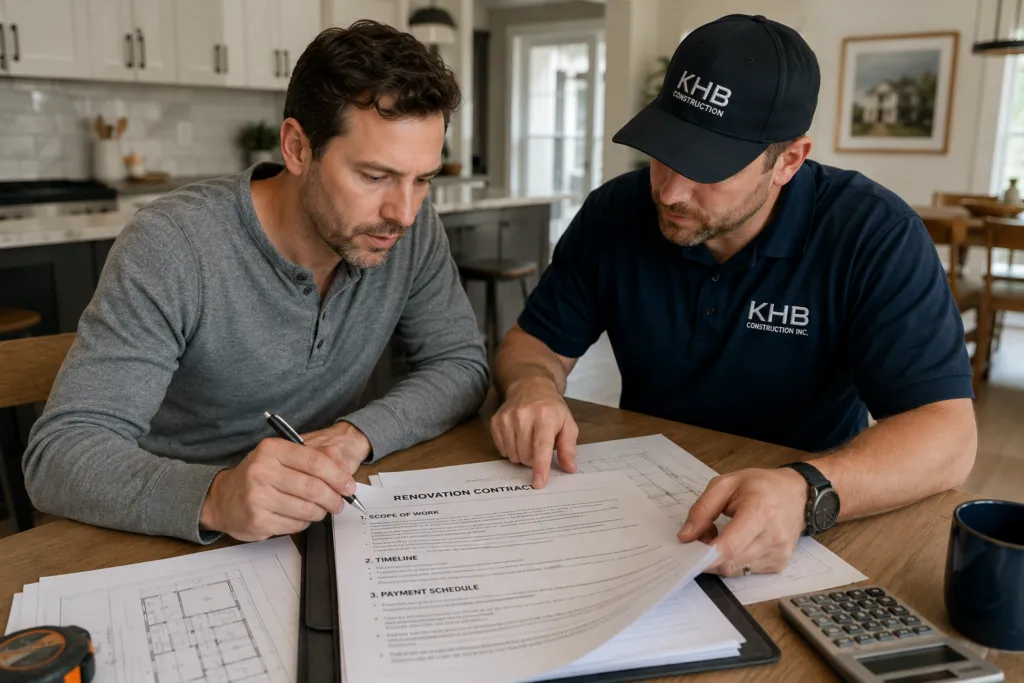
A verbal agreement is worthless the moment disagreement emerges. A detailed written contract isn’t just paperwork—it’s your shield against timeline delays, scope creep, and disappearing contractors. Before signing, ensure your contract includes:
- Precise scope of work describing what’s included and excluded.
- Detailed timeline with start, completion, and milestone dates.
- Total price with itemized breakdown.
- Payment schedule—upfront amounts, progress payments, and final payment timing.
- Procedures for scope changes with approval and pricing specifications.
- Insurance and licensing verification.
- Warranty terms for labor and materials.
- Dispute resolution and cancellation terms.
Strategic language should address seasonal delays and weather contingencies, particularly for multi-season projects.
Since renovations require flexibility to respond to unexpected issues—like discovering hidden structural problems during demolition—your contract should establish procedures for handling discoveries without derailing the entire project.
The contract transforms vague promises into binding obligations that protect both you and the contractor by establishing clear, realistic expectations that prevent costly disputes.
Do not rely on verbal changes. Any change to the scope, cost, materials, or timeline should be approved in writing before the related work is carried out, wherever possible.
Avoid paying the full project amount upfront. Payment rules and allowable deposit amounts vary by jurisdiction, so check local consumer-protection requirements. The FTC also advises against paying by cash or wire transfer.
How to Ensure the Contractor You Hired Actually Shows Up
You’ve vetted references, compared estimates, signed contracts. You feel confident. But here’s what many homeowners discover too late: the charismatic professional who won your business isn’t always the one holding the hammer.
Ask during initial meetings whether the owner will personally perform work or supervise subcontractors.
If delegating, ask who specifically will lead your project and request to meet them before signing. This accountability step ensures you know exactly who’s responsible for quality and timeline adherence.
Clarify in your contract that any substitutions in project leadership require your approval. Some contractors rotate between multiple projects, appearing when problems emerge but absent during daily execution.
Establish clear expectations about contractor presence—daily involvement or periodic visits?—and communication channels for concerns.
Understanding your contractor’s operational structure prevents the mid-project discovery that you’re working with someone entirely different from whom you hired.
Since comprehensive renovations require expertise across multiple sub-trades—framing, electrical, plumbing—clarity about who manages these specialists matters tremendously.
This confirmation of accountability ensures consistent quality and a professional you can actually hold responsible throughout your renovation’s duration.
A contractor using subcontractors is not inherently a concern; many remodels require specialist trades. The important point is to understand who is responsible for coordination, workmanship, insurance, permits, and communication.
The Takeaway
The right contractor is not simply the lowest bidder or the most persuasive salesperson.
Look for a professional who provides clear documentation, answers questions directly, verifies their credentials, and is willing to define the project before work begins.
Remember: Requirements and protections vary by location, so verify licensing, permit, contract, and payment rules with the relevant local authority or a qualified professional before committing to a project.
Ensure you thoroughly research all of this before you begin searching so you start informed!