Home renovations should make your home more enjoyable and more valuable—not become expensive lessons you wish you could undo.
Yet designers consistently hear the same frustrations from homeowners after a remodel: beautiful materials that require constant maintenance, trendy features that look dated only a few years later, and layouts that don’t actually fit everyday life.
The good news? Most renovation regrets are completely avoidable when you understand which upgrades offer lasting value—and which ones simply photograph well on social media.
Renovation Regrets: Expensive Decisions Homeowners Often Wish They Hadn’t Made
The biggest renovation mistakes usually aren’t construction errors—they’re decisions made without considering how a space will be used every day.
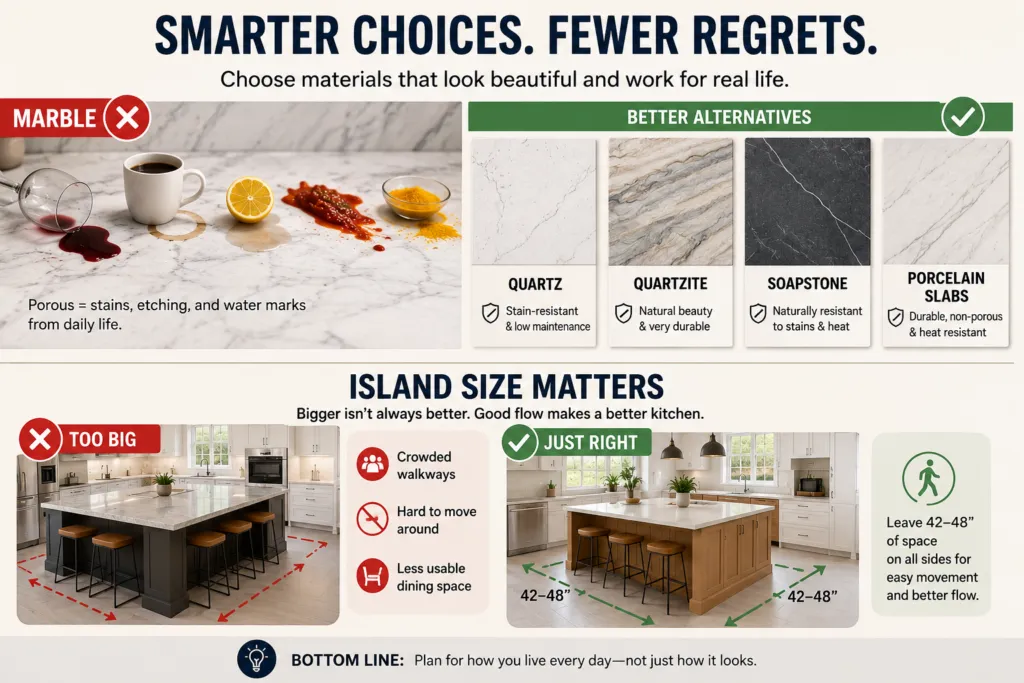
Marble Countertops
Natural marble is undeniably beautiful, but it’s also one of the highest-maintenance countertop materials available.
Because marble is porous, it easily absorbs wine, coffee, lemon juice, tomato sauce, oils, and colorful spices like turmeric or paprika. Even water left sitting on the surface can leave mineral marks over time.
For households that cook frequently or have children, many designers instead recommend:
- Quartz
- Quartzite
- Soapstone
- High-quality porcelain slabs
These materials provide a similar high-end appearance while resisting stains, scratches, and etching far better than marble.
Oversized Kitchen Islands
Large islands have become a design staple, but bigger isn’t always better.
Many homeowners install oversized islands only to discover they restrict movement, reduce dining space, or create awkward traffic flow.
A well-proportioned island that leaves at least 42–48 inches of walking space around each side is usually far more functional than the largest island the room can physically accommodate.
When Design Trends Become Design Regrets
Social media has made it easier than ever to fall in love with beautiful rooms—but what works in a carefully staged photograph doesn’t always work in a real home.
Designers often see homeowners regret following trends that were already beginning to fade by the time construction finished.
Some of the most common examples include:
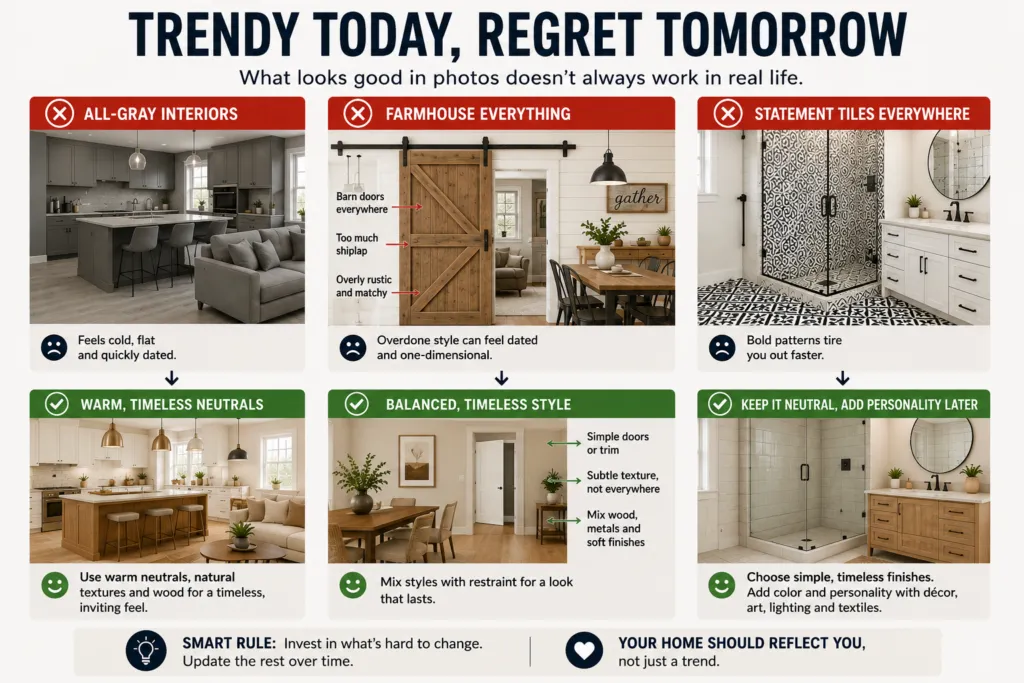
All-Gray Interiors
For years, gray floors, gray walls, gray cabinets, and gray furniture dominated renovation projects.
Today, many homeowners find these spaces cold and lacking personality. Designers are increasingly introducing warmer neutrals, natural woods, textured finishes, and earthy colors that feel inviting without becoming trendy.
Farmhouse Everything
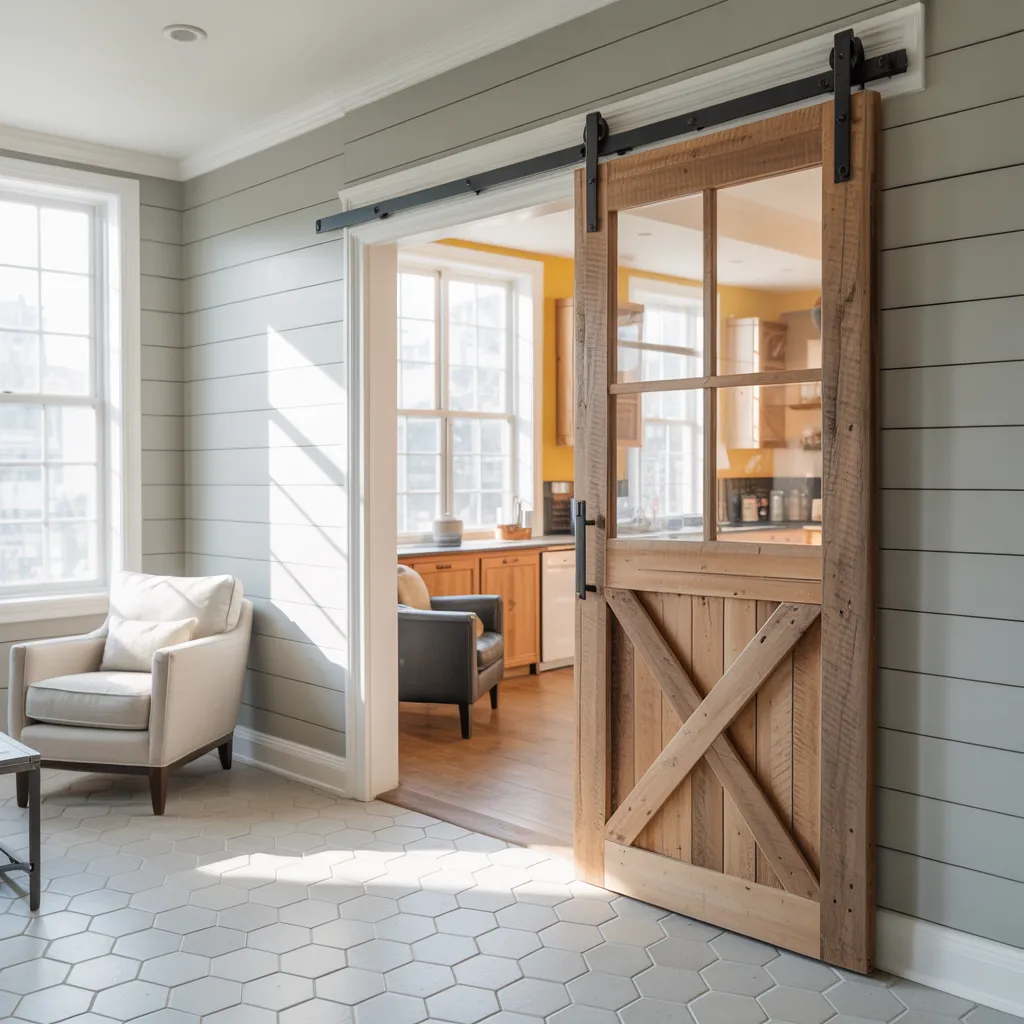
Barn doors, excessive shiplap, distressed wood, and industrial black fixtures created an instantly recognizable farmhouse style.
While these elements can still work in the right home, installing them everywhere often makes a renovation feel tied to a specific design era rather than timeless.
Statement Tiles Everywhere
Bold patterned floors or geometric wall tiles can make a dramatic first impression.
However, homeowners often tire of highly decorative surfaces much faster than simpler finishes.
Many designers recommend keeping permanent finishes relatively neutral while introducing personality through paint, artwork, lighting, textiles, and décor that are much easier to replace later.
Experts Say These Popular Features Often Create Everyday Problems
Some renovation ideas look incredible in magazines but become frustrating once people actually live with them.
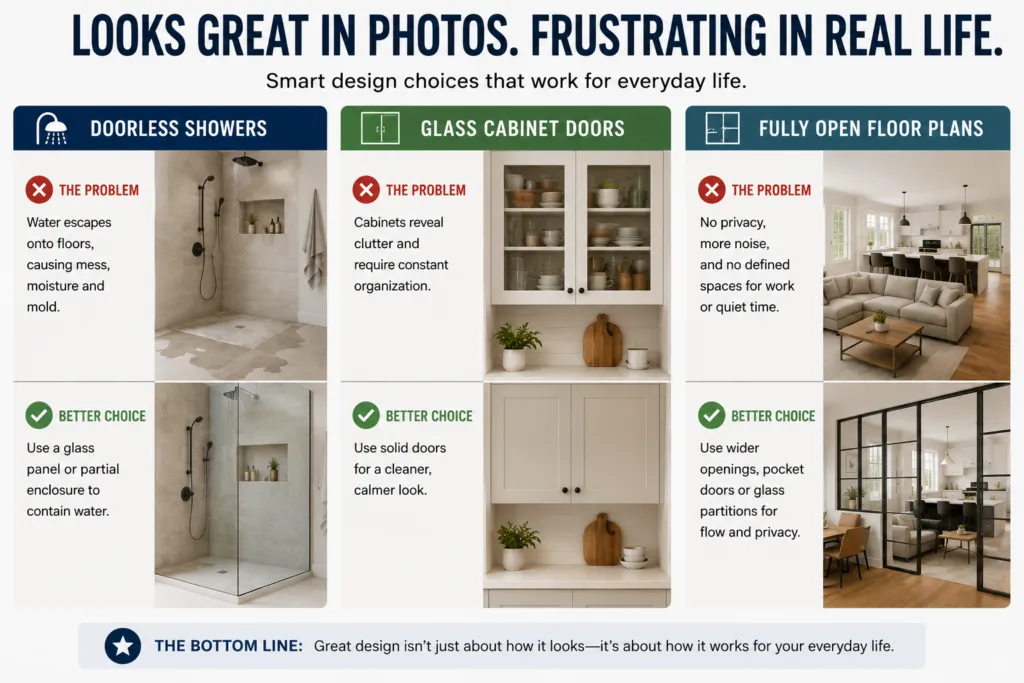
Doorless Showers
Curbless showers can be beautiful when professionally engineered.
Poorly designed versions, however, often allow water to escape onto bathroom floors, increasing cleaning, moisture problems, and the risk of mold.
A frameless glass panel or partial enclosure usually provides the same modern appearance while containing water far more effectively.
Glass Cabinet Doors
Glass-front cabinets work best when homeowners enjoy displaying carefully organized dishes or decorative items.
For everyone else, they often become windows into everyday clutter, requiring constant organization to maintain the intended look.
Fully Open Floor Plans
Open-concept living remains popular, but many families now appreciate having separate spaces for working, studying, entertaining, or simply enjoying quiet.
Instead of removing every wall, designers increasingly create semi-open layouts using wider openings, pocket doors, glass partitions, or partial walls that preserve natural light while improving privacy.
Build Around Your Lifestyle—Not Just the Latest Trend
One of the biggest mistakes homeowners make is renovating for a lifestyle they don’t actually have.
Ask yourself:
- Do you cook every day?
- Do you entertain large groups?
- Do you have young children?
- Will you still love this design ten years from now?
- How much maintenance are you realistically willing to do?
The answers should guide your renovation far more than what’s currently popular online.
Timeless Design Doesn’t Mean Boring Design
Creating a renovation that lasts doesn’t mean avoiding personality.
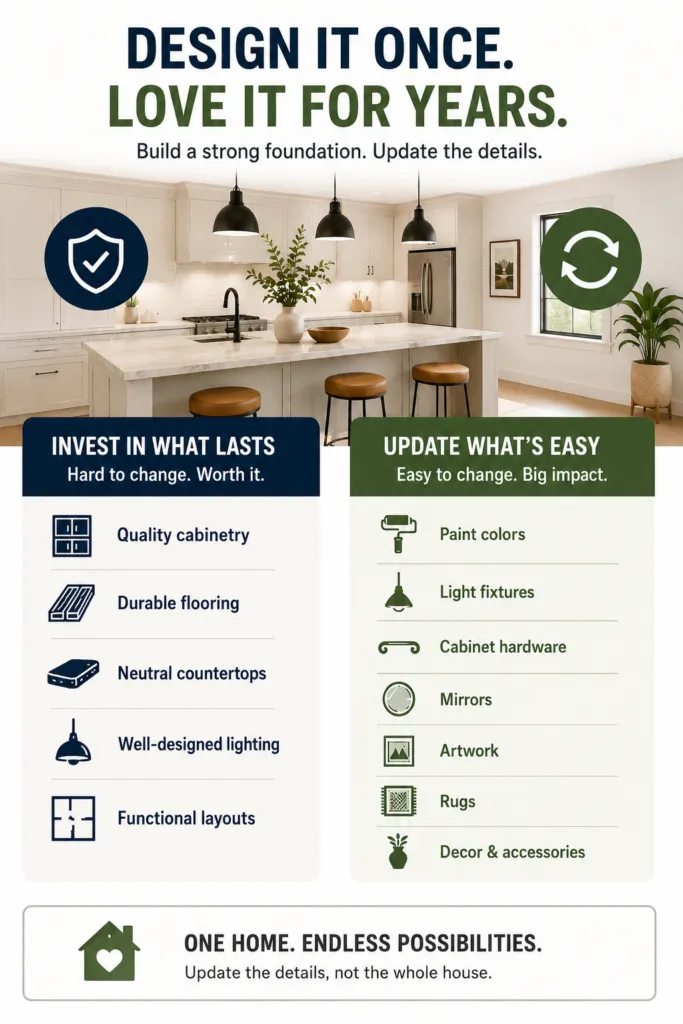
Instead, invest in timeless elements that are difficult or expensive to replace:
- High-quality cabinetry
- Durable flooring
- Neutral countertops
- Well-designed lighting
- Functional layouts
Then introduce current trends through items that can be updated easily:
- Paint colors
- Light fixtures
- Cabinet hardware
- Mirrors
- Artwork
- Rugs
- Decorative accessories
This approach allows your home to evolve over time without requiring another major renovation every few years.
The Best Renovations Age Gracefully
The most successful homes rarely chase every design trend.
Instead, they prioritize comfort, durability, functionality, and thoughtful material choices that continue to perform year after year.
By focusing on how you actually live—rather than what happens to be trending—you’ll create a home that feels just as enjoyable a decade from now as it does the day your renovation is finished.