Everything you’ve been told about small spaces is backwards—and professional designers are finally calling it out. For decades, conventional wisdom dictated that smaller rooms need minimalism and neutral colors.
But today’s designers are discovering something counterintuitive: bold, intentional design choices actually make spaces feel more expansive than the safe, timid approach most people take. Spacious-feeling rooms come from restraint—but not the kind you’d expect. The secret isn’t about removing things; it’s about choosing fewer, bigger, bolder elements that create visual confidence and presence.
This represents a fundamental shift away from the tired doctrine that less is always more. When design is intentional and strategic, rooms paradoxically feel larger and more luxurious.
The psychology is compelling. When a room feels deliberately designed with purpose, it actually feels larger than when it’s stripped bare. Think about a gallery space with a single bold artwork—it doesn’t feel cramped; it feels curated and intentional.
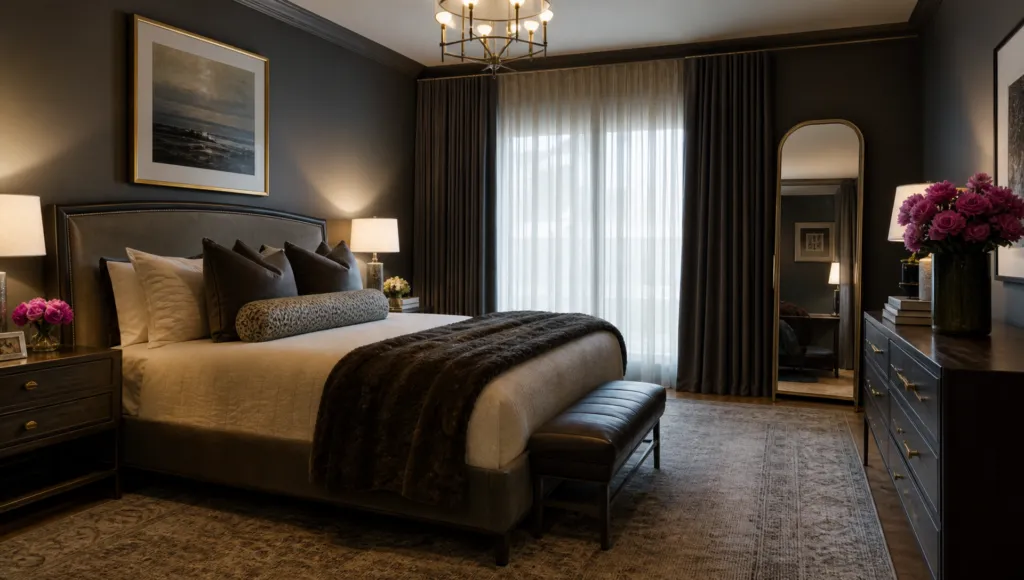
Your bedroom or living room can achieve that same effect through strategic, decisive choices rather than nervous compromises. Every element—from lighting to color to furniture scale—works together to reinforce that sense of spaciousness and luxury.
Why Dark Colors Make Small Rooms Feel Surprisingly Luxurious
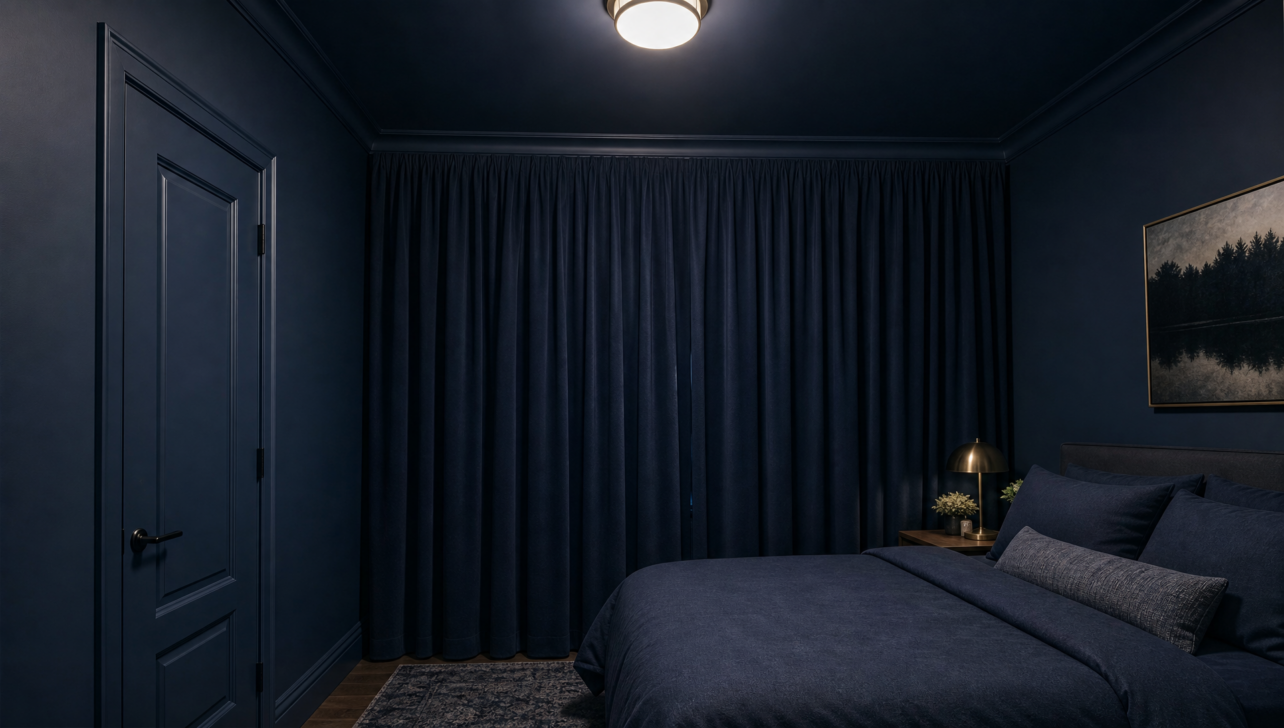
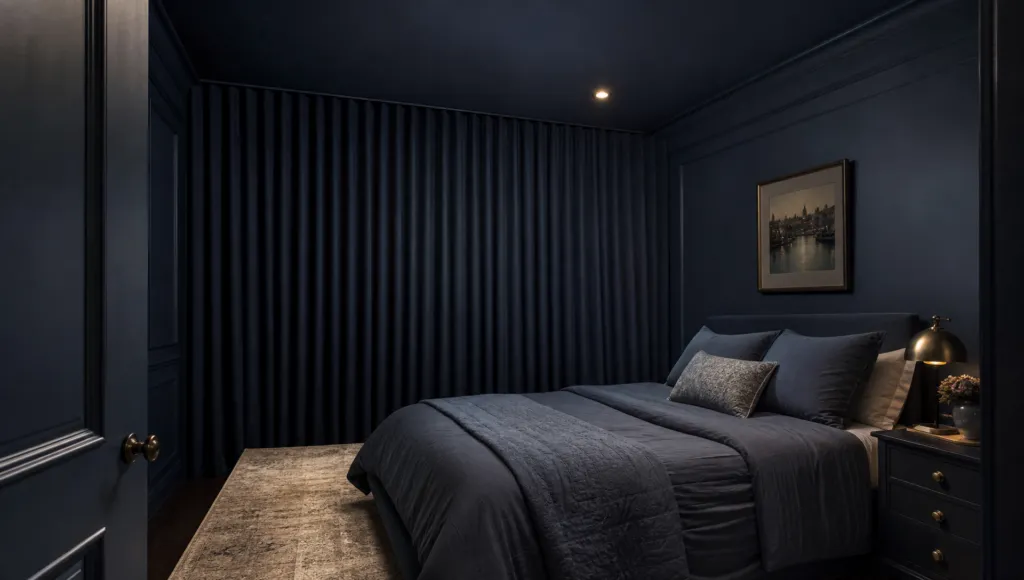
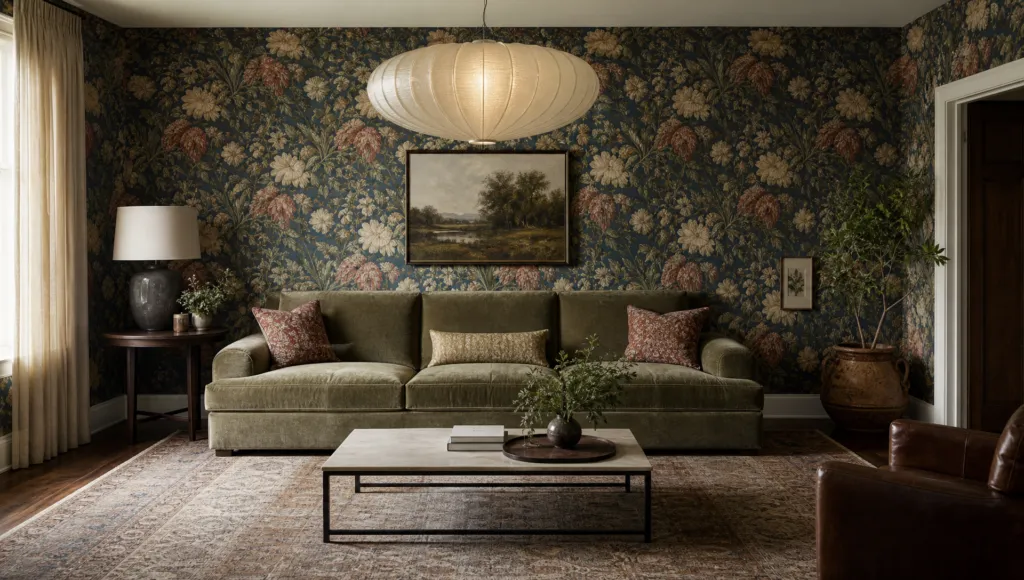
Forget what you’ve learned about painting small rooms light. Take this example of painting entire rooms—walls, ceilings, trim, doors—in deep navy, aubergine, and rich jewel tones. The counterintuitive result? The space feels both bigger and intentional.
Here’s what makes it work: dark, cohesive color palettes blur room boundaries and create a cocooning effect that makes edges disappear. When all surfaces share the same dark tone, your eye stops registering where walls meet ceiling, and those architectural limitations become invisible. Pair this with oversized drapes that extend wall-to-wall and ceiling-to-floor, and you’ve created seamless visual continuity that obscures the room’s actual dimensions.
The science backs this up. While dark colors applied haphazardly might theoretically make spaces feel smaller, unified application creates something entirely different—a seamless, enveloping environment that feels both intimate and expansive. It’s the consistency and intentionality that matter.
Designers also experiment with strategic color combinations like ocean blue with sandy pink or asparagus green with teal, which create visual depth while maintaining sophisticated ambiance. The key: cohesive approaches that demonstrate color psychology is about creating harmonious relationships between hues.
The Furniture Rule That Sounds Crazy But Actually Works
Playing it safe with tiny furniture is the biggest mistake in small-space design. Instead of scaling down, she recommends full-scale pieces that ground the space and give it real presence.
Large, well-chosen furniture pieces serve as visual anchors that define the room rather than drowning it in clutter. A single substantial sofa commands more authority than three small ones scattered around. Pair this approach with: large area rugs anchoring furniture with minimal exposed flooring, oversized lighting fixtures that add presence, strategic mirrors for depth, and bold prints on walls or ceilings.
The paradox? Bigger, bolder choices make small rooms feel more spacious than cramped compromises. When furniture is proportional and substantial, it establishes spatial hierarchy and prevents visual chaos. Scattered small furniture creates visual noise that makes any space feel overwhelming. The winning strategy: trade quantity for quality, ensuring every piece serves a clear purpose and contributes to deliberate design rather than filling space nervously.
Layered Lighting: The Finishing Touch That Elevates Every Space
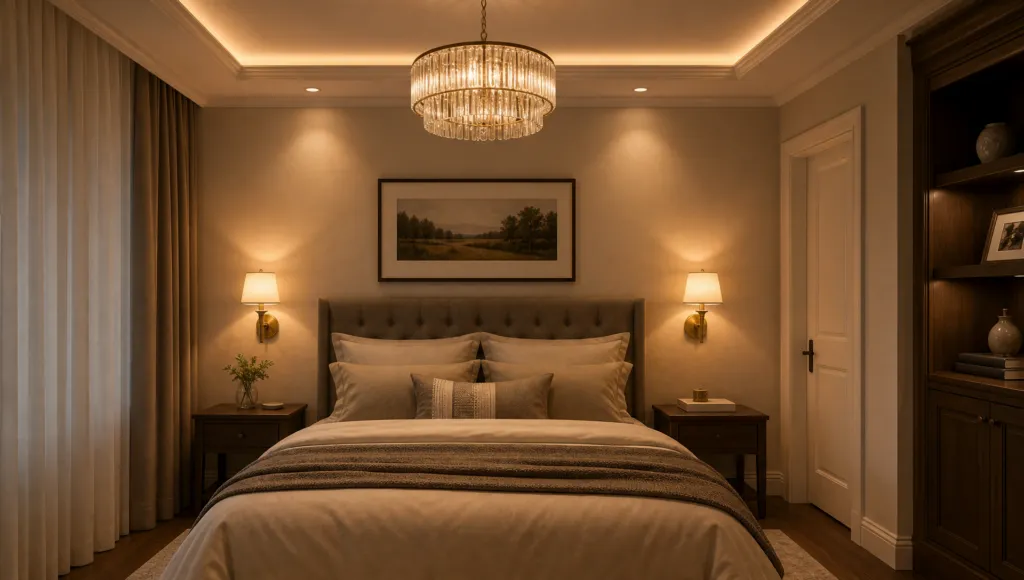
Professional designers unanimously identify layered lighting as the single most transformative finishing touch. According sophisticated spaces need at least three distinct light sources working together: a decorative fixture, sconces or table lamps, and recessed lighting—each on a dimmer switch to transition between functional and intimate settings.
Statement lighting fixtures add visual presence and confidence to compact spaces, serving as intentional design elements rather than mere utilities. Aim for warm lighting in the 2700K color temperature range, which creates an inviting atmosphere while enhancing depth. By controlling ambient levels, you can shift mood from energizing to cozy, making even modest dimensions feel intentional and curated.
This layered approach adds visual complexity and luxury. Multiple light sources create shadows and highlights that prevent flatness and prevent the space from feeling cramped. Combined with bold furniture and dark, cohesive color palettes, strategic lighting transforms small rooms into sophisticated sanctuaries. The interplay amplifies architectural elements, emphasizes texture, and creates depth that makes boundaries feel less confining.
Strategic Mirrors and Reflective Surfaces: Time-Tested Techniques
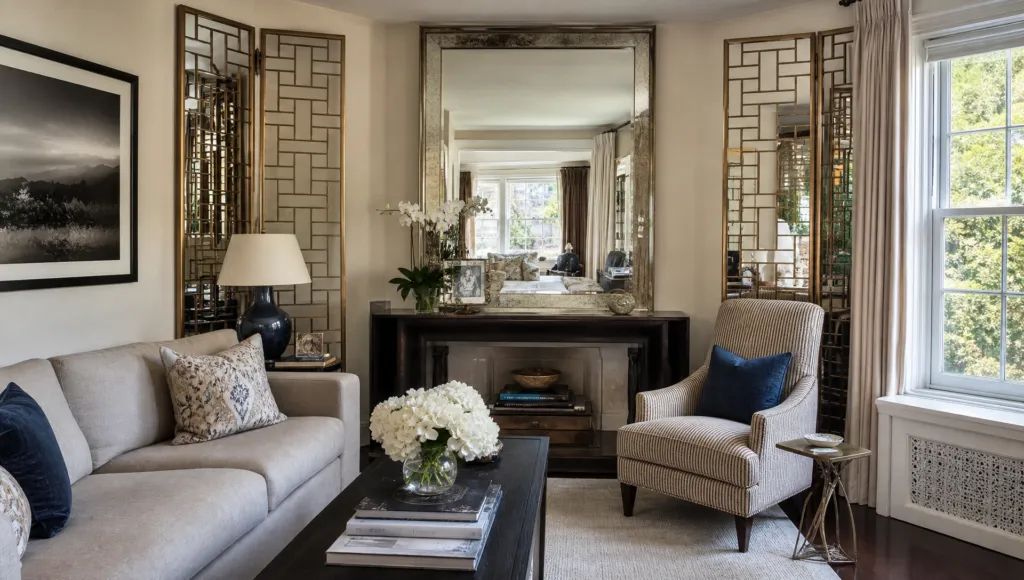
Reflective surfaces have expanded perceived space throughout design history. Legendary designer Syrie Maugham pioneered this technique in the early 20th century, famously incorporating mirrored screens as her trademark elements to amplify light and create boundless-feeling spaces. Her innovative approach proved that strategic mirror placement could transform intimate rooms into open, luxurious environments.
Mirrors serve dual purposes: they multiply available light sources and create visual depth by reflecting the room back on itself. Positioning a large mirror opposite a window or light fixture dramatically enhances brightness and perceived size. Pair reflective strategies with quality textiles, artwork, and thoughtfully selected décor to create layers of visual interest without overwhelming the space.
The key is intentionality—every reflective surface should be placed deliberately to enhance both light distribution and spatial perception. When mirrors work in concert with your layered lighting scheme and dark color palette, they become powerful tools for visual expansion, amplifying the sense of depth and luxury that professional designers cultivate.
How to Transform Your Small Room Into a Designer Sanctuary
The winning strategy combines visual continuity with intentional choices. Start with large rugs that extend across most of the floor with minimal exposed edges—this anchors furniture and creates spatial definition. Paint adjacent surfaces in cohesive dark colors to blur architectural boundaries and expand perceived space. This unified approach to color and materials creates the visual seamlessness that makes rooms feel larger.
Next, add well-chosen materials and finishes: quality textiles, strategic layered lighting with multiple sources, and carefully curated décor pieces. Incorporate full-scale furniture and bold design elements that give your room confidence and character. Position mirrors deliberately to amplify light and create depth, and add carefully selected prints on walls or ceilings for personality without chaos.
Finish with complementary touches professionals recommend: window treatments that add texture, original or vintage artwork, fresh flowers, varied textiles through pillows and fabrics, and subtle home fragrance to engage multiple senses. The transformation isn’t about what you remove—it’s about what you add with purpose. When these elements work together with visual continuity and strategic intentionality, your small room stops feeling cramped and starts feeling like the luxurious, intentional sanctuary you deserve.