Most of us treat hallways like forgotten passageways—just empty corridors connecting the “real” rooms.
But here’s what I’ve discovered after years of redesigning homes: hallways are actually your home’s secret weapon for making a stunning first impression.
They’re not design problems; they’re untapped opportunities. Think about it: hallways set the tone for everything visitors experience. They’re the stage your home uses to tell its story.
Whether you’ve got a narrow, dimly lit corridor or a spacious, light-filled walkway, your hallway has serious potential waiting to be discovered.
The good news? Hallways are easier to transform than most rooms because they’re essentially blank canvases. You don’t have to work around furniture arrangements or complicated functionality.
The real challenge is shifting how we think about them—from “just a passageway” to “an intentional design space that deserves attention.”
Why Paint and Color Are Your Secret Weapons
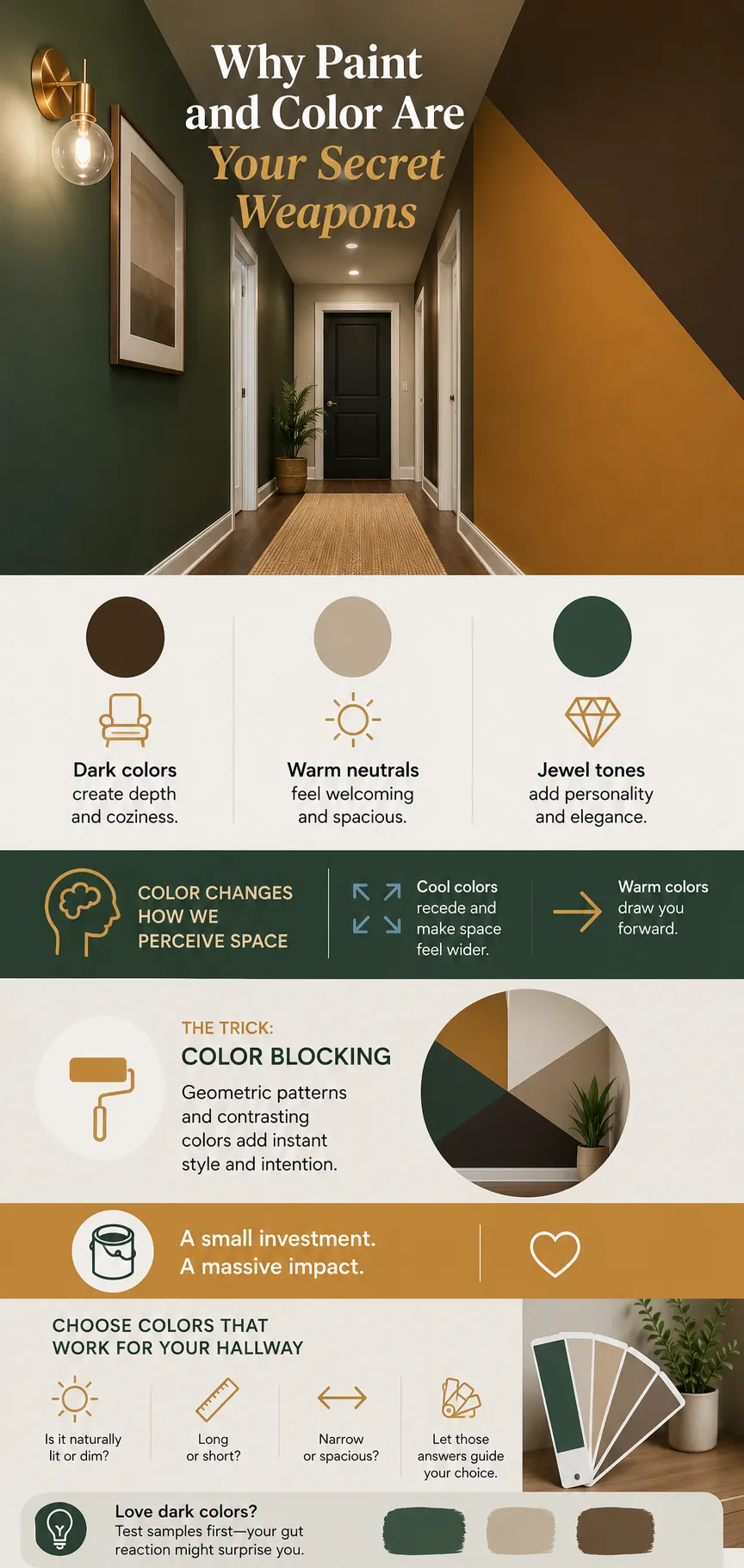
A single paint color can completely transform how you perceive your hallway. Dark brown walls create intimate sophistication. Warm neutrals feel welcoming and spacious.
Even unexpected jewel tones work beautifully when chosen thoughtfully.
Here’s why color matters: it actually changes how our brains perceive space.
- Cool colors recede and make narrow hallways feel wider. Warm colors draw you forward.
- Dark colors create depth and coziness—perfect for long hallways that feel impersonal.
The trick is color blocking: painting walls in geometric patterns or contrasting sections adds visual interest and makes spaces feel intentionally designed rather than accidentally decorated. A quality gallon of paint costs less than a nice dinner out, yet it delivers transformation worth thousands.
Start by identifying your hallway’s strengths: Is it naturally lit or dim? Long or short? Narrow or spacious?
Let those answers guide your color choice. If you love darker colors but worry about feeling claustrophobic, test samples first—sometimes our gut reaction surprises us.
The Art Gallery Hack That Makes Hallways Unforgettable
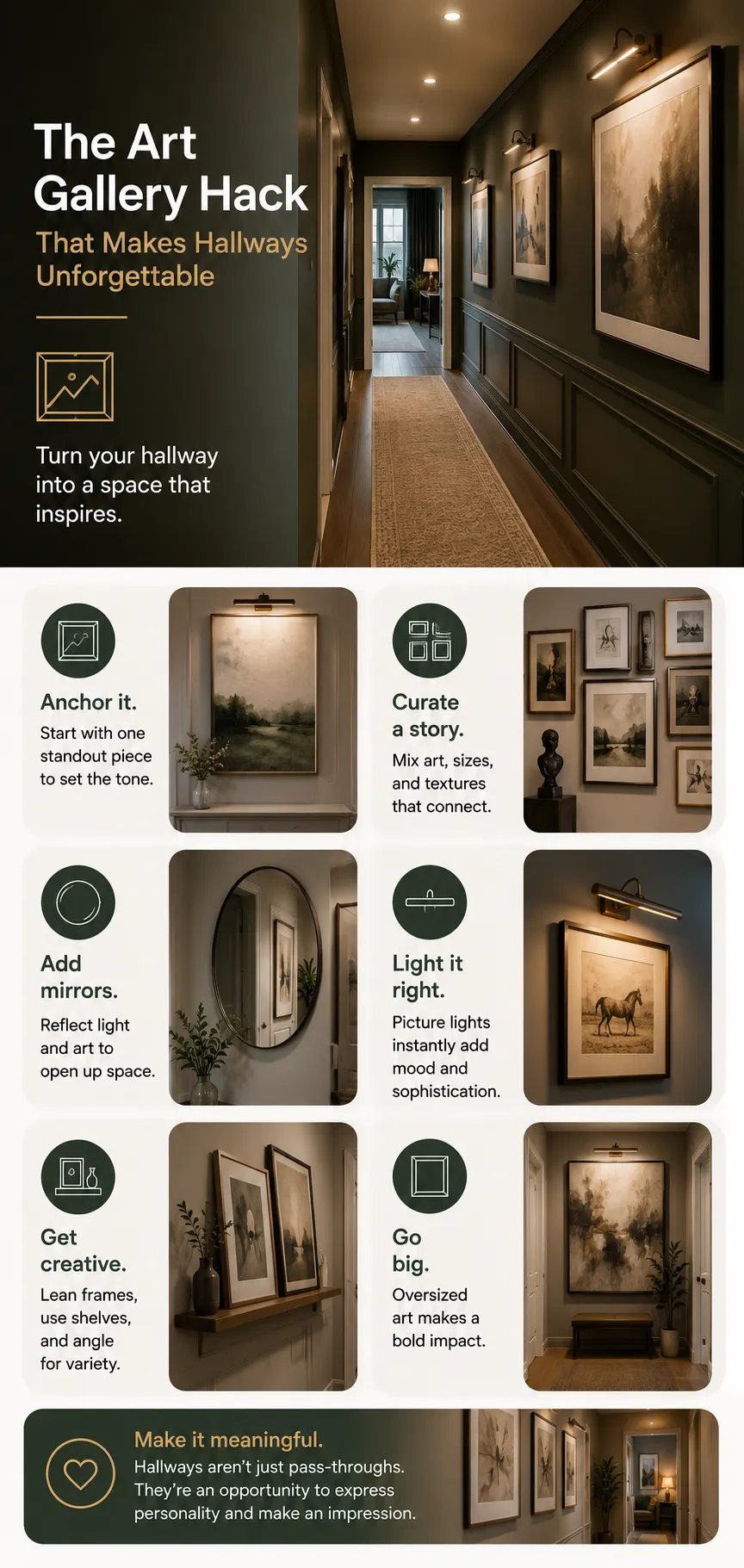
Instead of leaving walls bare, treat your hallway like a curated gallery. Start with one anchoring piece—maybe a large painting, striking photograph, or statement print—then build around it.
This focal point guides everything else, creating a cohesive visual story as people walk through.
Gallery walls work beautifully in hallways: mix framed artwork, sculptures, and even smaller pieces united by theme, color, or emotional resonance.
Don’t forget the power of mirrors at varying heights—they reflect light and artwork, making spaces feel wider while adding dimension.
Picture lights above framed pieces transform the mood, adding a touch of sophistication without requiring complicated electrical work.
Try leaning frames on floating shelves or angling them slightly from walls for dynamic variation. Oversized canvases command attention and ground larger hallway sections beautifully.
The magic happens when you stop treating hallways as mere passages and start treating them as legitimate display spaces. Art creates personality, starts conversations, and signals that this space matters. That’s powerful.
Furniture Placement: Breaking the Rules with Purpose
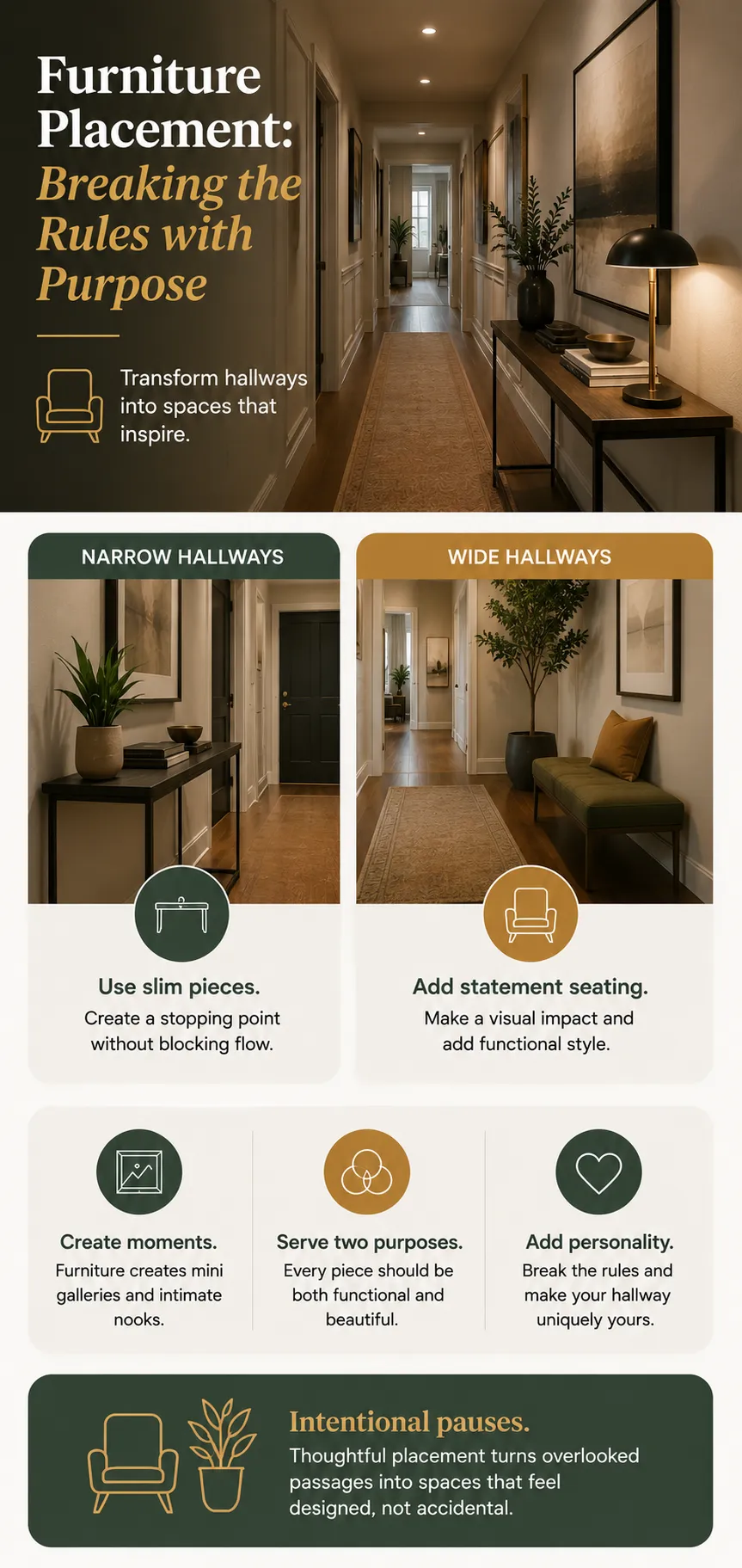
Conventional design wisdom says hallways shouldn’t have furniture. I respectfully disagree—and so do most interior designers worth their salt.
A slim console table, sculptural chair, bench, or even a small side table transforms hallways from utilitarian passages into thoughtfully designed spaces.
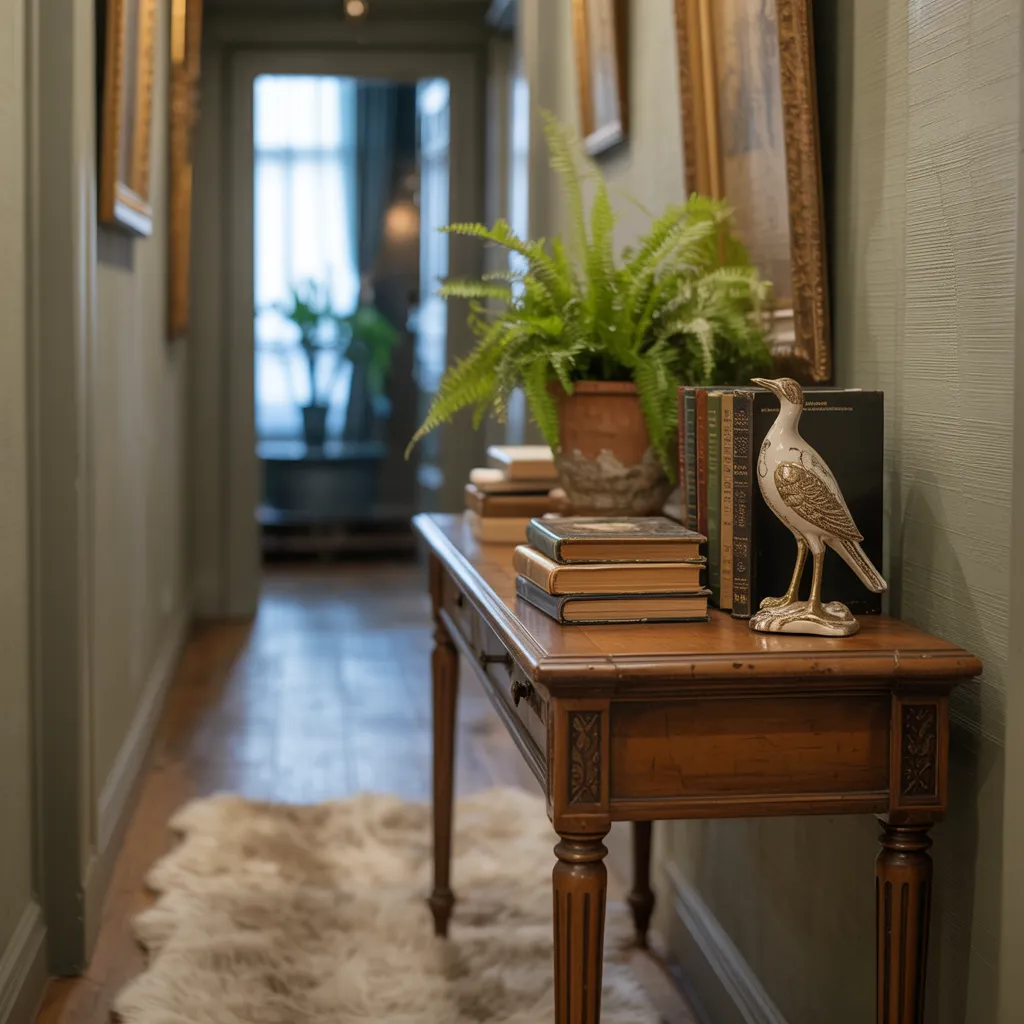
The key is respecting traffic flow while adding intentional elements. In narrower hallways, a console table topped with books, plants, or decorative objects creates a stopping point without blocking movement.
Wider corridors can support statement seating—a vintage chair, modern bench, or upholstered ottoman that doubles as both functional furniture and artistic statement.
These pieces create mini galleries or intimate seating nooks that make your hallway feel lived-in and curated.
Think of furniture placement as creating intentional pauses in the visual journey through your home. Each piece should serve dual purposes: practical function paired with aesthetic contribution.
By breaking conventional rules and adding personality-filled pieces, you transform hallways from overlooked spaces into rooms that rival your living areas in thoughtfulness and design sophistication.
Smart Storage That Hides Clutter and Displays Style
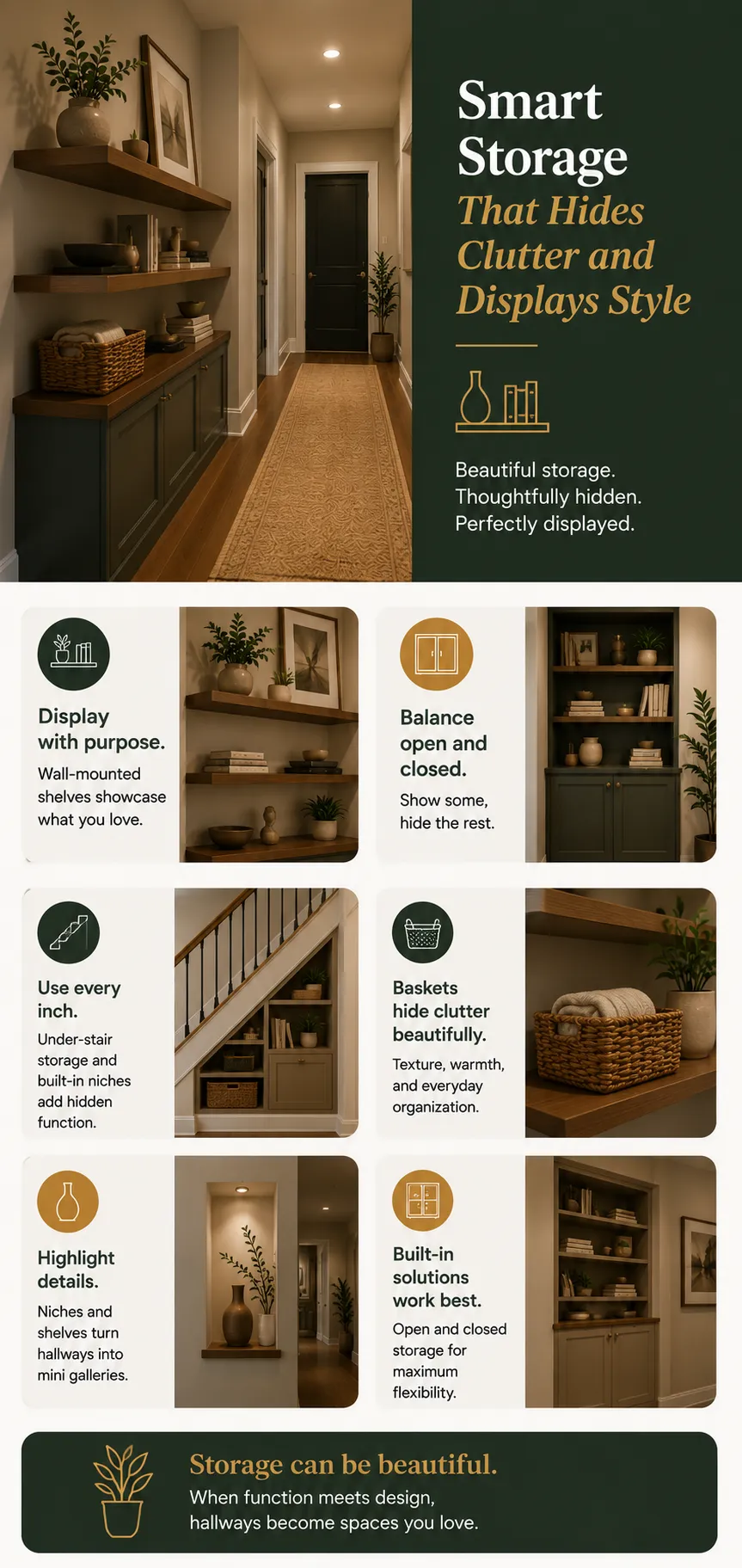
Hallways are prime real estate for storage that actually looks intentional. Wall-mounted shelving displays cherished objects while keeping surfaces clear and organized.
Floating shelves at varying heights introduce visual interest while showcasing carefully curated collections.
The best hallway storage balances hidden and open display: wooden shelving holds decorative ceramics and books, while closed cabinets hide less attractive items.
Incorporate under-stair storage, niches for sculpture, and floating shelves that feel like part of the design rather than band-aids covering problems.
Baskets add textural interest while concealing everyday clutter—they’re both functional and beautiful.
Built-in cabinetry with mixed open and closed storage offers maximum flexibility: display what deserves attention, hide what doesn’t.
The sophisticated approach treats storage as a design feature, not an afterthought.
Every shelf, basket, and cabinet should contribute to your overall aesthetic while solving practical problems.
This transforms hallways into intentional, beautiful spaces where function and beauty work together seamlessly.
Plants and Natural Elements: Bringing Your Hallway to Life
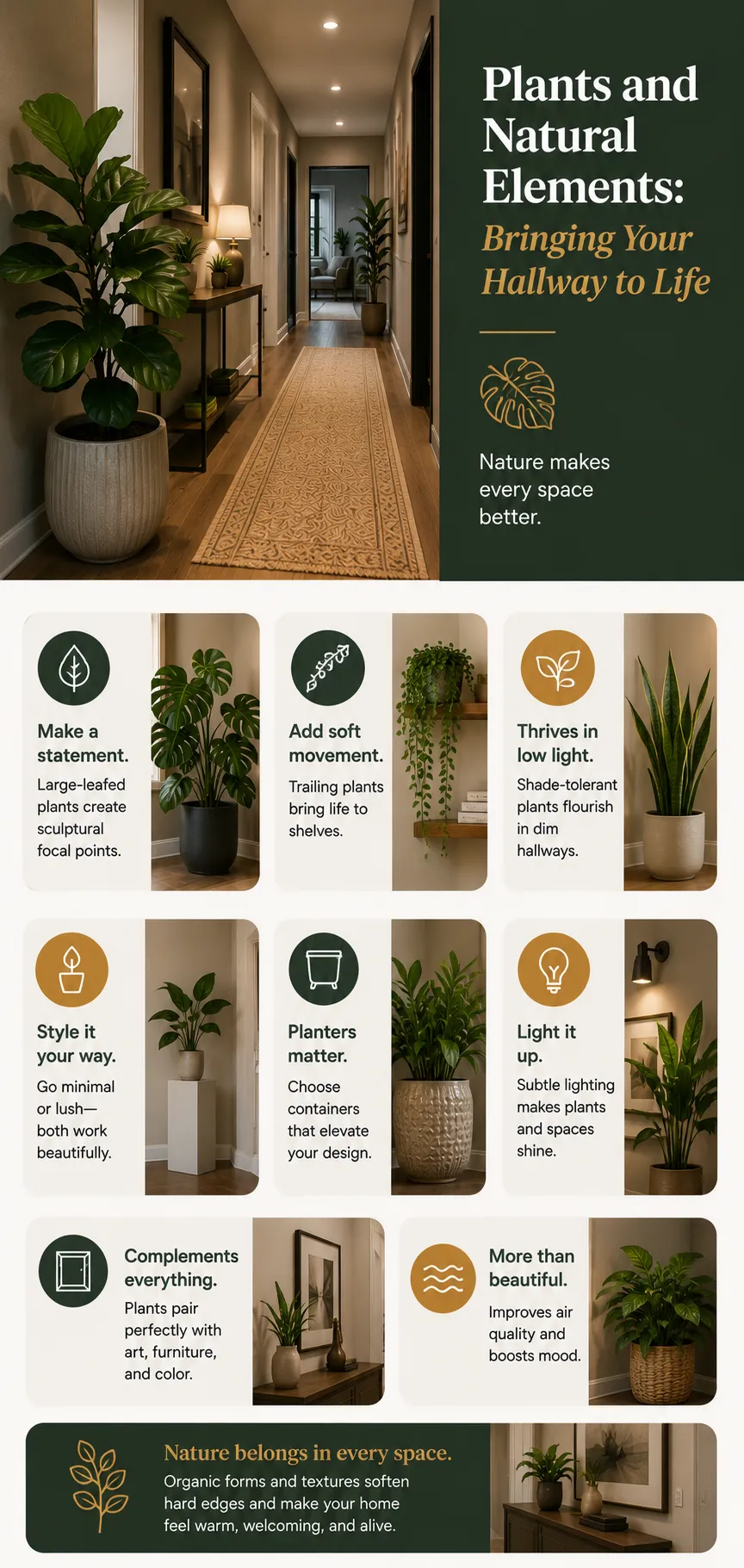
Adding greenery transforms sterile hallways into vibrant, welcoming spaces through biophilic design—that’s the fancy term for how nature makes us feel better.
Large-leafed plants like fiddle leaf figs or split-leaf philodendrons become sculptural focal points with quiet luxury.
Trailing ivy or string-of-pearls add soft movement to shelving.
Here’s the best part: even dimly lit hallways work with shade-tolerant varieties like pothos, ZZ plants, and snake plants. These thrive in low light while bringing life to spaces that might otherwise feel sterile.
Style them minimally—think individual plants on pedestals where their forms shine—or group them for lush abundance.
Planters themselves are design elements: vintage ceramics, sleek modern containers, or woven baskets contribute aesthetic value.
Add subtle lighting to make greenery more vibrant and visually pleasing. Plants work beautifully alongside gallery walls, soften furniture pieces, and add color when coordinated with your paint palette.
Beyond aesthetics, they improve air quality and create psychological comfort.
Botanical displays humanize hallways by introducing organic forms and natural textures that contrast with architectural hardness, making your entire home feel warmer and more inviting.
Beautiful Hallways for Every Budget
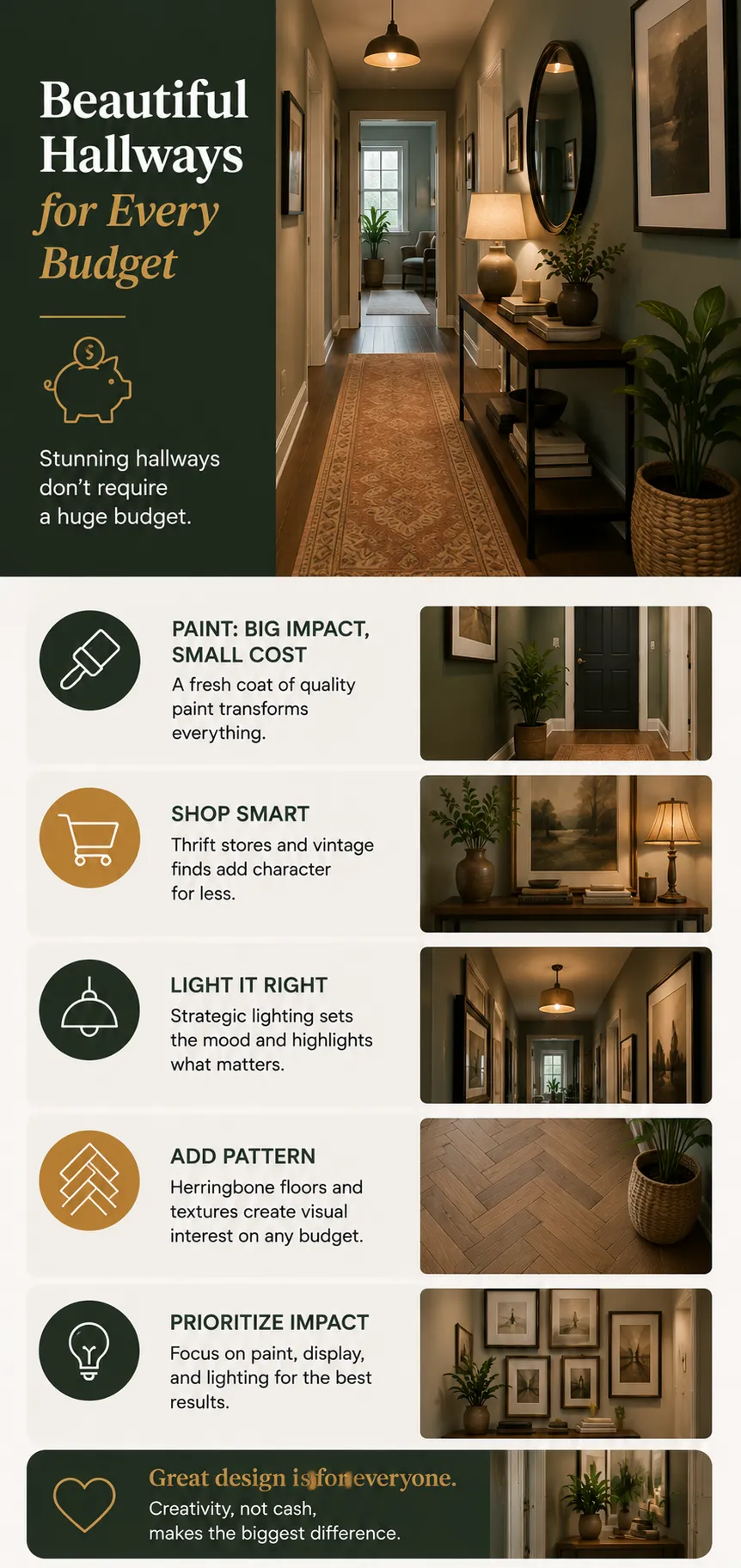
Whether you’re starting with $100 or $10,000, proven hallway transformations deliver remarkable results.
Paint remains your biggest bang for the buck—quality paint costs less than a nice dinner yet transforms spaces worth thousands.
Hunt thrift stores, vintage markets, and secondhand platforms for affordable artwork and furniture brimming with character.
Strategic lighting amplifies visual impact affordably: pendant lamps and thoughtful illumination showcase hallway features while setting mood without excess spending.
Pattern-based elements like herringbone flooring add visual dynamism on tighter budgets when incorporated thoughtfully. The beauty of hallway design? It’s democratic and accessible.
Every element adapts to any budget level through creative sourcing and DIY solutions combined with solid design principles.
The most beautiful spaces often emerge from creative problem-solving rather than lavish spending.
Prioritize impact over expense: focus on paint color, display arrangement, and strategic lighting first.
These foundational elements cost modest money but deliver professional-looking results.
The hallway renaissance of 2026 proves that exceptional design is within reach for anyone willing to reconsider conventional thinking and invest creativity alongside modest resources.
Your hallway is waiting for its transformation.