Bunk beds have come a long way from summer camp essentials. What once meant “we’re making do” has transformed into a sophisticated design choice that top interior designers are actively championing in modern homes.
At their core, bunk beds are elegantly simple—one bed frame stacked on another, supported by corner poles, with a ladder or staircase providing access and safety railings.
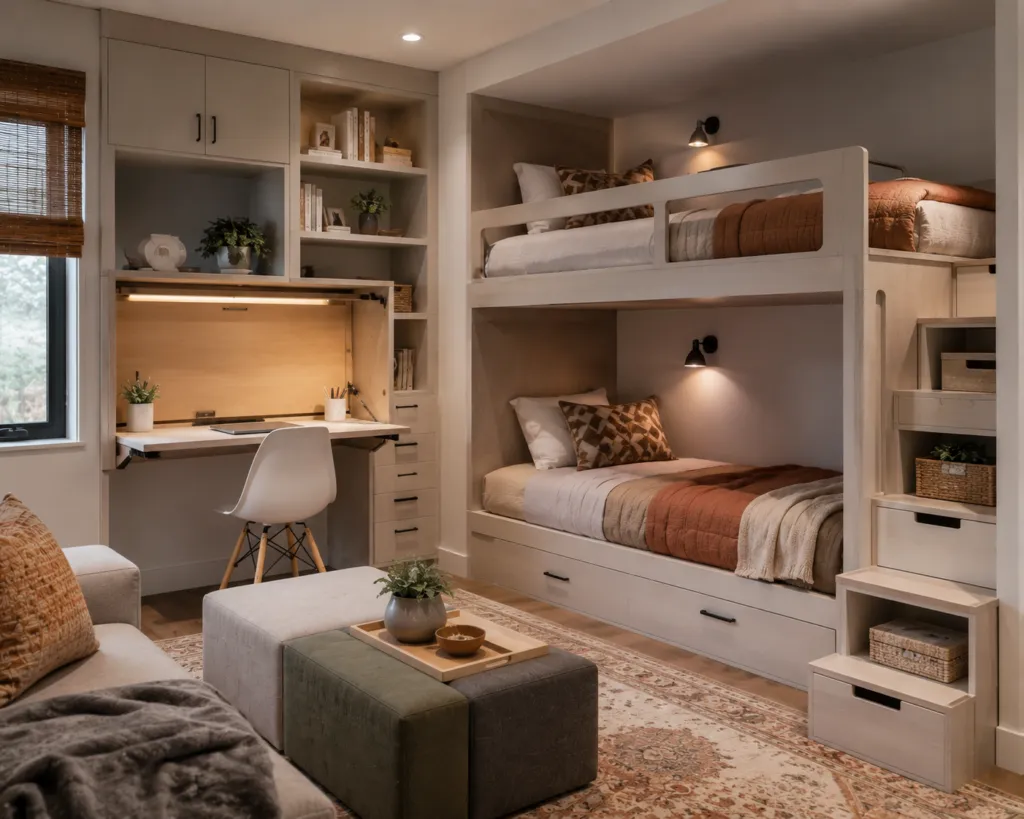
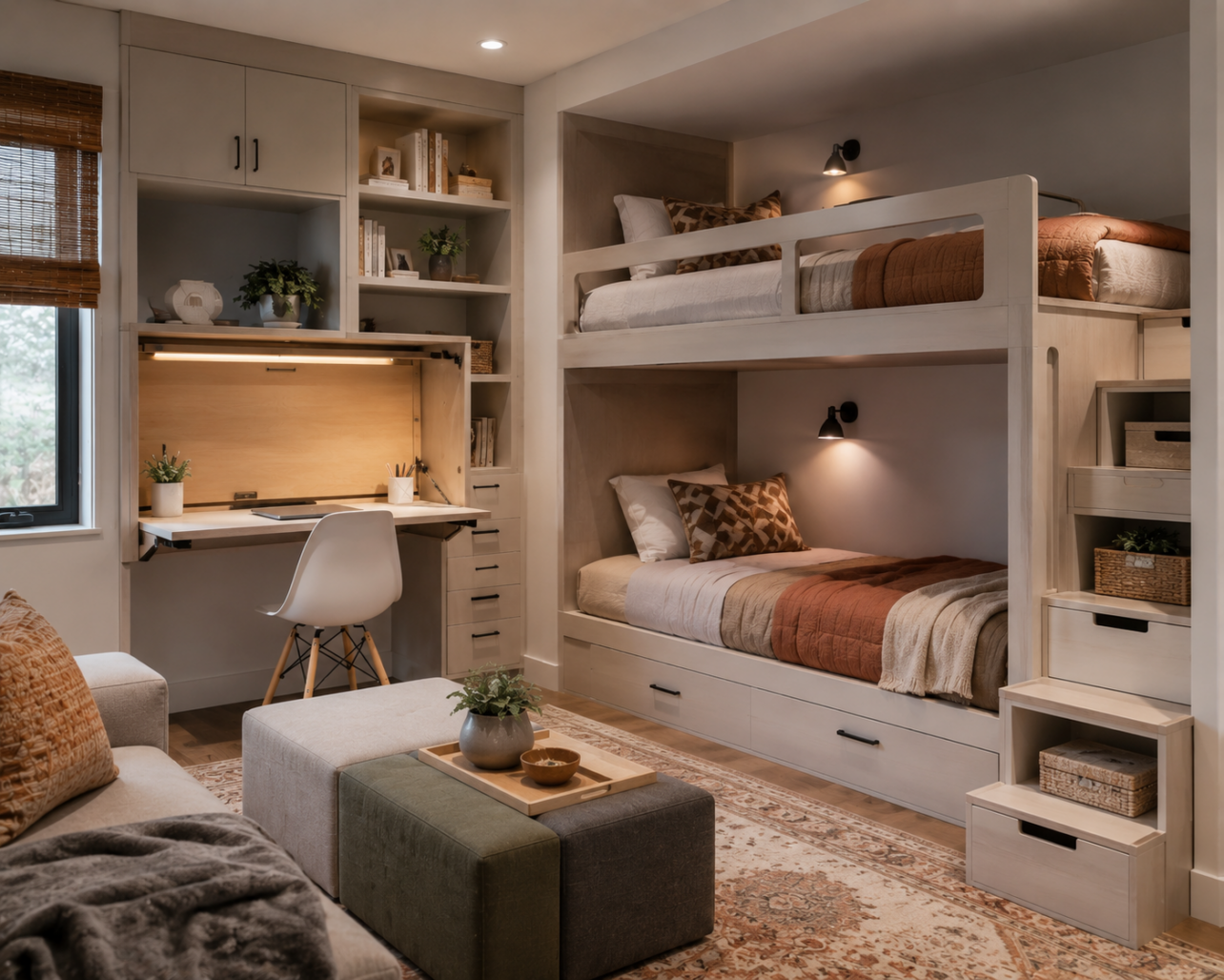
But today’s designers treat this fundamental structure as a canvas for real creativity. You’ll find L-shaped bunks creating natural alcoves for desks, futon bunks that serve double duty as daytime lounging spaces, and loft beds that open up your entire floor plan.
The game-changer? Realizing that maximizing functionality doesn’t mean sacrificing style. Contemporary bunk rooms blend nostalgic charm with modern luxury—think curtained sleeping capsules mimicking hotel suites, integrated staircases, and thoughtfully curated details that transform ordinary rooms into immersive experiences.
Interior designers now embrace full-scale, confident design choices in small spaces rather than miniaturized compromises. The result is more impactful, livable rooms that feel intentional rather than cramped.
The Secret Weapons Designers Use to Transform Cramped Bedrooms Into Luxe Retreats
Professional designers rely on strategic layering to make compact bunk rooms feel expansive and intentional. Here’s what actually works:
- Color psychology: plays a bigger role than you’d expect—the right hues can make spaces feel calm, energized, or genuinely larger. Designers layer sophisticated combinations like sand with terracotta, chocolate brown with ochre, or taupe with blush accents to create visual depth and distinct zones.
- Lighting is transformative: combining natural light with strategically placed artificial lighting accentuates key design elements and makes rooms feel more polished. Consider bedside sconces, under-bed ambient lighting, and layered overhead options that adapt to different times of day.
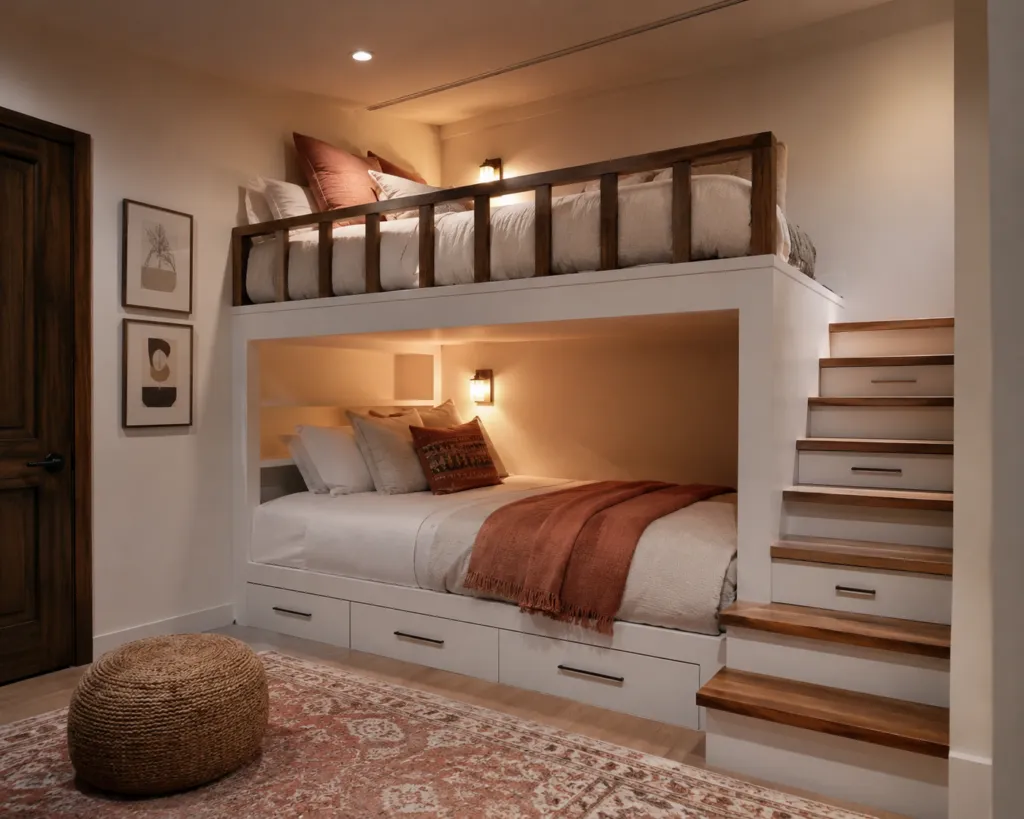
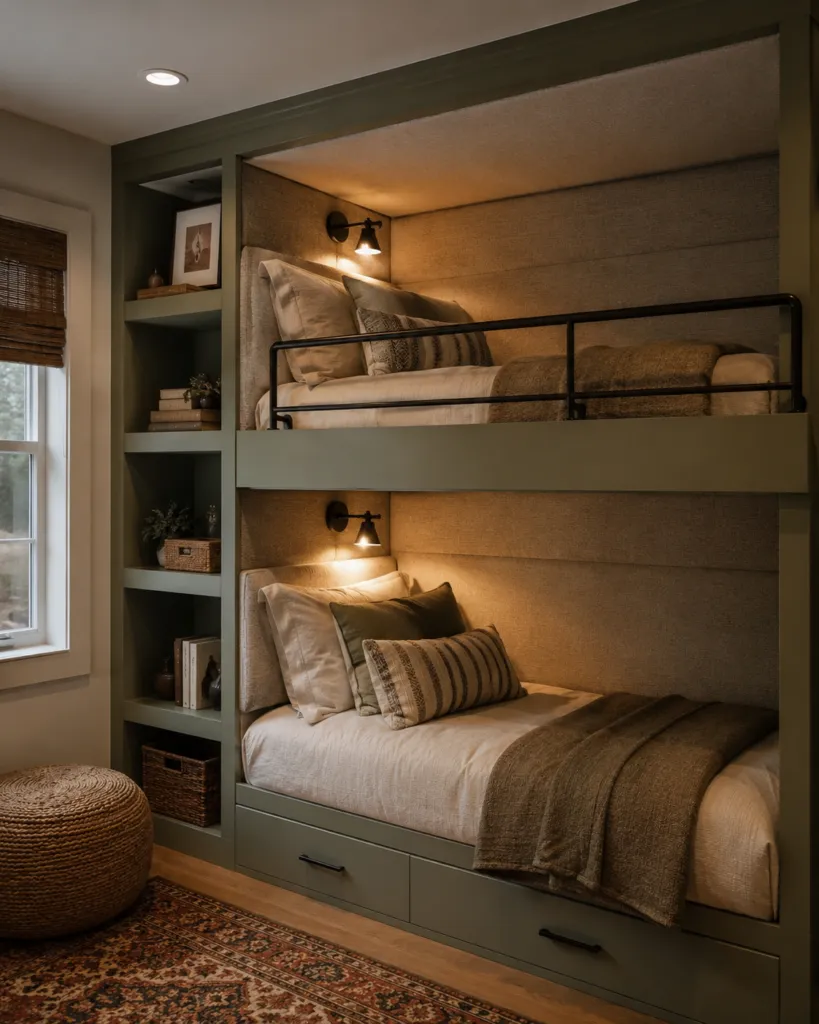
- Built-in architecture: maximizes every inch—integrated staircases, deep storage compartments, and lofted sleeping areas maintain clean lines while eliminating wasted space.
- Storage becomes design: Under-bed drawers designed as sculptural elements, wrapped headboards that define space and add visual interest, and wall-mounted shelving serve double duty as both functional and beautiful. Coastal and resort-style aesthetics provide proven inspiration for calming atmospheres.
The key: treat each component as purposeful design rather than purely functional necessity, creating spaces that feel curated and sophisticated rather than cramped or compromised.
Why Your Bunk Room Needs a Cozy Cave Mentality (And How to Build One)
Here’s something that really matters: enclosed, intimate sleeping spaces genuinely create emotional comfort and psychological security. Whether it’s a child developing independence or an adult seeking restorative rest, that “cozy cave” feeling works.
Modern design psychology shows that bedroom nooks and built-in alcoves function as personal sanctuaries—separate from the rest of your home, encouraging deeper relaxation and better sleep quality.
How to Build This Sanctuary
Start with alcove-style architecture (even partial enclosures help), add wrapped structural headboards that create definition, and layer your lighting with dimmers and warm bulbs. Incorporate thoughtful storage integration so everything has its place. Use textural finishes—soft linens, warm wood, tactile elements—to enhance the intimate atmosphere while maintaining sophistication.
The enclosed nature creates psychological separation that’s surprisingly powerful. When combined with careful material choices and textural layering, these intimate spaces transform from purely functional sleeping arrangements into genuinely personal retreats.
Tailor the approach to individual needs: a child’s bunk might feature playful colors and accessible shelving, while an adult’s might emphasize calm neutrals and streamlined storage. The result: spaces that reflect both functionality and genuine comfort.
The Unexpected Rooms Taking Over Your Bunk Space (And Why You Should Let Them)
Let’s be honest: modern bedrooms aren’t just for sleeping anymore. Today’s rooms need to be flexible, transitioning seamlessly between sleep zones, lounging areas, work nooks, and gathering spaces. That’s where thoughtful bunk design really shines.
- Consider multifunctional elements: Built-in benches that serve as seating or guests accommodations, reading alcoves with task lighting, storage that doubles as window seats. Incorporate furniture that adapts—ottomans that store items and provide seating, fold-down desks that disappear when not needed, modular pieces that shift with your needs.
- Strategic design ensures everything feels intentional: Confident furniture selections and purposeful material combinations prevent multipurpose spaces from feeling cluttered or compromised. Stick to a cohesive color palette and ensure different zones flow together visually.
The transformation is remarkable: spaces evolve from functional afterthoughts into genuine retreats that offer flexibility without sacrificing style. Your bunk room becomes a destination—a place where you actually want to spend time—rather than simply where you sleep. Modern living is complex, and your room should adapt accordingly while maintaining timeless elegance.