Bookshelves have transformed from simple storage into powerful design statements that tell your story.
What started as functional shelving has evolved into a curated reflection of who you are—your interests, travels, and aesthetic taste all on display.
Designers are moving away from rigid, perfectly symmetrical arrangements toward more intentional, personal compositions.
Instead of treating your bookshelf as just a library, think of it as a gallery showcasing your life.
You might display family photos, collected travel mementos, vintage finds, or color-coordinated books alongside decorative objects—whatever feels authentically you.
What makes this shift exciting? It’s permission to make your shelves feel genuinely lived-in rather than showroom-perfect.
Whether you’re using floating shelves, vintage bar carts, or traditional built-ins, the goal is creating a display that balances visual appeal with your actual lifestyle.
Color plays a particularly important role here—thoughtfully choosing warm or moody tones, for instance, can completely transform how a space feels while keeping things personal and grounded.
Understanding ‘Bookshelf Wealth’ — It’s About Authenticity, Not Budget
Bookshelf Wealth is a liberating approach that celebrates genuinely lived-in spaces over expensive design perfection.
Rather than pursuing sterile styling, this philosophy is about surrounding yourself with treasured volumes, meaningful photographs, collected objects, and mementos that genuinely matter to you. Your bookshelf becomes a personal museum—a visual timeline of your intellectual interests, cherished memories, and evolving tastes throughout different life chapters.
A worn leather armchair book, a framed photo from your favorite trip, a handmade ceramic piece from a friend—these tell your story far more compellingly than perfectly matched decorator books ever could.
This approach aligns beautifully with what designers call “warm minimalism”—combining minimalist simplicity with genuinely welcoming, textured elements through natural materials and soft lighting. You’re not cluttering; you’re being intentional about what deserves shelf space.
It’s about honoring what matters to you rather than following external design rules. The result? A space that feels both calm and authentically yours.
Transform Your Shelf Into a Design Statement: Proven Styling Techniques
Professional designers use several specific techniques to elevate ordinary shelving into focal points worth looking at:
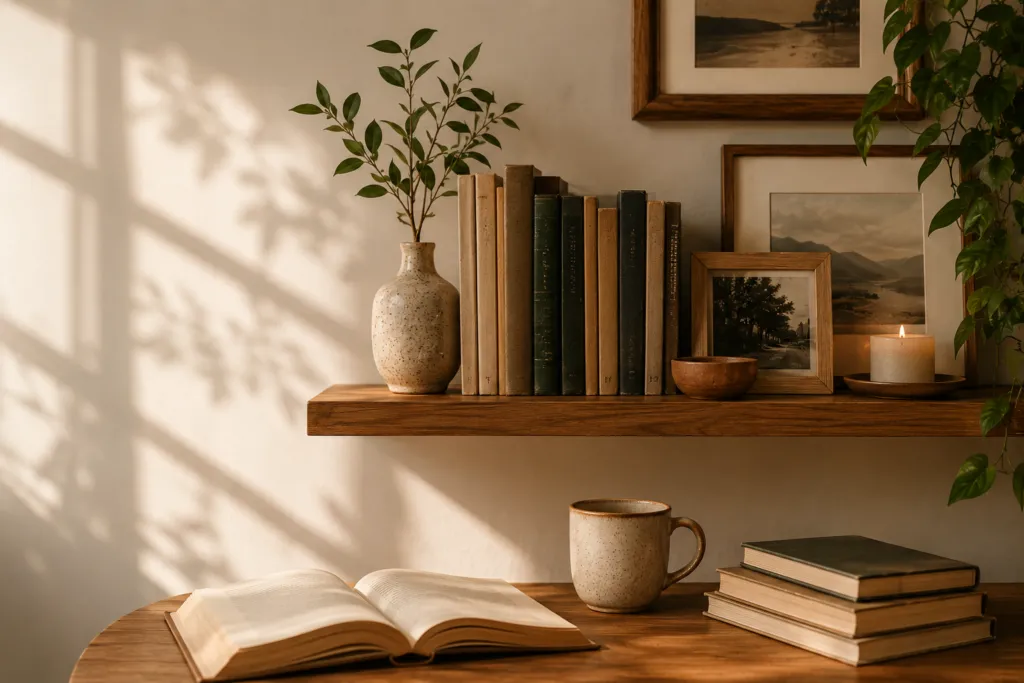
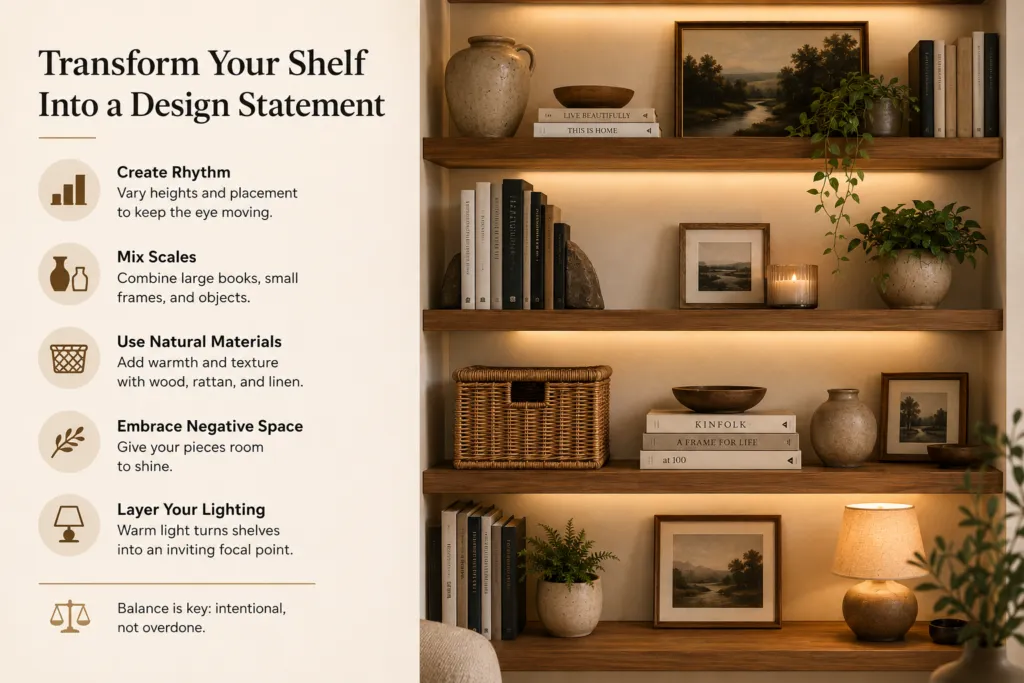
- Create Visual Rhythm: Vary the heights of items—books stacked vertically, objects placed horizontally, some standing solo. This natural rhythm keeps your eye moving and prevents visual monotony.
- Mix Different Scales: Combine large coffee table books with smaller framed photos, tall decorative objects with compact items. This balance feels more dynamic and interesting than uniform sizing.
- Use Natural Materials: Rattan baskets, woven storage, warm wood, and linen-covered boxes add tactile richness and softness that feels inviting rather than sterile.
- Embrace Strategic Empty Space: Don’t fill every inch. Breathing room actually makes your curated pieces stand out more and prevents that overwhelming, cluttered feeling.
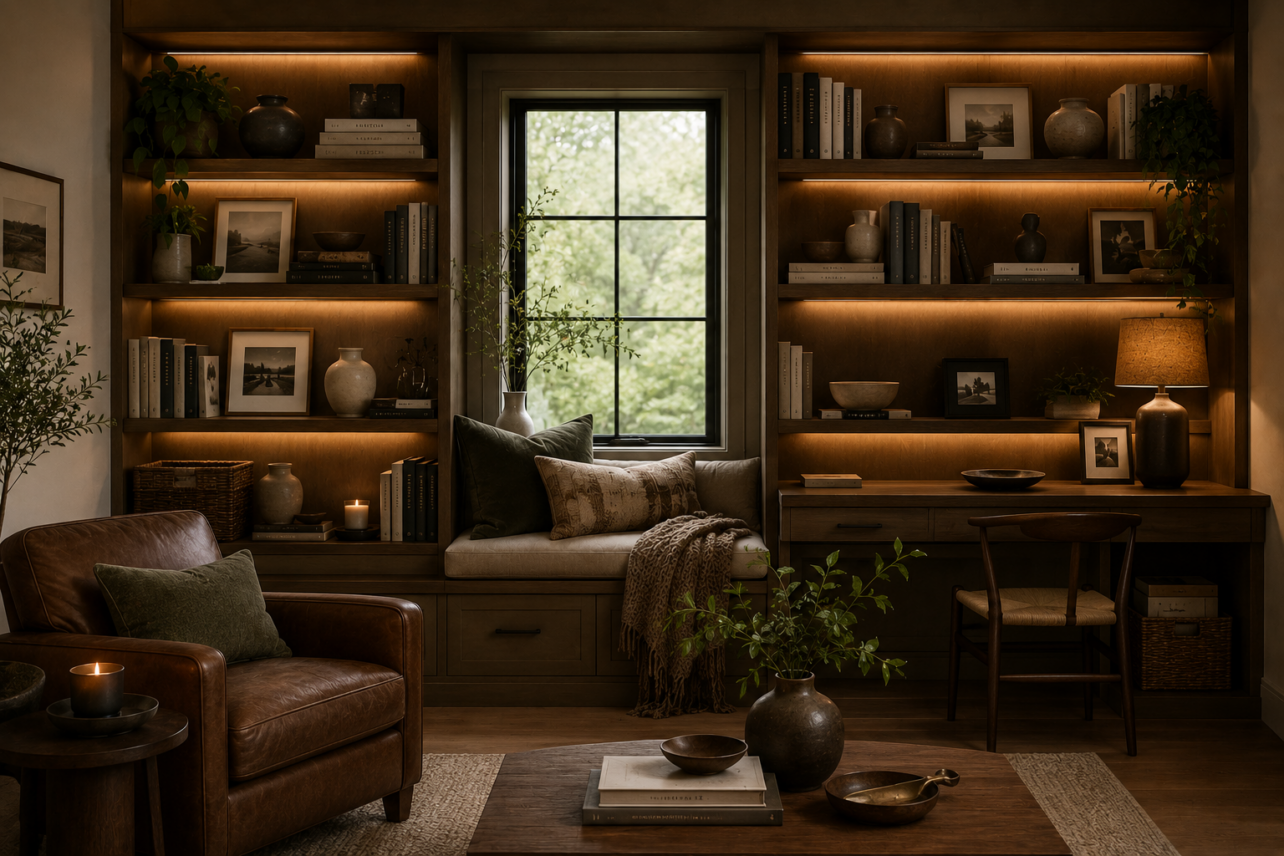
- Layer Your Lighting: This is crucial. Strategically placed warm-toned lights—whether built-in shelf lighting, a simple table lamp nearby, or even candlelight—transforms functional shelving into an inviting focal point that draws people in.
The key is balance: intentional arrangement without overthinking it to the point of feeling precious or untouchable.
Why Warm Wood and Moody Tones Are Replacing Cold White Minimalism
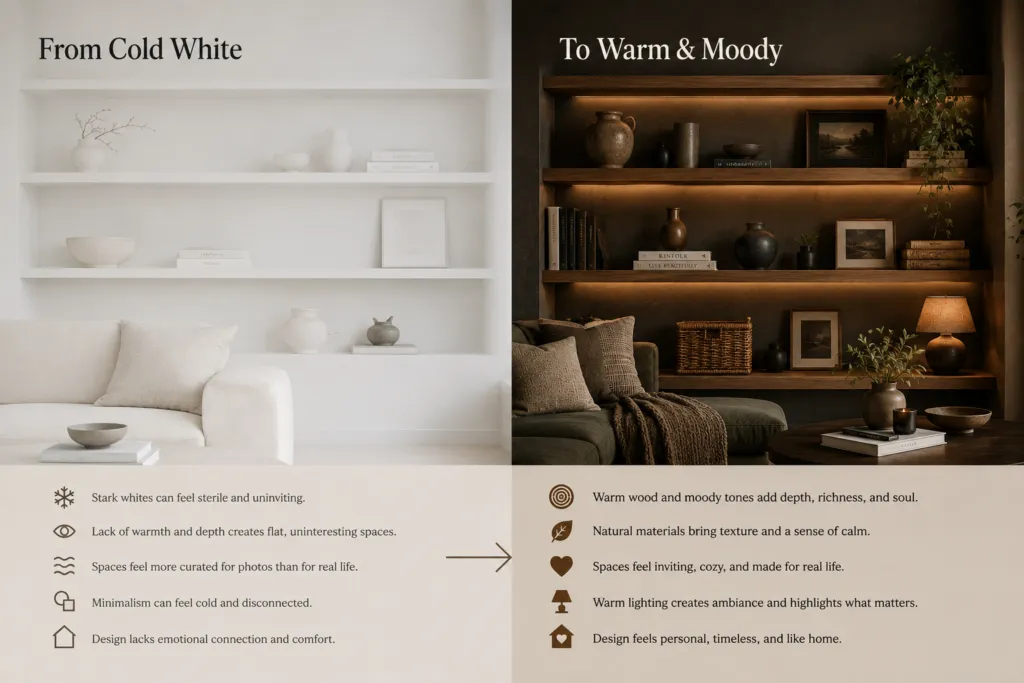
Contemporary design is shifting toward richness, depth, and warmth.
Rift-sawn white oak, walnut, deep charcoal, and other natural, warmer materials are steadily replacing the stark white minimalism that dominated recent years.
These warmer choices create something more inviting and lived-in—spaces that feel genuinely cozy rather than curated for magazine photography.
This movement reflects a broader design philosophy called “warm minimalism” that blends minimalist restraint with textured, welcoming elements through natural materials, soft lighting, and intentional negative space. The beauty of this direction? It aligns with how people actually want to live.
Warm wood tones age gracefully, feel more substantial underfoot and to the touch, and create natural visual coherence throughout a room.
Combined with thoughtfully chosen accent colors—whether muted earth tones or strategic pops of unexpected color—these palettes become tools that genuinely influence how you feel in your space.
This isn’t about abandoning simplicity; it’s about making minimalism feel like home rather than a design exercise.
Natural materials, neutral backgrounds, and warm lighting create the perfect foundation for displaying what matters to you.
Built-In Bookshelves Are Getting a Modern Makeover
Built-in shelving is being reimagined to work harder in your actual life.
Rather than standing alone as storage, contemporary built-ins integrate seamlessly with your room’s function and flow.
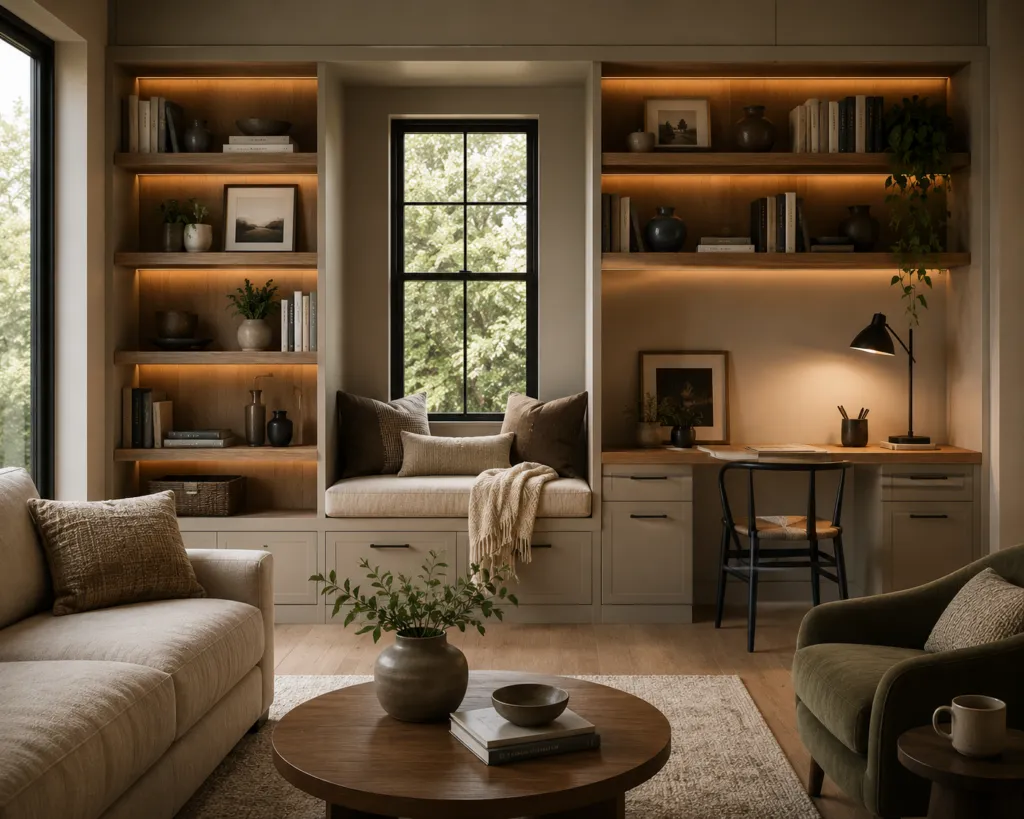
Modern designs increasingly feature integrated reading benches, functional countertops for workspace or display, and asymmetrical configurations that feel more dynamic than traditional grid layouts.
These multipurpose built-ins might include a cozy window seat for reading, dedicated display surfaces for collections, or flexible shelving that adapts as your needs change.
What’s shifting? Built-ins are moving from “storage that happens to be prominent” to active living spaces serving multiple overlapping purposes.
A bookshelf becomes a reading nook, a display gallery, a work surface, and a place to rest—all at once.
This evolution reflects how well-designed spaces honor how people actually live.
Rather than fitting your life into predetermined storage, thoughtful built-ins adapt to accommodate your genuine needs and daily rhythms while maintaining that warm, intentional aesthetic that makes a house feel like home.