
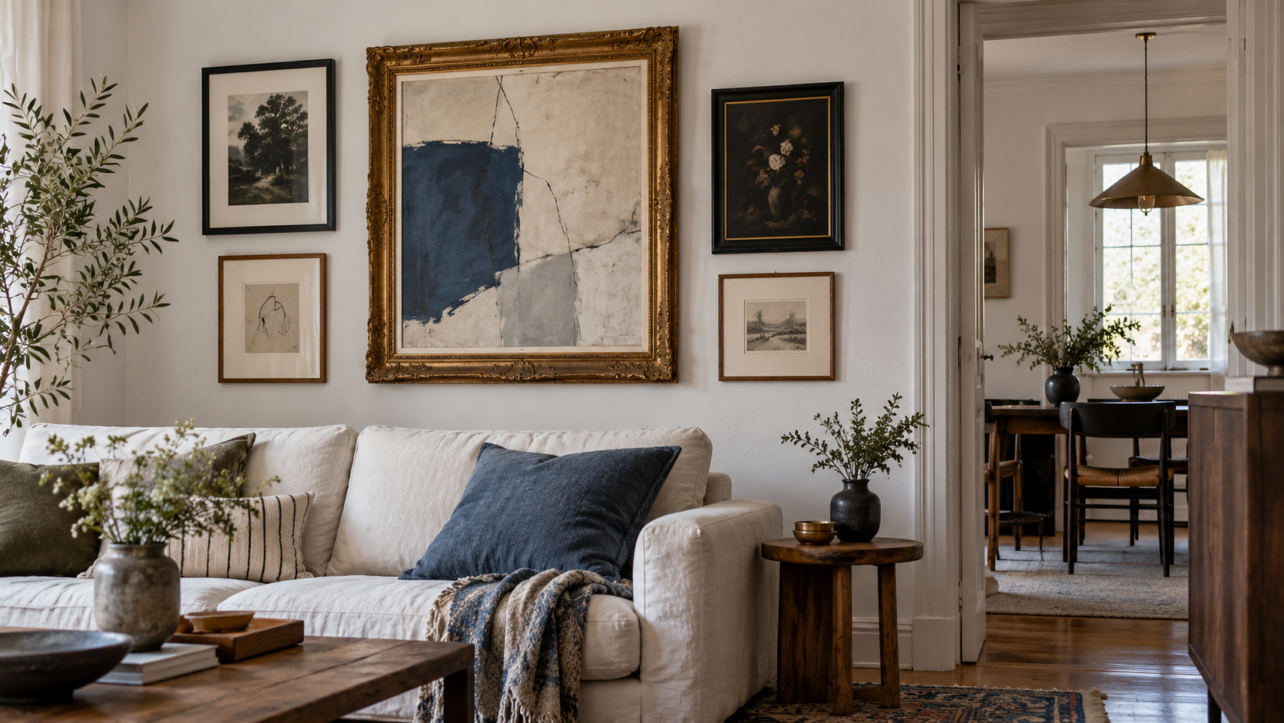
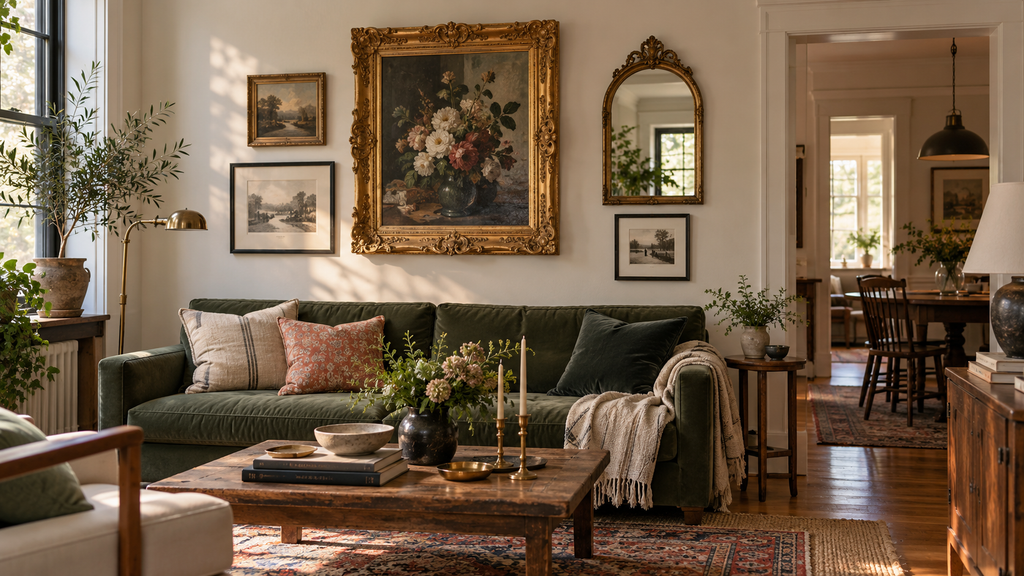
An elaborate gilded frame does not have to contain a traditional oil painting. It can just as effectively surround an abstract print, minimalist drawing, graphic photograph, or contemporary textile. The contrast creates a focal point while giving an interior the layered quality that comes from combining objects with different histories.
This pairing is sometimes presented as a new rule-breaking trend led by Gen Z, but that generational claim is difficult to substantiate. Mixing periods and styles is better understood as an established decorating technique that has gained renewed visibility through social media, resale marketplaces, and interest in secondhand furnishings.
The most successful displays do not depend on age labels or rigid formulas. They work because the frame, artwork, wall, and surrounding furniture have been considered together. Here is how to create that balance while protecting the pieces being displayed.
Start With Contrast, but Look for a Connection
An ornate frame and a contemporary artwork can differ dramatically in style while still sharing one connecting element. That link might be color, scale, subject, material, or mood.
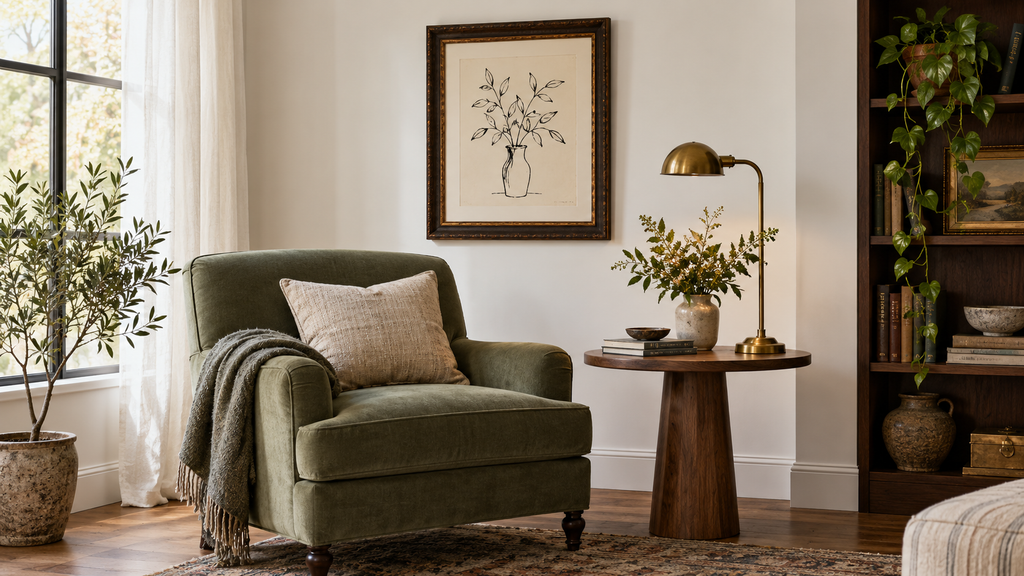
A black-and-white line drawing, for example, can look deliberate in a dark carved frame because the restrained palette unifies the two. A bright abstract print may work in a worn gilt frame when a small amount of gold appears elsewhere in the room. Even a pronounced mismatch can succeed if the artwork and frame have compatible proportions.
The frame should contribute to the composition without obscuring it. A narrow, highly detailed molding may sharpen a small graphic print, while a broad, heavily carved frame can overpower the same image. Before committing, place the frame and artwork together on the floor or photograph the combination. Viewing it from a distance makes it easier to judge whether the eye reaches the artwork or stops at the frame.
This is a matter of visual judgment rather than a universal design law. A quiet room may benefit from one deliberately extravagant frame. A room that already contains patterned wallpaper, decorative trim, colorful upholstery, and several collections may need a simpler treatment.
Skip the Supposed 1:3 Rule
There is no well-established requirement that a gallery wall contain one ornate frame for every three simple ones. That ratio can be used as a starting experiment, but presenting it as a professional standard creates false precision.
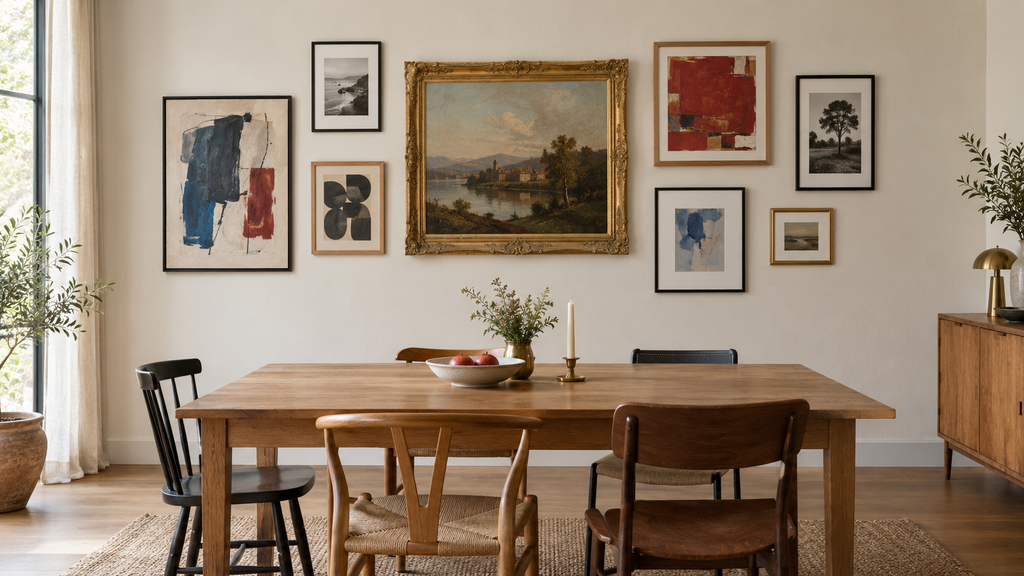
Instead, evaluate visual weight. A large gilded frame with deep carving will command more attention than several slim wood frames. It may therefore be the only ornate piece a small grouping needs. Delicate vintage frames can be used more frequently because they contribute less visual mass.
Two practical approaches tend to produce a coherent arrangement:
- Use one or two ornate frames as focal points and keep the remaining frames quieter.
- Use ornate frames throughout the display, but repeat a limited palette, such as gold, dark wood, and black.
Exact matches are unnecessary. Repeating a few finishes, shapes, or mat colors gives the eye enough consistency to understand the display as a group.
Before making holes, trace each frame onto kraft paper and tape the templates to the wall. Check the arrangement from the primary viewing position as well as from nearby doorways. Leave enough open wall around the grouping that it does not appear squeezed between trim, furniture, or the ceiling.
Treat the Frame and Artwork as Separate Decisions
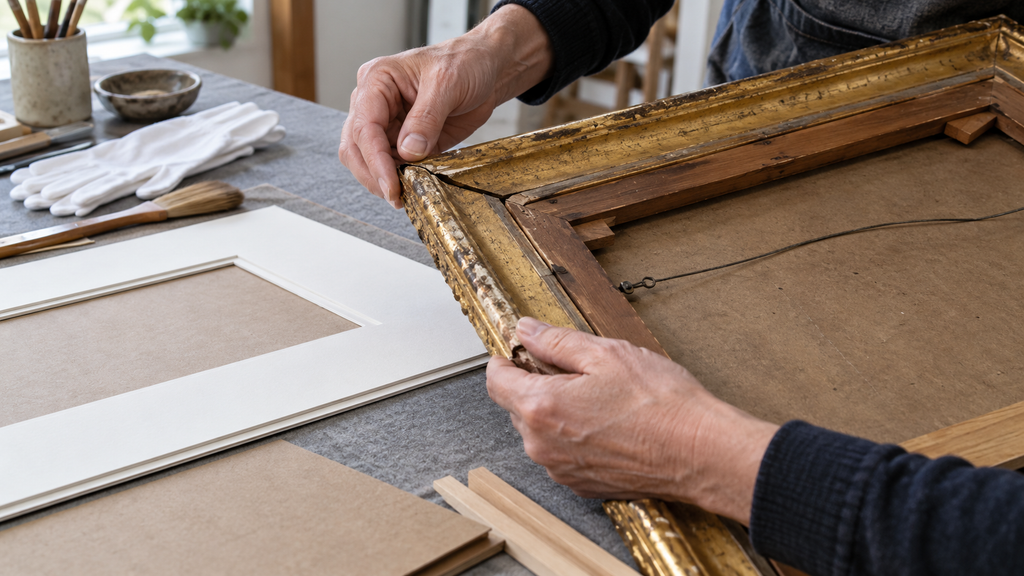
A beautiful old frame is not automatically suitable for a particular work. Examine secondhand frames for loose joints, active flaking, warped molding, unstable ornament, chipped glazing, and damaged hanging hardware. Confirm that the frame is deep enough for the artwork, mat, glazing, and backing materials.
The Canadian Conservation Institute notes that frame style is a matter of personal preference, but the frame package still needs to fit properly and protect the object. Its guidance also recommends inspecting reused frames for loose joints, lost decoration, warping, and damaged glass before use. For valuable, fragile, or historically significant works, consult a professional framer or conservator rather than modifying the frame casually. Canadian Conservation Institute framing guidance
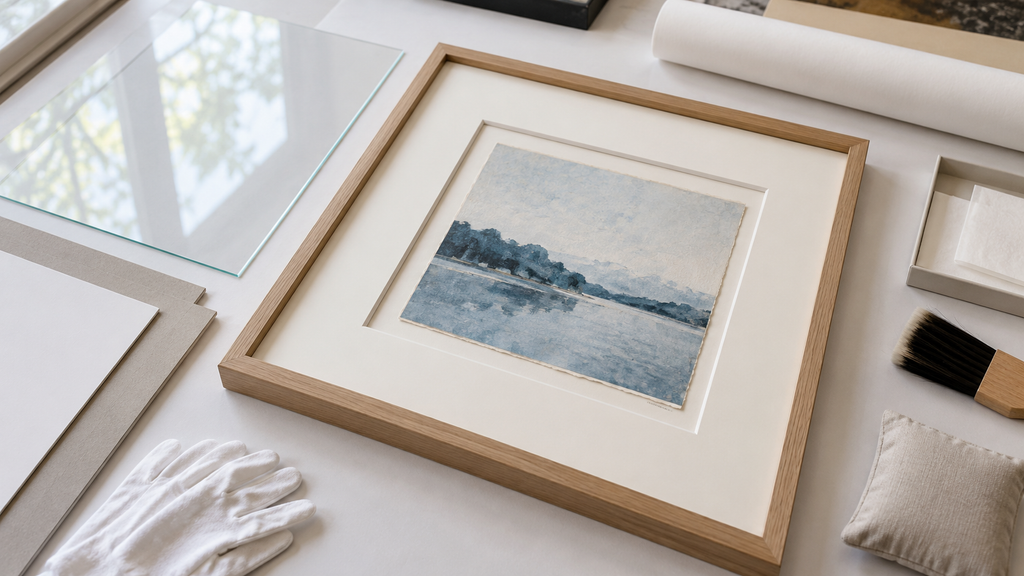
A frame that is too small should not be forced around a canvas or panel. Likewise, a paper work should not be pressed directly against the glazing. A window mat or appropriate spacer creates separation between the surface of the artwork and the glass or acrylic.
Protect Works on Paper and Personal Keepsakes
Modern prints, letters, photographs, children’s drawings, and other paper objects can be visually compelling additions to a gallery wall, but sentimental or valuable originals deserve more than decorative framing materials.
The Library of Congress recommends chemically stable framing components for paper-based objects, including conservation-quality matboard, a suitable backing board, and glazing that does not touch the object. It also advises keeping framed paper away from direct sunlight, intense light, radiators, vents, damp locations, and other environmental extremes. Light damage is cumulative and can cause fading, discoloration, and embrittlement. Library of Congress preservation guidelines
For an irreplaceable letter, photograph, or child’s drawing, consider displaying a high-quality reproduction and storing the original under appropriate conditions. If the original will be shown, ask a preservation framer about reversible mounting methods. Avoid household tape, rubber cement, spray adhesive, or permanent glue.
Matting can also improve the design. A generous mat creates visual space between a detailed frame and a restrained image, while a narrow mat produces a more compact and energetic effect. Choose the proportion by testing samples rather than relying on a single formula.
Textiles require their own mounting approach. Do not hang a valuable fabric by a few pins or stretch it aggressively to fit a frame. Fibers can weaken under uneven tension, and dyes may fade with prolonged light exposure. A conservator or experienced textile framer can advise on an appropriate support for valuable or fragile pieces.
Use Personal Objects Selectively
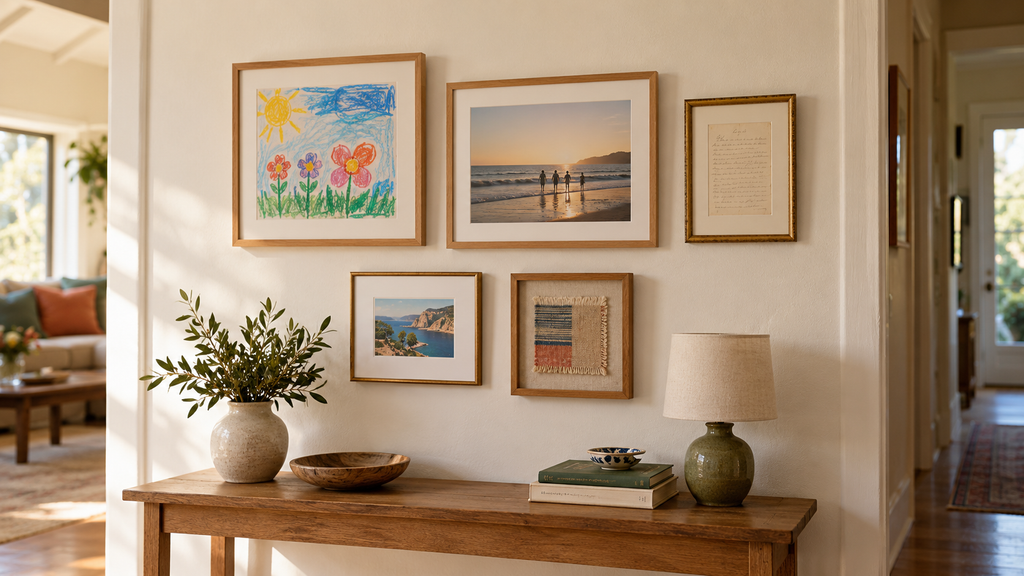
A gallery wall can include more than conventional prints and paintings. Postcards, handwritten notes, maps, small textiles, family photographs, and children’s art can give the display a clear point of view. Their value comes from specificity, not from filling every available space.
Choose pieces that can be seen and understood from the normal viewing distance. A tiny letter may have great emotional importance but become visually lost high on a wall. It may work better in a tabletop frame, a small dedicated grouping, or a deeper display case that allows closer viewing.
Avoid framing irreplaceable objects solely to fit a color scheme. Preservation needs should come first. When an original is too fragile for long-term display, a reproduction can preserve the personal story without exposing the object to unnecessary light.
Buy Old Frames Carefully
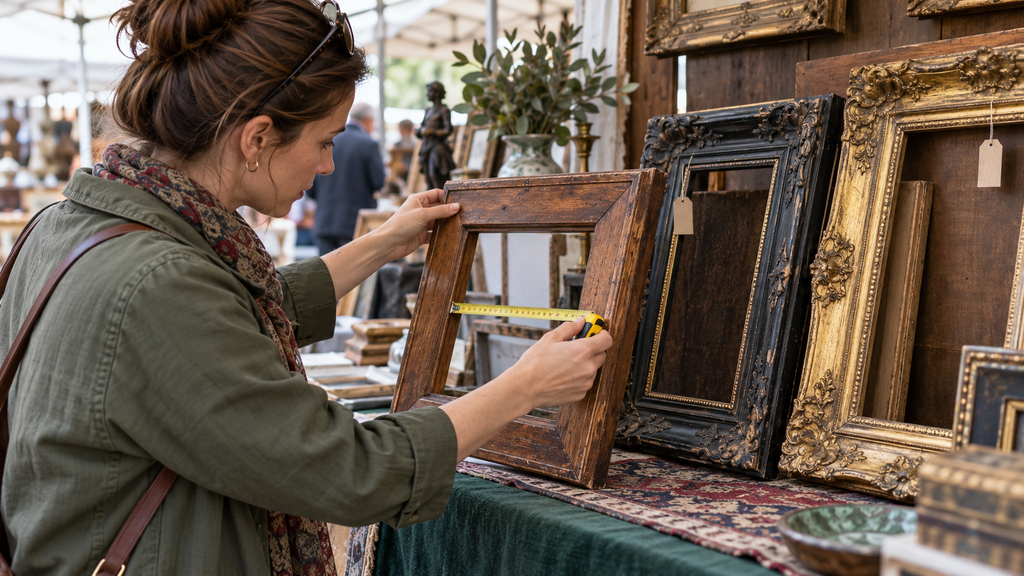
Estate sales, thrift stores, flea markets, and resale platforms can provide distinctive frames, but age and authenticity are not guaranteed. Describe a frame as “antique” only when its history or date is known. Otherwise, “vintage,” “older,” “secondhand,” or “ornate” may be more accurate.
Measure both the outer dimensions and the opening before buying. Reframing, replacing damaged glazing, or rebuilding the backing can cost more than the frame itself, so a low purchase price does not always mean a low-cost finished piece.
Be cautious when cleaning or refinishing old painted frames. Their coatings may be fragile, and aggressive scrubbing can remove gilding or decorative detail. Old painted objects may also contain lead. The US Environmental Protection Agency identifies refinishing old furniture as a potential source of lead exposure and warns that sanding or scraping suspect paint can create hazardous dust. Seek appropriate testing or professional advice before disturbing an unknown old coating. EPA lead-exposure guidance
Plan the Lighting Along With the Arrangement
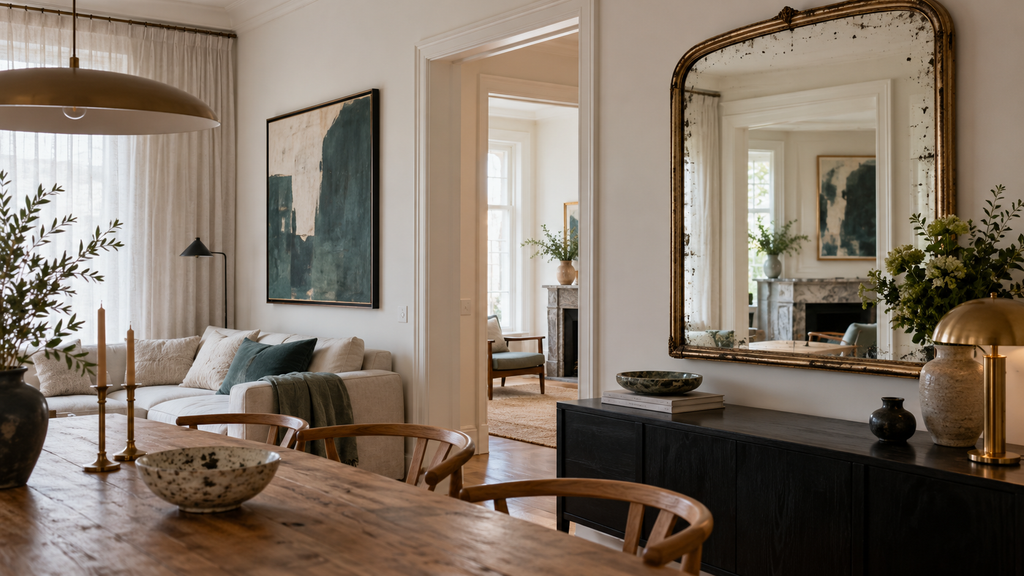
Mirrors can introduce reflected light and new sightlines, but they do not automatically make every gallery wall better. Place a mirror only after checking what it will reflect from the main seating and standing positions. A mirror that captures artwork, a window view, or an attractive architectural detail may add depth. One that reflects a television, exposed storage, harsh light, or a busy passage can add distraction instead.
Glare is another consideration. Glass-covered art opposite a bright window may already be difficult to see; adding a mirror can increase competing reflections. Test the placement throughout the day before drilling.
Do not use direct sunlight as display lighting for sensitive paper, photographs, or textiles. The Library of Congress explains that visible light as well as ultraviolet and infrared radiation can contribute to deterioration, and that most light-induced damage cannot be reversed. UV-filtering glazing can reduce one source of exposure, but it does not make prolonged bright light harmless. Library of Congress light-damage guidance
Hang Frames and Mirrors for Their Actual Weight
Decorative value does not outweigh secure installation. Check the condition of the frame, its attachment points, the hanging hardware, and the wall before installation. Select hardware rated for the object’s weight and appropriate for the wall material; drywall, plaster, masonry, and wood framing require different fastening approaches.
Large mirrors and unusually heavy frames may require more than a general-purpose picture hook. Follow the mirror or hardware manufacturer’s instructions and use a qualified installer when the weight, wall construction, or mounting system is uncertain. Renters should obtain any required permission before drilling or installing anchors and should not assume that a removable-looking installation is permitted by the lease.
Avoid placing inadequately secured glass objects where a fall could strike a bed, seating area, walkway, or play space.
Aim for a Collected Room, Not a Manufactured Backstory
The appeal of an ornate frame around contemporary art comes from contrast, but contrast alone is not enough. The frame should suit the scale of the artwork, the hanging method should suit the object and wall, and the display should reflect items the household genuinely wants to see.
A strong arrangement may include a gilded focal frame, several restrained companions, a family photograph, and one carefully positioned mirror. It may also consist of a single contemporary print in an exuberant secondhand frame. Both approaches can feel personal without pretending that every item is rare, antique, or historically important.
The useful principle is simple: style can be mixed freely, but materials, proportions, preservation, and installation still matter.