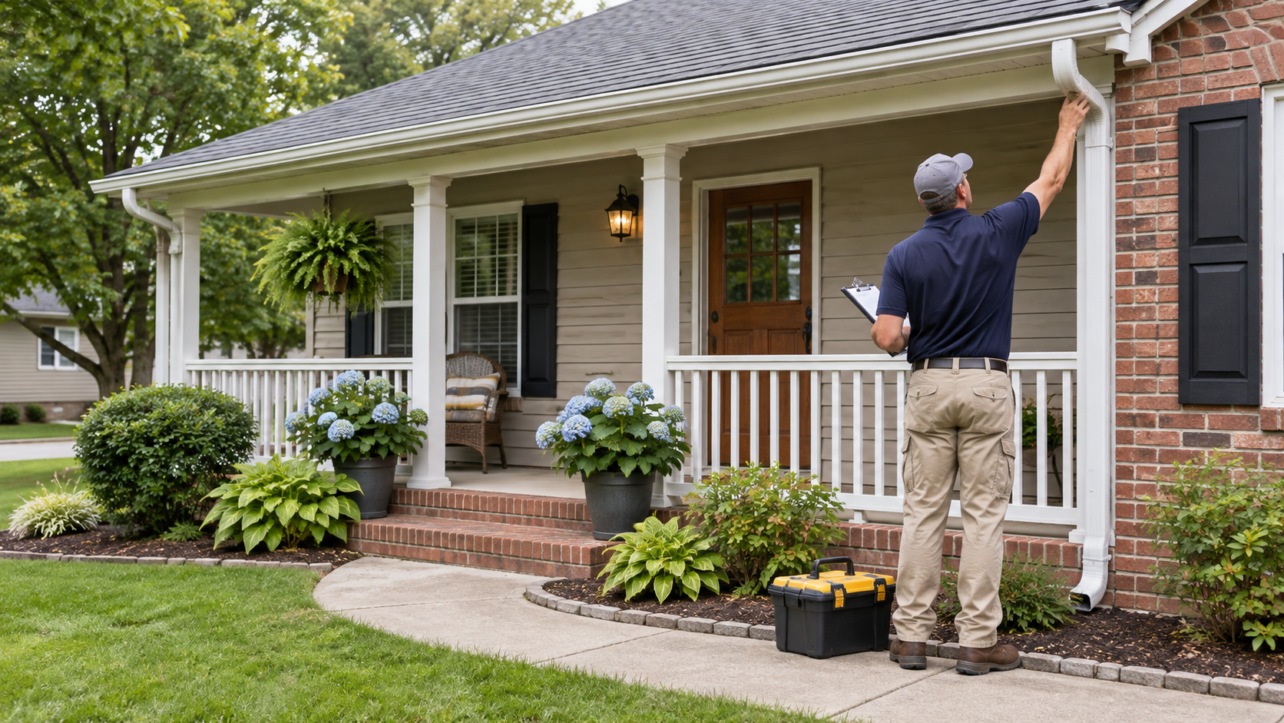
A home’s exterior can influence whether a prospective buyer approaches a showing with interest or concern. Peeling paint, blocked walkways, overgrown plants, and neglected gutters may suggest deferred maintenance. A clean entrance and a well-kept landscape, by contrast, make the property easier to understand and inspect.
That does not mean every exterior renovation will increase the sale price. There is no dependable formula showing that a particular paint color, front door, or planting choice will add—or subtract—thousands of dollars. Location, property condition, local demand, and the quality of the work all affect the result.
Still, curb appeal matters. In the National Association of Realtors’ 2023 outdoor-remodeling report, 98% of surveyed Realtors said curb appeal was at least somewhat important to potential buyers. That finding reflects professional opinion rather than a guaranteed return, but it reinforces a sensible selling strategy: fix visible problems first, then make restrained improvements that suit the house.
Repair Before You Decorate
The most valuable exterior work is often less glamorous than a dramatic color change. Start with defects a buyer or inspector is likely to notice:
- Loose handrails, uneven steps, or damaged walkways
- Missing shingles or visibly deteriorated roofing
- Leaking, detached, or clogged gutters
- Rot, failed caulk, or peeling exterior finishes
- Broken fixtures and unreadable house numbers
- Shrubs blocking windows, paths, or sightlines
- Poor drainage or water collecting near the foundation
These conditions affect more than appearance. They can raise questions about safety, water intrusion, and the amount of work awaiting the next owner. Repairs involving roofing, structural movement, electrical wiring, persistent moisture, or major drainage problems should be assessed by an appropriately qualified professional. Permit and contractor requirements vary by jurisdiction.
Cleaning can also make an exterior look more cared for, but the method must suit the material. Aggressive pressure washing or abrasive cleaning can damage brick, mortar, wood, and historic surfaces. The National Park Service warns that abrasive blasting can remove the protective outer surface of masonry and permanently alter its appearance. Test any cleaning method in an inconspicuous area and follow the material or coating manufacturer’s instructions.
Think Carefully Before Painting Brick
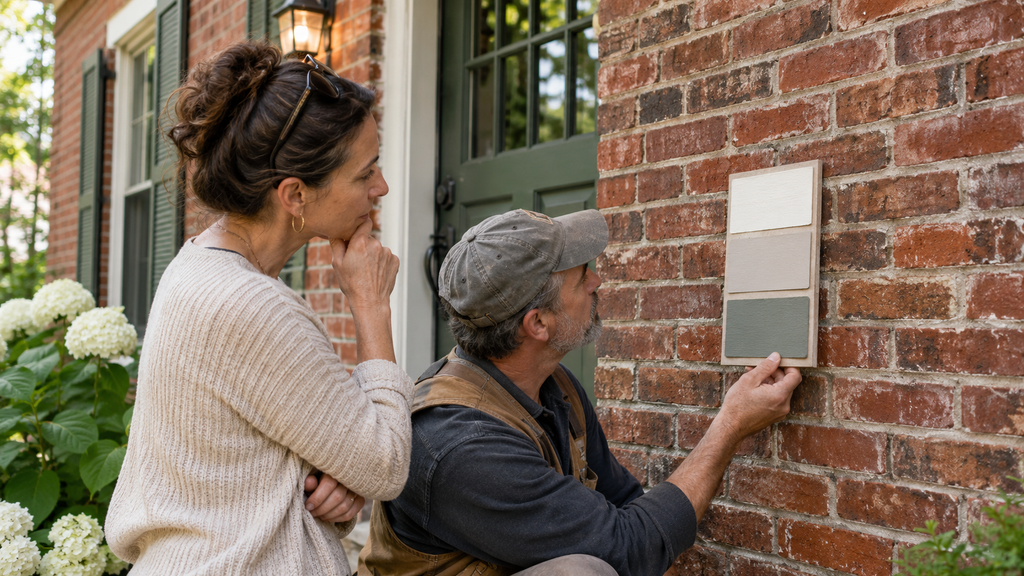
Painting brick can unify a patchy facade or support a deliberate architectural scheme, but it is not a maintenance-free shortcut.
The Brick Industry Association generally advises against applying traditional film-forming paint to brick because it can trap moisture within the masonry. It also estimates that traditionally painted exterior brick may require recoating approximately every three to five years. Actual performance depends on the wall assembly, exposure, preparation, paint system, climate, and workmanship.
Mineral-based masonry coatings may provide greater vapor permeability and longer service than conventional paint, but suitability still depends on the brick and existing wall conditions. Glazed brick, previously coated masonry, failing mortar, and moisture-damaged walls require particular care.
Removing paint later is not necessarily a simple reversal. The National Park Service’s masonry guidance explains that abrasive removal methods can erode brick faces and mortar joints. Chemical removal can also cause staining or leave residues when the product and procedure are not appropriate for the masonry.
Before painting, determine why the brick looks dated or uneven. Repointing deteriorated mortar, correcting moisture problems, cleaning carefully, or updating adjacent trim may solve the visual problem without coating the masonry. Historic homes may also be subject to preservation rules.
If work could disturb paint on a pre-1978 home, account for potential lead hazards and applicable federal, state, and local requirements. Do not sand, blast, or scrape an older coating casually.
Choose Color for the House, Not Just the Trend
Warm exterior colors are receiving more attention, but popularity should not be confused with universal suitability.
The 2026 U.S. Houzz Outdoor Trends Study surveyed 1,191 adult Houzz users who had recently completed, were undertaking, or planned an exterior or outdoor renovation. Its findings showed increased interest in beige exterior walls, contrasting trim, architectural accents, native plants, and lower-maintenance landscaping. Because the survey covered Houzz users involved in renovation, it should not be treated as a forecast for every US homeowner or buyer.
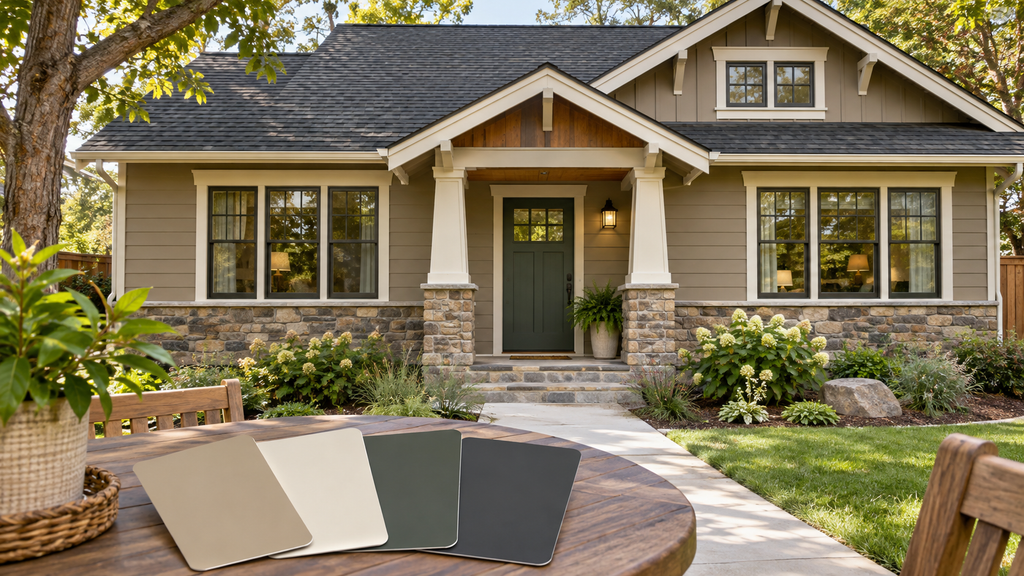
For a sale-oriented refresh, begin with the home’s fixed materials: roofing, masonry, stone, paving, and neighboring architectural context. A color that repeats an undertone already present in those materials will usually look more coherent than one selected from a trend list alone.
Bold color is not automatically a mistake. A saturated front door can provide a controlled focal point without requiring the entire facade to make the same commitment. Test large samples outdoors and view them at different times of day. Sun exposure, shadows, landscaping, and reflections can make exterior colors look substantially different from small indoor samples.
Proportion deserves similar care. A new door, portico, shutter, column, or beam should fit the scale and architectural style of the building. Decorative elements that are too large, too small, or unrelated to the structure can make an expensive project look unresolved. Changes to door openings, porches, stairs, or structural components may also require professional design, engineering, or permits.
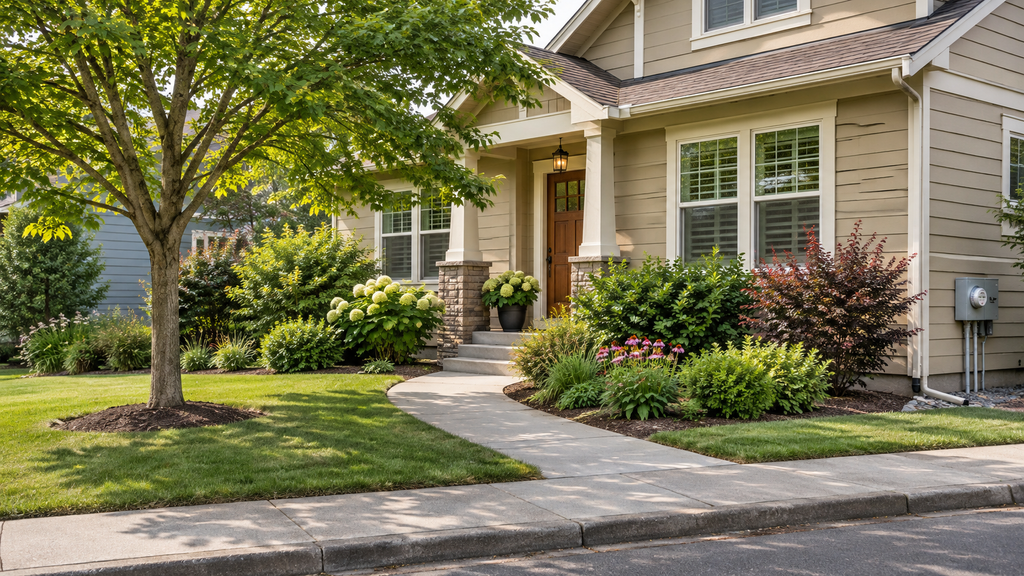
Plan Landscaping at Mature Size
Healthy landscaping can frame the house, guide visitors toward the entrance, and soften large areas of paving. It can also create maintenance and access problems when plants are chosen only for their size at the nursery.
There is no universal rule requiring every tree to be planted 15 or 20 feet from a house. Suitable spacing depends on the species’ mature canopy and root characteristics, the foundation, soil, utilities, drainage, overhead lines, and nearby hardscape. University of Minnesota Extension recommends following the “right plant, right place” principle and planning for the plant’s mature size.
Before planting:
- Check the expected mature height and spread.
- Confirm the site’s sun, soil, drainage, and moisture conditions.
- Locate buried utilities through the appropriate local service.
- Keep required access to meters, equipment, windows, and utility lines.
- Consider how roots, falling fruit, leaf litter, and branches could affect paths, roofs, and gutters.
- Avoid invasive species identified by your state or regional authority.
Pruning may improve visibility, but removing large limbs or working near power lines is not a casual DIY task. Use a qualified arborist where the tree’s size, condition, or location creates risk.
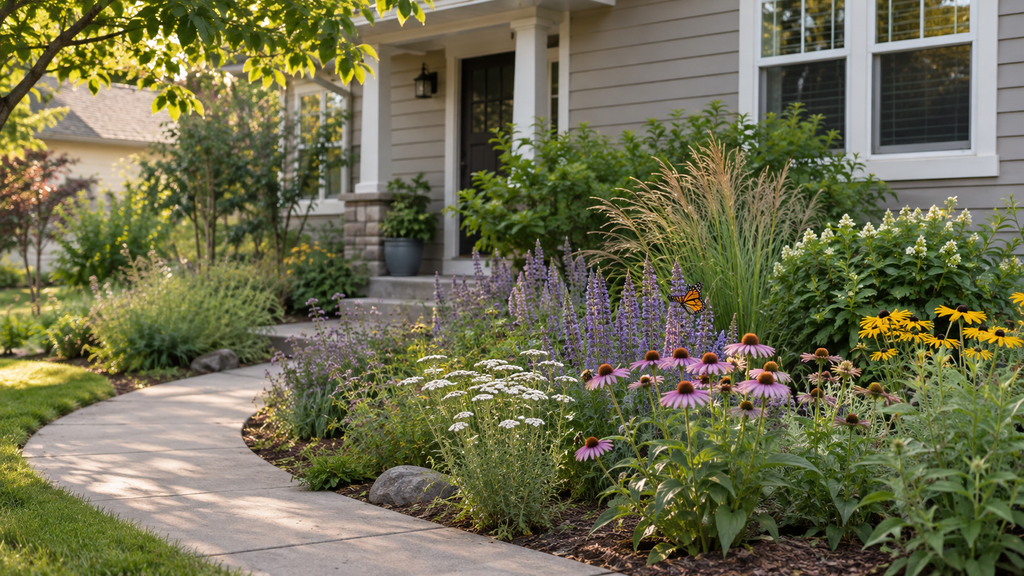
Use Native Plants With Specific Conditions in Mind
Native plants can be valuable because they are adapted to the environmental conditions of the regions where they occur and can provide food or habitat for local wildlife. USDA Natural Resources Conservation Service guidance also supports native flowering plants as part of pollinator habitat.
However, “native” does not automatically mean no watering, no maintenance, or suitability for every spot. A wetland native may struggle in a dry foundation bed, while a sun-loving prairie plant may fail in deep shade. New plantings generally need attentive watering while they establish, even when the mature plants are drought-tolerant.
Use the USDA Plant Hardiness Zone Map to assess whether a perennial is likely to tolerate a location’s average extreme winter temperature. Hardiness zones do not account for summer heat, rainfall, soil, drainage, wind, or light, so they should be one part of plant selection rather than the entire decision.
A regional native-plant society, cooperative extension office, or local botanical garden can help identify species suited to the property’s specific conditions. A layered mix of appropriately sized trees, shrubs, perennials, and ground covers can provide seasonal interest without hiding the house.
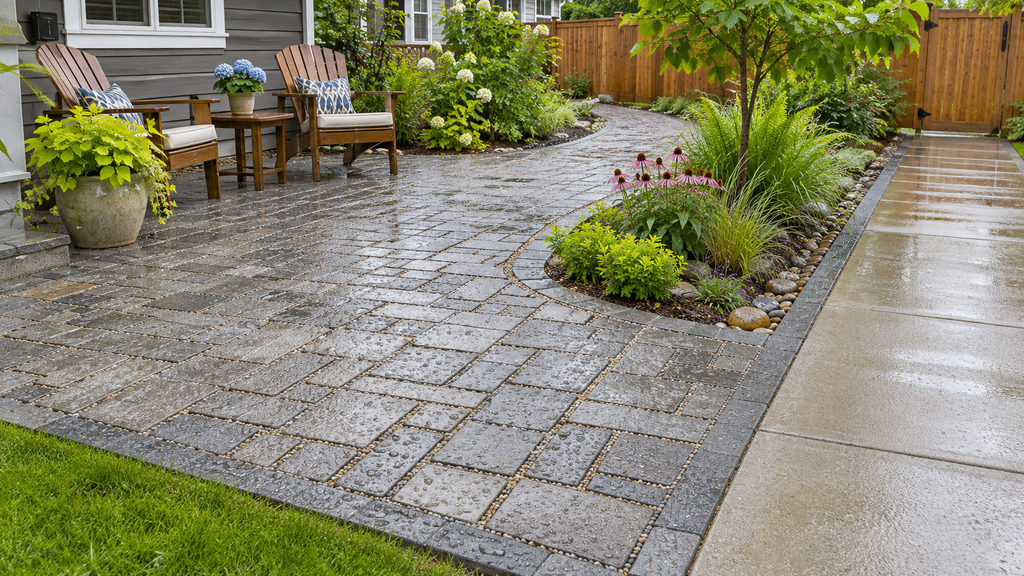
Understand What “Permeable” Surfaces Require
Gravel, permeable pavers, and other porous surfaces can reduce runoff by allowing water to move through the surface. Their performance, however, depends on more than the visible top layer.
The US Environmental Protection Agency explains that permeable pavement systems use underlying soil and gravel layers to store, infiltrate, or direct stormwater to an underdrain. Proper grading, base preparation, soil conditions, edge restraint, and drainage design all matter.
Permeable does not mean maintenance-free. Sediment, leaves, and fine material can clog open surfaces. The EPA recommends inspection, debris removal, erosion repair, and cleaning or refreshing permeable media as needed.
Loose gravel also has limitations. It can migrate onto adjacent surfaces, complicate snow removal, and create difficult footing for wheelchairs, walkers, strollers, and some visitors. Where an accessible route is needed, use a firm, stable, slip-resistant surface appropriate to local requirements. Confirm drainage and hardscape rules with the local authority before replacing a driveway, walkway, or large paved area.
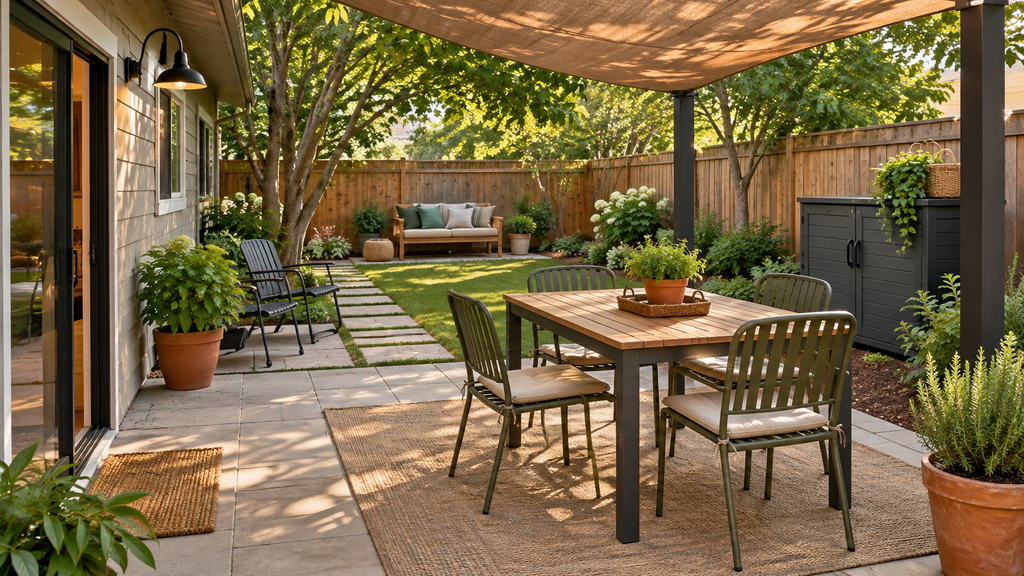
Design Outdoor Space Around Daily Use
Outdoor living remains a significant renovation focus. In Houzz’s 2026 survey, 83% of renovated outdoor spaces included a lounge or seating area. The same study found that deteriorated or broken elements were a more common renovation trigger than improving resale value.
That distinction is important. A shaded seating area, dining space, or outdoor kitchen may improve life for the current household, but it should not be presented as a guaranteed investment return. Climate, maintenance, storage, privacy, utilities, and the amount of usable yard all affect whether a feature makes sense.
Keep permanent installations proportional to the property. Outdoor kitchens involving gas, plumbing, or fixed electrical service require appropriate professional work and may require permits. Fire features must comply with manufacturer instructions, local fire restrictions, fuel clearances, and placement rules.
For homeowners planning to sell soon, flexible improvements may be more prudent than an elaborate built-in installation. Comfortable movable furniture, shade, repaired paving, functional lighting, and a clearly defined seating area can demonstrate how the yard works without committing the next owner to a highly specialized layout.
A Better Curb-Appeal Strategy
The strongest exterior does not need to be the boldest one. It needs to look maintained, coherent, and appropriate for the property.
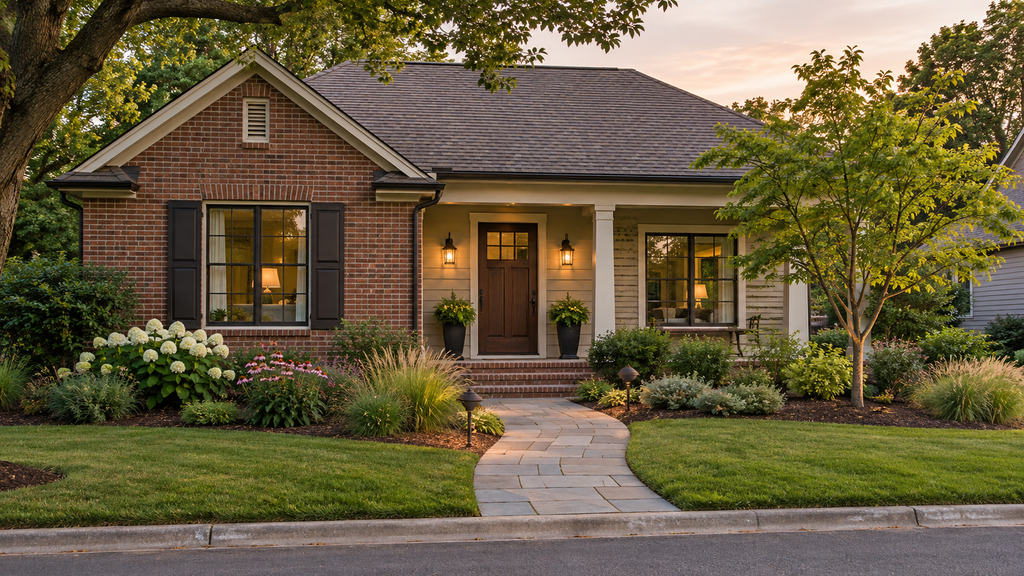
Begin with repairs and drainage. Preserve sound materials when possible. Choose colors in relation to the roof, masonry, and surrounding architecture. Select plants for their mature size and actual site conditions. Treat permeable surfaces as designed systems rather than decorative gravel alone.
These choices cannot guarantee a higher sale price, but they can reduce visible objections and help buyers evaluate the home on its merits. That is a more defensible goal than chasing an unproven trend or promising that one exterior project will pay for itself.