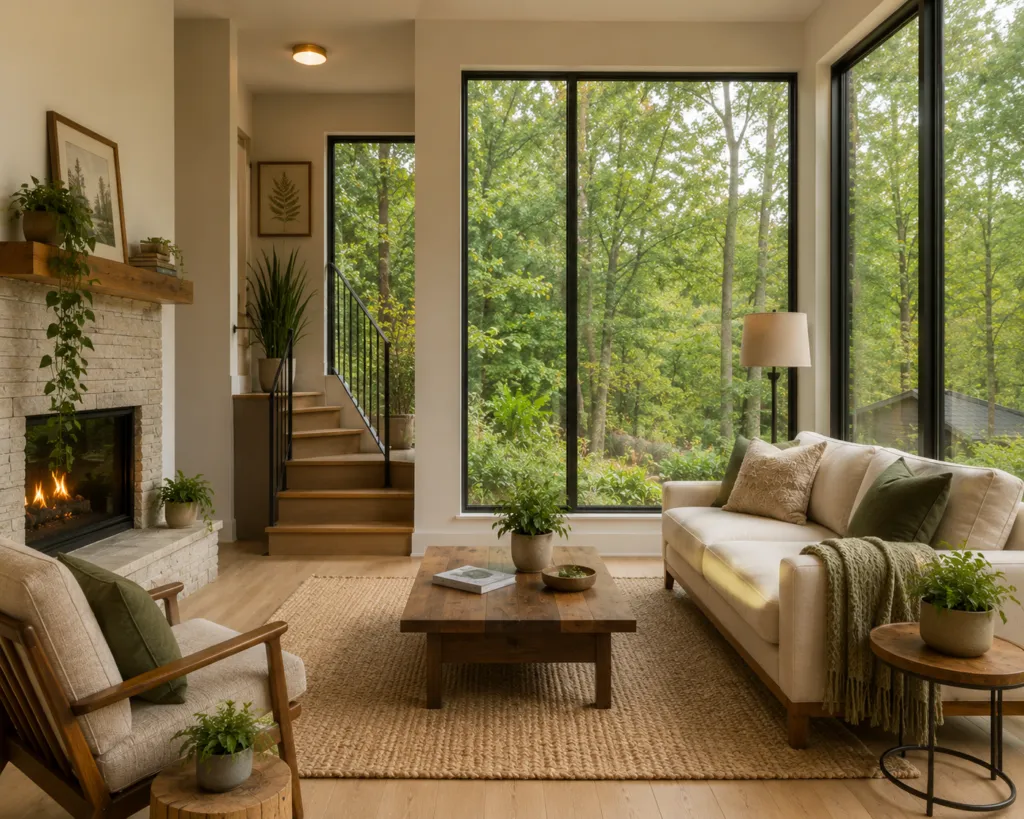
Most of us unknowingly fall into decorating traps that make our spaces feel dated or cluttered—the exact opposite of what we’re aiming for.
Design experts see predictable patterns again and again: outdated color palettes mixed with poor furniture placement, overcrowded shelving, and reluctance to let things go. Here’s the thing: these mistakes develop gradually.
A room doesn’t wake up cluttered overnight; accumulated choices compound until everything feels heavy and uninviting. There’s actually science behind why this happens—we humans tend to instinctively add rather than subtract, filling empty space as a reflex.
Interestingly, trends like modular and adaptable furniture are intentional corrections to this instinct, letting you reconfigure without constant shopping cycles.
Common Mistakes That Age Poorly:
- Trendy color palettes that date within 2-3 years.
- Furniture arrangements that disrupt natural traffic flow.
- Too many competing visual elements without negative space.
- Outdated lighting fixtures that feel institutional.
The good news? Small shifts create outsized impact.
Repositioning furniture, introducing strategic empty space, or refreshing a color scheme can completely reset a room’s energy without major investment.
You’ll be surprised how much difference one thoughtful change makes.
The Budget Revolution: Transform Your Home Without Breaking the Bank
Here’s a design secret: sophisticated spaces don’t require designer price tags. Strategic shopping changes everything—thrift stores, vintage markets, and clearance sections yield treasures rivaling expensive curated finds. That designer sofa’s impact? You can replicate it through thoughtful styling for a fraction of the cost.
Where Smart Decorators Hunt:
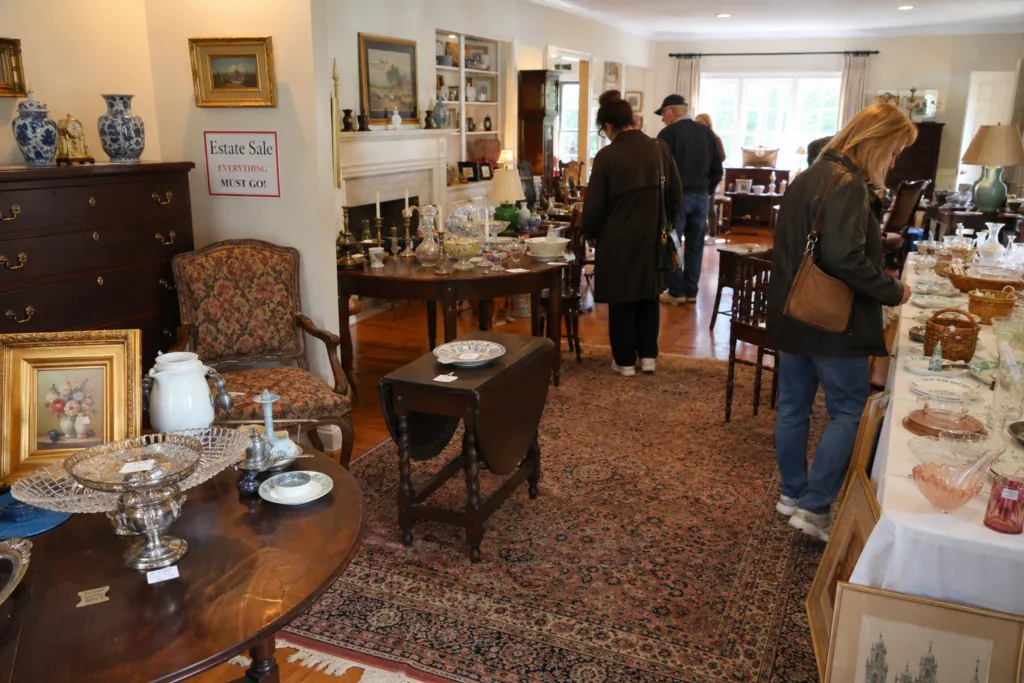
- Estate sales and auctions
- Online marketplaces (Facebook Marketplace, Craigslist)
- Architectural salvage yards
- Clearance sections at major retailers
- Local antique and vintage shops
Kitchen upgrades demonstrate this perfectly: replacing cabinet hardware, updating backsplash elements, or refreshing paint delivers dramatic transformations without renovation expenses.
The real art? Blending investment pieces with budget discoveries to create layered, intentional looks. High-low mixing—when executed thoughtfully—appears far more intentional than matching designer collections.
DIY solutions particularly work here, injecting personality while maintaining affordability.
Contemporary modular furniture trends help too; these adaptable pieces let you reconfigure and refresh without replacing entire collections. Sophistication emerges from restraint and curation, not price point. Budget constraints often spark the most creative solutions.
The Forgotten Spaces: Why Your Bedroom and Bathroom Hold the Key to Happiness
While living rooms command all the decorating attention, your bedroom and bathroom—those personal sanctuaries—deserve equal investment because they profoundly impact daily well-being and stress levels.
Bedroom Design for Better Sleep:
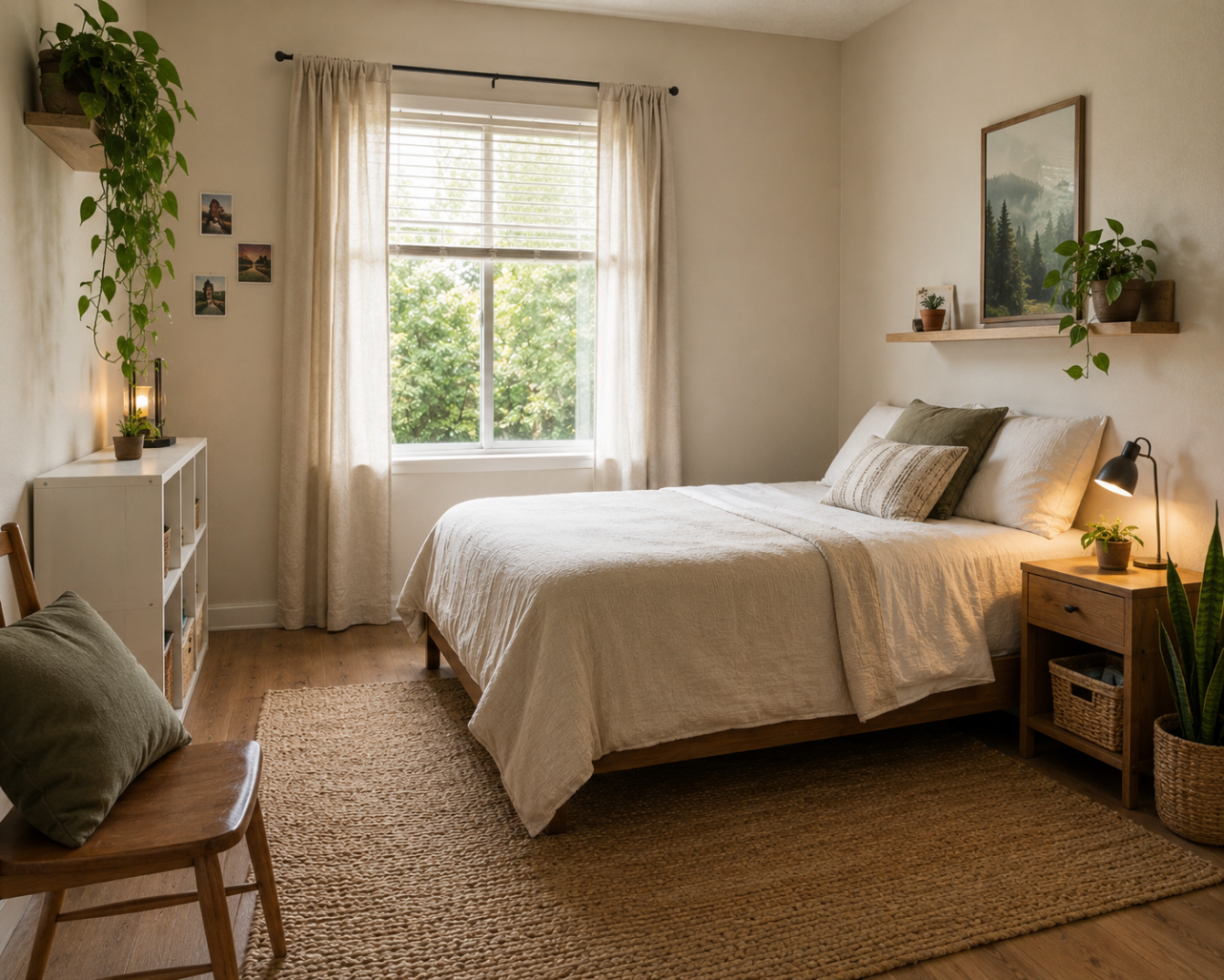
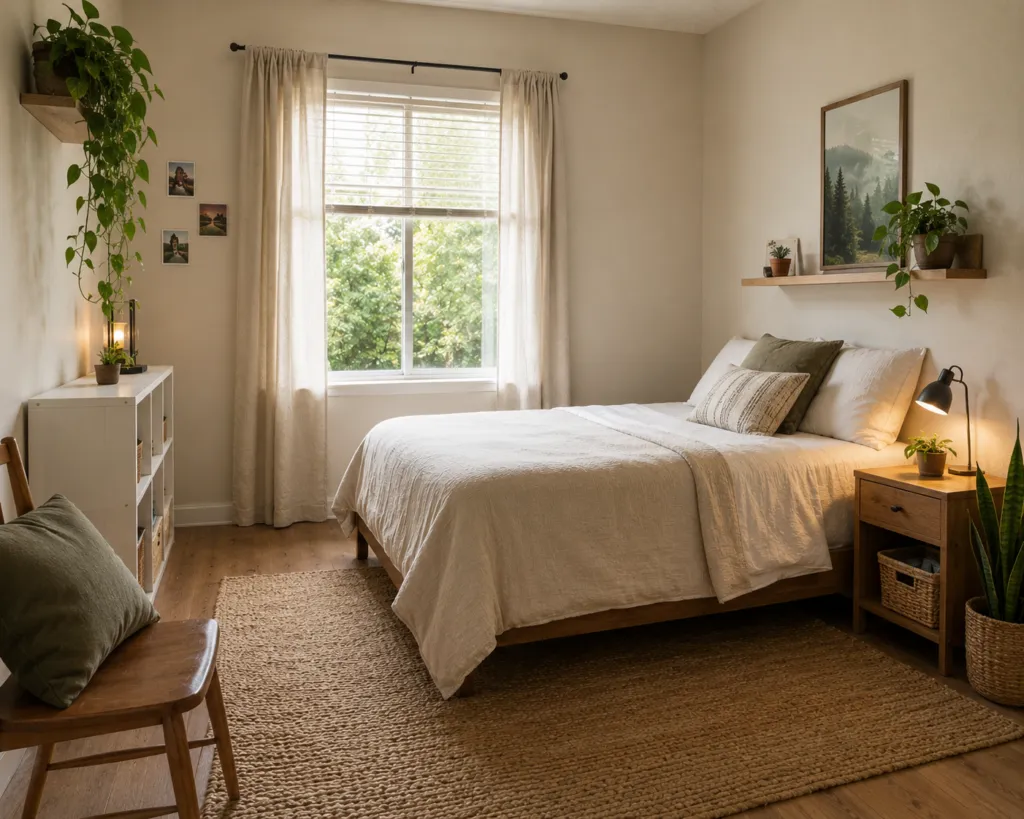
Successful bedroom design balances comfort with aesthetics through thoughtful furniture, fixtures, and accessories that create a tranquil environment.
- Consider your room size, layout, storage needs, lighting, and window treatments.
- Color psychology matters here: cooler tones and muted palettes promote relaxation, while thoughtful lighting placement—think bedside lamps rather than harsh overhead fixtures—establishes the right mood.
- Biophilic design principles enhance these personal spaces too: natural light, organic materials like wood, and indoor plants are proven to improve sleep quality and reduce stress. A single plant or nature-inspired artwork shifts the entire room’s energy.
Bathroom Transformations for Daily Joy:
Bathrooms deliver outsized happiness returns from modest upgrades.
- mirror frames, lighting enhancements, organized storage systems, or quality linens create meaningful daily impact.
- Small choices—fresh towels, organized shelving, soft lighting—generate disproportionate influence.
- Maximizing function without sacrificing style proves particularly crucial; practical storage requirements needn’t overwhelm aesthetic intentions.
Investing thoughtfully in these overlooked areas creates genuine lifestyle improvements.
Small Apartments, Bold Statements: Making Every Inch Count
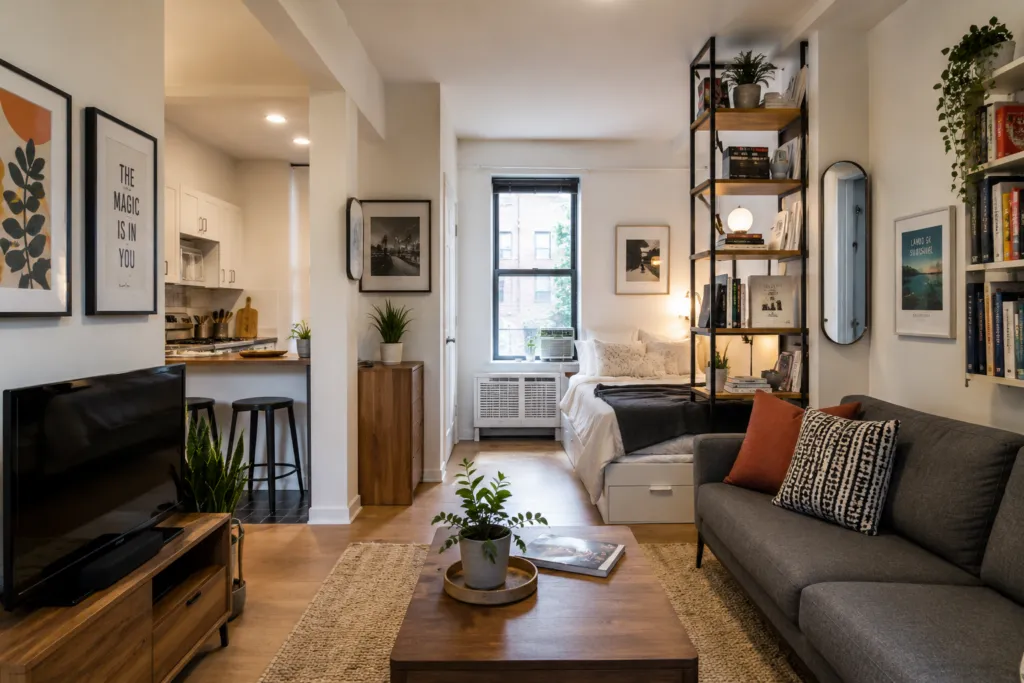
Limited square footage doesn’t limit your aesthetic—it actually sparks the most innovative design solutions. The key? Strategic choices create illusions of expansiveness while maintaining distinctive personality.
Smart Small Space Strategies:
- Position furniture to respect sight lines and create natural traffic flow.
- Choose proportional-scale pieces that don’t overwhelm the space.
- Use vertical storage to draw eyes upward (makes ceilings feel higher).
- Layer throws, pillows, and artwork for depth without consuming floor space.
- Limit metal finishes to 3 types maximum for visual coherence.
Modular, adaptable furniture is engineered specifically for compact living, allowing transformation without sacrificing aesthetics. Your living room likely serves multiple purposes—sleeping, entertaining, working, relaxing—often combined with kitchen space. Every piece must earn its placement through dual functionality or exceptional visual interest.
Color as a Design Tool:
- Strategic color choices dramatically influence how spacious rooms feel.
- Lighter, cooler tones make tiny rooms feel larger; deeper colors create intimacy.
- Saturation and undertone selection matter tremendously. Intentional organizing habits prevent chaos; everything requires designated placement or removal.
Coveted lifestyle spaces in small apartments feel curated rather than cramped, personal rather than sterile, and functional rather than sacrificed. That’s your goal.
The Color Conspiracy: Paint Trends That Actually Stand the Test of Time
Paint trends shift with predictable regularity—some colors fade into dated obscurity within 2-3 years, while others maintain timeless appeal. Here’s how to spot the difference.
What Makes Colors Timeless:
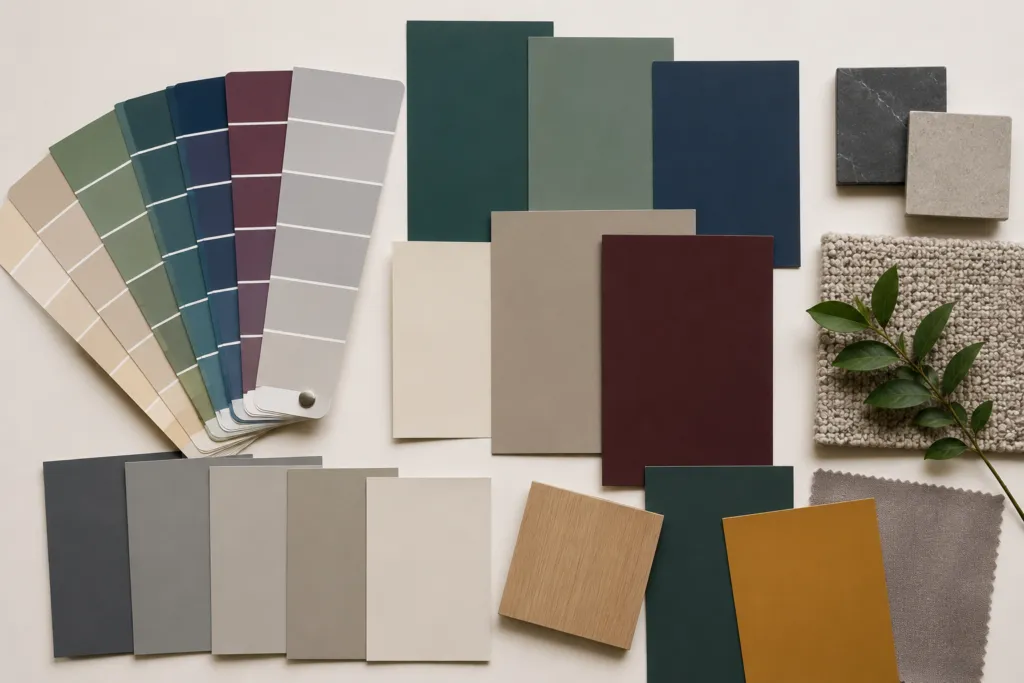
- They exist in nature (greens, warm neutrals, earthy tones).
- They complement multiple design styles.
- They photograph well across varied lighting conditions.
- They feature balanced saturation (not trend-dependent intensity)
Color psychology is real: it profoundly affects how spaces feel, whether calm, cheerful, stressful, or dramatic.
Understanding warm versus cool undertones, saturation levels, and how light interaction happens determines whether colors age gracefully or look trendy.
Contemporary Palettes with Staying Power:
- Deep jewel tones.
- Warm neutrals.
- Sophisticated grays.
Emerging forecasts for 2026-2027 predict “faded opulence”—muted, sophisticated palettes blending luxury with restraint—will define lasting appeal, moving beyond stark minimalism and trend-driven saturations.
Conversely, colors tied to specific trends—particularly those requiring matching furnishings or specific accents—become quickly dated as design cycles shift.
Light exposure dramatically impacts color perception over time: north-facing rooms demand different considerations than sun-drenched southern spaces.
Understanding these nuances allows confident color selection that won’t feel dated in five years.
The Styling Secrets Experts Hide: From Vintage Wallpaper to Maximalism Done Right
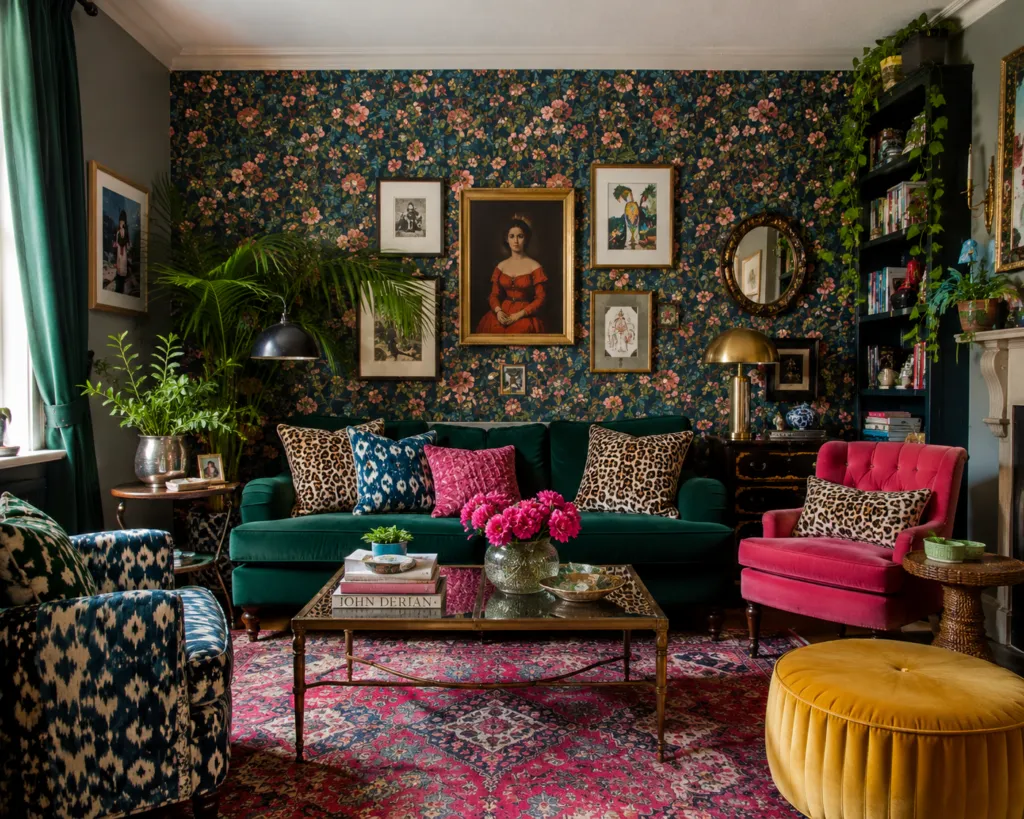
Maximalism and vintage wallpaper represent bold design territories where execution determines success, separating stunning spaces from Pinterest disasters. Here’s where professionals separate from amateurs.
The Maximalism Rules:
- Create visual anchors through strategic throw pillow placement.
- Establish cohesive color schemes that unify despite apparent eclecticism.
- Ensure every element serves aesthetic purpose, not random accumulation.
- Limit metal varieties to 3 maximum, distributing them intentionally.
- Ensure metals share complementary warm or cool undertones.
Emerging trends highlight all-over continuous pattern interiors and bold geometric tableware, proving that maximalism successfully integrates pattern complexity when anchored by cohesive color narratives.
The distinction between bold design and visual chaos rests entirely on intention. Professional decorators treat maximalism as sophisticated curation, not indiscriminate accumulation.
Vintage Wallpaper Done Right:
- Feature walls containing patterns prevent overwhelming spaces.
- Proper installation ensures longevity, while complementary furnishings prevent clashing.
- Strategic deployment transforms a single wall into a design statement without overwhelming the entire room.
Visual design principles guide viewers through complex compositions without sensory overload—that’s the professional approach.
The Decluttering Paradox: Why Organized Homes Are Actually the Most Designed
Here’s a design truth that surprises most people: the most dramatically transformed spaces often require decluttering and organization rather than furniture purchases. Clearing chaos impacts aesthetics more than adding elements.
The Science Behind the Shift:
- Cleared, organized spaces feel significantly more spacious, intentional, and professionally curated than cluttered environments—regardless of furnishing quality.
- Removing unnecessary items eliminates visual competition, allowing curated pieces to command attention and define space character.
It’s straightforward: more negative space=more impact.
Strategic Organization Maintains Design Integrity:
- Designate storage locations for seasonal items.
- Organize collections into intentional displays.
- Maintain clear surfaces consistently.
- Implement systems that prevent reaccumulation.
- Use invisible storage solutions for visual calm.
Thoughtful storage becomes invisible design infrastructure, creating visual calm without appearing austere.
Homes that appear genuinely designed—rather than merely decorated—typically feature considerable empty space, carefully selected furnishings, and organized systems preventing visual overwhelm.
Professional organizers and interior designers increasingly collaborate, recognizing that organization precedes design success.
This hierarchy fundamentally improves outcomes: establish organized systems before investing in furnishings. You’ll be amazed how much more impactful your curated pieces become once chaos clears.
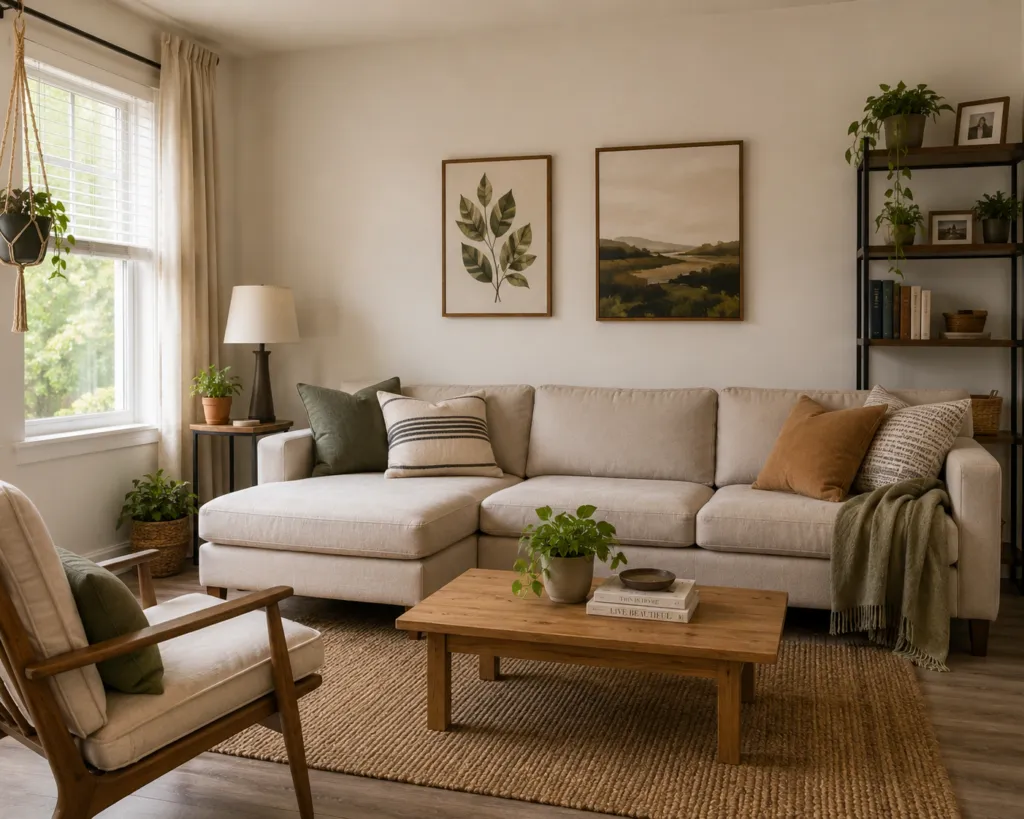
Design with Purpose: Integrating Nature and Wellness into Your Spaces
Contemporary design increasingly recognizes that spaces profoundly influence cognitive function, sleep quality, and overall well-being.
This isn’t just about aesthetics—it’s wellness infrastructure.
Biophilic Design Principles:
- Connecting your built environment with nature creates measurable wellness improvements through.
- Maximizing natural light exposure.
- Incorporating organic materials (wood, stone, natural textiles).
- Introducing indoor vegetation (proven to improve air quality).
- Creating visual connections to nature through windows and landscaping.
- Choosing nature-inspired color palettes.
- Using eco-friendly, low-VOC paints.
Wellness-Focused Design Choices:
Organic shapes and forms replace rigid geometries, creating inherently calming, restorative spaces.
Sustainable design practices—emphasizing eco-friendly and energy-efficient choices—complement biophilic approaches while maintaining functional beauty.
Emerging trends bring nature-inspired outdoor furniture indoors, extending wellness benefits beyond traditional interior spaces.
Regional materials and cultural elements establish genuine sense of place, transforming homes from generic boxes into authentic reflections of inhabitants and environments.
This integrated approach treats design as wellness infrastructure, where intentional choices ripple across aesthetic, psychological, and physiological dimensions.
Creating homes that simultaneously look beautiful and genuinely support well-being represents modern design evolution.