Most homeowners treat their outdoor areas as forgotten extensions of their homes, but here’s what we’ve learned from interior designers: your backyard is actually an extension of your personality and your capacity for genuine rest.
The difference between a neglected patio and a true sanctuary isn’t about square footage or budget—it’s about intentional design choices that signal you value this space.
Think about how a colorful tablecloth transforms a bare dining table into a Mediterranean escape, or how Balinese-style parasols instantly elevate the whole vibe while providing shade and visual interest.
These aren’t frivolous touches; they’re a deliberate commitment to making outdoor time feel as valuable as indoor comfort. When you purposefully decorate your outdoor space—mixing colors, textures, and elements with the same attention you’d give your living room—something shifts.
You’ll spend more time outside, host more gatherings, and actually relax. Looking ahead, designers increasingly view outdoor spaces as wellness zones and year-round living areas, not just seasonal afterthoughts.
This shift reflects something real: thoughtfully designed backyards directly support your mental health, social connection, and overall satisfaction. When you invest in your outdoor space, you’re telling yourself that relaxation matters just as much as productivity.
The Design Principle That Makes Outdoor Furniture Look Intentional
Here’s what luxury outdoor brands understand: your patio isn’t separate from your living room—it’s an extension that simply exists under open sky. The difference between furniture that costs a lot and pieces that genuinely elevate your space lies in how thoughtfully they’re arranged.
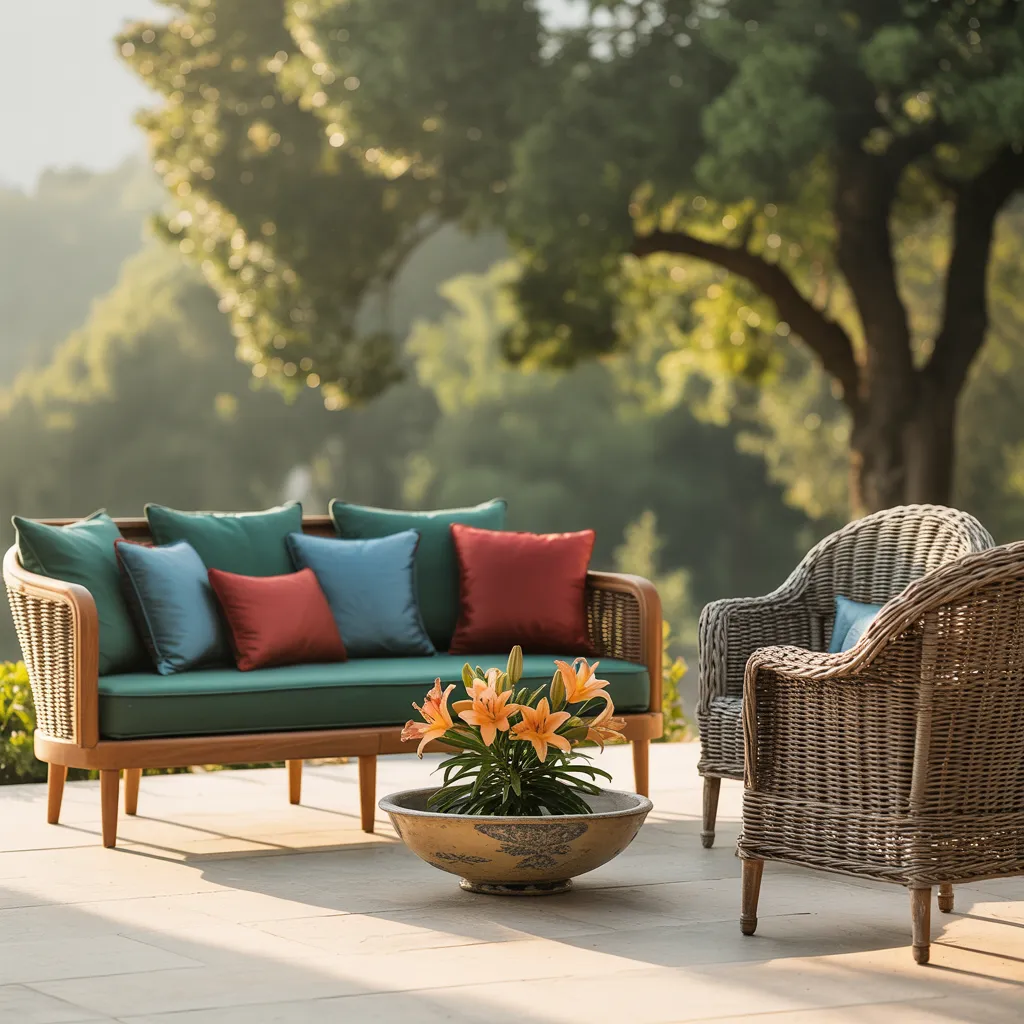
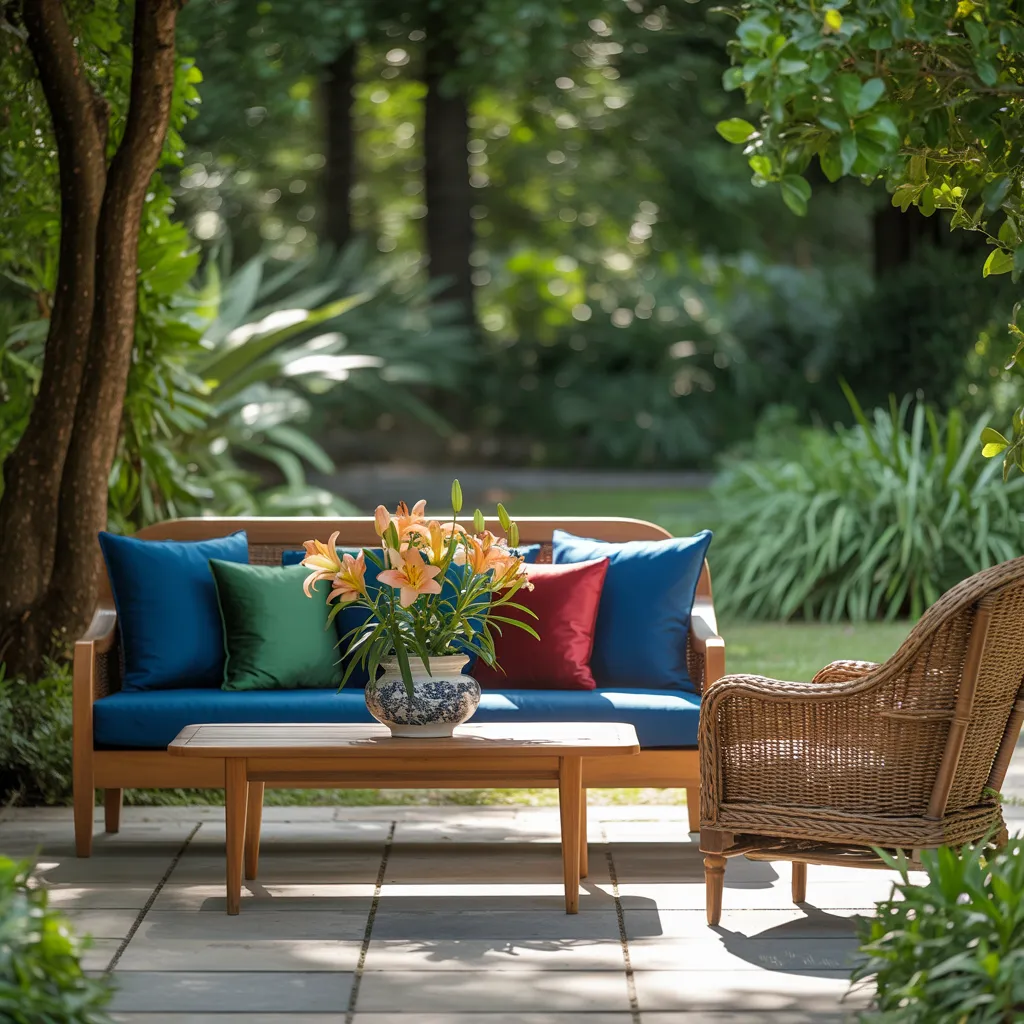
- Start with color coordination: Match your seating colors to the natural landscape around you. If you’re framed by green trees, jewel tones or warm neutrals that echo those elements work beautifully.
- Layer pillows strategically: One pillow looks lonely, but five arranged with varying textures and patterns suggest both sophistication and comfort. Pairing a mid-century modern lounge chair with vintage wicker creates visual interest and prevents that sterile feeling of perfectly matched sets.
- Choose materials intentionally: Teak offers warm, durable elegance. Concrete brings contemporary sculptural appeal. Rattan adds organic texture. Modern patio materials now include treated woods, metals, stone, vinyl, glass, and specialized resins that balance durability with beauty. Select dining furniture with the same care you’d apply indoors, recognizing these pieces anchor your gatherings and set the tone for how your space actually functions.
Brands like Outer, Article, Serena & Lily, and West Elm excel because they recognize outdoor spaces as outdoor living rooms where guests instinctively sense intentionality and livability.
Seventeen Proven Strategies That Transform Outdoor Spaces
Interior designers have identified seventeen specific decorating strategies that consistently elevate outdoor spaces. Here’s what actually works:
- Foundational elements: Embrace weathered wood for textured warmth. Add ceramic accents—tiles, planters, decorative pieces—to bridge indoor and outdoor aesthetics.
- Architectural framing: Flank your doors with bold statement planters filled with thriving plants. This instantly elevates entryways.
- Color and texture: Layer varied-colored chairs throughout rather than matching sets. Use playful ceramic accents for personality. Drape colorful textiles to add warmth.
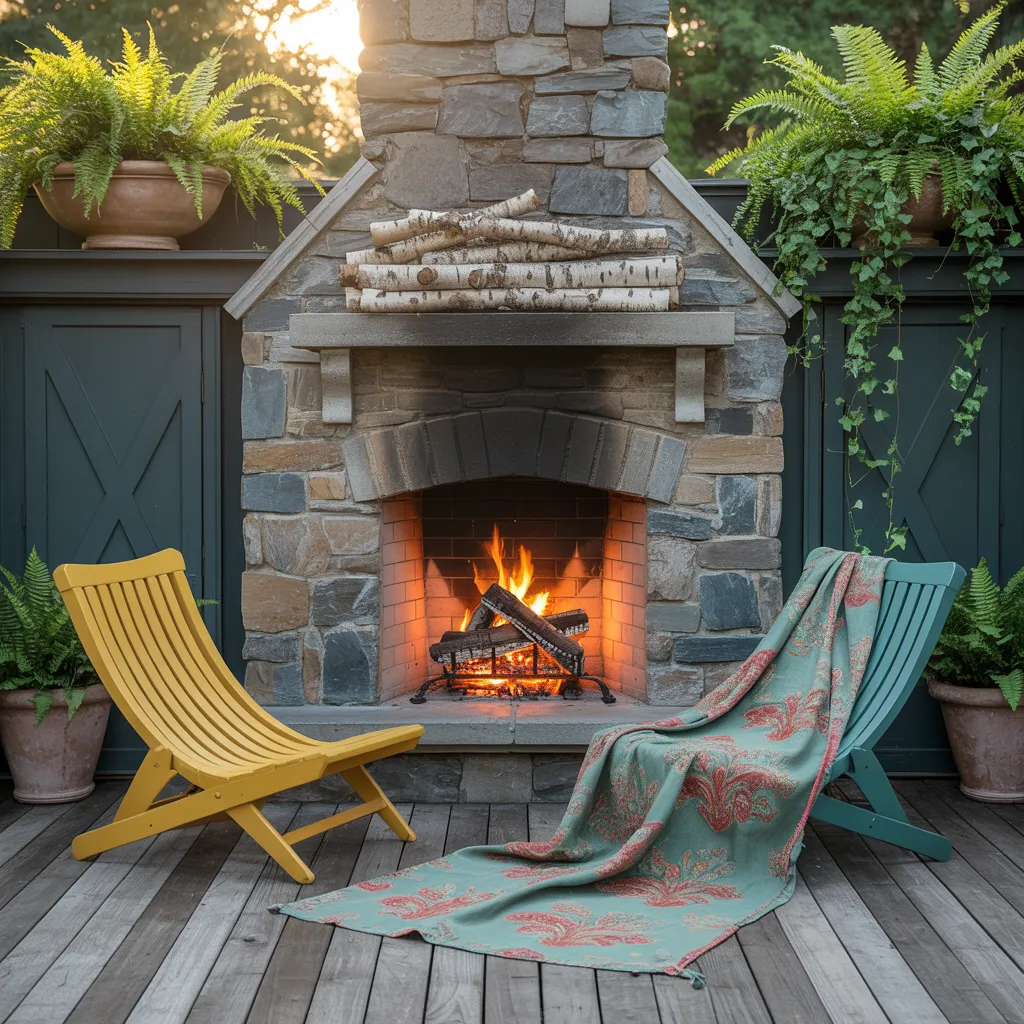
- Focal points: Incorporate an outdoor fireplace for seasonal gathering and ambiance. Consider a plunge pool as an immediate luxury statement. Plant a cottage garden with intentional informality rather than rigid precision.
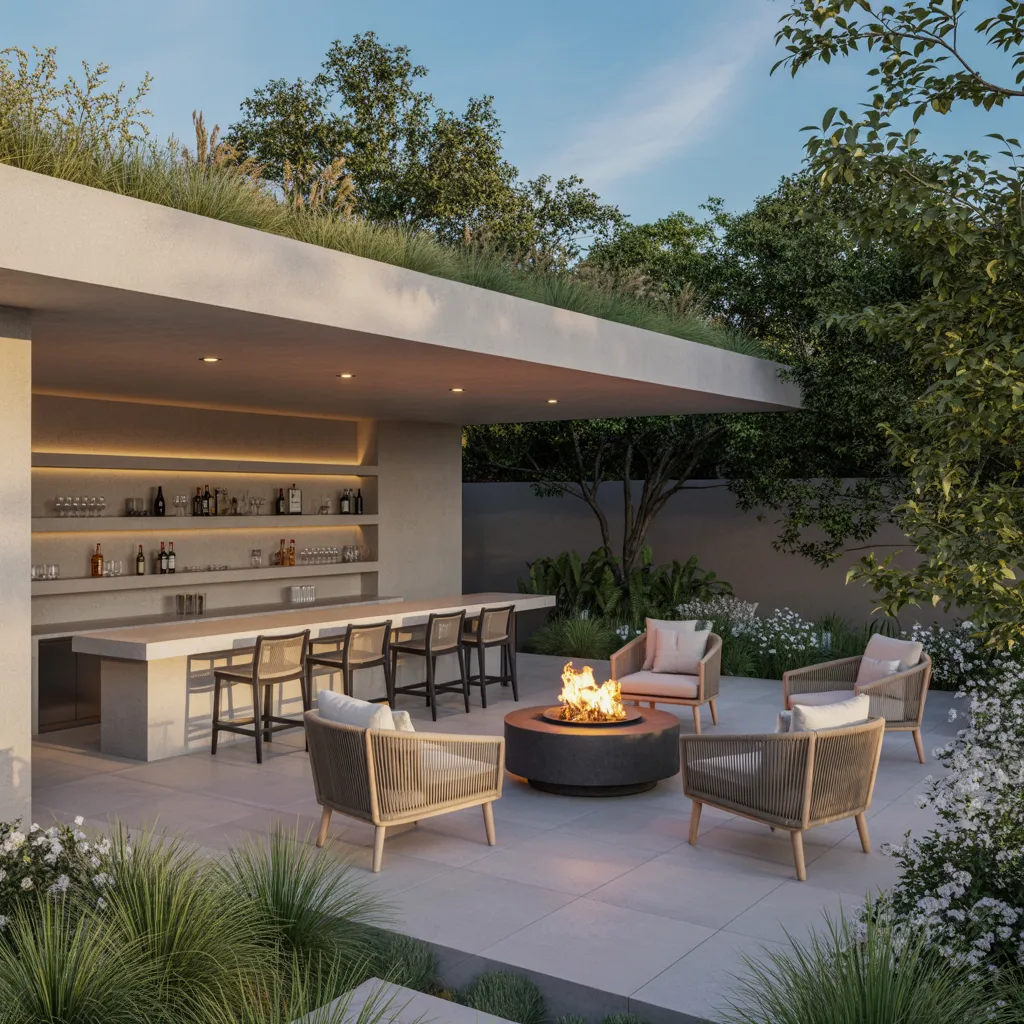
- Functionality: Set up a full outdoor bar with the same care you’d give an indoor kitchen. Add layered pillows to all seating, matching cushions to landscape colors for visual cohesion.
- Sustainable choices: Emphasize native plantings that require lower maintenance while supporting local ecosystems. These elements work because they address fundamental design truths about how outdoor environments engage us.
Garden design combines hardscape features like paths and decking with softscape plantings to create spatial definition and focal points that naturally draw people outside.
The Privacy Solution That Looks Nothing Like a Fence
Creating an ultra-private outdoor sanctuary doesn’t require fortress-like walls. Designers use far more elegant approaches that establish genuine privacy while maintaining openness.
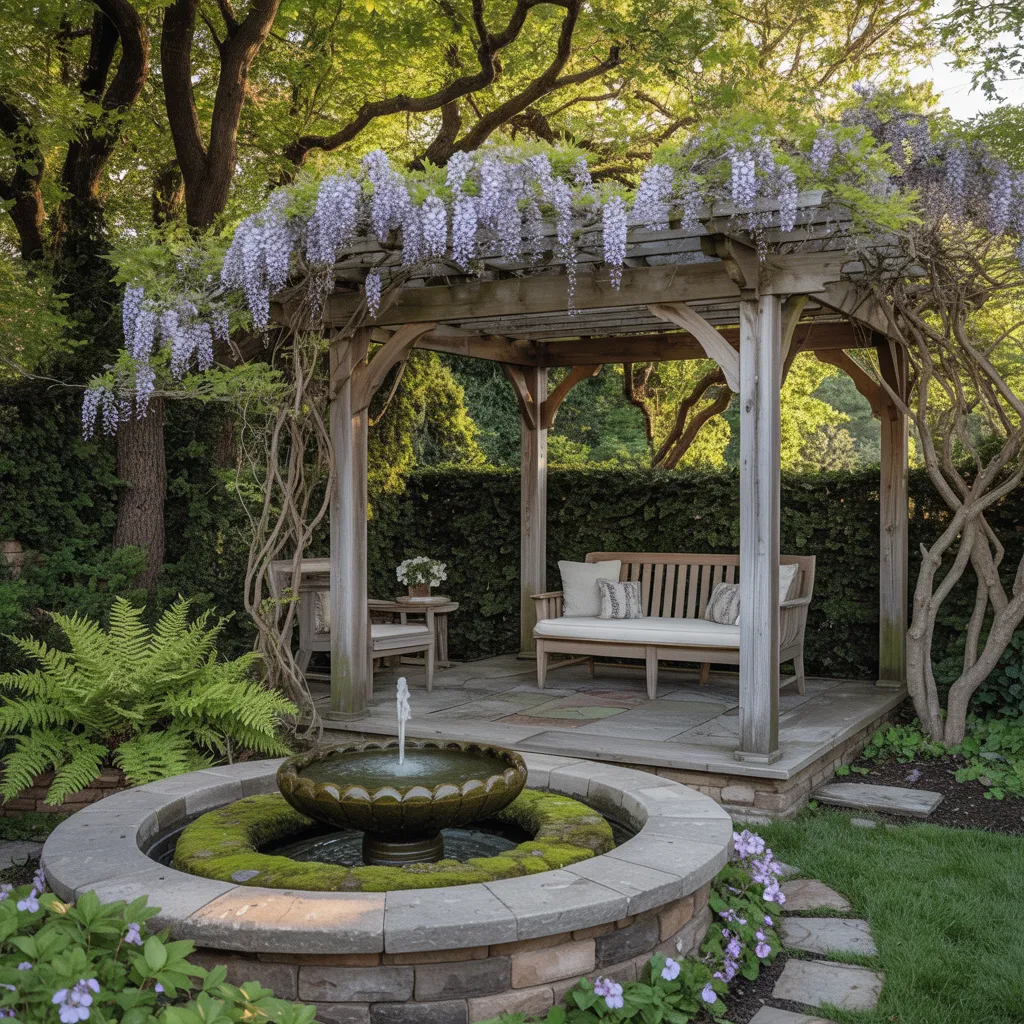
- Strategic Landscaping Works Remarkably Well: Planting trees, shrubs, and tall grasses creates natural barriers that feel organic while adding beauty. Thoughtful window treatments—shade sails, pergolas with climbing vines, or strategically placed outdoor curtains—establish boundaries without permanence or visual heaviness.
- Spatial Arrangement Matters Significantly: Arrange furniture to turn backs toward property lines and face inward, creating psychological privacy even in open spaces. Vertical gardens provide screening while adding greenery. Tall planters and architectural plants act as living screens.
- Acoustic Privacy is Often Overlooked: Water features positioned near property lines mask neighbor sounds while adding soothing ambiance. The real insight is that privacy doesn’t require severity—it requires intentionality and harmony with your property’s natural characteristics. These layered design choices whisper privacy while maintaining elegance and lightness.
Before You Spend Another Dollar: The Framework That Actually Works
The game-changer isn’t purchasing one expensive showpiece—it’s understanding the underlying principles that make every element work together. Treat your outdoor space with the same intentional, layered approach you’d apply to your bedroom or living room.
- Think Systematically: Start with furniture placement and color coordination. Then layer in accents, textiles, and accessories that extend indoor comfort outdoors. This approach ensures every dollar spent reinforces your overall vision.
- Create Gathering Destinations: A full outdoor bar works brilliantly because it enables year-round outdoor living and creates a focal point signaling your space serves lifestyle purposes. Similarly, a fireplace, plunge pool, or cottage garden transforms functionality while making spaces feel genuinely designed.
- Invest in Materials Wisely: Teak offers timeless warmth. Concrete provides contemporary presence. Rattan delivers organic texture. Compare options across price points to find what works for your budget.
- Don’t Overlook Lighting: This underutilized element deserves particular attention. Low-voltage LED integration into paving, strategic uplighting, and downlighting create ambiance while serving practical safety functions. LED solutions now enable sophisticated effects efficiently.
- Consider Surface Choices: Loose gravel, pebbles, wood chips, and paved materials create textural contrast that defines patterns and flow. The gradual transformation from reluctant outdoor space to backyard you actually prefer happens through accumulated choices communicating one message: this area matters just as much as any indoor room.