When a living space feels cold or unfinished, introducing elements with natural warmth can create an inviting ambiance without overwhelming the room. Modern rustic decor emphasizes honest materials and visible textures that bring depth and character.
Warm Up Your Living Room with These Rustic Touches
A living room’s sophistication comes down to intentional choices, not the size or layout of the space. Sure, a living room is fundamentally designed to gather people in a comfortable spot for relaxing and socializing—it needs to work on both functional and emotional levels. But here’s what many people miss: there’s a huge difference between a furnished room and one that actually feels alive.
That hollow feeling? It rarely stems from having too few pieces. Instead, it’s about how those pieces work together and what emotional warmth they create. A sofa, coffee table, and rug don’t automatically create atmosphere—they need purposeful selection behind them. Think of it this way: your furniture and objects do more than just occupy space. They create visual conversation, tell a story about who you are, and even influence how comfortable you feel inviting guests over.
The key to transforming that empty feeling is understanding warm minimalism—a design approach that combines clean, uncluttered spaces with cozy, tactile elements. It’s about choosing fewer things intentionally, making sure each piece has genuine purpose, both visually and functionally.
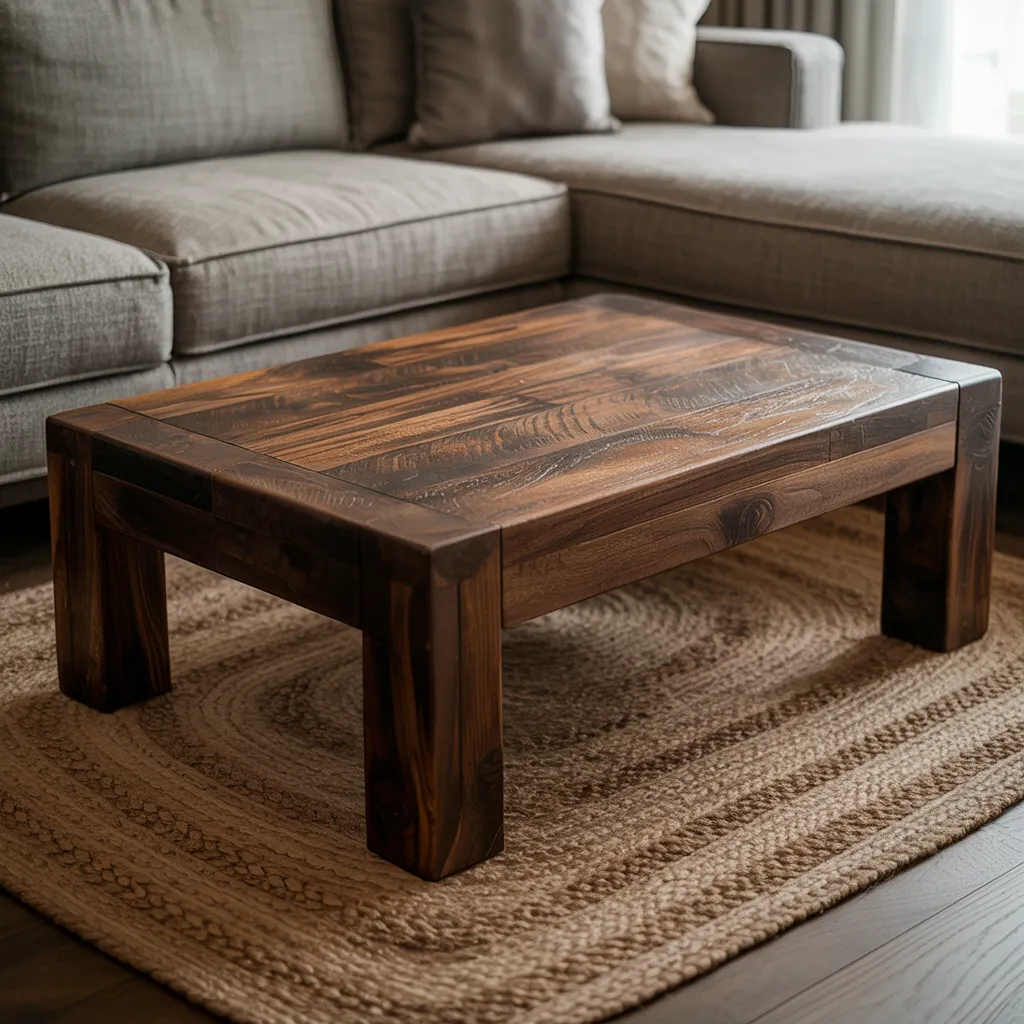
A chunky, rustic coffee table anchors this cozy living room setup. Crafted from warm, solid wood with contrasting grain patterns, the table features a simple yet refined design with a raised lip. A magazine rests atop its smooth surface. Surrounding the table is a plush, hand-woven jute area rug in soft, neutral tones that add inviting texture. Natural light filters in through large windows, illuminating the space’s calming color palette of warm browns, taupes, and creams. An understated sofa in a soft beige completes the relaxed, rustic-modern aesthetic filled with natural wood, textile, and leather accents.
The Secret Weapon: Using Honest Materials to Create Real Warmth
Here’s what separates cold, sterile spaces from truly welcoming ones: materials with visible grain, natural texture, and authentic finishes. There’s genuine psychology here—polished, uniform surfaces just don’t create the same sense of comfort as a piece of wood that shows its age or leather that’s developed character through use.
This philosophy traces back to the rustic furniture movement of the 1800s, which celebrated natural materials like wood, stone, and leather for their genuine craftsmanship. Modern rustic design takes this further, layering wood species (think willow, hickory, mountain laurel) with contemporary materials like metal and resin. The magic? These materials improve with time. That’s not poetic—it’s practical. A worn leather chair becomes more beautiful, not less. Linen develops interesting creases. Wood grain deepens.
This longevity-focused approach means your pieces become better investments, aging gracefully rather than looking dated. Organic Modernism, an evolution of this philosophy influenced by mid-century design principles, combines clean lines with raw, earthy elements—giving you the best of both worlds: sophisticated simplicity and tactile richness.
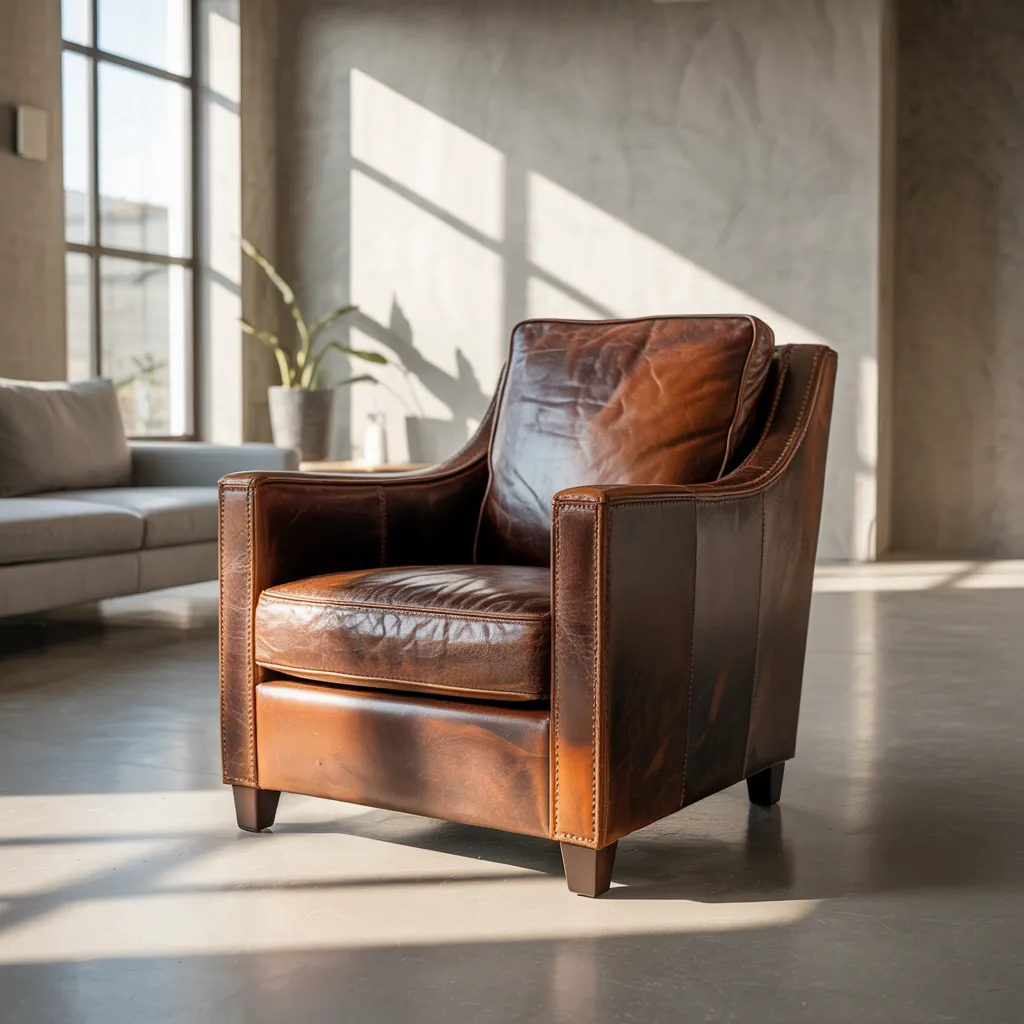
A buttery leather armchair takes center stage, bathed in sunlight filtering through tall windows. Its distressed upholstery and nailhead trim exude a rustic warmth, while clean lines lend a modern sensibility. The deep caramel hue complements the concrete-look walls and hardwood floors. Nearby, a plush grey sofa provides a soft textural contrast against the rich leather accents. Natural materials like wood and plant life harmonize with the industrial undertones, creating an earthy yet refined living space. Warm terracotta and camel tones blend with ashy greys for an inviting palette that feels both timeless and fresh.
Four Design Moves That Transform Your Space
You don’t need to start over to elevate your living room. Strategic layering is your real power move here.
- Start with a sculptural coffee table—ideally solid wood with visible construction—something that catches the eye and invites closer inspection.
- Next, add a statement rug in textured wool that grounds the space with warmth and anchors your furniture arrangement.
- Then incorporate sculptural objects (think vases, sculptures, interesting objects) to create visual rhythm and prevent monotony.
- Finally, layer intentional details: aesthetic candles for ambient warmth, textured throws that invite use, and an interesting mirror that reflects light while adding visual interest.
Here’s the thing: every piece should work double duty. That magazine rack isn’t just functional—it encourages engagement and adds visual interest. Your bookshelves are both practical storage and decorative focal points. This dual functionality is what creates real character and intention.
Within warm minimalism’s framework, these curated details prove that elevation comes through thoughtful composition, not expensive statement pieces. Even minimal spaces feel inviting and sophisticated when every element is deliberately chosen.
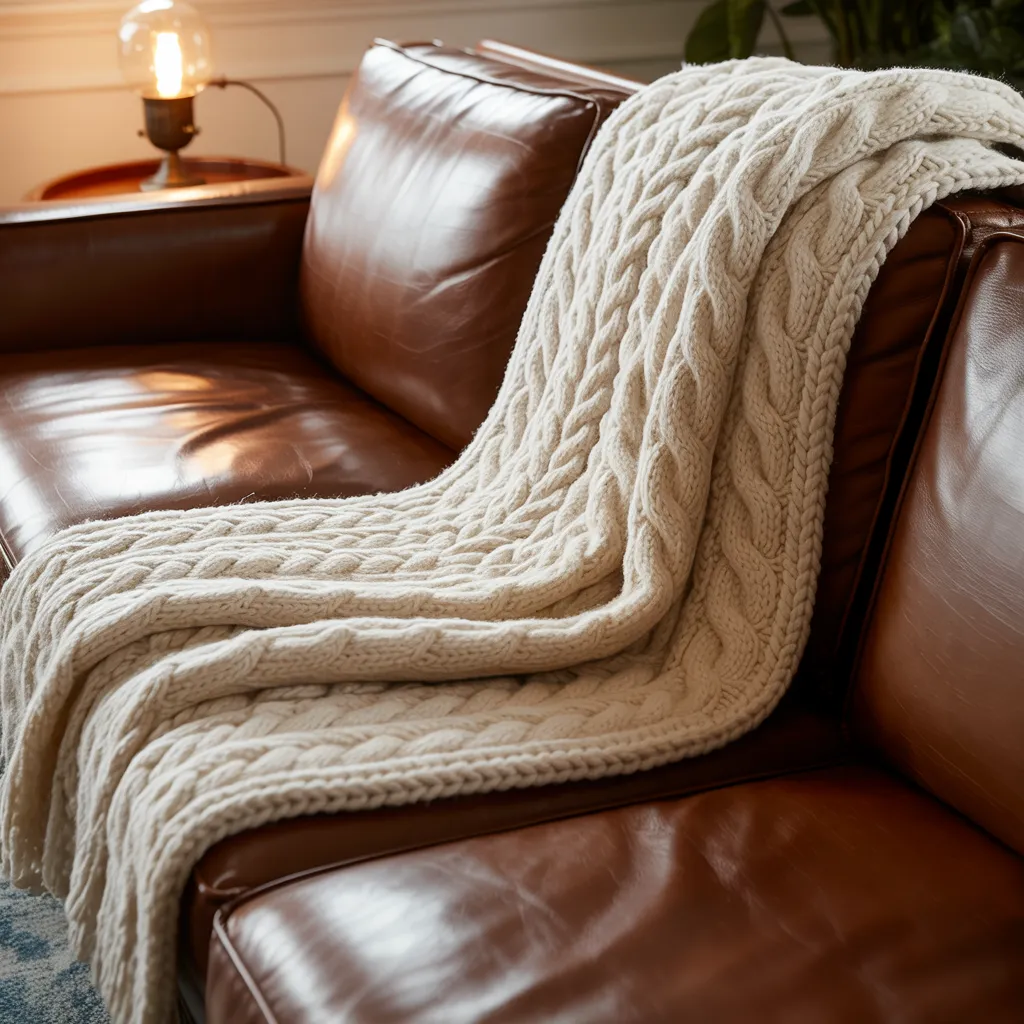
A plush cream-colored cable knit blanket lays draped over a worn brown leather armchair, creating a cozy and inviting textural contrast. The rustic scene exudes a sense of warmth and comfort, with the flickering glow of a small lamp adding to the ambiance. The chunky knit fabric alongside the supple leather upholstery exemplifies the modern rustic interior design style. The dominant earthy color palette features rich caramel tones complemented by the creamy off-white accents of the textiles. This vignette beautifully showcases the art of layering diverse materials and textures to cultivate a relaxing and welcoming atmosphere.
How to Get a Designer-Quality Room on Any Budget
Here’s the truth that interior designers know: warmth and sophistication don’t require luxury price tags. A curved velvet sofa, an arched mirror, a quality rug, and sculptural accents can deliver the same visual and emotional impact at a fraction of luxury costs.
The real distinction between an expensive room and an accessible one? Selection criteria and intentional curation, not actual cost per item. When you understand what creates visual interest—authentic texture, honest materials, purposeful layering—you can achieve sophisticated results at nearly any budget. \
Many editor-approved pieces starting under $100 deliver substantial impact because they prioritize texture and character. This democratization of design means anyone with a clear vision can create something that rivals professionally designed rooms without financial strain.
Warm minimalism actually amplifies accessibility: by combining simplicity with carefully selected natural materials, you invest thoughtfully in fewer, higher-impact pieces rather than accumulating numerous items. That approach creates sophisticated, inviting spaces without draining your wallet.
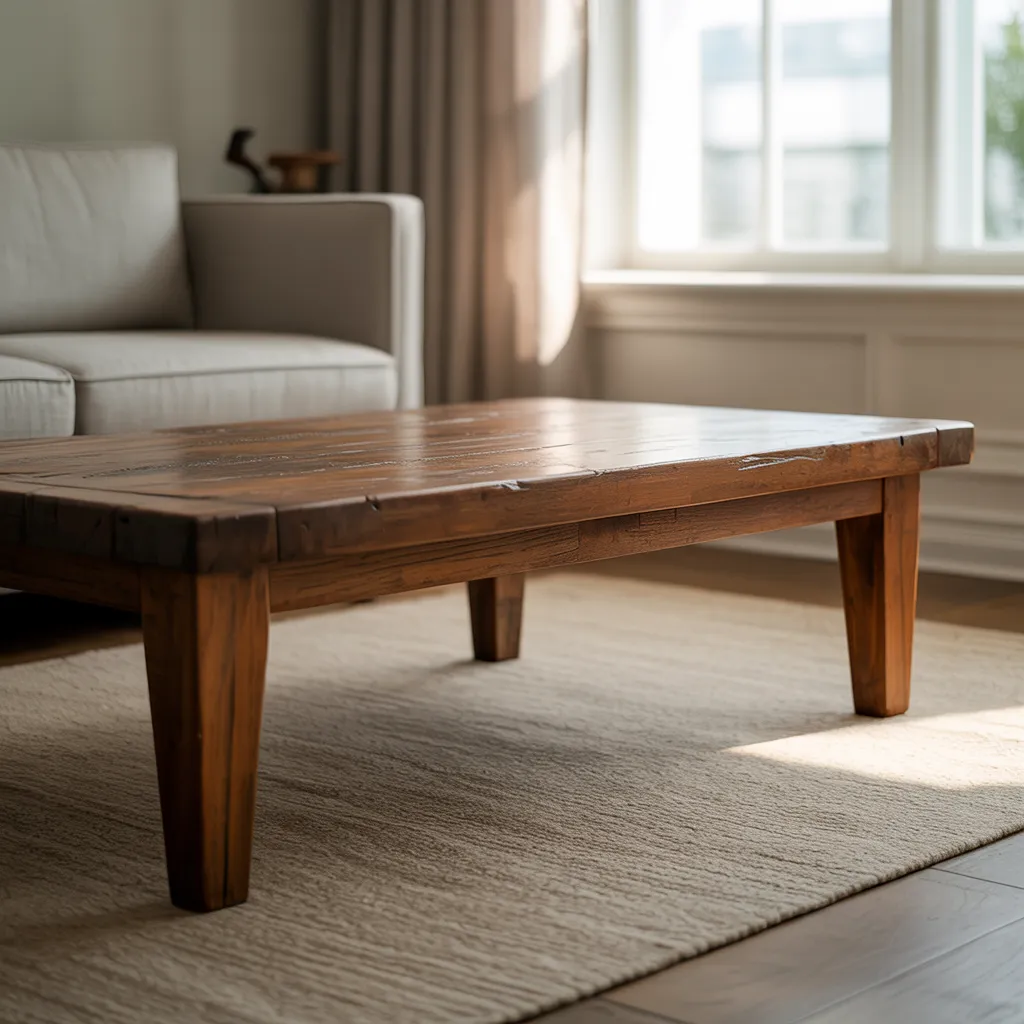
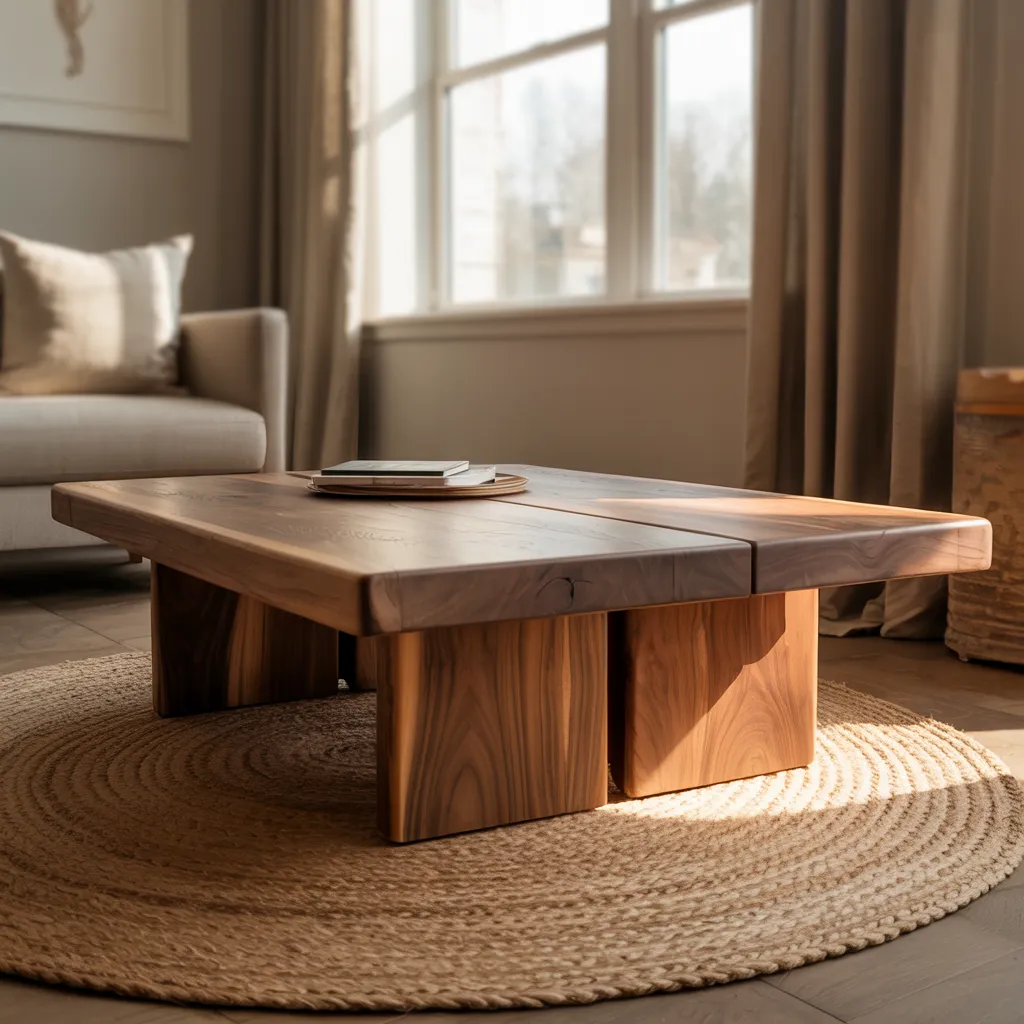
A sturdy coffee table made of warm-toned oak wood takes center stage, its rugged plank-style top hinting at a rustic character. Thick, solid legs provide a grounded base. The table’s natural wood tones and organic textures harmonize with the beige area rug underfoot. Light streams in through sheer curtains, casting a warm glow over the minimalist living space. An upholstered sofa in a neutral shade blends seamlessly with the earthy, pared-back aesthetic. The overall style evokes a modern rustic feel – unfussy yet inviting, with an emphasis on natural materials and understated elegance in a calming, earthy palette.
What Separates ‘Styled’ from ‘Lived-In’ (And Why It Matters)
Proportion, texture, and balance create rooms that feel authentic and genuinely inviting rather than sterile or staged. Modern rustic design nails this distinction: pairing natural finishes with cleaner silhouettes creates elevated spaces that don’t feel overwrought or like you’re trying too hard.
The goal? A room that actually welcomes you home—a space genuinely designed around comfort and gathering, not one that demands perfection or intimidates through aspirational excess. When elements work together seamlessly—functional decor that encourages real living, visual rhythm from sculptural pieces, intentional material choices—the space becomes a reflection of authentic living rather than staged perfection designed for Instagram.
A truly sophisticated room whispers its excellence rather than demanding admiration. Visitors should be able to imagine actually existing in the space comfortably, not just admiring it from the doorway. This lived-in authenticity develops through restraint, through honest material choices, and through allowing natural aging and imperfection to enhance rather than diminish. That’s when real sophistication happens—when life actually happens in your space.
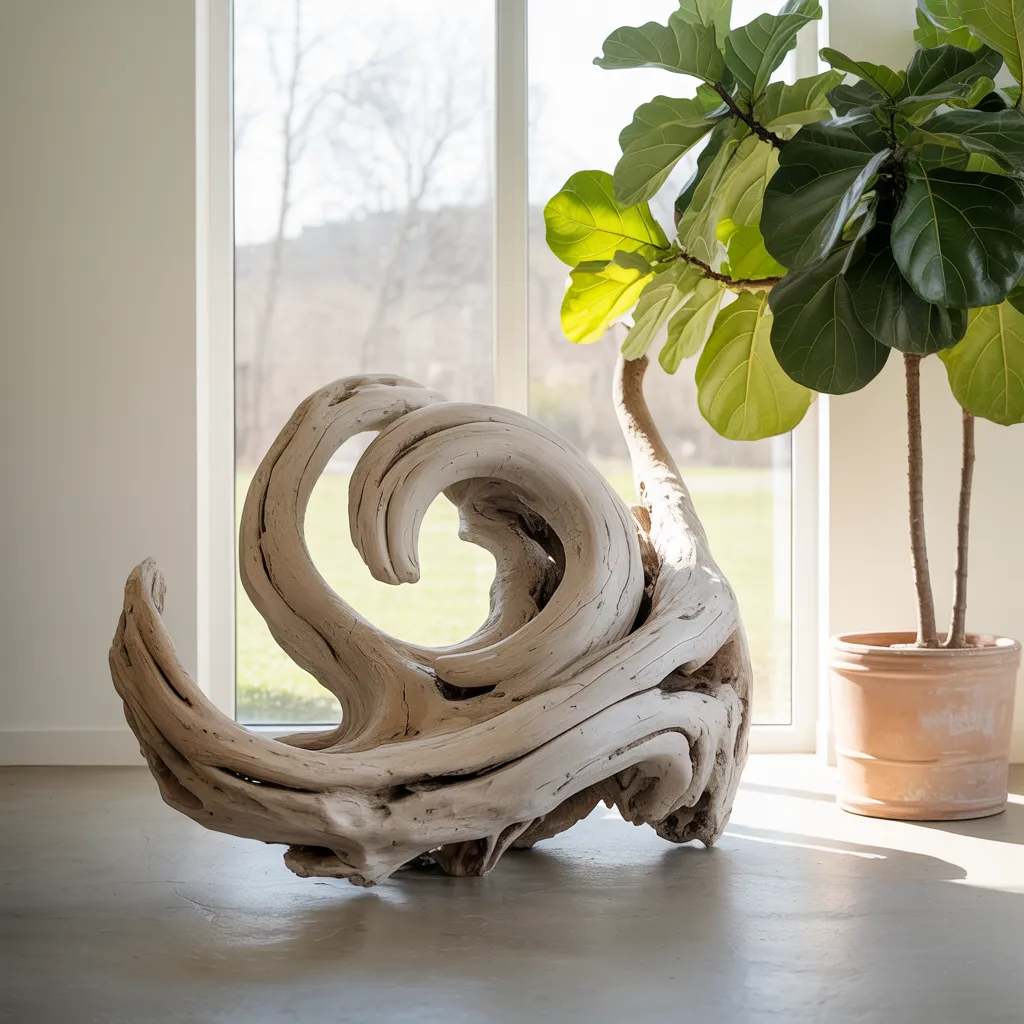
A twisted, sculpted piece of driftwood takes center stage, its pale tan swirls creating an organic, eye-catching centerpiece. Placed beside a potted fiddle-leaf fig tree in warm terracotta, this vignette exemplifies modern rustic design. The natural materials and muted color palette infuse the space with an earthy, grounded aesthetic. Blending raw, untreated wood tones with lush greenery allows the outdoors to harmoniously coexist indoors. Subtle neutral hues and crisp white highlights produce a calming, understated environment, connecting the interior to the serene beauty of nature outside its windows.