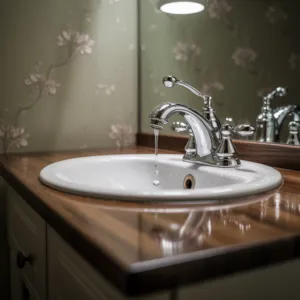
Most people blame poor lighting or cramped spaces for bathroom stress, but the real culprit operates on a subtler level—hiding in design choices themselves. Environmental psychology research reveals three specific, interconnected design mistakes quietly undermining your comfort. The best part? Each is entirely fixable without a major renovation.
Bathroom stress stems from how your brain processes visual information, lighting cues, and organizational chaos. Research confirms that changing physical qualities—lighting, temperature, odor, and visual elements—significantly reduces stress. When all three work against you simultaneously, the cumulative effect feels inherently stressful, regardless of your bathroom’s size or fixture quality.
Here’s what’s happening: your perception determines an environment’s psychological impact. Once you recognize these patterns and redesign sensory elements through coordinated materials, strategic lighting, and personalized details, you can dismantle stressors and transform your bathroom into a genuine sanctuary.
The Visual Chaos That’s Making You Anxious Every Morning
The Problem: Visual Overload
Bold, competing tiles and clashing patterns create visual noise that triggers stress subconsciously. Too many colors and patterns force your nervous system to work overtime, elevating cortisol before your day even begins. It’s like visual clutter—your brain struggles to process conflicting information, leaving you feeling drained.
The Solution: Calming Color Palettes
Think of strategic color as visual decluttering. Muted palettes and softer tonal finishes offer elegant, affordable solutions. Interior designers consistently recommend calming colors like soft pinks, light blues with green undertones, warm whites, or deeper greens for grounding without chaos.
Extending the Principle Beyond Paint
This principle extends to every element: coordinated hardware, streamlined fittings, clear glass, and unified materials create cohesion that naturally calms your eye. When your visual landscape simplifies through strategic color and coordinated finishes, your bathroom immediately transforms into a calming refuge instead of a source of morning tension.
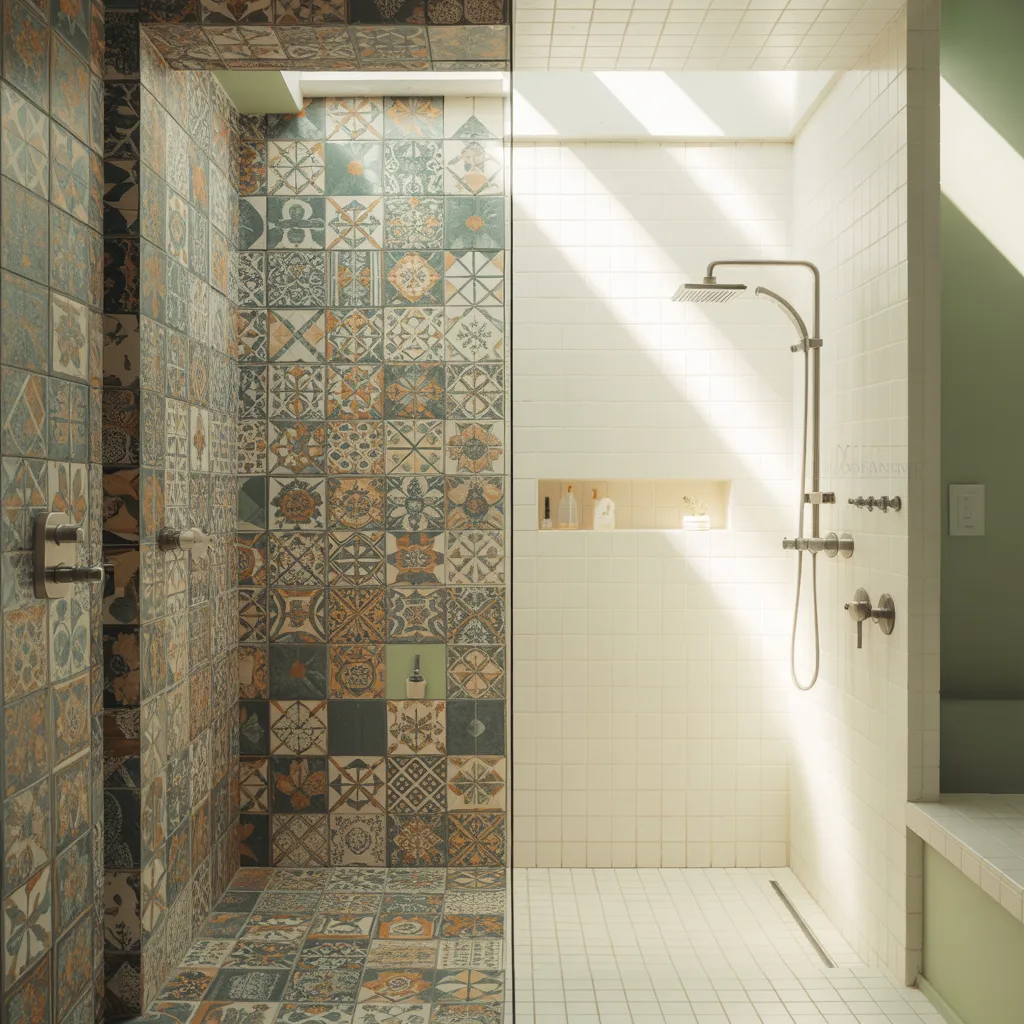
A shower space split by contrast: one side covered in busy, colorful patterned tiles and the other in simple white tiles washed in sunlight showing visual overload vs calming simplicity.
The Lighting Trap That Makes You Look Bad (And Feel Worse)
Why Single Overhead Lighting Fails
Single overhead lighting is one of the most underrated design failures—it’s harsh, unflattering, and creates clinical, institutional qualities. Poor lighting doesn’t just affect how you look; it fundamentally alters how you feel through direct sensory impact.
Layered Lighting: The Game-Changer
Layered lighting combining task-specific (grooming) and ambient (atmosphere) lighting solves this elegantly. Eye-level wall sconces provide functional task lighting while ambient sources create warmth. Add dimmer switches for flexible control and daylight-temperature bulbs for accurate color assessment.
The Science Behind Warmth
Warm color temperatures (around 2700K) trigger relaxation responses in your nervous system, while task lighting ensures visibility. This cost-effective upgrade transforms harsh institutional lighting into warm, layered illumination that makes your bathroom feel sanctuary-like rather than clinical—and you’ll look better too.
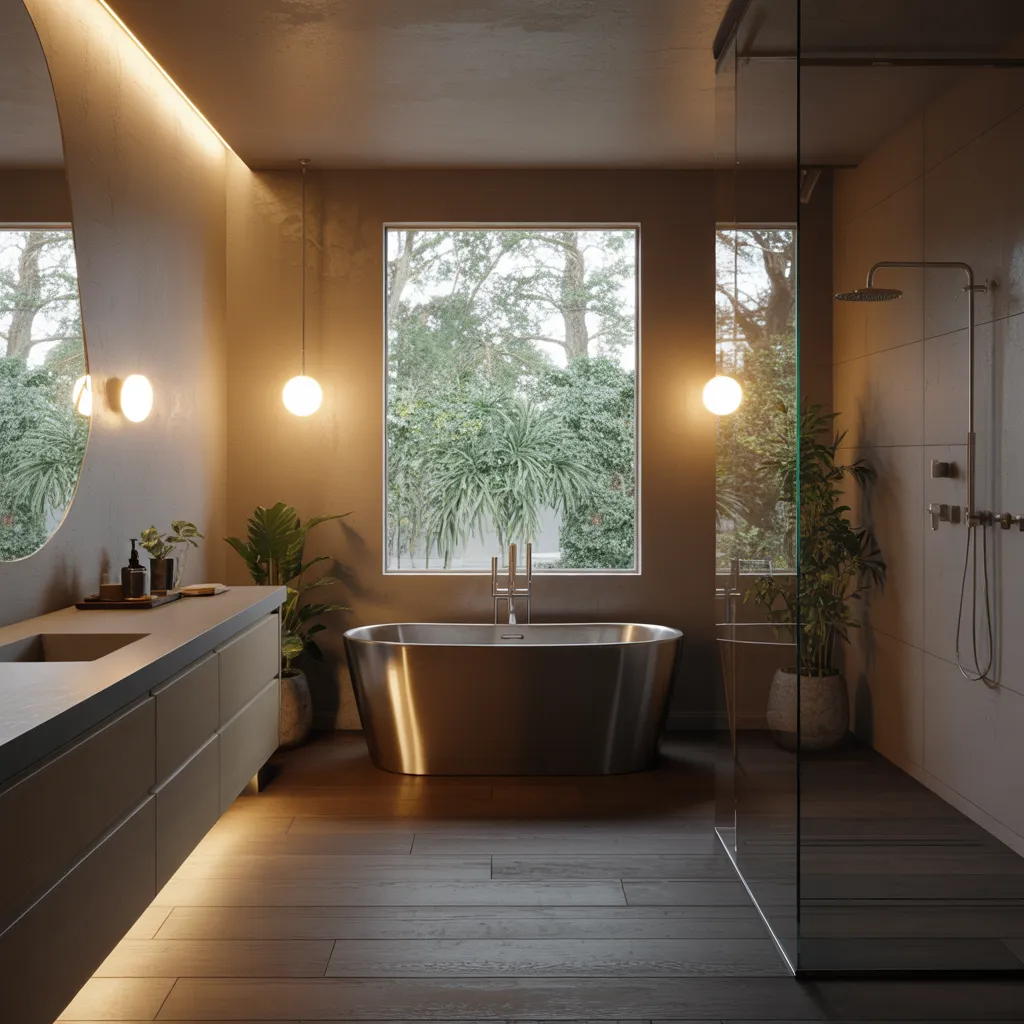
A modern spa-style bathroom with a freestanding tub centered under a large window, surrounded by greenery. Warm layered lighting (glowing pendants and indirect light) and a glass shower create an inviting, sanctuary-like atmosphere.
The Storage Secret That Stops Clutter From Creeping Back
Why Most Organization Systems Fail
Organization systems fail when designed for perfection rather than real life. Overly complicated storage and open shelving virtually guarantee clutter returns within weeks because they require too much effort for daily use.
The Behavioral Psychology Behind It
When storage requires multiple steps, people take shortcuts—and within days, these shortcuts become normal habits. Professional organizers reveal that effortless storage is the key to lasting organization. Storage should be so intuitive that putting things away becomes automatic behavior.
What Actually Works
Closed storage for everyday items proves far more practical than open shelving, which demands constant maintenance. Instead, focus on accessible drawers, clearly labeled cabinets, and designated zones. This friction-reduction principle is fundamental: when storage is frictionless, organization becomes automatic, resulting in a naturally calm environment that stays that way.
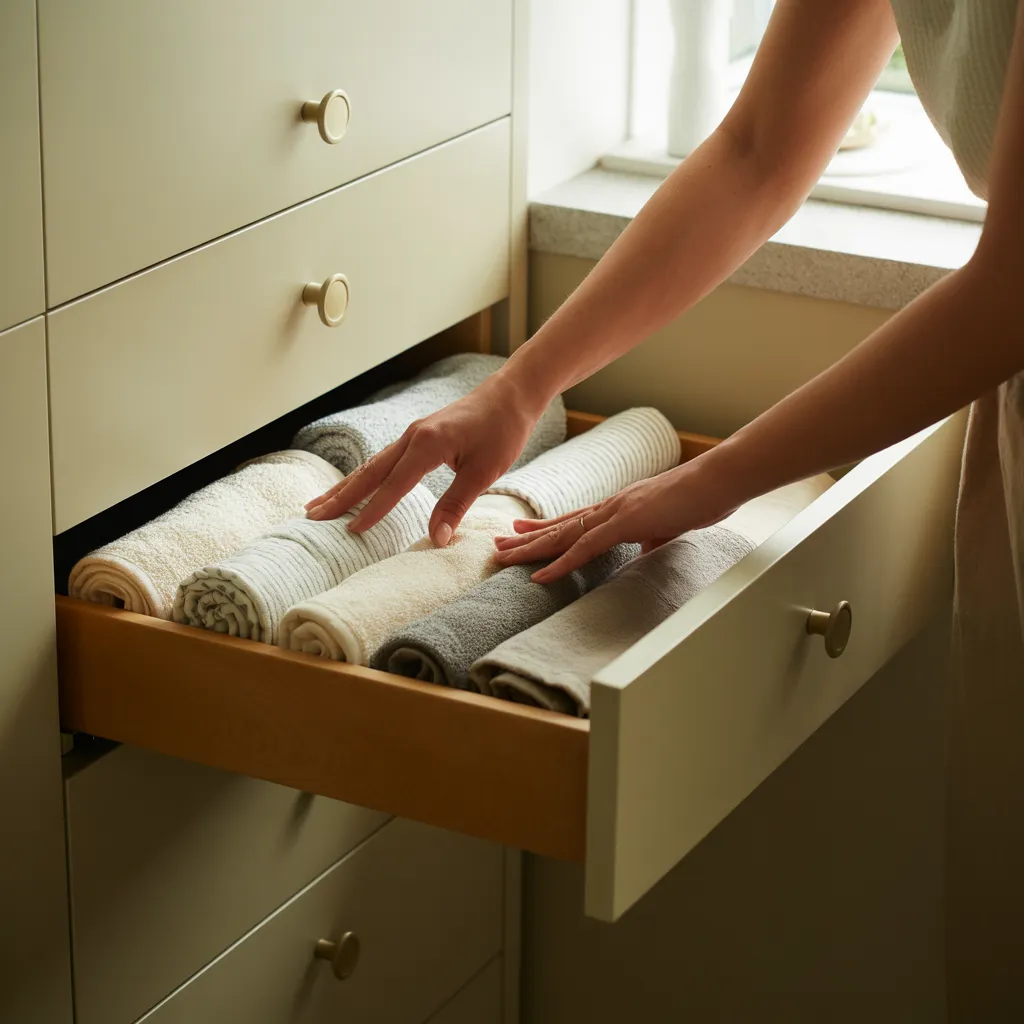
Hands gently arranging neatly rolled towels inside a wide bathroom drawer. The muted, coordinated linens and clean cabinetry emphasize effortless, closed-storage organization.
The Luxury Details That Feel Like Indulgence (But Aren’t)
Small Touches With Big Impact
Heated floors, towel warmers, and personalized touches create spa-like atmospheres that make your bathroom genuinely irresistible. These subtle additions aren’t frivolous—they’re mood-shifters communicating that your space deserves care.
The Psychology of Luxury
When a space feels luxurious, you maintain it better and engage more intentionally with routines. Heated floors at 80-85°F trigger comfort responses signaling safety to your nervous system. Warm towels create deliberate self-care moments, transforming routines from transactional to intentional.
Affordable Ways to Add Warmth
You don’t need a major budget: consider a heated towel rack, a small bath mat with memory foam, candles, or a simple shower bench. Strategic textural layering—mixing soft towels, natural wood accents, and calming accessories—deepens intentional curation. These details cost far less than assumed, with psychological impact far exceeding financial investment.
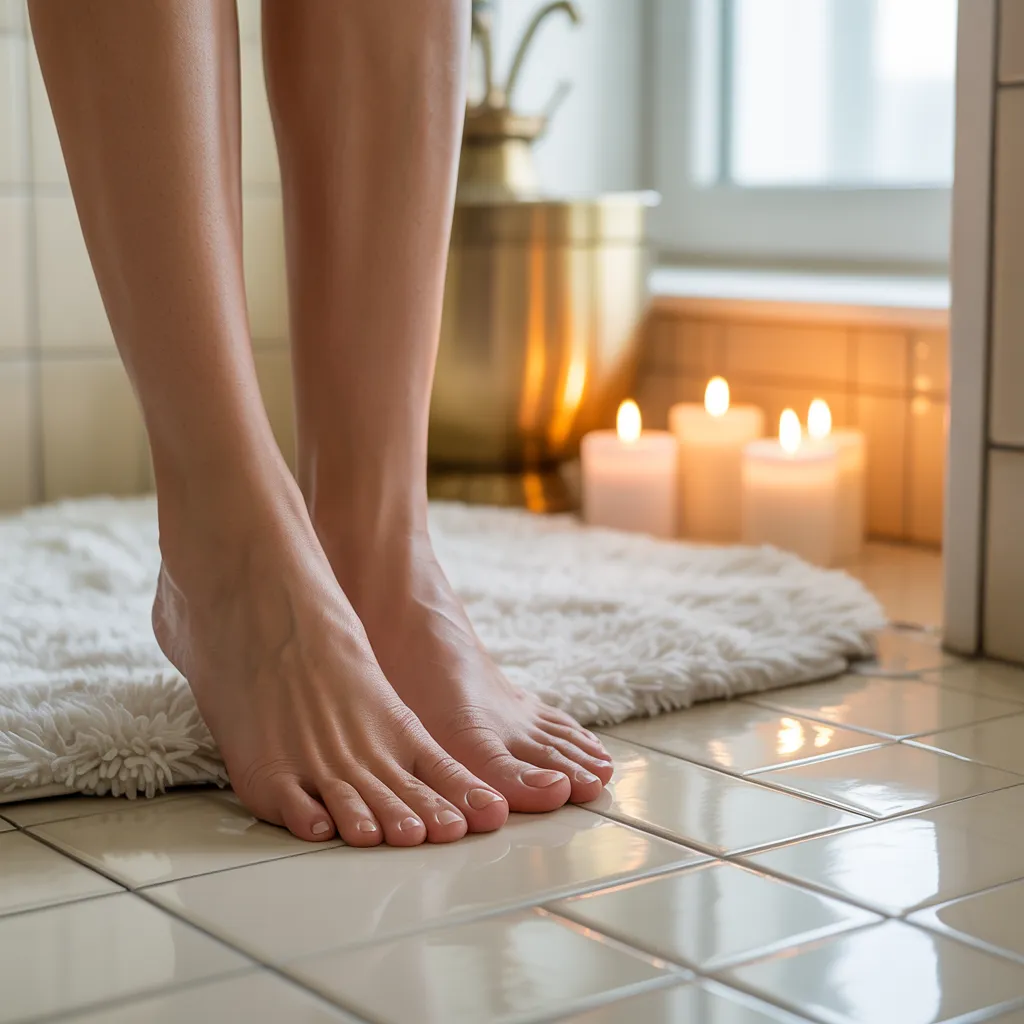
Close-up of bare feet on glossy white tile next to a fluffy bath mat, creating a cozy “warm floor” feeling. Soft candlelight glows in the background, giving the scene a calm, spa-like mood.
The Cleaning Mistake That Undoes All Your Design Work
How Maintenance Affects Mental Health
Even beautifully designed bathrooms feel stressful when maintenance suffers. Your brain psychologically registers neglect and degradation, regardless of how intentionally you’ve designed the space.
Common Cleaning Mistakes to Avoid
Professional cleaners identify consistent errors: excessive product use, neglecting high-touch surfaces, and using dirty tools that spread contamination. These seemingly minor shortcuts undermine your design investments and create subtle stress.
What Actually Works
Consistency beats intensity—frequent, light cleaning prevents buildup far better than occasional deep scrubs. Focus on proper technique: appropriate product quantities, attention to high-touch areas (faucets, handles, mirrors), and clean tools prevent degradation.
The Final Touch
Proper cleaning keeps your design work visible and appreciated; neglect compromises even excellent design. A genuinely clean bathroom reinforces the calm sanctuary feeling you’ve created through intentional choices, coordinated finishes, and personalized touches.
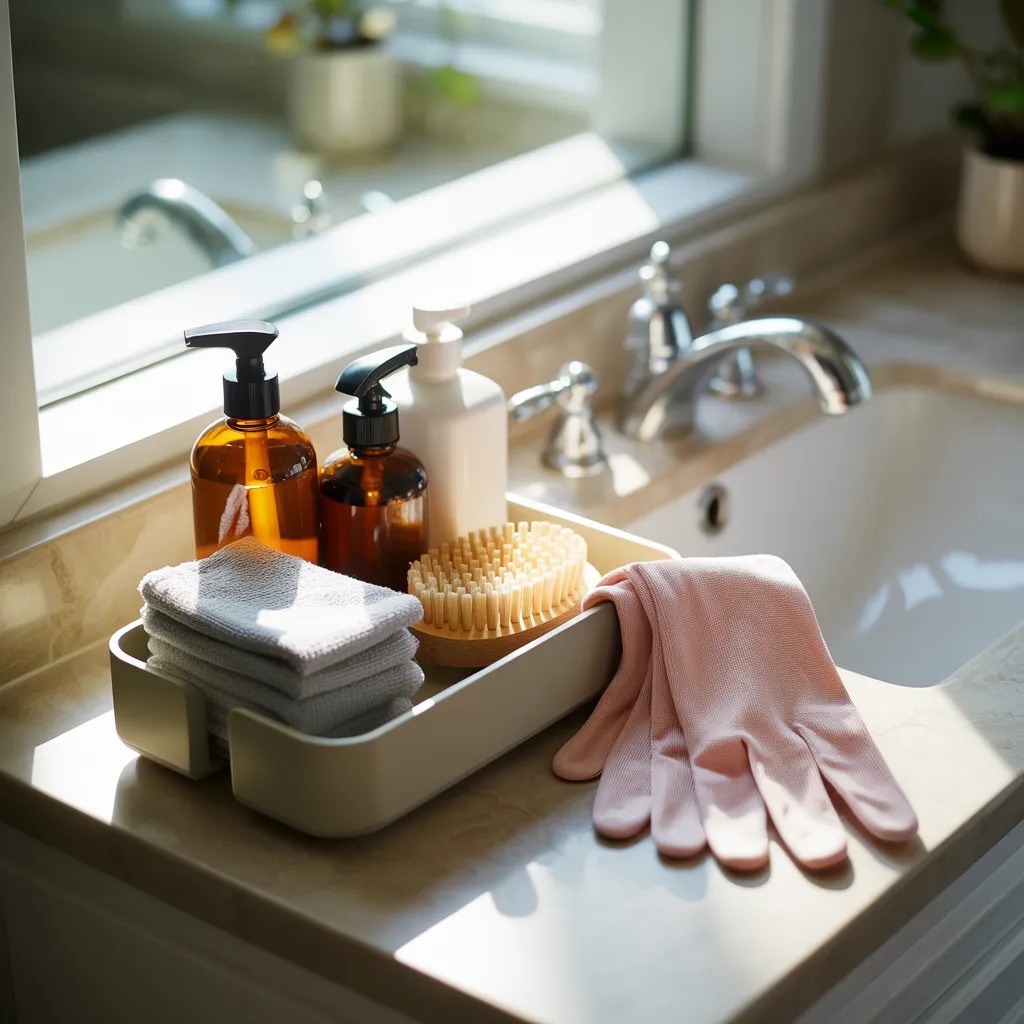
A sunlit bathroom sink counter with a tidy cleaning caddy holding amber pump bottles, a white dispenser, folded microfiber cloths, and a wooden scrub brush. Pink rubber gloves rest beside the tray, with bright morning light streaming through a nearby window.