
Most homeowners see icicles as a charming winter sight—just part of the season. But here’s what you’re actually looking at: a red flag waving from your roof. Those icicles aren’t random; they’re telling you that warm air is escaping from your home and your insulation isn’t doing its job.
When you see large or persistent icicles forming, especially during sunny winter days, it means snow on your roof is melting from underneath—that’s heat from your home rising up and doing the exact opposite of what you paid your heating system to do.
Over weeks and months, this continuous melting and refreezing creates icicles that grow heavier, but more importantly, it reveals where your insulation has failed. That escaped warmth? It translates directly into higher heating bills—sometimes thousands of dollars annually. The good news is those icicles are showing you exactly where to focus your efforts.
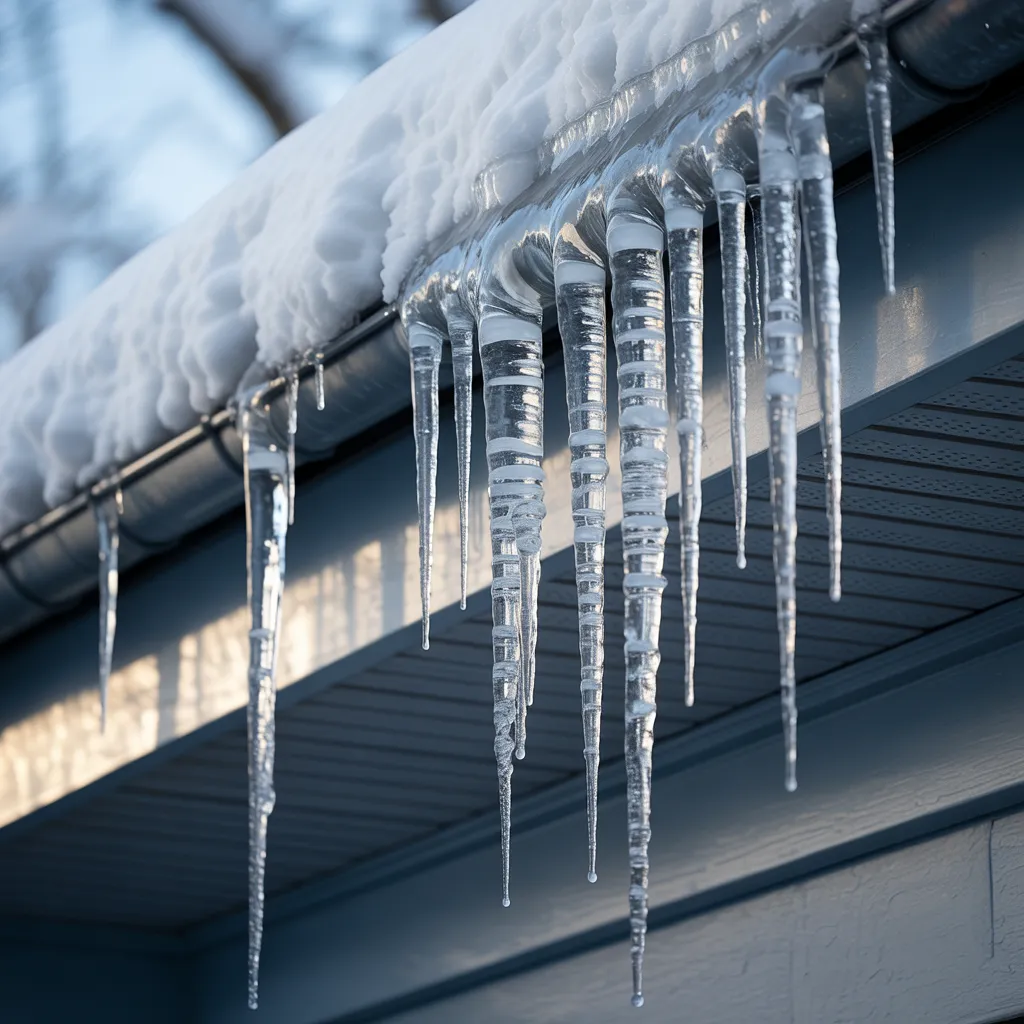
While visually striking, this frosty scene serves as a poignant reminder of potential insulation deficiencies that can lead to energy inefficiencies and structural damage over time.
The Hidden Temperature War Between Your Attic and Winter
Your attic is essentially a battleground during winter, even though you can’t see the action. Here’s what’s happening: heat naturally rises from your living spaces, and when insulation is inadequate or compromised, that warmth travels straight up into your attic.
Once it gets there, poor ventilation traps it—nowhere for it to escape. That warm air hits the underside of your roof and melts the snow above, creating the perfect conditions for icicles to form. Meanwhile, you’re probably noticing your upper floors feeling colder than downstairs and your heating system running constantly.
Here’s a common mistake that makes this worse: closing vents in unused rooms to save energy. This backfires spectacularly. It disrupts your HVAC system’s airflow, creates pressure imbalances, and forces your heating system to work even harder—actually increasing energy consumption while making temperature problems worse.

High energy bills are an unwelcome sign to any homeowner – and can be an early indication of a bigger problem.
Beyond Icicles: The Other Warning Signs Your Attic Is Screaming for Help
Icicles never travel alone. If you’re noticing uneven temperatures—certain rooms staying cold despite running heat—that’s a warning sign. Elevated energy bills that don’t match your usage? Investigation time.
Check your attic for moisture, frost buildup, or condensation on the roof decking. Drafts in upper-floor rooms suggest air sealing has broken down. You might even see water stains on ceilings. These aren’t separate problems; they’re all connected to the same insulation and ventilation failure.
Beyond comfort and bills, there’s a safety factor: heavy icicles can damage property or injure someone below, and accumulated ice weight can compromise your roof’s structural integrity. Addressing only the visible icicles while ignoring these broader indicators means the underlying problems continue year-round, affecting comfort in every season and draining your wallet indefinitely.
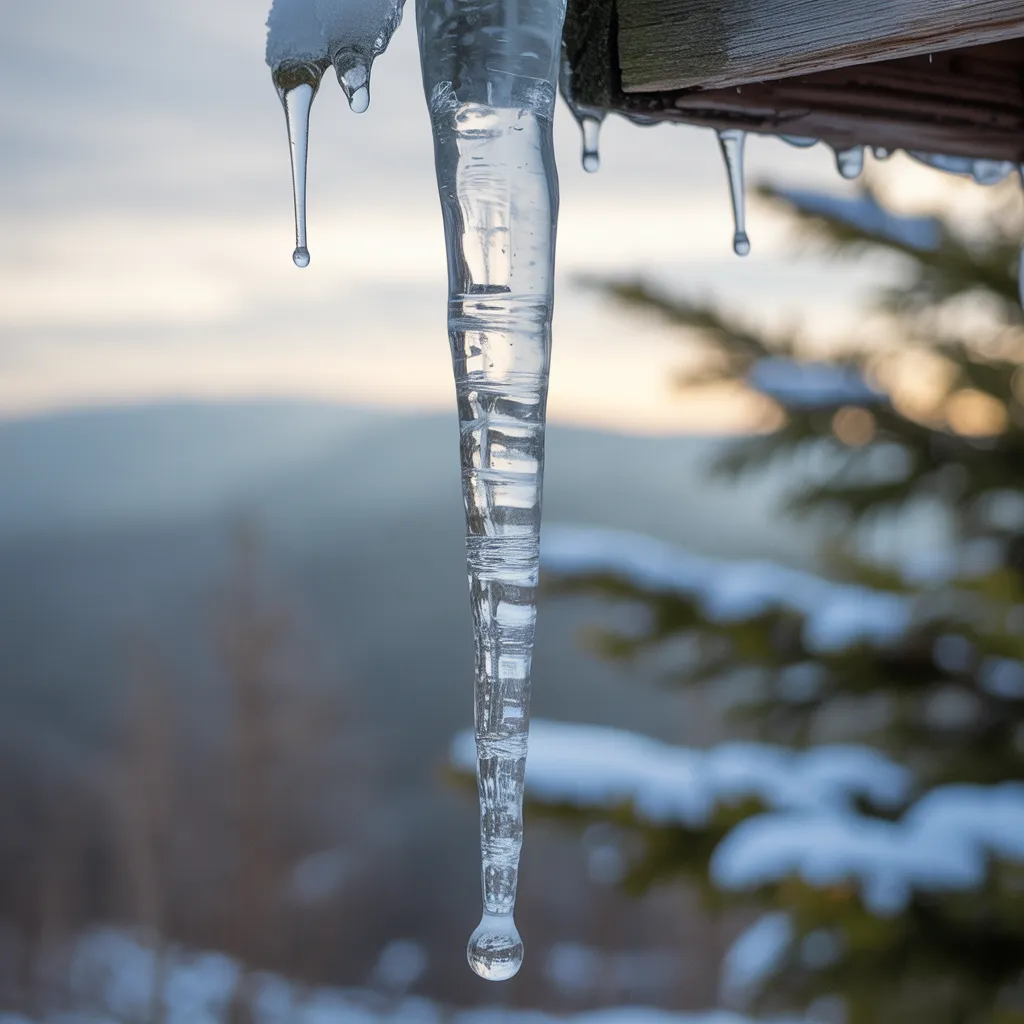
Elongated icicles dangle precariously, formed through the intricate interplay of dripping water and refreezing temperatures.
The Specific Weak Points Where Your Warmth Escapes
Icicles form strategically where heat loss is most severe, and pinpointing these spots helps you prioritize fixes. Unsealed chimneys act as vertical highways for warm air. Poorly sealed vents, recessed lighting fixtures without insulation barriers, and gaps around pipes and electrical conduits all allow heat to bypass your insulation entirely.
These weak points create hotspots on your roof where snow melts preferentially—that’s exactly where icicles form most dramatically. Icicles often form along gutters and eaves where concentrated warm air causes continuous melting. This same problem frequently leads to ice dams, which compound the issue by allowing water to penetrate below shingles and cause structural damage.
Identifying and sealing these specific problem areas prevents both ice dam formation and the water damage that follows, while simultaneously improving your attic’s overall thermal performance.
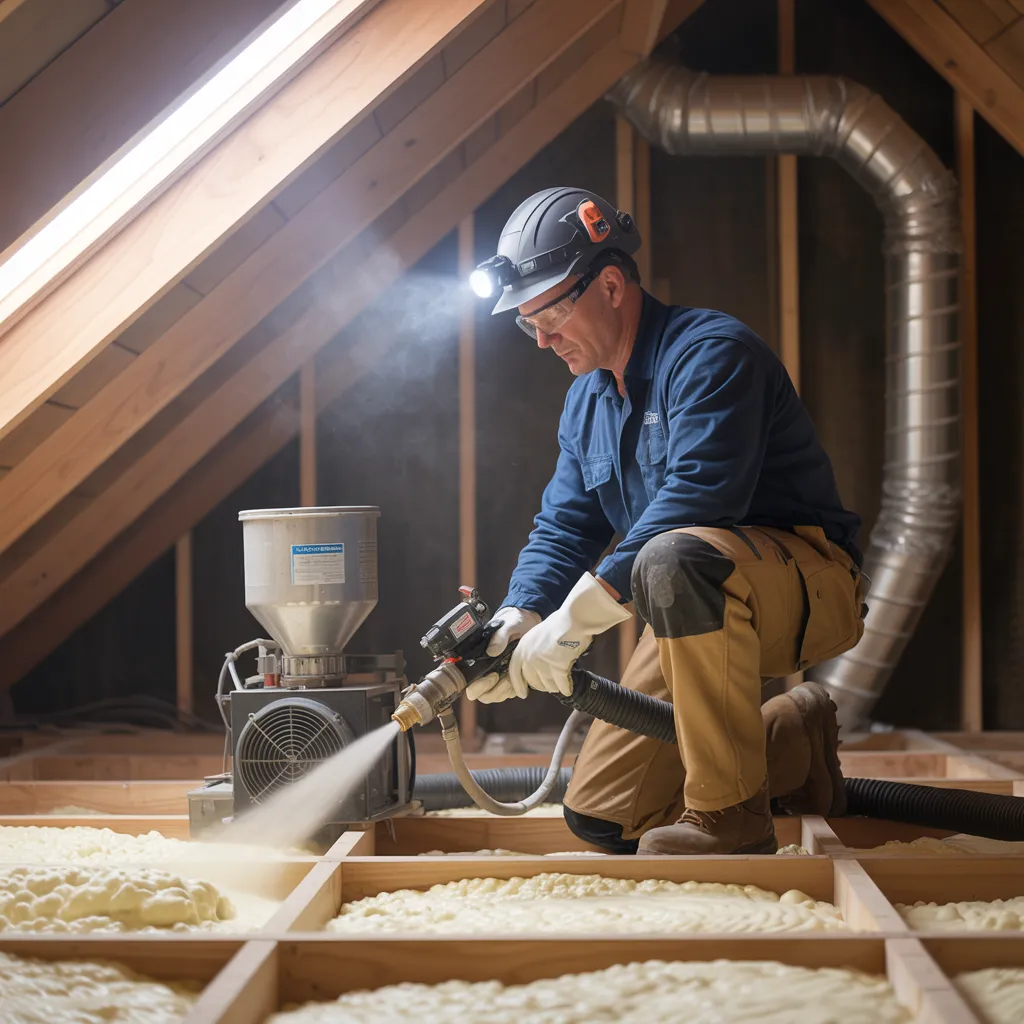
A home insulation professional, dressed in workwear, installs spray foam insulation in an attic space. Kneeling on wooden floor joists, he directs the spray nozzle into the open ceiling cavity, filling it with expanding foam insulation. Existing loose-fill insulation lies in the eaves. A hands-on insulation upgrade process can improve a home’s thermal efficiency and prevent ice dams.
From Temporary Fixes to Permanent Solutions: Breaking the Expensive Cycle
Quick fixes like heat ropes, gutter cleaning, or calcium chloride provide temporary relief, but they’re treating symptoms while the real problem keeps costing you money.
True prevention means addressing root causes directly. Focus on three key improvements: upgrading attic insulation to current building code standards, improving ventilation to ensure warm air escapes properly, and comprehensive air sealing around chimneys, vents, and lighting.
Don’t overlook your HVAC system—use programmable thermostats or zoned heating rather than blocking vents, which disrupts airflow and forces your system to work harder. While solutions like spray foam insulation carry higher upfront costs (sometimes thousands), you’ll recoup that investment through lower HVAC expenses and reduced utility bills over five to ten years.
After that payback period, you enjoy the savings indefinitely. The choice is simple: invest in permanent solutions now or keep paying for the same expensive problem every winter.