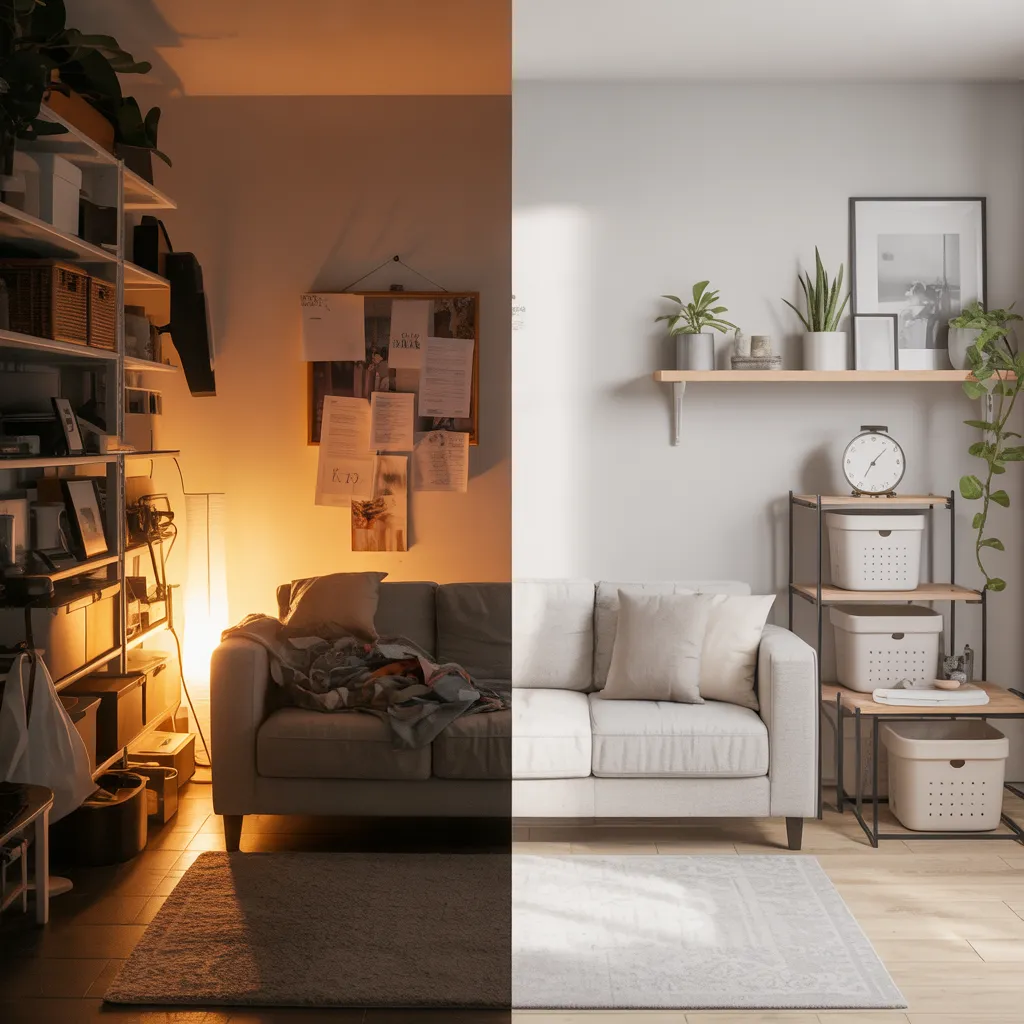
Visual decluttering has moved way beyond your makeup vanity.
This minimalist aesthetic—removing visible branding and labels to create serene, intentional spaces—is reshaping how homeowners approach their pantries, closets, and kitchen storage.
What started as an Instagram trend is quietly becoming the organizing revolution many of us didn’t know we needed.
Here’s what makes it work: when you eliminate visual noise, your mind genuinely follows suit.
Princeton University research backs this up, showing that visual clutter directly reduces cognitive abilities and mental clarity.
This isn’t just about pretty shelves—it’s about creating spaces that actually help you think better and feel calmer.
It’s why the visual decluttering movement resonates so powerfully. Interestingly, this philosophy aligns beautifully with Marie Kondo’s KonMari method, which emphasizes intentional curation of what you keep.
Why Your Organized Space Keeps Falling Apart (It’s Not Your Fault)
You’ve decluttered meticulously, labeled everything, invested in storage solutions—yet somehow your home still feels chaotic. The culprit? Your system is working against your natural habits instead of with them.
Common missteps include over-labeling, using open shelving for everyday items, and creating storage systems so complicated that they become impossible to maintain.
Here’s the real issue: most of us optimize for how things look rather than how they actually work in daily life. Beautiful organization that’s too difficult to maintain will fail every time.
Understanding your ‘clutter personality’ changes everything. Experts identify five distinct types:
- The Happy Heaper (comfortable with visible chaos)
- Kind Keeper (struggles to declutter sentimental items)
- Warm Weeper (uses clutter emotionally)
- Harassed Housekeeper (overwhelmed by volume)
- Lifetime Lingerer (holds onto everything).
Recognizing which pattern describes you reveals why certain strategies backfire and which approaches will actually stick.

The Visual Decluttering Formula: Three Steps to Calm, Organized Spaces
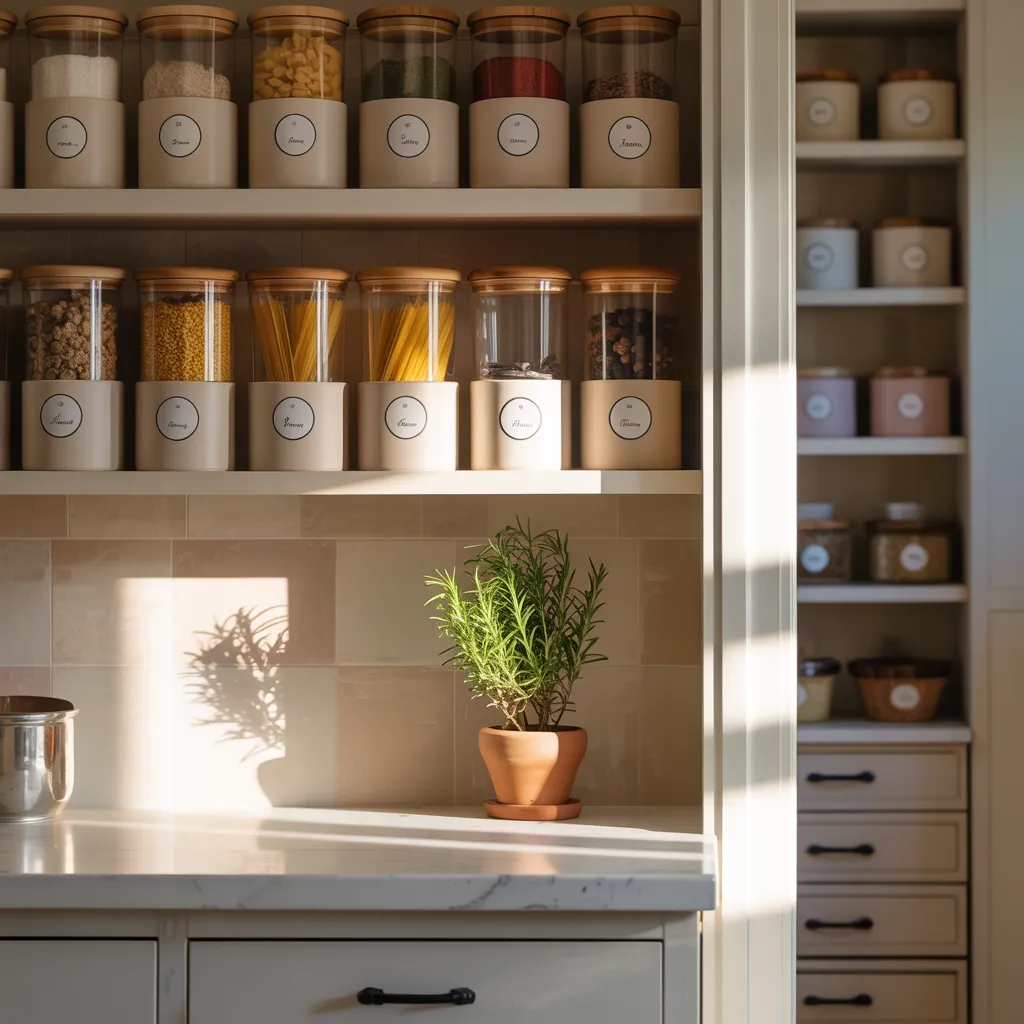
Visual decluttering combines three strategic techniques that work together: stripping items of labels, using matching storage containers for spices and condiments, and keeping aesthetically pleasing items visible for curated displays. The real magic happens when you ground these techniques in functional design.
Why matching containers work: They’re not just pretty—they’re practical.
Uniform containers hide visual noise while letting you see at a glance what you actually have. They reduce decision fatigue every time you cook or grab something from storage.
This approach works everywhere: kitchens, closets, laundry rooms, even bedside tables. When items look intentional rather than accumulated, your whole space breathes differently.
Your pantry transforms from a cluttered catchall into a genuinely calm, organized zone where you actually enjoy spending time.

The One Critical Step That Prevents Organization from Falling Apart
Here’s what separates people with lasting organized homes from those watching their beautiful systems slowly crumble: maintenance.
Many people declutter ruthlessly, organize beautifully, then wonder why chaos creeps back in weeks later. They skipped the most crucial step: building in a real maintenance schedule.
Without consistent attention, even perfect organization gradually reverts to mess. It’s not because you failed—it’s entropy at work.
Spaces don’t stay organized by accident; they require intentional, ongoing attention. This is where your clutter personality becomes invaluable. Different personality types benefit from different maintenance rhythms.
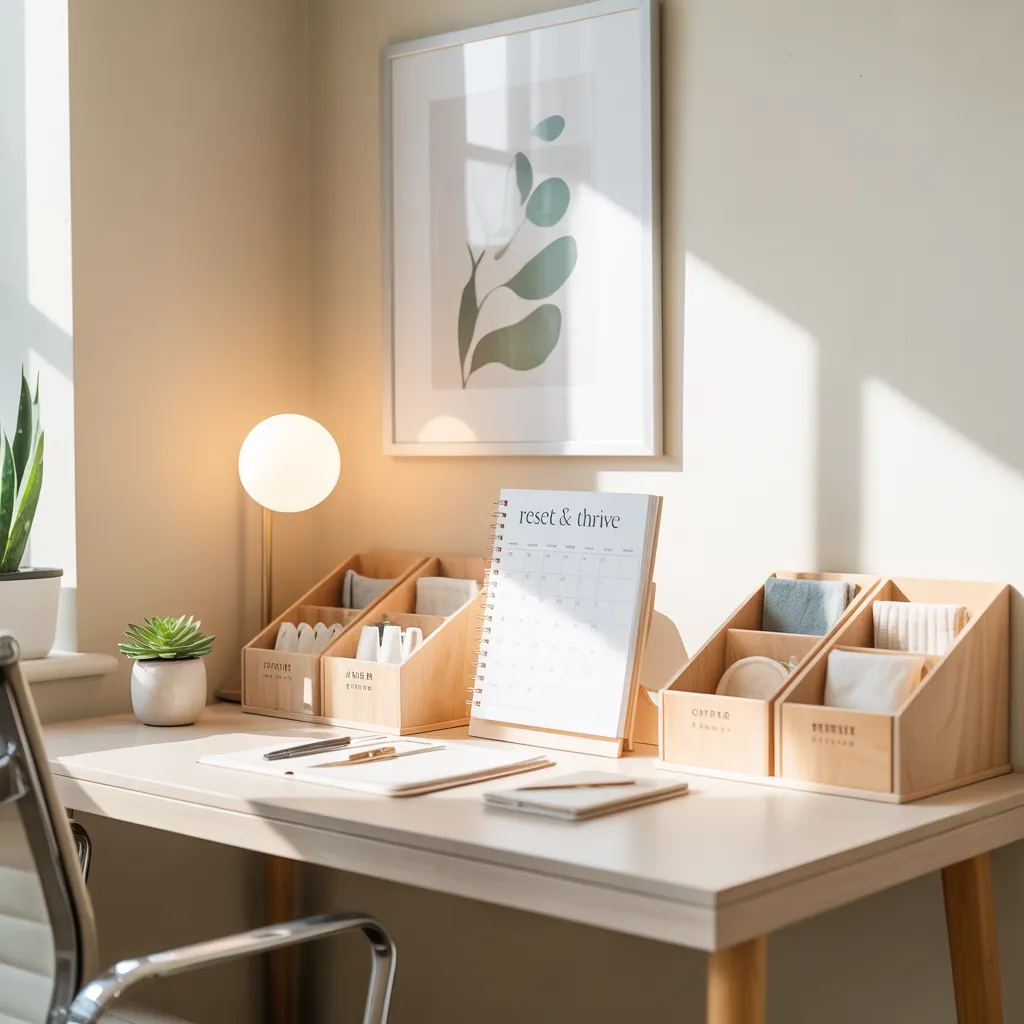
Some people thrive with weekly 15-minute resets, while others need a monthly deep-dive. Finding what works for your natural style is the difference between temporary organization and lasting change.
Building a Decluttering Habit That Actually Lasts
Creating a sustainable decluttering routine means treating it like any other non-negotiable appointment. Here’s what actually works:
Start small and specific: Tackle high-traffic zones first (they show results fastest), organize by category within rooms rather than entire spaces at once, and set realistic goals that don’t feel overwhelming.
Using a 30-minute timer for focused bursts makes tasks feel manageable—and you’ll be amazed what you accomplish in that window.
The key insight: Decluttering isn’t a one-time project but an ongoing rhythm.
When you approach organization as a personalized system aligned with your clutter personality and values—not a generic mandate—you’ll maintain that serene aesthetic permanently.
Pick your maintenance schedule, align it with your personality type, and suddenly organizing stops feeling like punishment and starts feeling like self-care.