
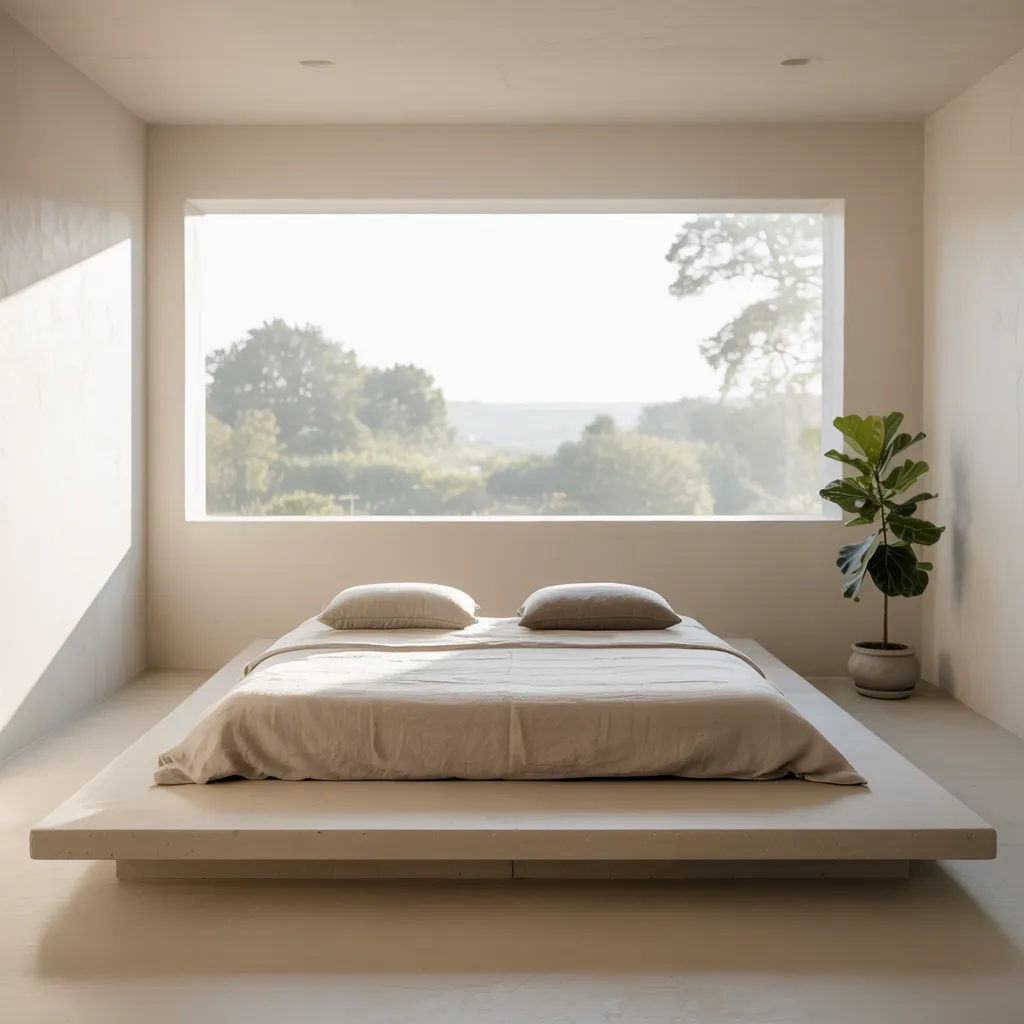
In our fast-paced, cluttered world, finding true rest can be a challenge. But what if the key to better sleep lies in the simplicity of a minimalist bedroom? Experts weigh in on how stripping back your sleep sanctuary can nurture deeper relaxation and rejuvenation.
The Minimalist Bedroom: Your Path to Better Sleep
In the pursuit of restorative sleep, the minimalist approach offers a compelling solution. By intentionally curating our sleep environment, we create a sanctuary that fosters deep relaxation and rejuvenation. Every object in a room demands some level of mental processing, and in a cluttered space, these visual stimuli can hinder our ability to fully unwind. Research has linked excess clutter to elevated stress levels and increased cortisol production, both of which can disrupt our sleep patterns. By embracing minimalism in the bedroom, we eliminate these distractions, allowing our minds to truly power down and embrace the restorative benefits of quality rest.
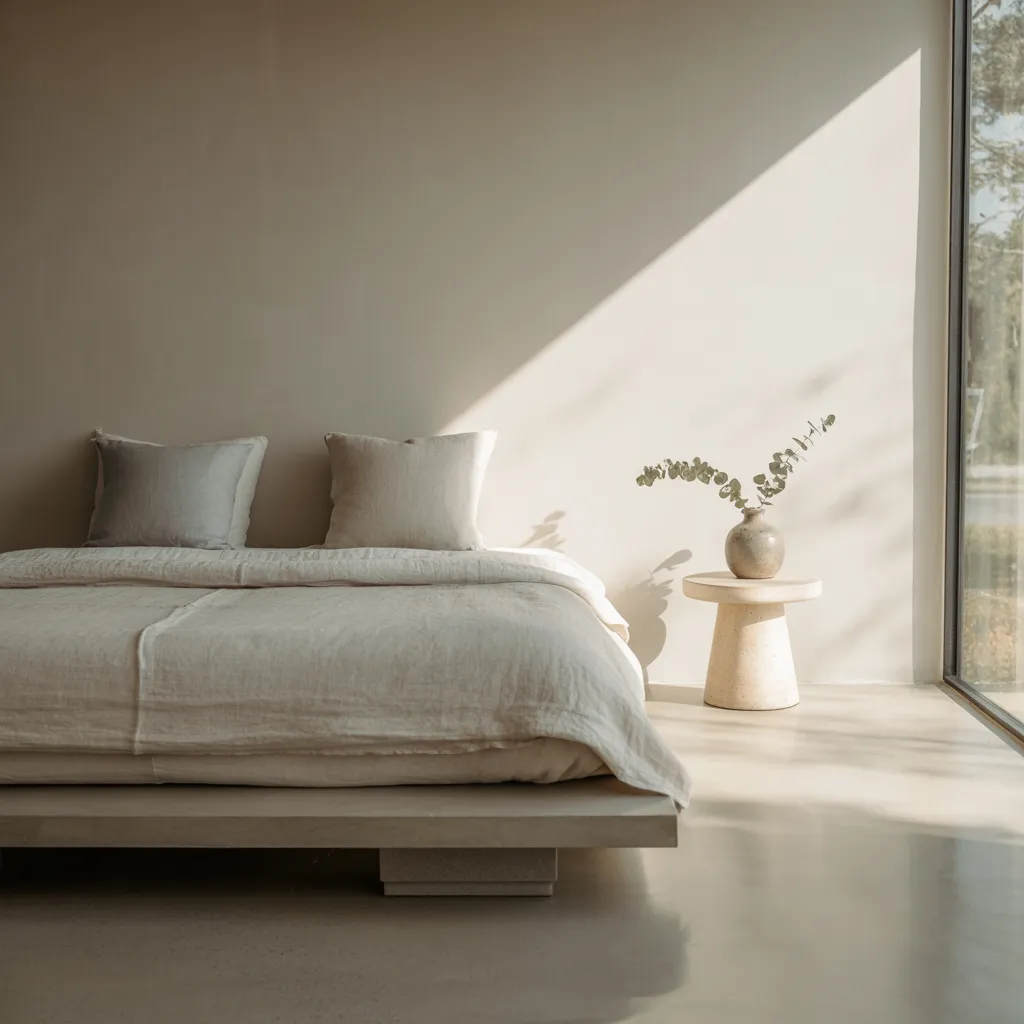
A serene, minimalist bedroom bathed in natural light, featuring a low platform bed with crisp white linens and plush grey pillows. An earthy ceramic vase holding delicate eucalyptus branches adorns a simple wooden stool, adding an organic touch. The muted, neutral color palette creates a calming atmosphere. Clean lines, raw materials like wood and ceramic, and a distinct lack of clutter define this space’s tranquil, contemporary minimalist aesthetic geared towards promoting undisturbed sleep and rejuvenation.
Decluttering Your Sanctuary: The First Step
The journey to a minimalist bedroom begins with a thoughtful decluttering process. This doesn’t mean stripping your space of all personality or warmth; rather, it’s about surrounding yourself with intentional, purposeful items that promote a sense of calm. Start by evaluating your bed – the centerpiece of your sleep sanctuary. Opt for a streamlined frame and limit bedding to one or two complementary textures in calming neutral tones made from natural fibers like cotton or linen. Keep nightstands clear, with a maximum of three essential items, and conceal storage to create an open, grounded feel. Establish a simple two or three-color palette using soft, soothing shades like sage green or warm white, avoiding bold, energizing hues that can overstimulate the senses.
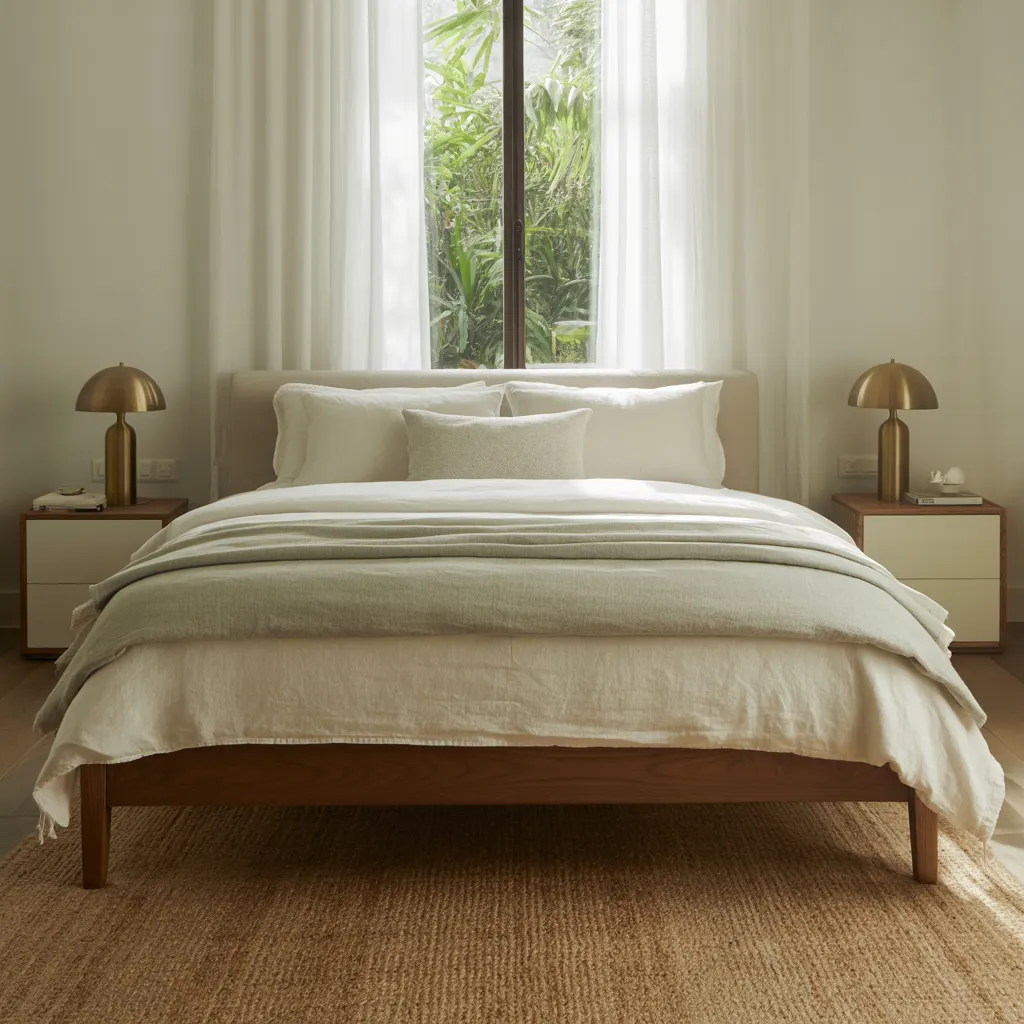
A serene, minimalist bedroom with crisp linen bedding in soft neutral tones welcomes natural light from the window overlooking lush greenery. The sleek wood bed frame and matching nightstands with golden metal lamps create a warm, grounded aesthetic. Smooth lines and muted earth tones of the furniture blend harmoniously with the understated beige color palette. Textures like the nubby area rug add subtle depth while maintaining a pared-back, tranquil ambiance ideal for rest and relaxation.
Curating Calm: Essential Elements for Restorative Sleep
While minimalism emphasizes simplicity, it’s not about deprivation or creating a sterile, uninviting environment. Instead, it’s about striking a balance between clean lines and sensory cues that nurture a sense of comfort and tranquility. Incorporate subtle textures through a soft rug or plush throw, and consider warm, ambient lighting that creates a cozy ambiance. These thoughtful touches add depth and personality while maintaining a serene atmosphere. Remember, the goal is to create a space that feels calm yet personal – a restorative oasis tailored to your unique needs and preferences.
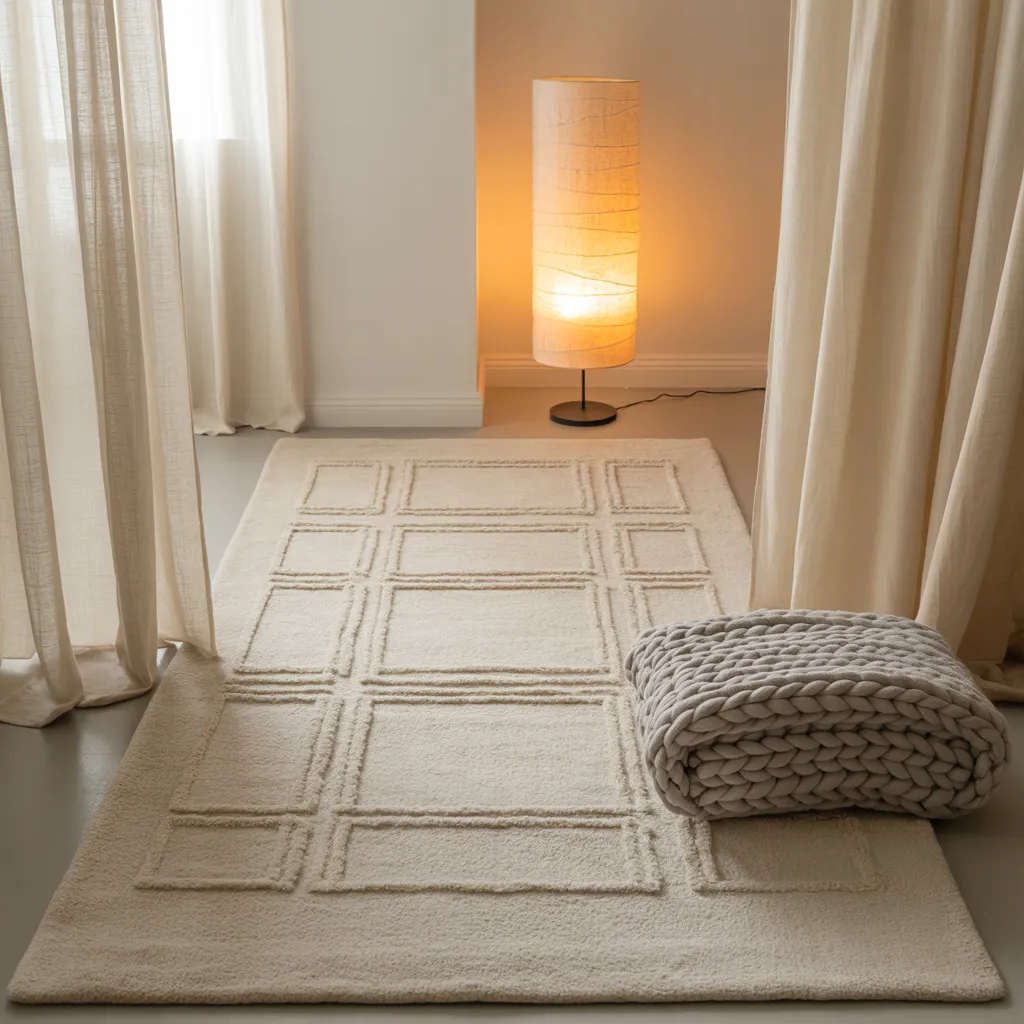
A cozy nook bathed in warm, ambient light from a woven cylinder lamp emanates a sense of tranquility. A plush, chunky knit footstool in a gentle greige tone lends inviting texture beside a geometric patterned area rug in neutral hues that anchors the space. Sheer, gossamer curtains frame the soothing vignette, epitomizing modern minimalist style through an edited mix of natural materials like wool and cotton textiles accented by sleek black metal. The soft, earthy color palette cultivates an aura of understated elegance and calm ideally suited for rest and rejuvenation.
Finding Balance: When Minimalism Goes Too Far
While the benefits of minimalism in the bedroom are well-documented, it’s important to recognize that there is a tipping point where simplicity can become too extreme. Completely bare, empty rooms can inadvertently create a sense of unease or anxiety, counteracting the intended calming effects. The key is to find a middle ground – a space that feels open and uncluttered, yet still exudes warmth and invites relaxation. By incorporating a few well-chosen personal touches, such as framed artwork or a cherished memento, you can strike this delicate balance, creating a space that is both serene and nurturing.

A low-profile wooden bed frame serves as the centerpiece, adorned with crisp white linens and a cozy gray throw blanket. The minimalist design exudes a serene, contemporary aesthetic. Warm sunlight streams through the window, casting soft shadows on the bare beige walls. A framed abstract artwork in muted tones hangs above the bed, providing a subtle focal point. An antique side table made of distressed oak displays a simple ceramic vase with delicate stems, lending an earthy, organic touch. The harmonious blend of natural textures like wood and linen, coupled with neutral hues and thoughtful accents, strikes a calming balance – a sanctuary that invites both tranquility and comfort.
Beyond Rest: How Minimalism Nurtures Mental Clarity
The benefits of a minimalist bedroom extend far beyond the realm of sleep. By reducing excess visual stimuli and creating a calming, uncluttered environment, we cultivate an atmosphere that supports focus, mental clarity, and overall well-being. For individuals with conditions like ADHD, minimalism can be particularly beneficial, as it minimizes distractions and allows the mind to fully relax and recharge. Ultimately, embracing minimalism in the bedroom is about more than just better sleep – it’s about nurturing a holistic sense of tranquility and rejuvenation that permeates every aspect of our lives.
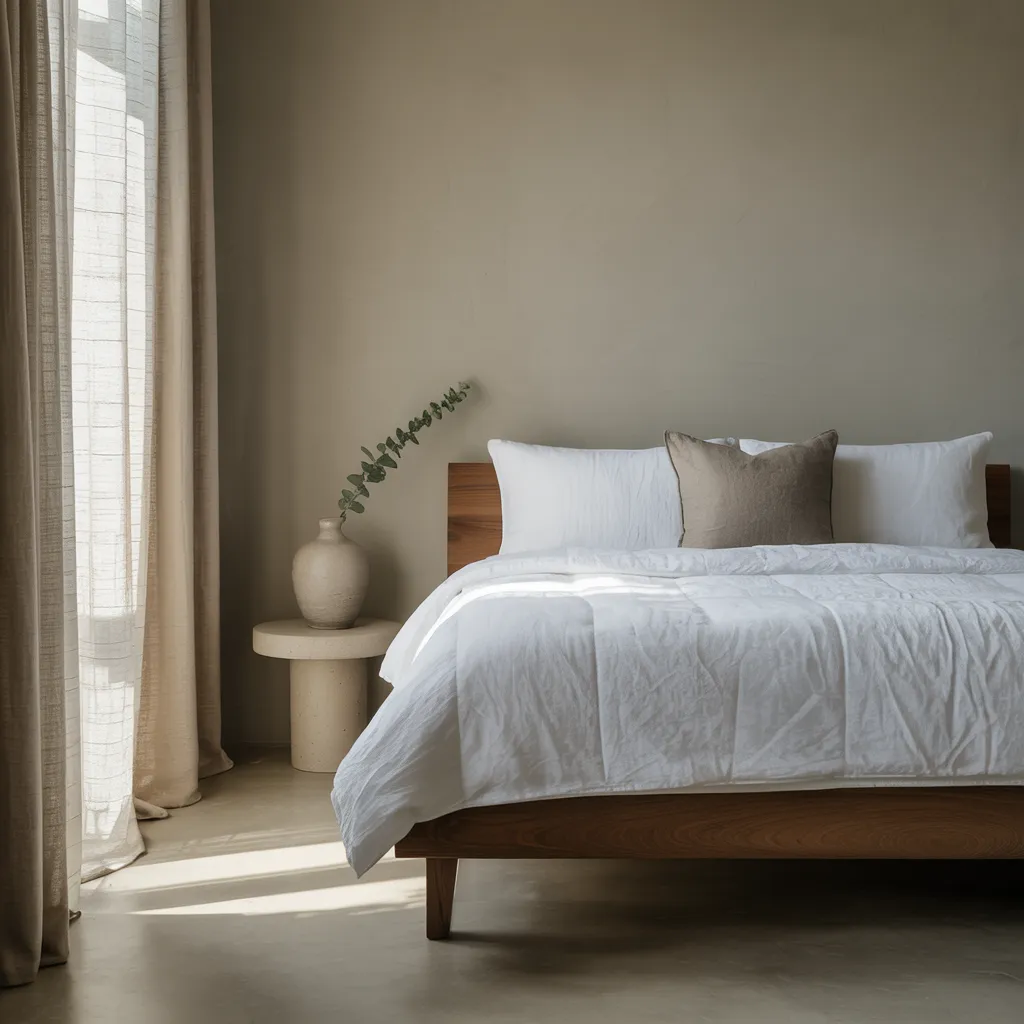
A serene, minimalist bedroom with clean lines and a calming neutral color palette. The taupe-hued linen bedding and warm wood platform bed exude understated elegance, while a simple ceramic vase displays a graceful eucalyptus stem. Sheer curtains filter in soft natural light, casting gentle shadows across the room. The muted tones of tan, cream, and greige create a soothing, pared-back ambiance that invites relaxation and respite from sensory overload. With its harmonious blend of natural textures and soft, organic accents, this tranquil space epitomizes the rejuvenating essence of minimalist design.