
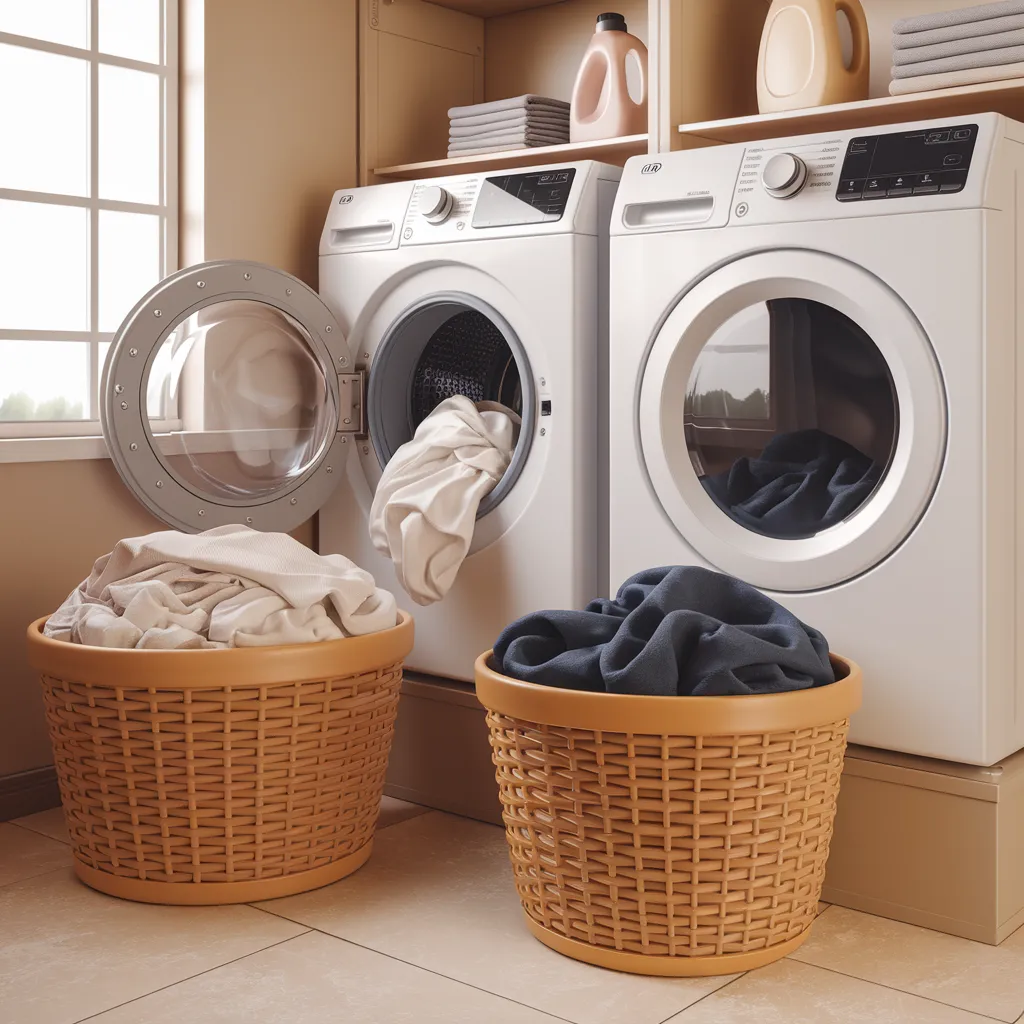
Doing laundry is a chore that often feels like a never-ending cycle, but there’s one simple rule that can make a world of difference in keeping your clothes looking fresh and vibrant for longer.
The Laundry Hack That Will Save Your Clothes
In the world of laundry, there’s one rule that often gets overlooked, but it can be a game-changer for preserving the quality and appearance of your clothes. It’s a simple hack that involves separating your lights and darks when drying them, and it can have a profound impact on the longevity of your wardrobe. By following this straightforward guideline, you can avoid a host of common laundry woes, from discoloration to excessive lint transfer, and keep your garments looking their best for years to come.
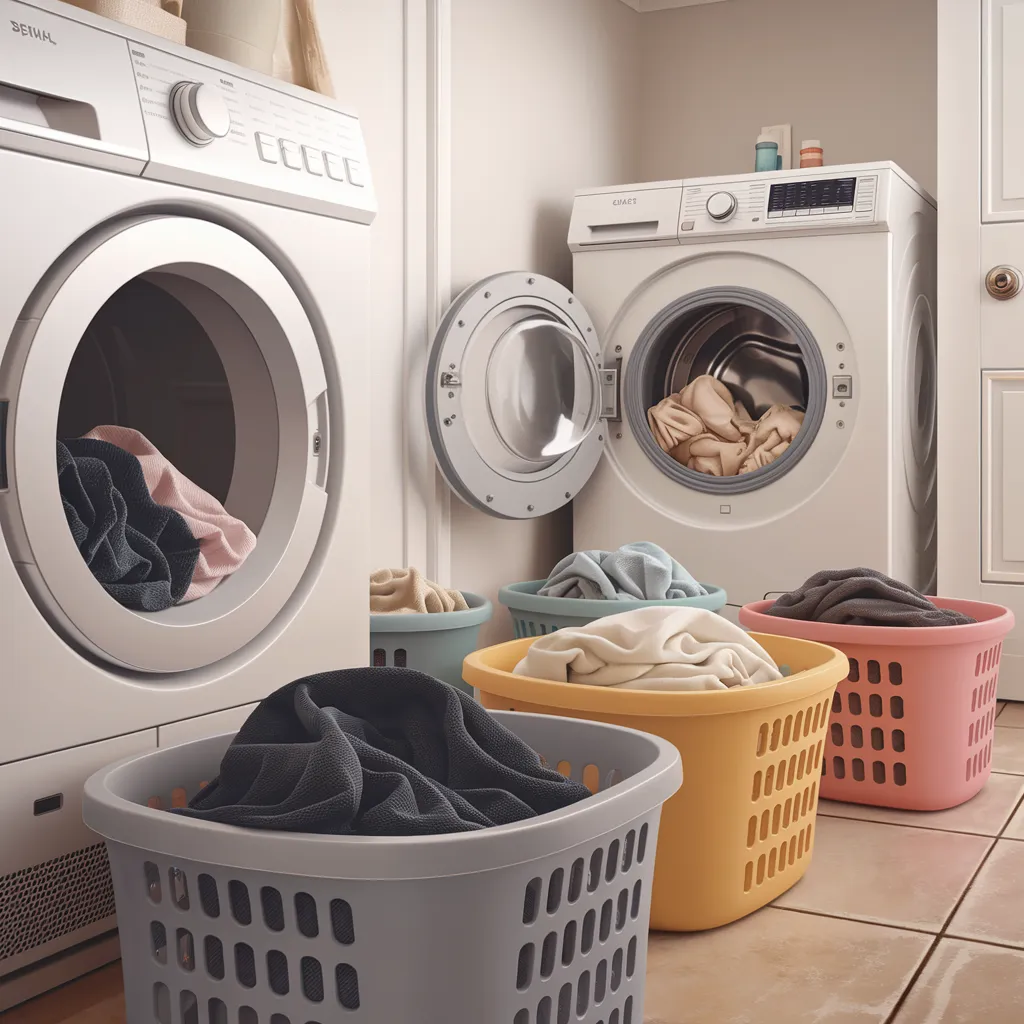
An orderly laundry room with two front-loading washing machines and baskets overflowing with neatly sorted lights and darks. The sleek, contemporary appliances in crisp white blend seamlessly with the surrounding neutral tones of beige tile floors and pale mint green walls. Practical plastic laundry baskets in pastel shades of yellow, pink, and blue house piles of clothing waiting to be washed or dried, highlighting efficient organization. The scene exudes a minimalist aesthetic with its clean lines, muted color palette, and uncluttered space – the very essence of functional simplicity for this utilitarian area.
Unraveling the Mystery: Why Separate Lights and Darks?
At first glance, the idea of separating lights and darks might seem like an unnecessary hassle, but there are compelling reasons behind this laundry wisdom. When you toss light and dark clothes together in the dryer, a few undesirable things can happen. First, loose dye from darker garments can rub off onto lighter items, leaving unsightly discoloration. Additionally, lint from light-colored clothes can cling to dark fabrics, giving them a dull, dingy appearance. And let’s not forget the frustration of finding lint from dark clothes clinging to your favorite white shirt. By keeping lights and darks apart, you eliminate these cross-contamination issues, ensuring your clothes maintain their vibrant colors and pristine appearance.
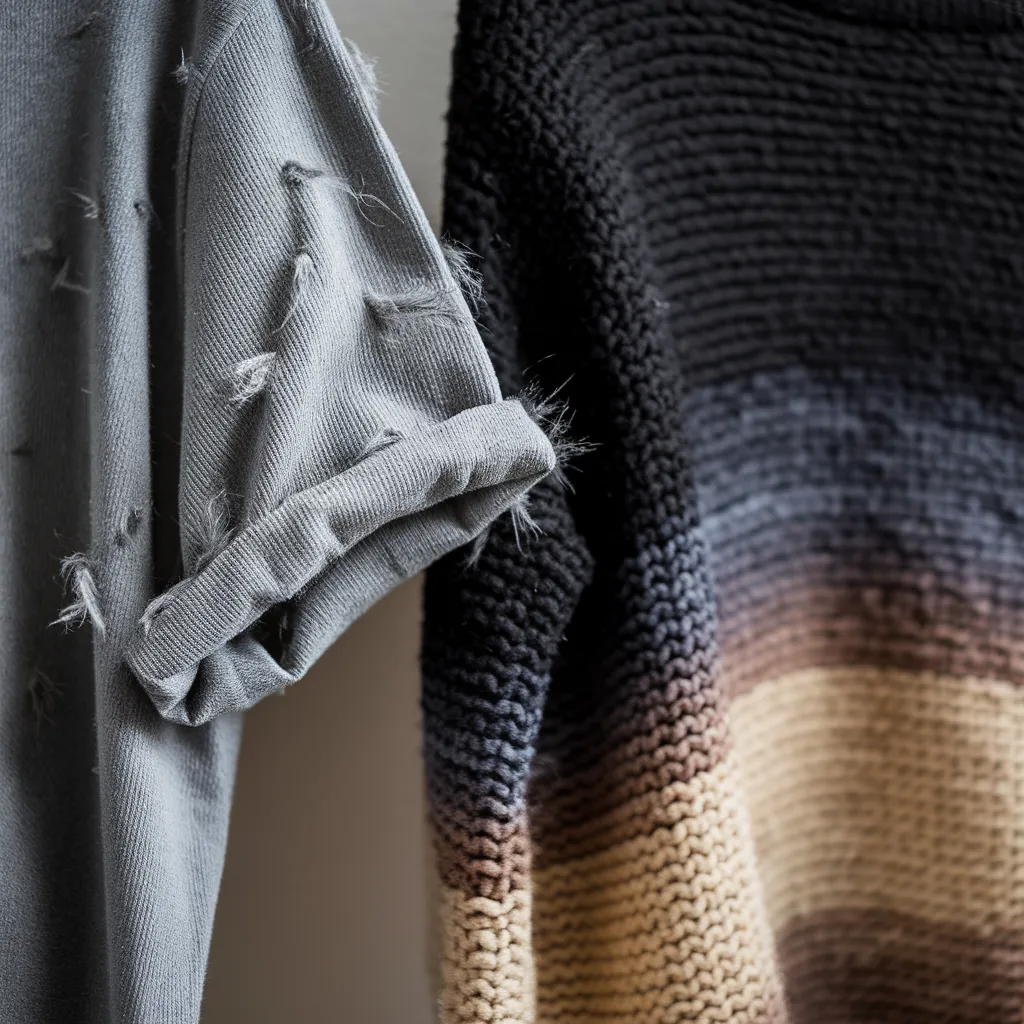
Two clothing items hang side by side, contrasting starkly in both color and texture. A gray t-shirt displays scattered tufts of fuzz clinging to its surface, an unintended rustic embellishment. Beside it hangs a chunky black knit sweater with ombré shading, gradually fading from deep charcoal to soft oatmeal hues. The juxtaposition highlights the consequences of improper laundry sorting – the fuzzy shirt likely shedding onto darker items, while richly dyed fabrics can bleed pigment onto lighter garments. The neutral palette, dominated by urbane grays and blacks, aligns with a modern, minimalist style. The varied textures, from the napped knit to the smooth cotton, showcase the diverse material mix found in contemporary wardrobes. This visual encapsulates the importance of separating lights and darks to preserve clothing’s pristine quality.
The Lint Dilemma: Keeping Your Clothes Pristine
Lint is a common enemy in the laundry room, and it can be a real nuisance when it comes to maintaining the pristine look of your clothes. When you dry light and dark garments together, lint can easily transfer from one to the other, leaving unsightly fuzz and diminishing the overall appearance of your wardrobe. By separating lights and darks, you minimize the risk of lint transfer, ensuring that your clothes remain crisp and clean-looking. This simple step can be particularly beneficial for delicate fabrics like silk or cashmere, which are prone to attracting lint and can be easily damaged by excessive fuzz buildup.
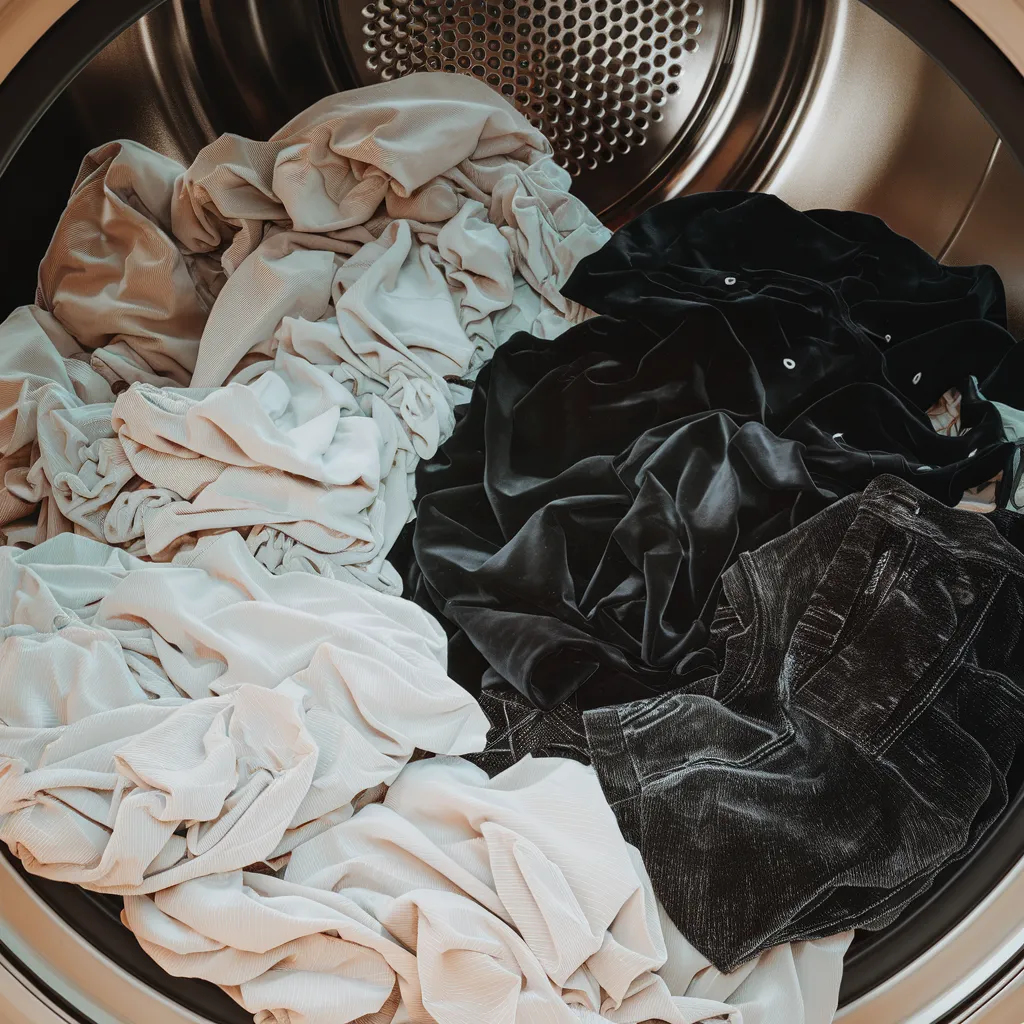
A chaotic jumble of light and dark fabrics spills out of a dryer’s drum, illustrating the lint-attracting perils of mixing laundry loads. Delicate nude and sky blue tones mingle with inky blacks and grays, showcasing how lint can spread indiscriminately between garments. Crumpled textures range from silky satin to rugged denim, exemplifying how different weaves are susceptible to lint cling. The cool stainless steel interior provides an industrial backdrop for the soft fabric piles, highlighting the necessity of separating delicates from rougher pieces to prevent unsightly fuzz transfer and maintain a fresh, crisp wardrobe.
Mastering the Art of Laundry Sorting
To fully embrace the benefits of separating lights and darks, it’s important to understand the proper sorting techniques. Generally, deep shades like navy blue, black, red, brown, and dark gray are considered darks, while lighter hues like pastels, cream, beige, and light gray fall into the lights category. For colors that fall somewhere in between, like lavender, pink, orange, light blues, and greens, it’s best to dry them with the colors that most closely match their intensity. Setting up separate sorting bins in your laundry room or bedrooms can make this process more streamlined and help maintain the separation from the start.
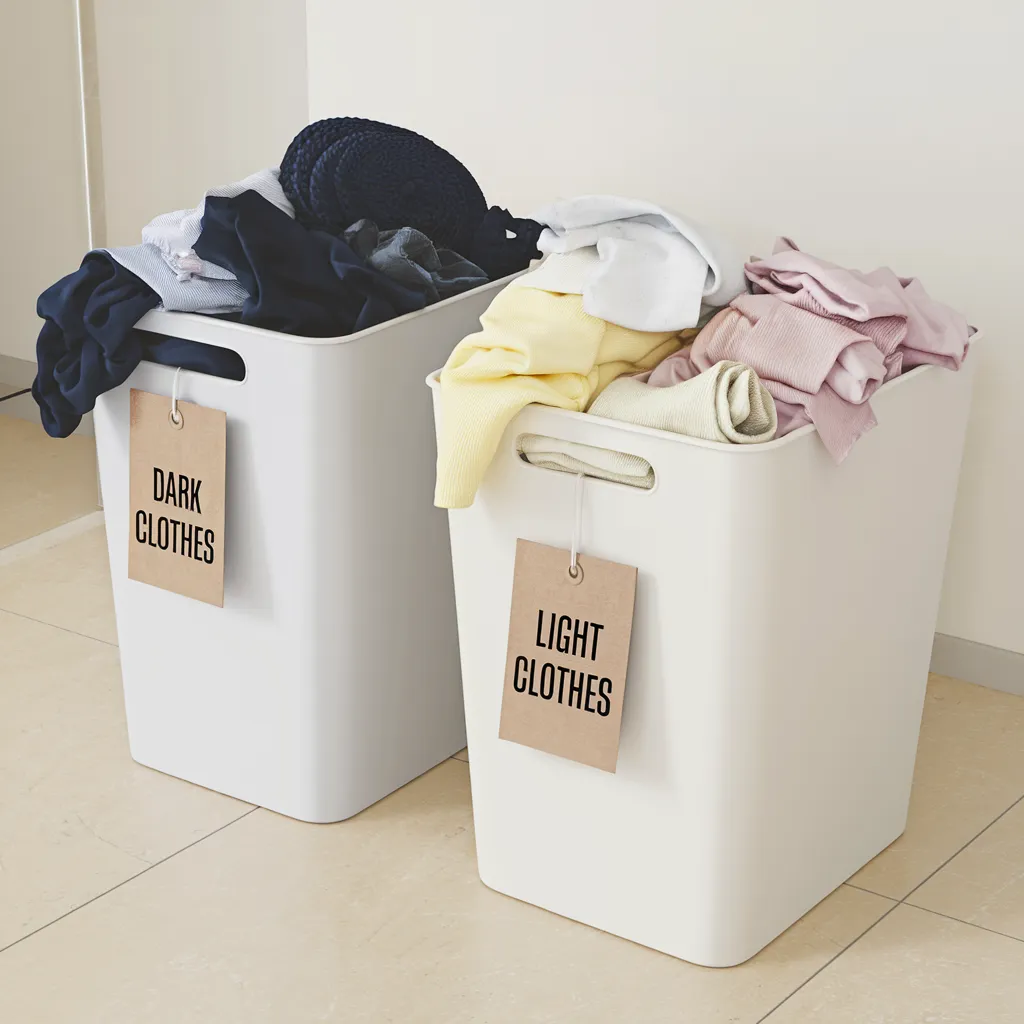
Two classic laundry baskets stand side by side, one labeled “DARK CLOTHES” and the other “LIGHT CLOTHES,” neatly separating garments by their color. The dark basket overflows with navy and black items, while the light one contains pale yellows, whites, and soft pinks. The minimalist design features clean white plastic baskets with simple wooden accent tags. The practical yet stylish organization system exudes a crisp, contemporary aesthetic through its monochrome palette and sleek lines. The durable plastic and natural wood materials lend a touch of warmth while prioritizing functionality. This visual representation effectively illustrates the straightforward process of sorting laundry by shade for optimal cleaning results.
Extend Your Wardrobe’s Life with This Simple Trick
Beyond preserving the appearance of your clothes, separating lights and darks when drying can also contribute to the overall longevity of your wardrobe. Overstuffing the dryer with a mix of light and dark garments can lead to excessive friction and heat buildup, which can cause premature wear and tear on fabrics. By doing smaller, more frequent loads and keeping lights and darks separate, you’re not only preventing discoloration and lint transfer but also reducing the strain on your clothes. This simple laundry hack can help you get the most out of your wardrobe investments, ensuring that your favorite pieces remain in top condition for years to come.
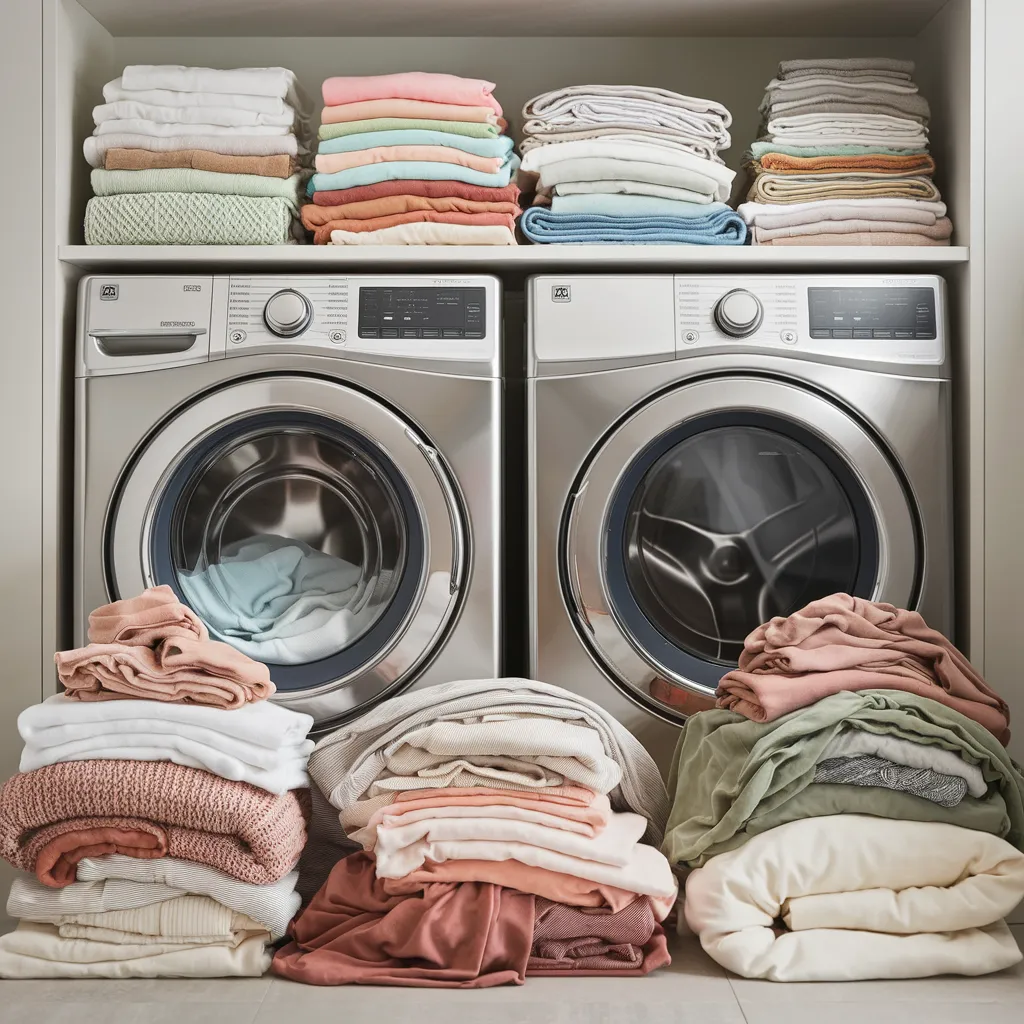
Two front-loading washing machines hold loads of neatly folded clothes in various shades – from bright whites and soft pastels to rich blues and earthy tones. The simple yet functional laundry room showcases a minimalist, contemporary style with sleek metallic appliances and clean lines. The piles of clothing textures highlight materials like cozy knits, crisp cottons, and airy linens in the neutral color palette spanning creams, grays, and muted mossy greens. Thoughtful wardrobe care ensures maximum longevity through considerate sorting, gentle cycles, and preventing excessive wear from friction or heat exposure.