Wabi-sabi isn’t about perfection — it’s about celebrating what’s real. This ancient Japanese philosophy is quietly transforming how homeowners think about window treatments and interior spaces. Instead of hiding imperfections, wabi-sabi embraces them as honest expressions of authenticity and craftsmanship. At its heart, wabi-sabi teaches that beauty exists in incompleteness, impermanence, and the natural aging process. When you apply this to curtains, it means choosing fabrics that show their true nature — visible weaves, subtle color variations, and organic imperfections that tell a story of genuine craftsmanship. Weathered textures, exposed edges, and natural materials like linen and hemp become the ultimate symbols of sophisticated design, not compromise. This philosophy has quietly revolutionized interior design by rejecting the sterile perfection that once dominated high-end spaces. It pairs beautifully with warm minimalism, a design approach that balances restraint with inviting warmth through natural materials, textural depth, and neutral tones. Both recognize that authenticity requires embracing raw textures and earth-toned palettes rather than artificial polish. Wabi-sabi has also become foundational to Japandi — a design style that emerged around 2016 by blending Japanese aesthetics with Scandinavian principles. This contemporary movement emphasizes quality, timelessness, and respect for traditional craftsmanship, proving that genuine beauty transcends cultural boundaries. The result is sanctuaries that feel genuinely inhabited, where materials haven’t been artificially polished into submission.
Why Designers Are Ditching Perfectly Polished Curtains
For decades, interior design demanded flawless finishes and pristine fabrics that felt almost artificial. But a quiet revolution is happening: the most coveted curtains now feature imperfect beauty and raw authenticity. By choosing natural fibers with visible texture and minimal hardware, you’re not settling — you’re making a bold design statement. This movement signals a shift from ‘more is more’ to ‘less, but real’ — and it’s oddly liberating. When you select curtains crafted from linen, hemp, or cotton, you’re investing in materials that age gracefully, develop character over time, and require no artificial enhancement. These natural materials integrate beautifully with Japandi interiors, where walls painted in off-white, beige, or soft grays amplify natural light while allowing window treatments to take center stage. Contemporary designers now recommend embracing exposed seams, uneven dyes, and natural color palettes that evoke calm rather than clinical perfection. This approach pairs beautifully with warm minimalism principles, which emphasize textural contrast, neutral tones, and simple, functional design that prioritizes both beauty and purpose. Drawing back curtains to maximize natural light is now recognized as a core technique that enhances both functionality and atmosphere. The result is spaces that feel genuinely lived-in from day one — not through cost-cutting, but through a sophisticated philosophical stance that values honest materials over mass-produced uniformity.
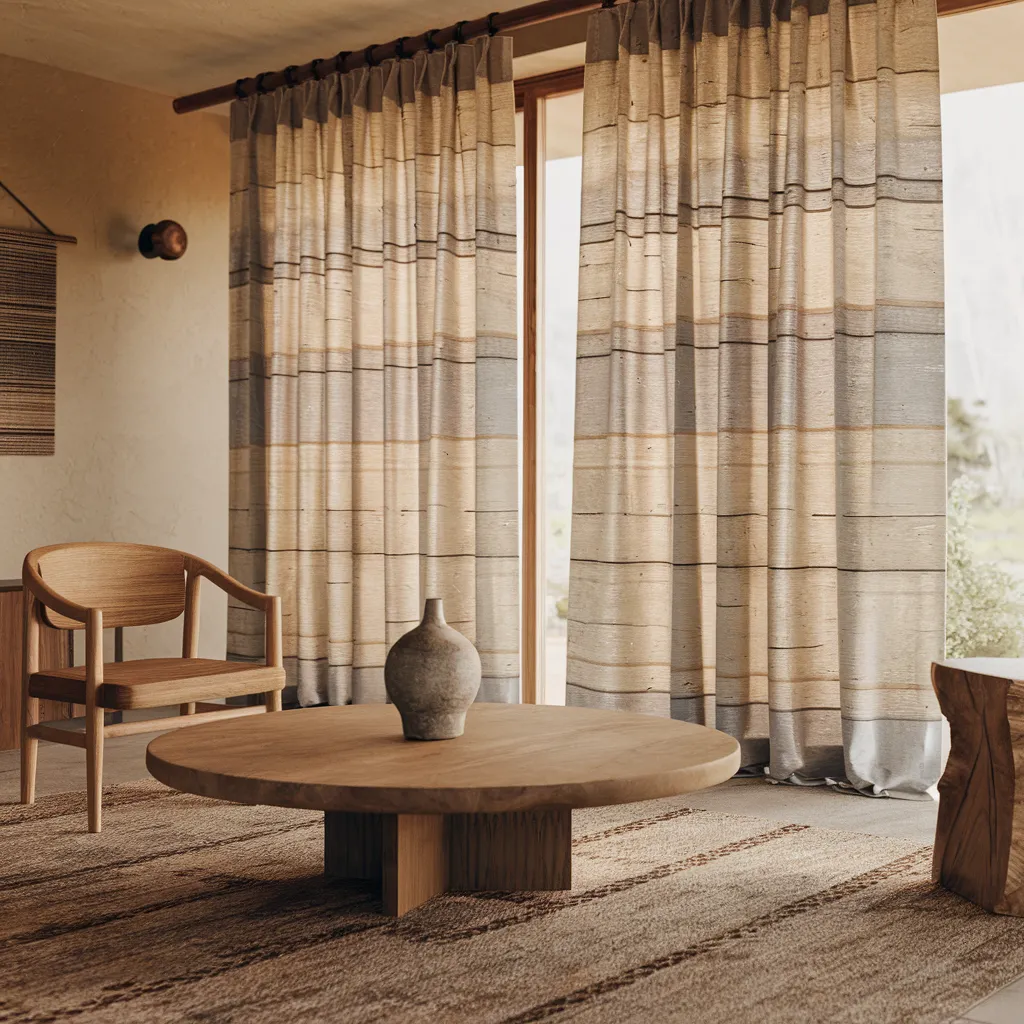
A contemporary living space defined by natural textures and warm minimalism. Linen curtains in muted tones drape gracefully over windows, their soft folds and visible weave evoking raw authenticity. An oak wood coffee table anchors the space, while a ceramic vase and solid wood chairs introduce earthy contrast against the beige carpet. The neutral color palette of warm beiges and grays highlights the interplay of organic materials and irregular finishes, creating a calming atmosphere that embraces imperfect beauty as the ultimate sophistication.
The Bamboo Revival: Blending Cultural Heritage With Modern Minimalism
Bamboo decor disappeared from mainstream design for years, dismissed as dated and disconnected from contemporary interiors. But it never truly left the consciousness of design purists — it was waiting for the right philosophical moment to return. Now it’s back, reimagined for modern spaces that crave authenticity and cultural respect. Small bamboo accents like drawer pulls, decorative dishes, and furniture pieces merge East-meets-West aesthetics with understated elegance. This natural material echoes wabi-sabi principles while adding warm, sculptural interest to contemporary interiors that feel both grounded and sophisticated. The resurgence reflects designers’ recognition of bamboo’s sustainable credentials and its deep connection to Japanese aesthetics. Scandinavian design’s emphasis on simplicity, minimalism, and functionality creates unexpected synergy with bamboo’s organic appeal. What makes this revival different from its 1960s predecessor is context: contemporary bamboo decor isn’t about retro nostalgia, but about acknowledging cultural authenticity within the Japandi framework. Bamboo fits seamlessly into organic modernism — an approach emphasizing clean lines, raw textures, negative space, and unfinished materials like stone and wood. When paired with wabi-sabi curtains, bamboo elements create a cohesive visual narrative grounded in genuine craftsmanship, where greenery plays a meaningful role in creating harmony and balance.
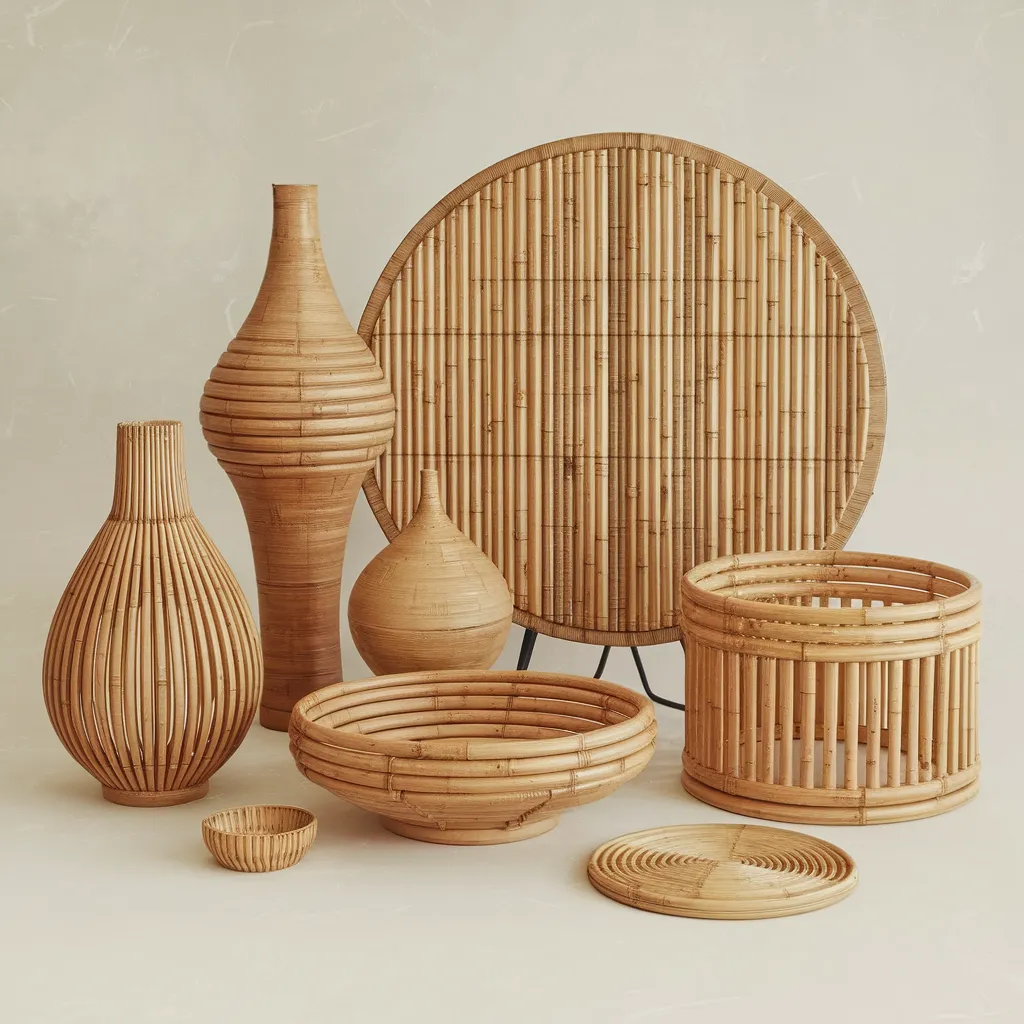
Organic sculptures of woven bamboo vessels and baskets in warm tones adorn the scene, exuding an earthy, artisanal vibe. The arrangement showcases handcrafted pieces characterized by intricate lattice patterns and organic shapes, reflecting a contemporary take on traditional Japanese craftsmanship. The natural bamboo material lends a tactile, sustainable, and grounded aesthetic aligning with the wabi-sabi principles of finding beauty in imperfection. Complemented by a serene, neutral color palette, the bamboo accents introduce textural depth and organic warmth, seamlessly blending East Asian minimalism with modern interior sensibilities. This curated vignette epitomizes the resurgence of bamboo decor in contemporary spaces, celebrating cultural authenticity through natural materials and thoughtful craftsmanship.
Building a Home That Feels Genuinely Honest
Wabi-sabi curtains and bamboo decor aren’t just separate trends — they’re interconnected pieces of a larger movement toward Japandi design, which fuses Japanese minimalism with Scandinavian simplicity. Both celebrate natural materials, textural depth, and the quiet power of imperfection. Together, they create spaces that feel intentional, calm, and authentically lived-in. This philosophy balances feng shui principles with Scandinavian hygge, creating refined yet genuinely inhabited environments. It’s not minimalism that feels sterile or cold; it’s a philosophy where every element serves both beauty and purpose, transforming your home into a sanctuary of honest design. Warm minimalism and organic modernism explain why this aesthetic resonates globally — they combine the restraint of minimalist principles with inviting warmth through natural materials, strategic lighting, and textural contrast. Low-profile furniture, indirect lighting in warm tones, and Japandi elements like shoji space dividers create visually light and serene atmospheres that reject fast design trends in favor of authenticity. By layering wabi-sabi principles through window treatments, incorporating bamboo accents, and embracing warm ambient lighting and open space, you’re building an environment that celebrates genuine craftsmanship. Sophistication doesn’t require perfection — it requires intention, respect for materials, and the courage to embrace what’s real. That’s the philosophy that transforms a house into a timeless sanctuary.
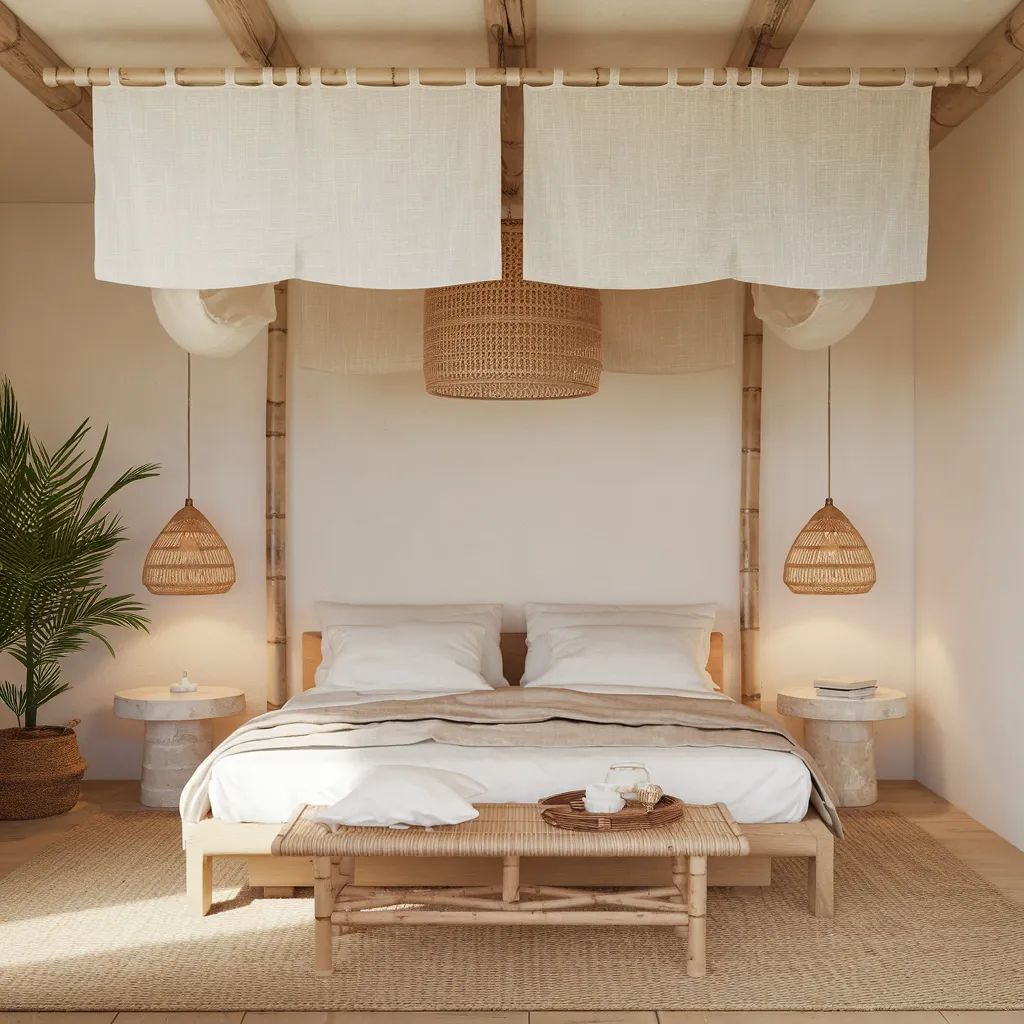
A tranquil, Japandi-style bedroom with warm woven textures and bamboo accents. Woven pendant lights, a rattan headboard, and intricately crafted furniture create a calming oasis of earthy tones and natural fibers. The neutral color palette of creams, beiges, and light wood tones is punctuated by woven storage baskets, organic linen curtains, and lush plant life. This design exemplifies the wabi-sabi principles of embracing imperfection and celebrating humble, handcrafted elements that cultivate a serene, lived-in essence.