When you’re furnishing a small bedroom, dining area, or living room, your instinct is usually wrong. We reach for undersized furniture, convinced that scaling down will make things feel airy and open. But here’s the irony—it does the exact opposite. Undersized pieces actually make rooms feel cramped and awkward, leaving visual voids that amplify the sense of tightness.
The real trick? Reject that cautious thinking. Place full-scale furniture with carefully chosen materials and finishes that anchor a room without overwhelming it. This counterintuitive approach transforms small spaces into intentional, grounded environments where everything feels deliberately chosen—not grudgingly compromised.
Think of it this way: successful small spaces share one fundamental principle—intentional curation matters more than square footage. When each piece earns its spot through both design merit and function, compact rooms paradoxically feel more expansive and lived-in.
How to Transform Your Bedroom Into a Storage Powerhouse
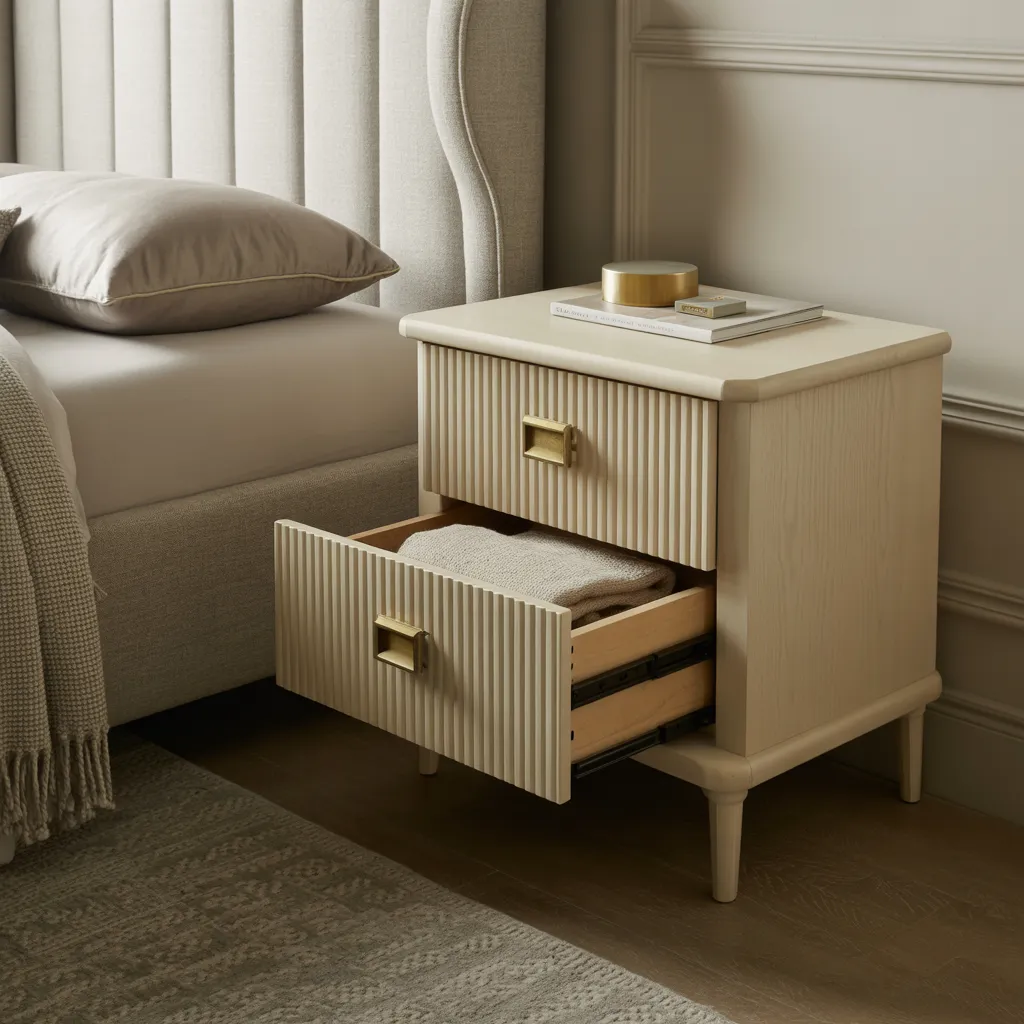
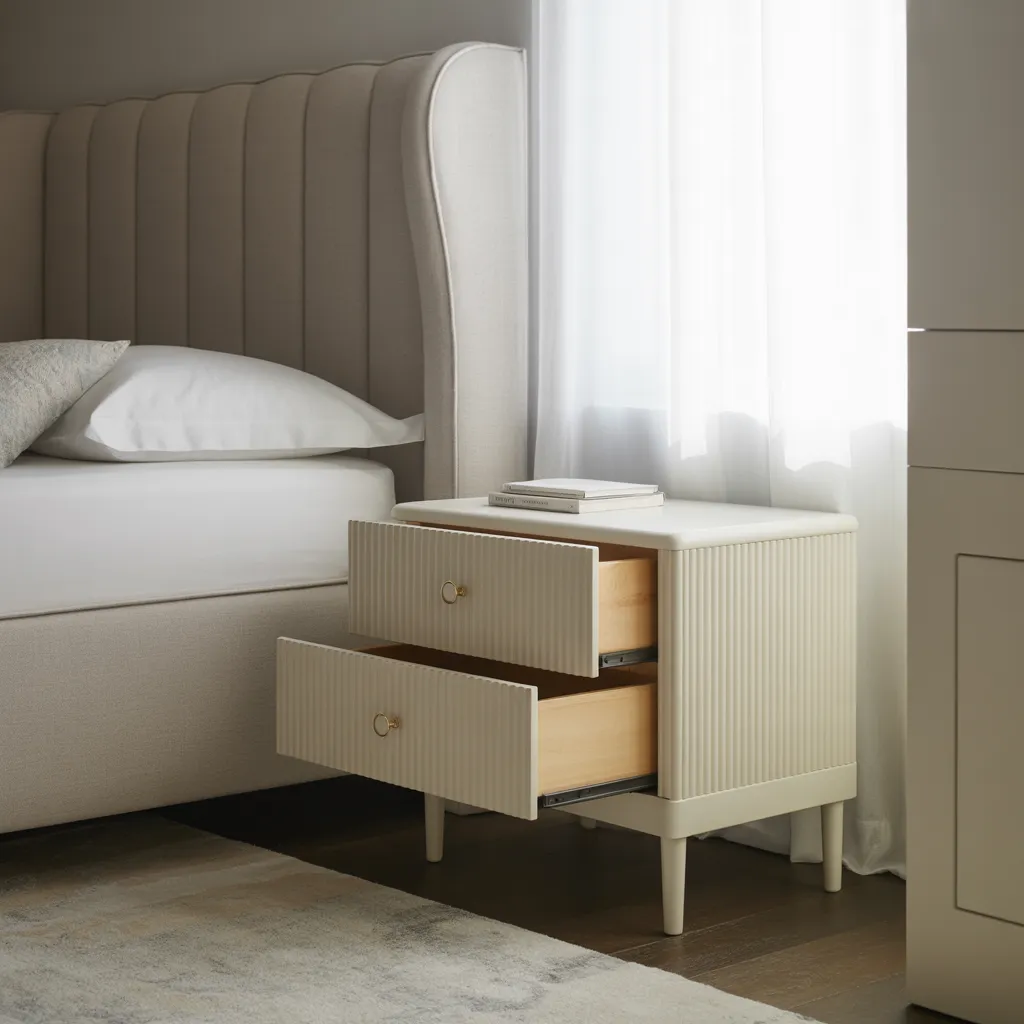
A tailored bedside table with fluted detailing and brass hardware stands alongside an upholstered wingback bed, exemplifying a refined contemporary style. The pieces, crafted from solid oak wood and velvet upholstery, showcase a muted color palette of warm beiges and grays accented by metallic gold tones. The design maximizes storage through built-in drawers while exuding an elegant, space-conscious appeal ideal for smaller bedrooms. The understated furniture silhouettes and restrained material combinations create a sophisticated, uncluttered aesthetic suitable for compact urban living
Why Your Small Dining Area Deserves Full-Sized Entertaining Power
Small dining spaces often get relegated to basic utility duty while larger rooms claim the entertaining spotlight. That’s a fundamental misunderstanding of what’s actually possible. An extending dining table constructed from solid wood with a butterfly leaf mechanism shatters the assumption that space constraints demand entertaining sacrifice.
When the table’s in its compact state, your room flows naturally. When guests arrive, it expands to welcome them. Pair that with dining chairs featuring wheels and removable slipcovers, and you’ve got flexibility to adapt to different gatherings and arrangements. This combination proves that entertaining in intimate spaces becomes not just possible but genuinely elegant.
The growing trend toward washable, durable upholstery reflects something important: families need practicality alongside aesthetics. Removable slipcovers and performance fabrics eliminate anxiety about entertaining in compact spaces where accidents happen.
Strategic choices with pattern and texture through upholstery—whether bold colors or sophisticated weaves—allow small dining spaces to project intentionality and refinement. Your small dining area can transform from an underutilized corner into a capable, elegant entertaining hub.
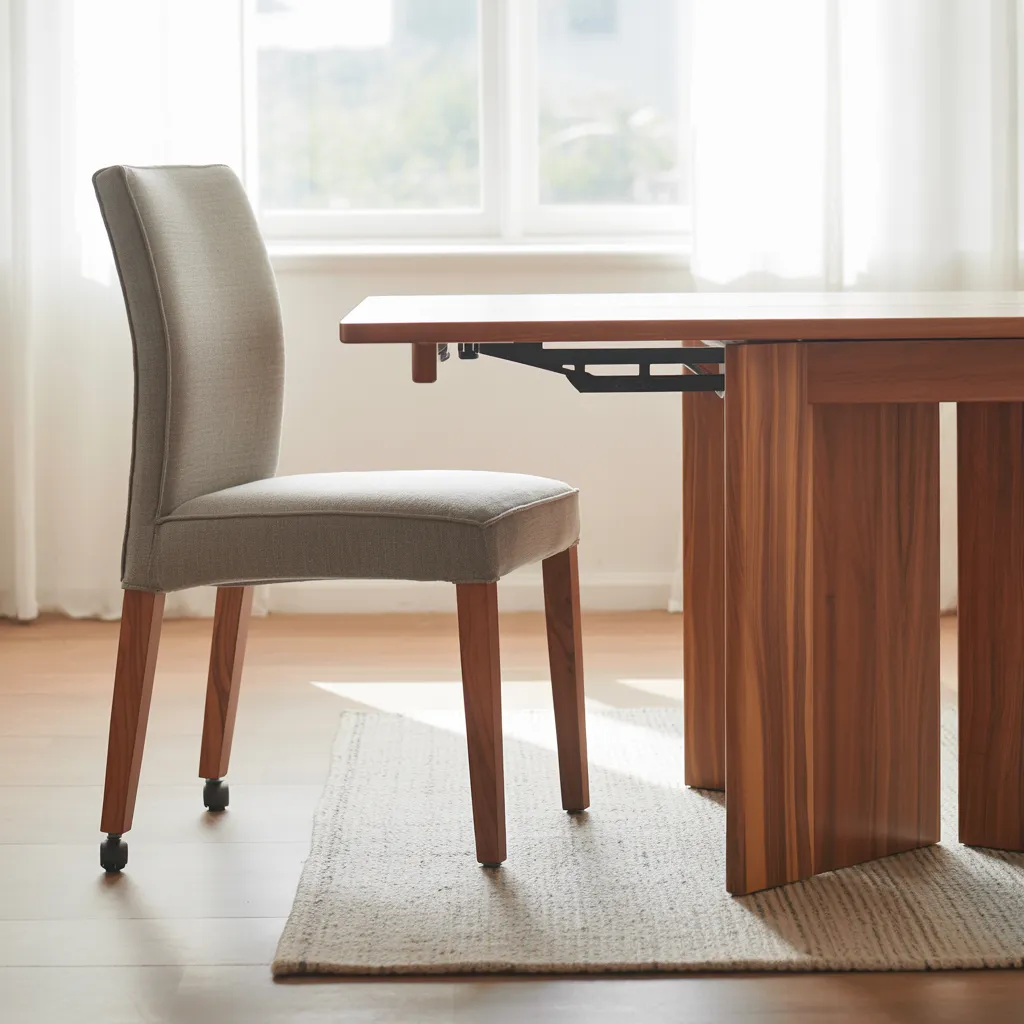
An upholstered dining chair with casters and a wooden extending table set the scene for a contemporary dining area. The chair features a tailored greyish upholstery with clean lines and a supportive back, while warm walnut wood tones lend natural elegance to the table’s slatted design. Metal hardware and casters add industrial accents. The table’s hidden butterfly leaf allows seamless expansion for hosting guests without dominating the space when closed. Ideal for urban apartments or small dining rooms seeking flexible, multifunctional furniture that balances style and practicality. The neutral palette with pops of warm wood creates an inviting yet modern aesthetic.
The Light-Reflecting Trick That Makes Rooms Feel Twice as Big
Expanding visual perception in confined spaces requires mastering strategic light manipulation through reflective surfaces—a principle that interior designers recognize as fundamental to spatial enhancement. A large sculptural mirror doesn’t merely serve decorative purposes; it functions as a spatial amplifier, bouncing natural and artificial lighting throughout the room and creating the illusion of architectural depth.
When light reflects across a room, it travels further, lingers longer, and creates subtle visual pathways that psychologically expand perceived dimensions. Complement this with textured glass fixtures that refract light in unexpected directions, layering illumination and preventing the flat, one-dimensional lighting that can make compact spaces feel claustrophobic.
Professional lighting design emphasizes that natural and artificial lighting work synergistically—by combining strategic reflective surfaces with layered illumination, you can significantly influence how a room feels. Shadows soften, surfaces brighten, and boundaries seem to dissolve.
Best part? This approach requires no structural renovation, no wall removal, no costly intervention—just strategic placement of reflective surfaces and lighting fixtures that harness existing light and transform how you experience your space.
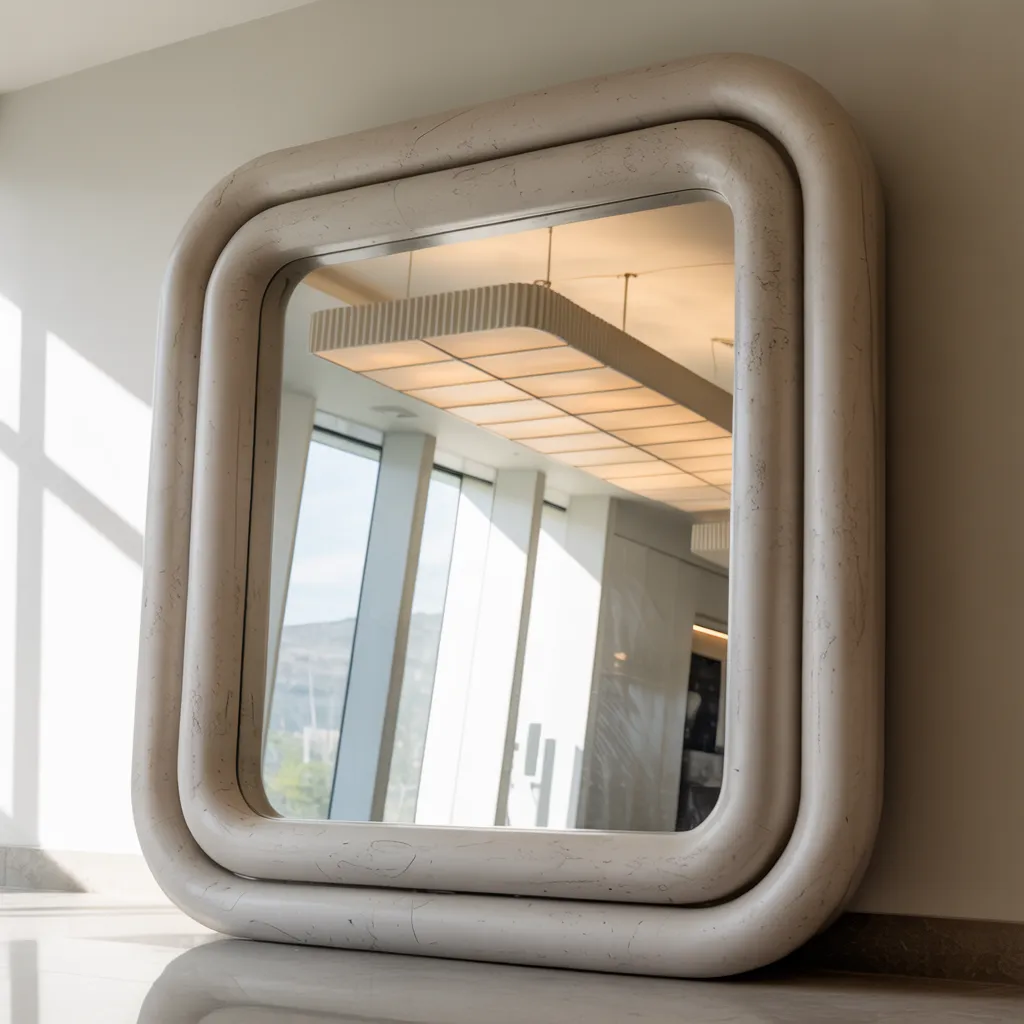
A curved, sculptural mirror frame constructed from a matte, concrete-like material opens up the space, providing an intriguing focal point. The sizable arched window floods the room with natural light, revealing glimpses of a minimalist, contemporary interior design style. Clean lines, pale wood accents, and sleek glass surfaces create a bright, airy atmosphere. Neutral tones of warm beige and cool grays dominate the palette, with crisp white trims offering subtle contrast. The unique circular light fixture overhead features textured glass panels that diffuse the illumination in an engaging, pattern-like display.
Color and Pattern: The Game-Changer Neutrals Miss Completely
The most insidious small-space advice encourages playing it safe with monochromatic neutral palettes—creating beige boxes that paradoxically feel smaller through their blandness. When walls lack personality, ceilings fade into invisibility, and furnishings blend into undifferentiated backgrounds, the space feels emptier rather than larger.
Here’s the psychology: different colors affect how occupants feel depending on the environment, with darker colors creating sensations of enclosure that may trigger claustrophobic responses in confined spaces. The antidote? Introduce bold prints and colors strategically—particularly on walls and ceilings, where they establish character without cluttering the floor plane where people navigate and furniture sits.
A quality wool area rug becomes more than decoration; it demarcates distinct zones and creates visual anchors that help small spaces feel more organized and intentionally designed. Incorporating textural variety through decorative pillows, throws, and carefully selected upholstery lets you experiment with pattern and color while maintaining visual balance.
When combined thoughtfully, color, pattern, and textured finishes transform small rooms into confident, personality-infused environments. Intentional, character-filled spaces feel larger and more comfortable than sterile, cautiously neutral ones—that’s not opinion, that’s psychology.
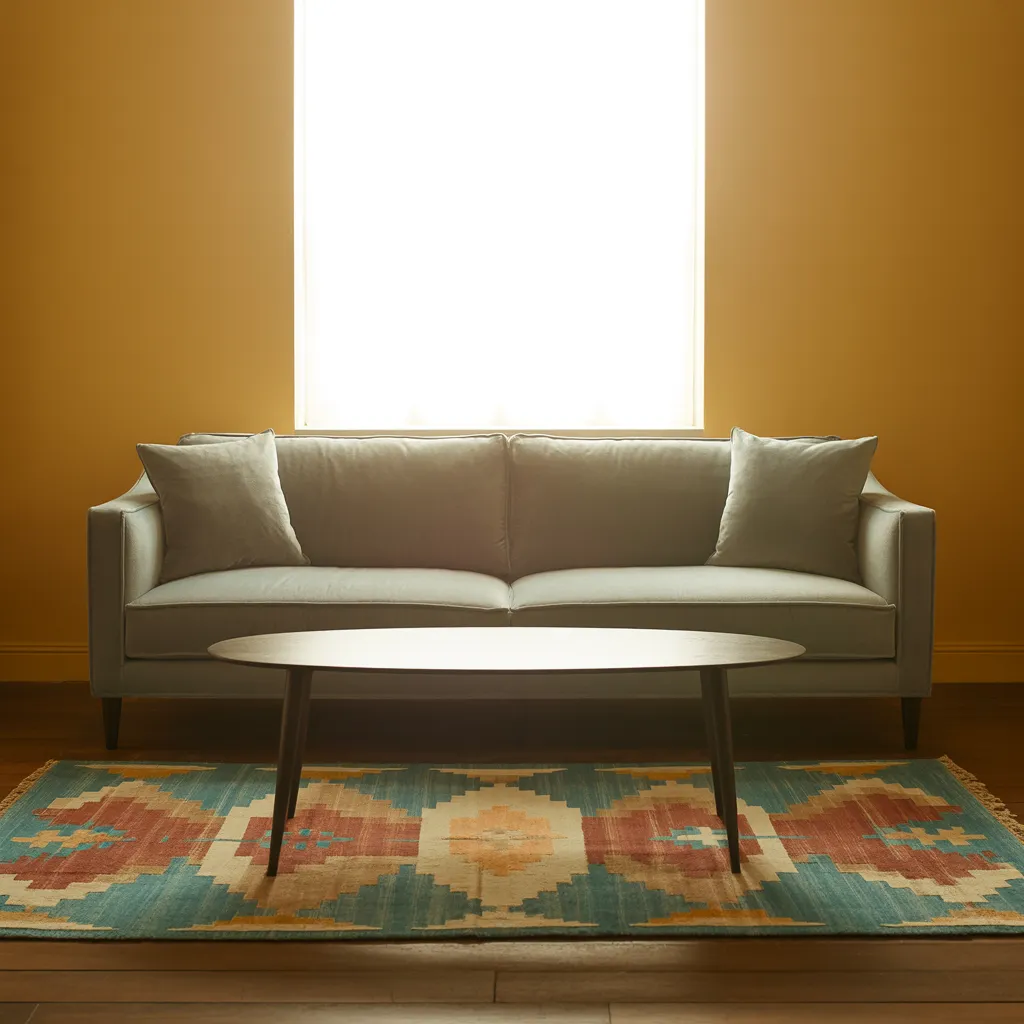
A plush taupe sofa with plump cushions takes center stage, complemented by a round espresso-toned coffee table. The warm earthy color palette is accentuated by a handwoven wool area rug featuring geometric southwestern patterns in terracotta, turquoise, and ochre tones. Clean lines and sleek wood legs lend a contemporary flair to the furniture pieces crafted from premium materials like leather and solid hardwood. The space exudes a cozy yet sophisticated ambiance, blending modern minimalism with rustic boho accents – a harmonious interior style suited for intimate living areas brimming with understated elegance and comfort.