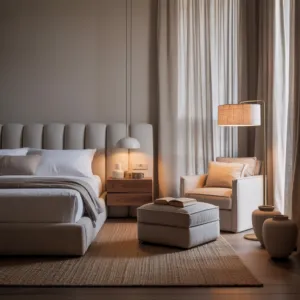
Modern boho living rooms have cracked a design code that many still struggle to master: achieving that effortless, eclectic aesthetic while keeping things clean and sophisticated. It’s a delicate balance—and one of the most compelling design movements happening right now.
Bohemian style has roots in the nomadic lifestyle of the Romani people in the late 19th and early 20th centuries, eventually evolving into a broader philosophy of unconventional, free-spirited living through fashion, art, and design. The heart of it? Embracing mismatched furniture and natural textures without tipping into clutter or chaos.
Here’s what makes it tricky: bohemian design celebrates spontaneity and rule-breaking, while modern minimalism demands restraint and intention. Sounds contradictory, right? But when you get it right, these seemingly opposing aesthetics merge into something really special.
The secret isn’t maximalism. Modern boho isn’t about filling every surface with eclectic finds. Instead, it’s strategic curation—selecting pieces that feel authentic while still giving your eyes (and your mind) room to breathe. Each item needs to earn its place through function or genuine meaning. That’s what separates real boho design from organized chaos: everything has a purpose, so your space feels lived-in without feeling cluttered, adventurous without feeling chaotic.
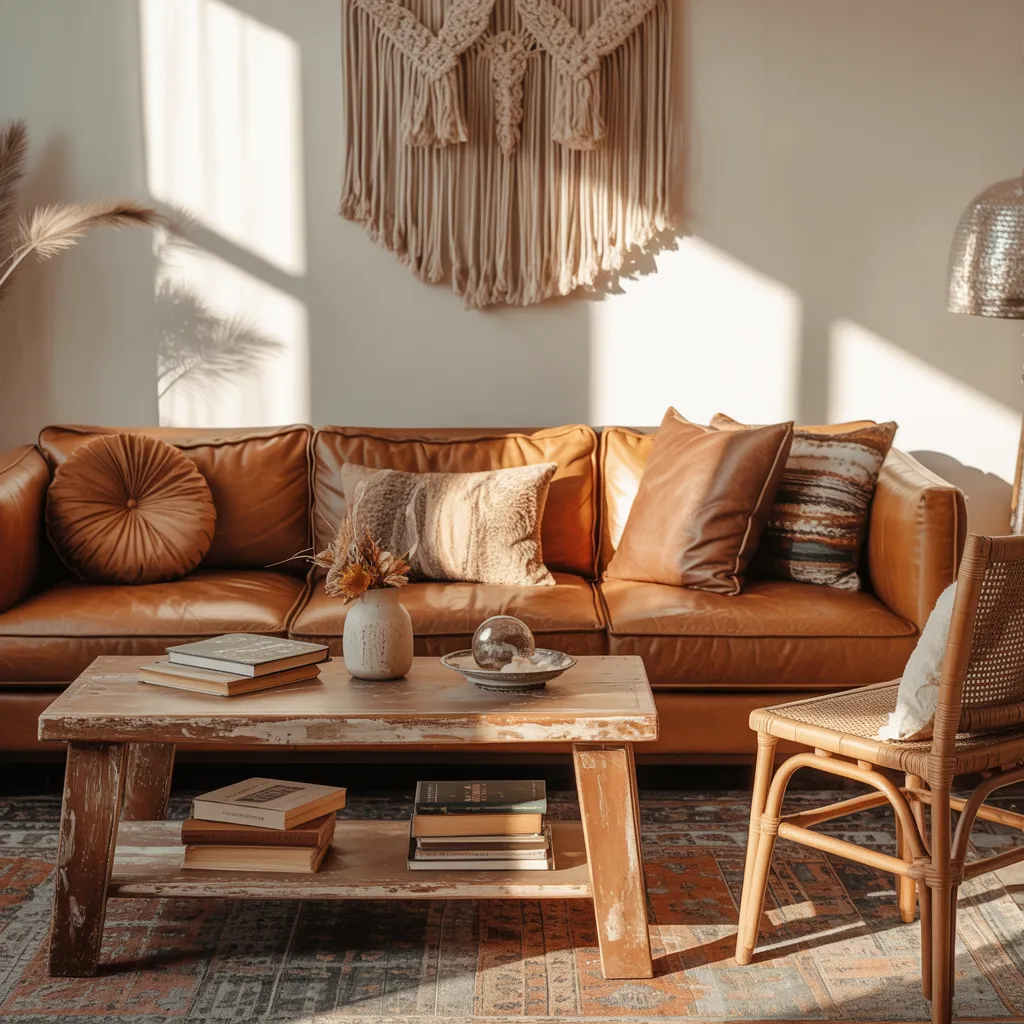
A sun-drenched living space with a luxuriously plush leather sofa as the centerpiece, adorned with a profusion of patterned throw pillows in warm terracotta, beige, and earth tones. An ornate macramé chandelier hovers overhead, complementing the bohemian aesthetic. Rustic elements, such as a weathered wood coffee table and cane armchair, create a laid-back and well-traveled vibe. Tactile textures abound, from the nubby woven area rug to the metallic ceramic accents, embodying the essence of bohemian décor through a harmonious blend of rich materials, global patterns, and an inviting, layered ambiance.
Beyond Beige: The Unexpected Color Strategy That Makes Every Room Better
Neutral palettes form the foundation of modern boho, but the real magic? It’s in how you layer color strategically. Soft backgrounds—creams, warm whites, soft grays, earthy tones—create the perfect canvas for vibrant accents that grab attention without overwhelming.
This is actually a refinement of the 1960s and 70s bohemian tradition. Back then, bold, saturated colors appeared everywhere. Modern boho learned something important: restraint amplifies impact.
Think about how a single jewel-toned throw pillow becomes a focal point against neutral furniture, or how patterned textiles gain sophistication when surrounded by calm, minimal elements. That’s intentional contrast at work.
Your color strategy should:
- Identify signature colors that match your space’s personality
- Layer them through artwork, textiles, and carefully placed accents
- Let your eyes find visual rest stops (those neutral areas)
- Keep the eye moving while maintaining cohesion
Without this balance, an over-earthy palette can feel stagnant rather than serene. Strategic placement transforms color from decoration into a design language—one that speaks volumes about intention and thoughtfulness.
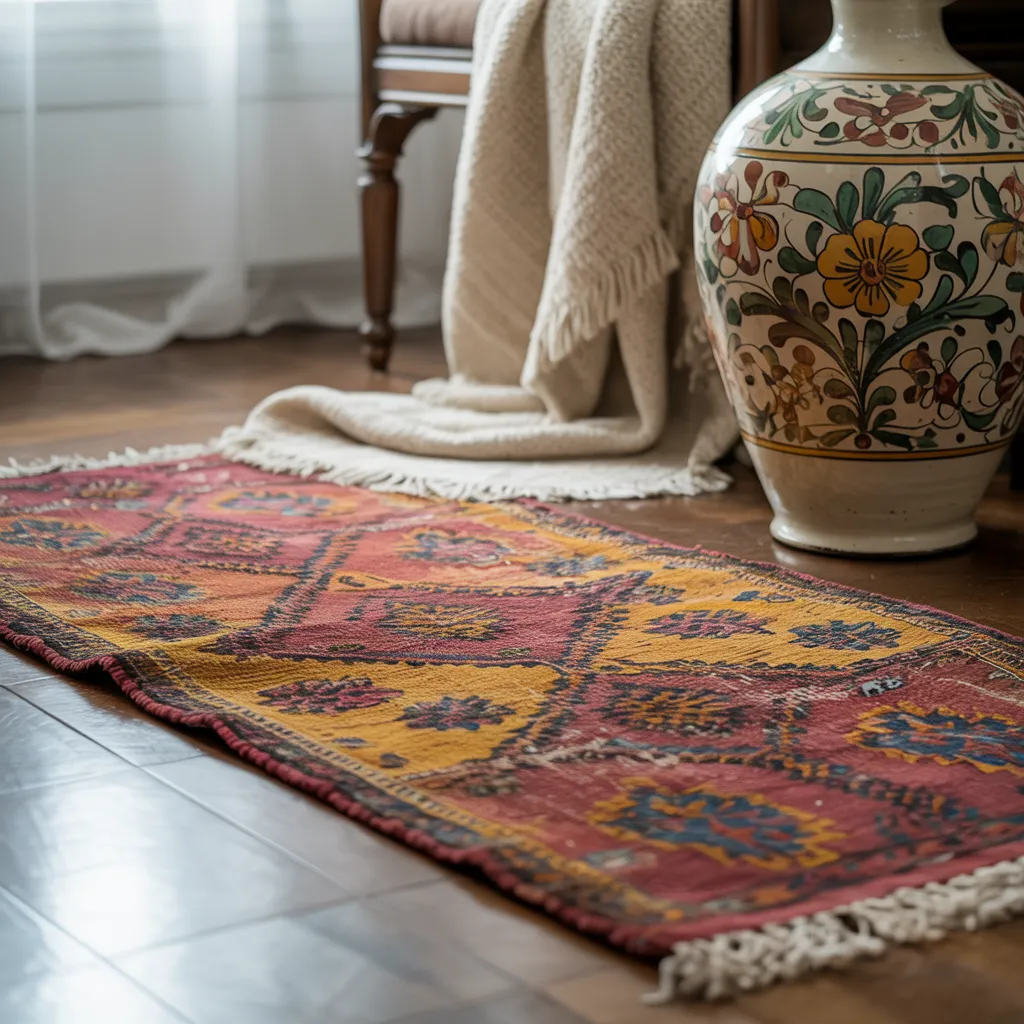
A vibrant vintage rug anchors the space, its rich colors blending terracotta, mustard yellow, and deep blues in an intricate geometric pattern. An ornately patterned ceramic vase stands beside a plush armchair draped in cozy cream throws. The room exudes a bohemian flair, telling stories through carefully curated textiles and decor. The materials range from the natural fibers of the wool rug to the glazed earthenware vase. Warm, inviting hues contrast with neutral linens, collectively creating a space that feels well-traveled and full of character – a true bohemian sanctuary.
The Texture Secret That Designers Keep Quiet About
Texture is the unsung hero of modern boho design. While color captures your immediate attention, texture creates emotional connection—it’s what makes a room feel genuinely livable.
Consider what different textures bring: woven rugs ground a room with organic complexity, cozy throws invite you to curl up and relax, and natural wood introduces warmth with grain patterns that tell stories of growth and time. Layering soft textures throughout—from handcrafted accessories to sculptural objects—creates the richness that separates merely decorated spaces from truly lived-in sanctuaries.
Here’s the real insight: texture makes neutral palettes feel abundant rather than austere. A minimalist room becomes genuinely inviting when woven baskets, natural fibers, and varied surface finishes create visual interest. Run your hand across a carefully chosen throw blanket. Sink into cushions with different weave patterns. Notice how candlelight catches on a wooden object.
These sensory moments? They define the difference between a room that photographs beautifully and a room that actually feels like home. Designers know something important: people remember how spaces feel before they remember how they look. Texture is the silent orchestrator of that emotional experience.
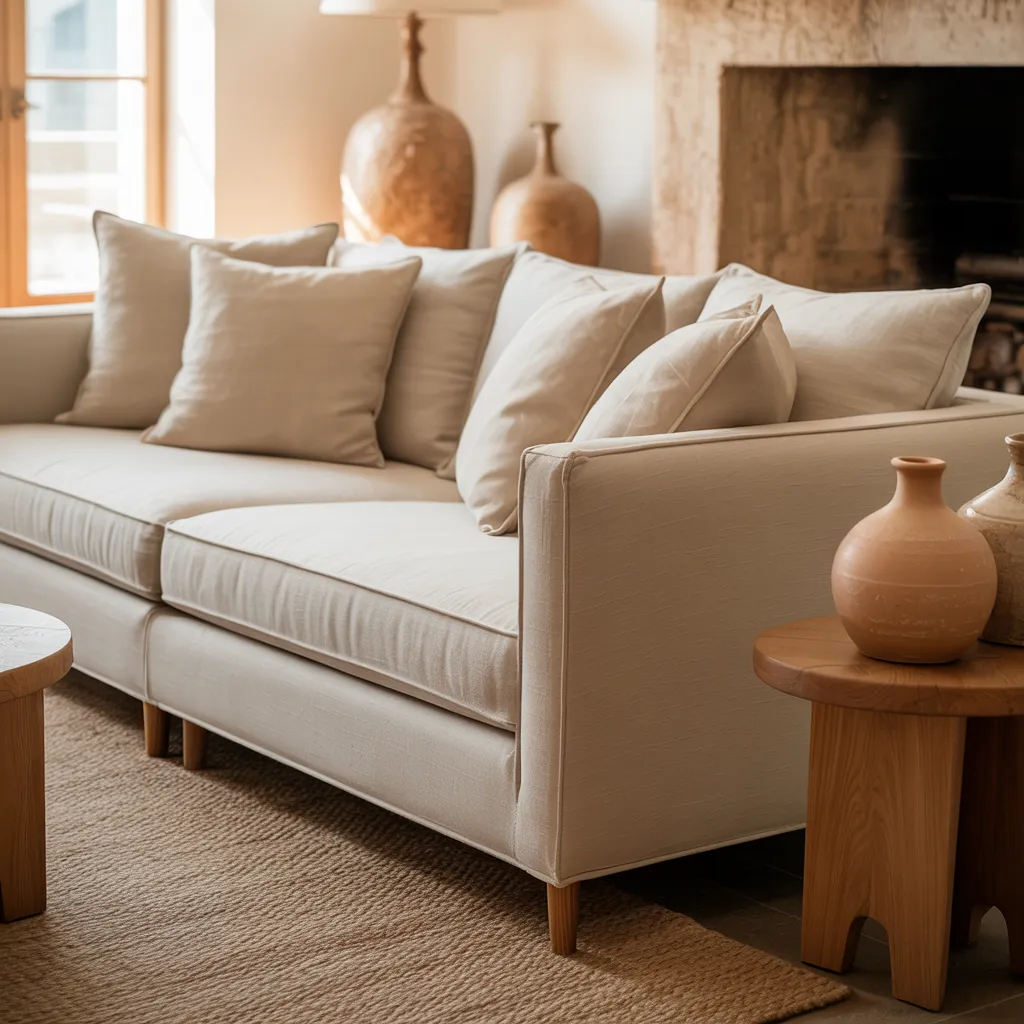
A cozy living room with a warm, earthy color palette exudes comfort and tranquility. The centerpiece is a plush beige sofa, complemented by beige linen cushions and neatly arranged wooden side tables. Crafted from solid oak wood, the tables display ceramic vases in earthy tones, bringing natural elements indoors. A woven jute area rug anchors the space, its neutral tones providing a grounding foundation. The minimalist decor, dominated by warm beiges, terracotta accents, and hints of greenery, embodies a modern bohemian aesthetic that feels inviting and serene. The overall design strikes a harmonious balance between simplicity and organic textures, creating a calming sanctuary.
The ‘Lived-In Luxury’ Formula: Choosing Pieces That Actually Matter
The sophisticated aesthetic of modern boho doesn’t come from accumulation—it emerges from intentional curation of meaningful, functional pieces with genuine character. This challenges the idea that more equals better. Instead, fewer, more thoughtfully selected items create exponentially greater impact.
Consider upgrading the ordinary with the extraordinary: an artistic coffee table becomes a conversation-starting focal point. Aesthetic candles in carefully chosen vessels add sensory dimension. A unique mirror doesn’t just reflect light—it frames your entire design philosophy. This echoes the 1960s and 70s bohemian ethos of discovering pieces that felt like treasures from a dressing-up box.
The transformation happens through strategic replacement. Substitute bland, utilitarian items with functional pieces that also elevate aesthetics. A beautiful candle holder signals intentionality. An artistic mirror speaks to your taste. Sophistication isn’t about expensive maximalism; it’s about replacing the ordinary with the extraordinary.
But here’s what matters: the lived-in look requires active maintenance. Thrifted and vintage pieces benefit from regular curation; without intentional decluttering, lived-in elegance becomes unintentional messiness. If you’re using open shelving, display only pieces that justify their presence through beauty or functionality.
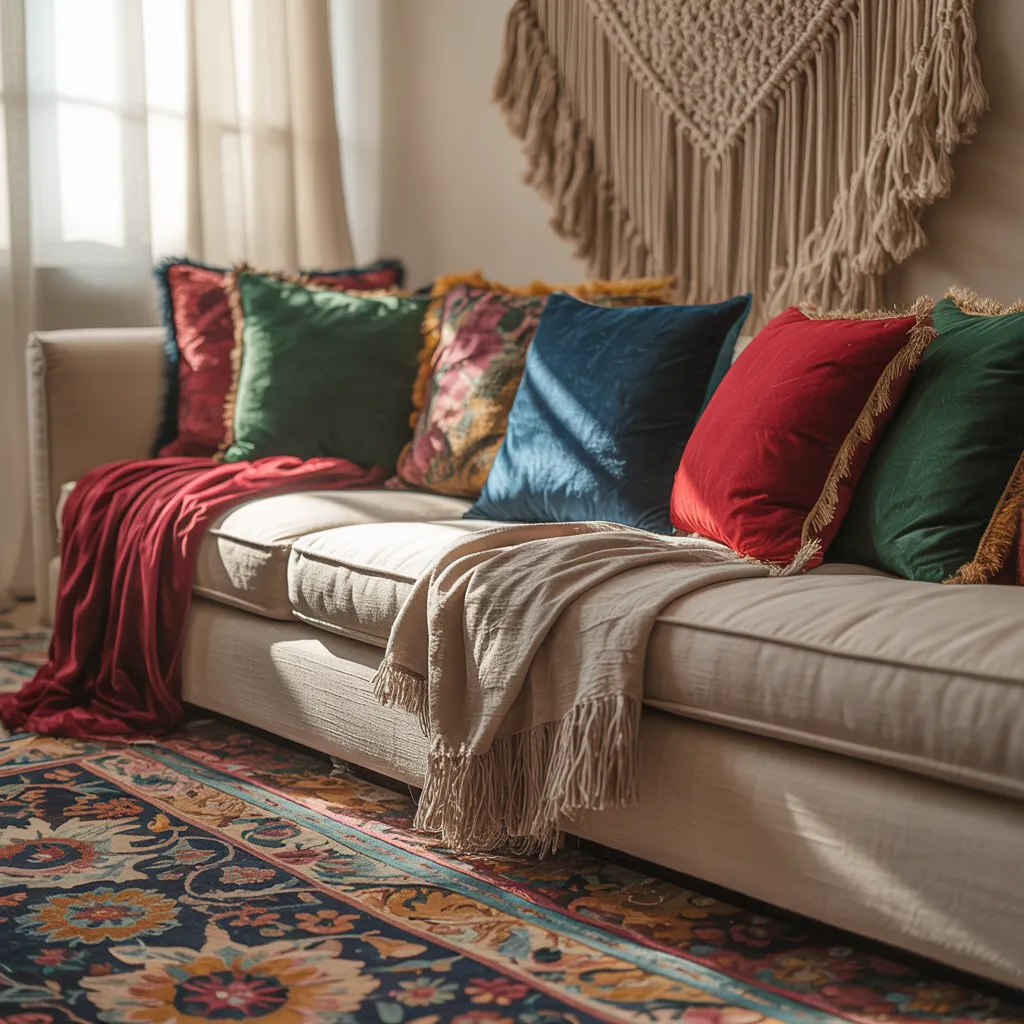
A cozy living room corner evokes bohemian charm with a harmonious blend of textures, patterns and rich colors. An ornately fringed macramé wall hanging complements jewel-toned velvet pillows adorning the sofa. The diverse array includes patterned, solid, and embroidered pillows in shades of burgundy, forest green, mustard yellow and navy blue. Textured woven blankets in cream and charcoal drape over the plush beige sofa. A vintage-style patterned area rug grounds the space with its rustic, distressed design in warm terracotta, gold and indigo hues. Natural materials like wool, cotton and macramé bring an organic, laid-back feel.
Why Plants Aren’t Just Decoration—They’re the Heart of Modern Boho Design
Natural elements do far more than look pretty in modern boho interiors—they function as philosophical anchors and design transformers that bring literal and metaphorical life to your space. Plants, natural wood, and organic materials reinforce the core bohemian principle of honoring nature within contemporary home life.
Plants offer multidimensional benefits: varied foliage shapes and colors create visual interest, natural filtration improves air quality, and living plants create genuine psychological connection to the natural world. Natural wood introduces warmth, historical authenticity, and the kind of organic imperfection that humanizes modern minimalism. Organic materials like rattan, jute, linen, and stone create textural richness while reflecting bohemian values of sustainability and conscious living.
This integration represents more than an aesthetic choice—it’s a philosophical statement. In increasingly digital, urbanized lifestyles, living elements create genuine sanctuary. Watching plants grow, noticing seasonal changes in materials, and feeling organic textures keeps your space dynamic and evolving.
The result? Your living room develops authentic character and deepening richness over time—something that conventionally decorated spaces simply can’t achieve. You’re not just decorating; you’re creating a genuine gathering sanctuary that transforms with the seasons and as you grow.
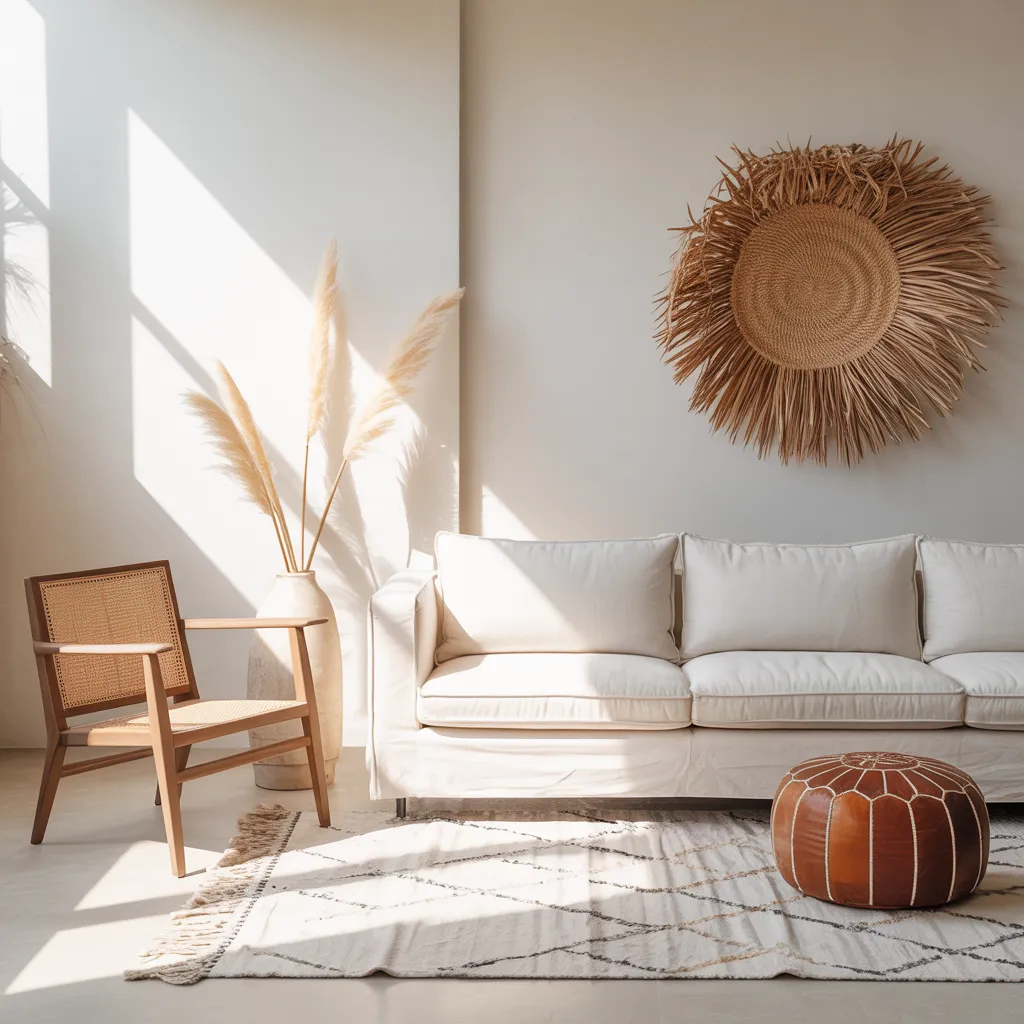
A light-filled living space exudes bohemian tranquility with a muted desert palette. An oversized white sofa with plush cushions takes center stage, grounded by a soft diamond-patterned area rug. Rustic textures abound, from the woven leather pouf to the wicker sun mirror adorning the wall. Natural materials like rattan chairs and dried pampas grass stems add organic warmth. The neutral color scheme allows warm terracotta accents like the wooden chair frame to softly harmonize, creating a serene yet soulful oasis for relaxation.