
The homes we see trending on social media tell a carefully curated story—but what if that story conflicts with how you actually feel in your space? We’ve all scrolled past stunning, minimalist bedrooms or moody dark walls and thought, “That looks so peaceful.”
Yet lately, something’s shifted. Popular design choices that promise sophistication and calm are leaving homeowners feeling sluggish and unmotivated without understanding why. Dark ceiling colors create literal heaviness overhead. Open shelving demands constant visual processing. Heavy furniture and earth-tone palettes, while beautiful, can actually drain energy rather than restore it.
What’s fascinating is that both design psychology and feng shui principles point to the same culprit: imbalance. When we over-emphasize softness, darkness, and stillness without counterbalancing brightness and movement, our spaces work against our vitality.
Research confirms that visual clutter alone increases cortisol levels—your brain stays in low-alert mode, unable to fully relax. The good news? These patterns aren’t permanent. Small, strategic adjustments can transform your home from energy-draining to genuinely restorative.
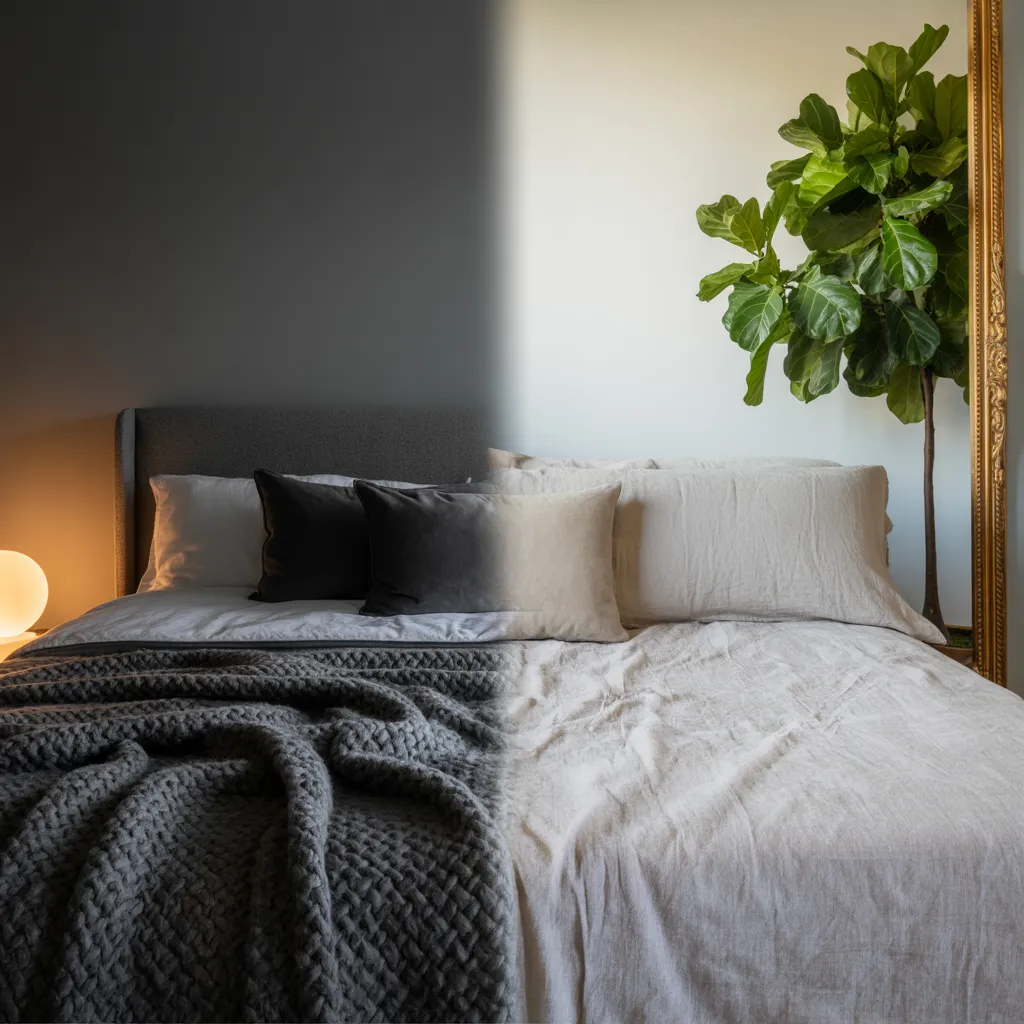
This image shows a bedroom split down the middle to contrast two design moods. The left half is dark and heavy—charcoal wall, black and gray pillows, a chunky dark knit blanket, and a warm bedside lamp glow that feels cozy but subdued. The right half is light and airy—pale wall, soft white bedding, and a tall leafy plant beside a gold-framed mirror, creating a brighter, more energized atmosphere.
The Clutter Trap: Why Your ‘Lived-In Look’ Might Be Exhausting You
There’s a real difference between a home that feels genuinely lived-in and one that’s slid into chaos. Somewhere along the way, the “perfectly imperfect” aesthetic shifted from intentional coziness into something more like controlled surrender.
Visible dirty dishes, stacked books, clothes draped across chairs—these create more than a messy appearance. Your brain registers disorder as a problem demanding attention, keeping you in a subtle state of stress even when you’re trying to relax. Here’s what happens: Broken items left unmended send your mind the message that things aren’t quite right. Clutter fragments your focus, forcing your brain to process each item individually instead of relaxing fully.
Studies consistently link cluttered spaces to elevated stress hormones that prevent genuine rest. The feng shui principle of ‘chi’ (life force energy) teaches that stagnant clutter literally blocks energy circulation through your home. The trend masquerades as self-acceptance—suggesting you must choose between sterile perfection or authentic mess.
But there’s actually a powerful middle ground: intentional minimalism. This means keeping items that matter while releasing what doesn’t, creating authentic spaces that feel both real and genuinely peaceful.
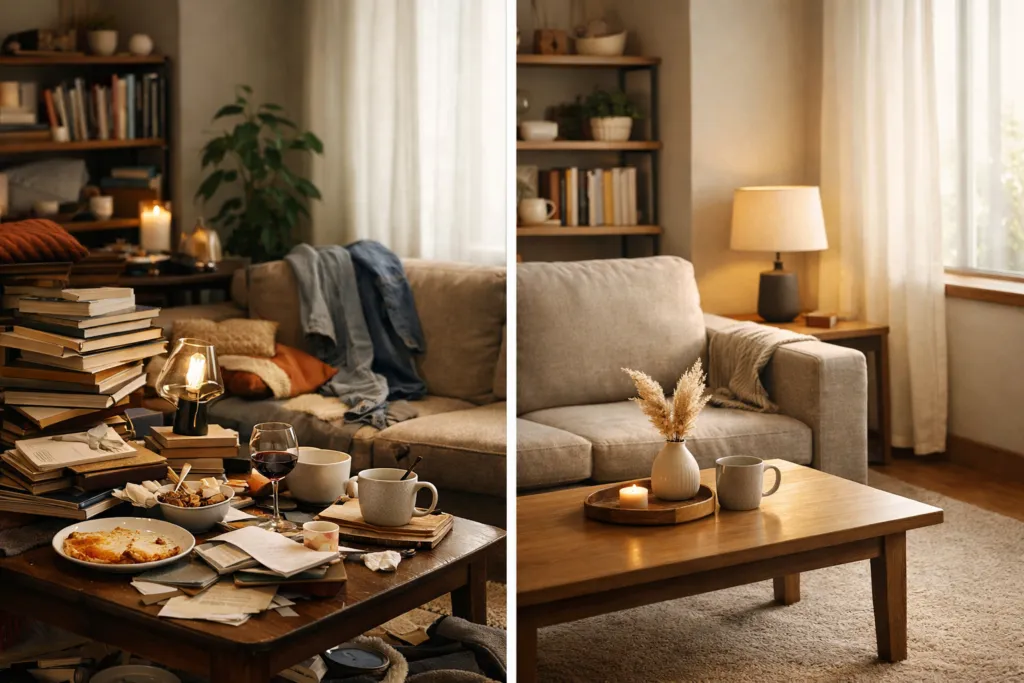
The image shows a split view of the same cozy living room: the left side is cluttered with stacked books, scattered papers, and dirty dishes on the coffee table, with clothes draped over the sofa creating a slightly tense, chaotic feel. The right side contrasts this with intentional minimalism—clear surfaces, a neatly arranged mug and simple décor, and a calm, open atmosphere under the same soft window light.
Heavy Earthy Palettes and Oversized Furniture: Why Your Grounding Palette Might Be Draining You
Earthy tones absolutely deserve their calm reputation—warm terracottas, muted ochres, and soft browns genuinely do evoke comfort and grounding. But when an entire room becomes saturated in these muted shades, paired with oversized furniture in equally heavy tones, the energy shifts.
Your space stops feeling grounded and starts feeling sedating. You’ll notice motivation mysteriously disappears. Productivity becomes harder to access. The very qualities that make earthy palettes appealing—their calming, inward-turning nature—become problematic when they’re the only energy present. The design fix comes down to balance.
Heavy earthy environments need counterpoints: lighter accents, reflective surfaces, and brighter pops of energy that create movement. Oversized furniture compounds the problem by physically anchoring weight and reducing airflow. Interior designers working with feng shui principles increasingly report that clients in these all-earth-tone spaces experience stagnation and lack of forward momentum.
The solution isn’t abandoning earth tones—they’re genuinely beautiful. It’s about layering in contrasts. Consider adding metallic accents, brighter artwork, lighter textiles, or reflective surfaces that create visual energy and literally bounce light around the room, restoring vitality to the space.
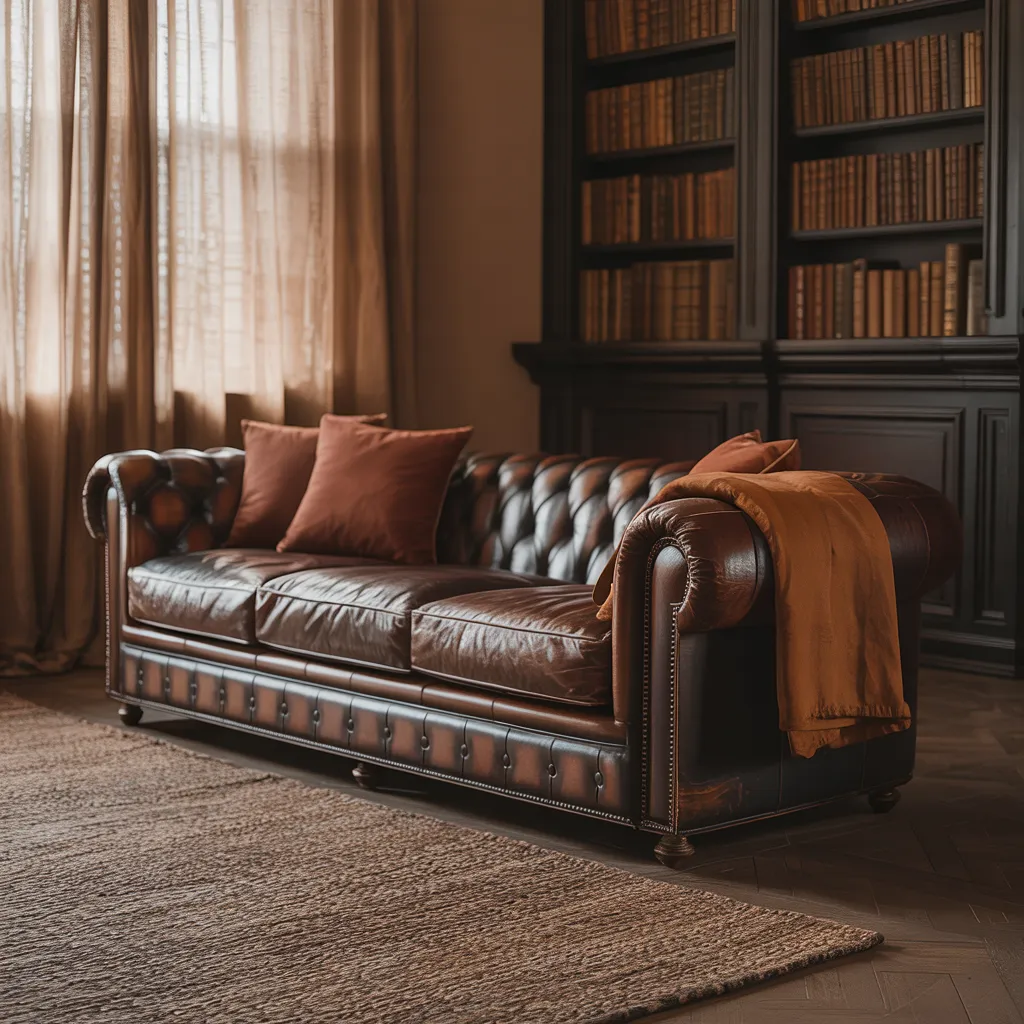
A warm, moody living room with a classic dark-brown leather Chesterfield sofa as the focal point. Two terracotta-colored throw pillows sit on the sofa, and a rust-toned blanket is draped over the right armrest, reinforcing the earthy palette. Soft daylight filters through sheer curtains on the left, while a tall, dark built-in bookcase filled with old books creates a rich, cozy backdrop; a textured neutral rug covers the floor in the foreground.
Quick Energy Audit: Feng Shui Fixes to Prioritize Now
Whether you’re preparing for seasonal shifts or simply ready to restore your home’s energy, these targeted fixes make immediate differences.
- Start with your most visible spaces: Your front door is your home’s primary energy entry point—ensure it’s clean, functioning smoothly, and welcoming. A jammed lock or cluttered entryway literally blocks opportunity.
- Tackle bedroom energy: Remove electronics from nightstands and keep surfaces clear with just three items maximum. Bedrooms are sacred regeneration spaces, and research confirms that bedroom minimalism dramatically improves sleep quality by allowing your brain to fully relax. Dim screens and charging devices before bed.
- Clear problem zones strategically: The south sector of your home (or the area associated with your goals) needs attention first—clutter here directly blocks visibility and success. That forgotten storage corner or disorganized shelf requires clearing.
- Add strategic mirrors and lighting: Mirrors activate stagnant energy through reflection and light multiplication, but avoid placing them directly in south-facing zones where they can fragment recognition energy. Bright, warm lighting strategically placed counteracts the heaviness of dark spaces.
These aren’t superstitions—they’re practical design choices that create spaces where energy literally circulates better.
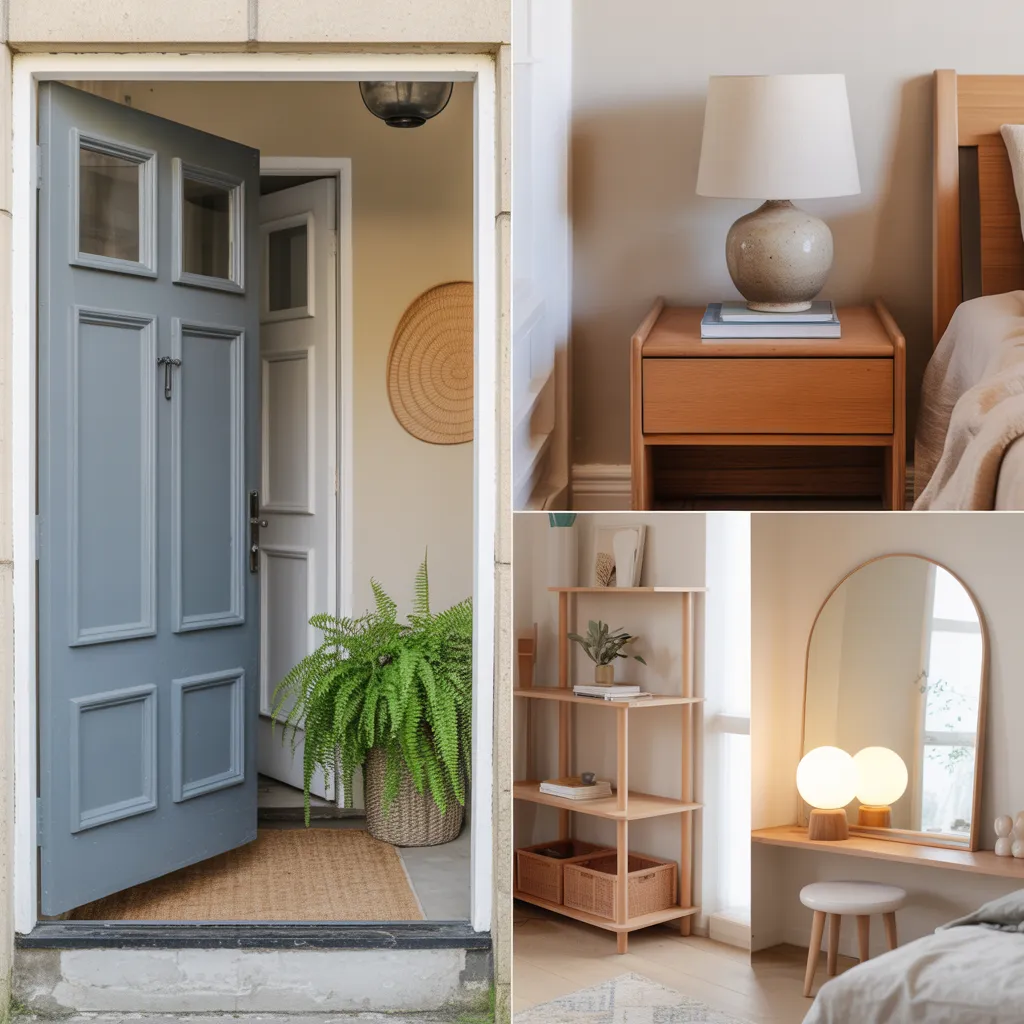
A clean, airy collage of three home “energy reset” moments. On the left, an open blue front door leads into a calm entryway with a woven wall accent, a natural fiber doormat, and a lush fern in a basket—welcoming and uncluttered. On the right, the top panel shows a minimalist bedside setup with a wooden nightstand, a single book, and a ceramic lamp, while the bottom panel features a neatly styled shelving unit and a softly lit mirror/vanity area with warm globe lights, emphasizing light, order, and gentle flow.
Quality Over Trends: What Thoughtful Designers Are Recommitting to in 2026
Interior designers are experiencing a collective shift in what they’re actually recommending. Fast furniture—pieces designed for Instagram rather than longevity—now feels energetically hollow and wasteful. Trendy bouclé that saturated social media six months ago? Already feeling dated.
Matching furniture sets, once celebrated for cohesion, increasingly feel staged and soulless rather than authentic. What’s emerging instead is quiet intentionality: investing in fewer, higher-quality pieces that genuinely work in your life. That vintage find purchased because it spoke to your soul carries more authentic energy than ten trendy items from a mood board.
A quality mattress you’ll use for a decade matters more than a statement piece that collects dust. Sustainable design now resonates because designers recognize that meaningful interiors must serve both aesthetic and practical purposes.
An eclectic collection of pieces gathered over years—each chosen for actual beauty and function—creates homes that feel authentically alive. The transformation happens when you shift from curating a pretty room to creating a functional sanctuary. You’ll notice the difference immediately: homes built on intentional choices feel energetically different than those built on trend-chasing.
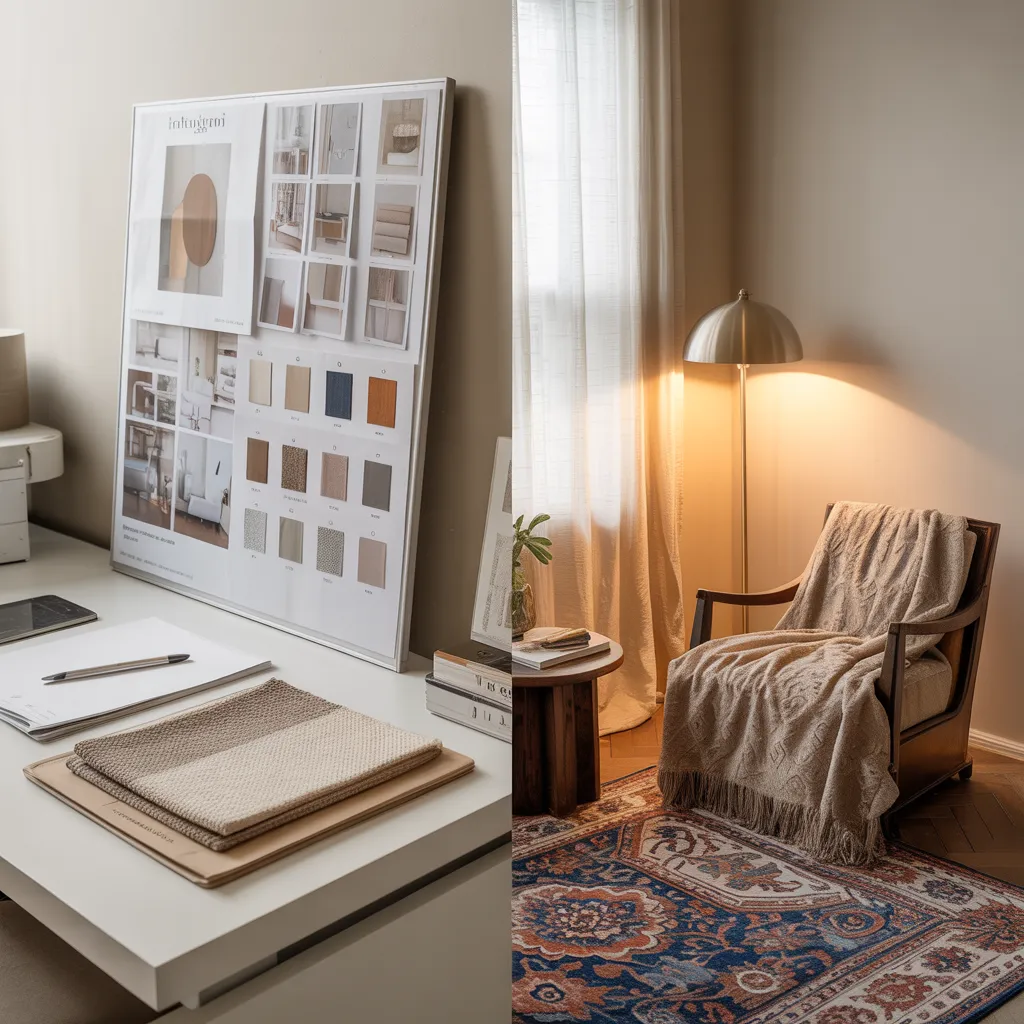
This image is a split composition that pairs design planning with lived-in comfort. On the left, a clean white desk holds fabric swatches, a pen and paper, and a large interior design mood board featuring neutral palettes and room inspiration—suggesting thoughtful, intentional selection. On the right, a cozy reading nook glows with warm lamplight: a wooden armchair draped in a soft throw, a small side table with books and a plant, sheer curtains, and a richly patterned rug that adds warmth and character.
Restoring Balance: Adding Yang Energy to Your Space
Yin and yang represent complementary opposites that should coexist in your home.
Yin embodies softness, darkness, stillness, and inward energy, while yang expresses brightness, movement, action, and outward vitality. Contemporary design trends have heavily overemphasized yin—dark walls, heavy furniture, muted colors, soft textures, and interior-focused aesthetics dominate.
The assumption seems logical: more yin equals more calm. In practice, excessive yin creates stagnation that manifests as procrastination, lack of motivation, and lethargy. The solution isn’t abandoning comfort but restoring actual balance through strategic yang elements.
Practical ways to add yang energy: Metallic accents—gold, silver, copper—introduce reflective, energetically active surfaces that catch and bounce light. Bright, warm lighting strategically placed counteracts dark ceilings and minimal windows.
Mirrors activate stagnant energy through reflection and light multiplication. Living plants introduce natural energy that balances both yin’s receptivity and yang’s growth. Even small adjustments—adding lighter artwork, introducing warmer lighting, or placing a mirror to reflect natural light—shift how your entire space feels.
Research confirms that balanced environments create optimal conditions for genuine rest and sustained vitality. Your home’s transformation begins the moment you start orchestrating both rest and movement, darkness and light, softness and clarity.
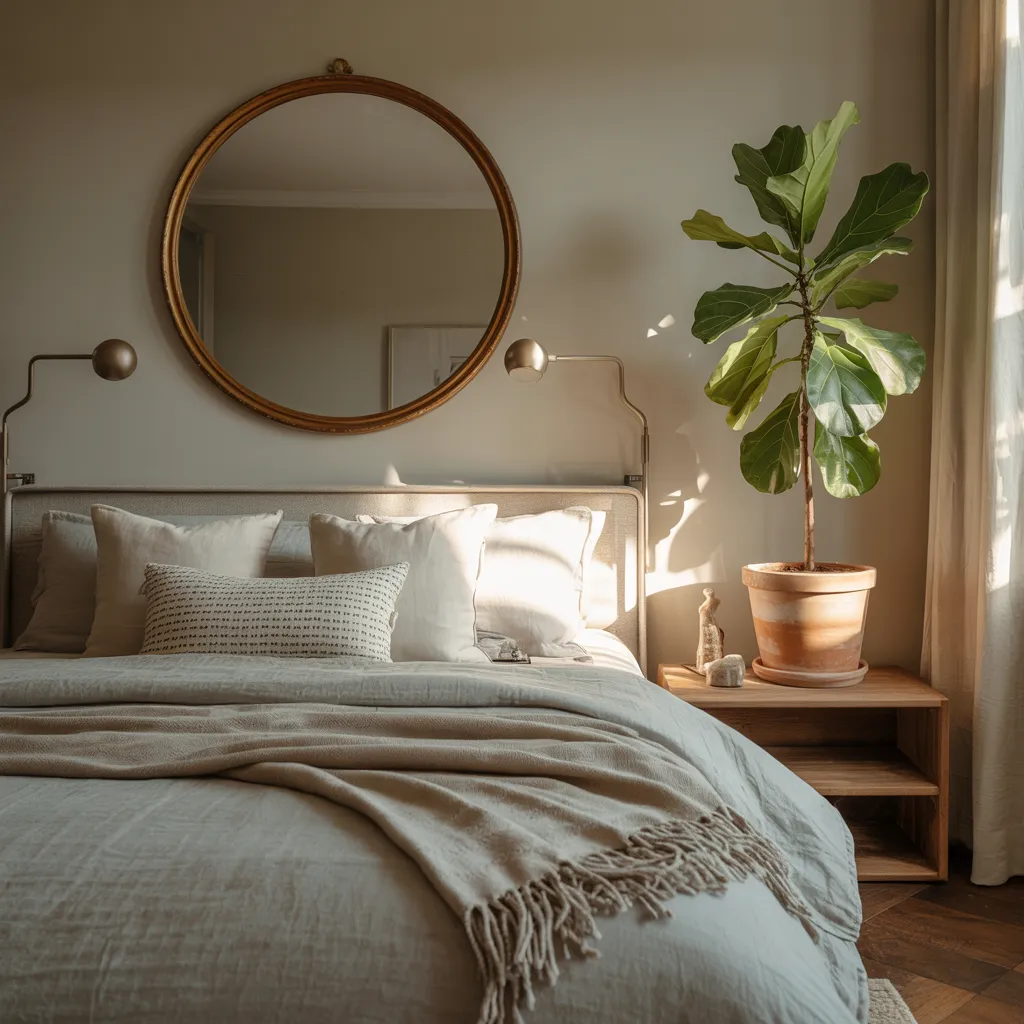
A calm, minimalist bedroom bathed in warm natural sunlight. Soft textures and calm palette (yin) paired with warm lighting, a mirror reflecting daylight, subtle metallic accents, and a healthy plant (yang). The room feels deeply restful yet energizing in the morning.
