
Most people overcrowd their living rooms, filling every corner with items that compete for attention rather than complement the space. But Japanese design philosophy reveals something surprisingly simple: emptiness has power too.
When you leave strategic breathing room, your eyes and mind actually rest. This principle comes from centuries of Japanese aesthetic tradition rooted in Zen philosophy—long before “minimalism” became a Western buzzword.
Rather than seeing empty space as wasted space, Japanese design honors it as essential to the whole. The Japanese concept of “ma” literally means the power of emptiness.
Here’s what this means practically: instead of filling every surface, you intentionally choose pieces where each item pulls double duty—it’s both functional and beautiful. Contemporary designers have evolved this into Japandi (Japanese + Scandinavian), which blends crisp simplicity with inviting warmth.
Think warm neutrals, natural wood, and touchable textures like linen that make a room feel serene without feeling sterile.
The beautiful irony? By having less, you gain more. More peace, more clarity, and yes, more visual sophistication. Every object you keep earns its place through genuine purpose and beauty, not just habit or decoration.
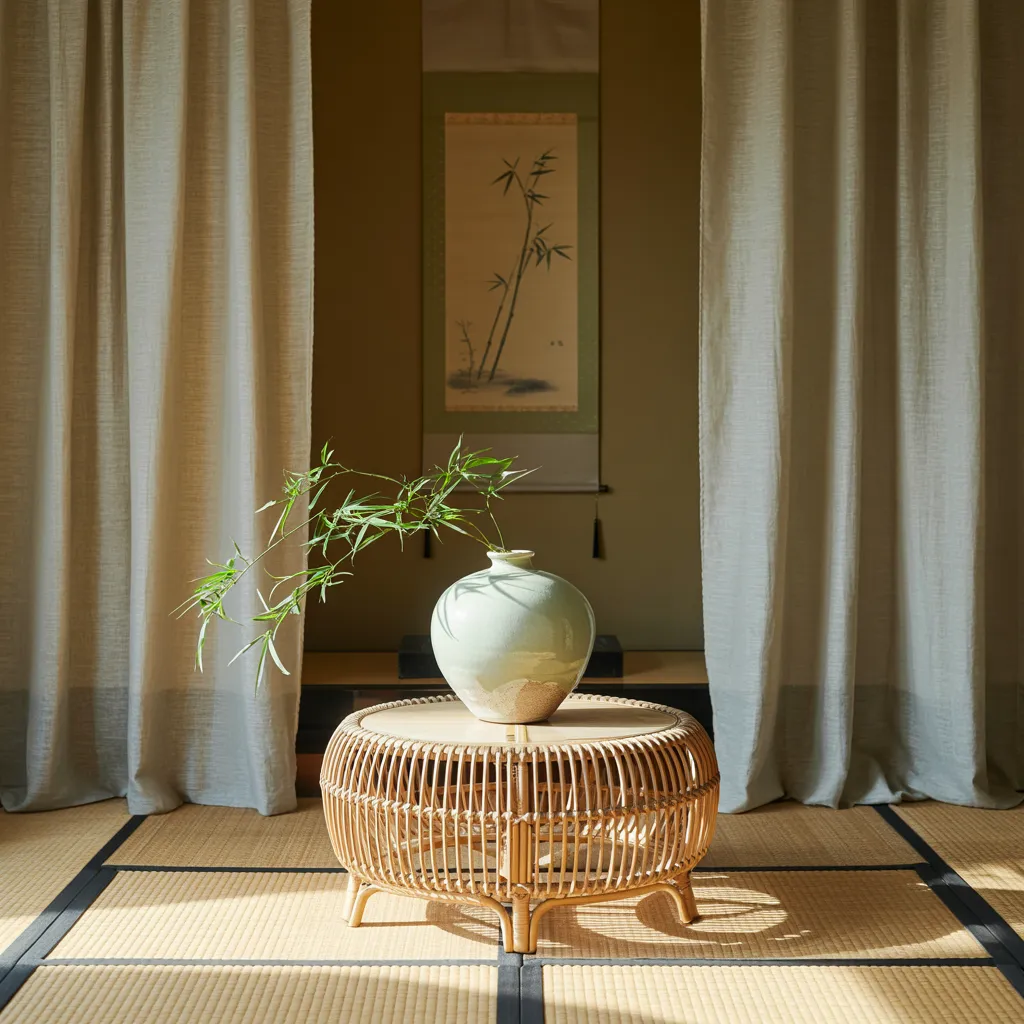
Calm serenity emanates from a minimalist interior vignette inspired by Japanese design principles. Sheer curtains frame an understated scene where a woven rattan stool supports a ceramic vase holding graceful bamboo stems, echoing the delicate brushwork of the bamboo art piece mounted nearby. Natural materials like rattan, ceramic and bamboo harmonize with the tranquil neutral palette of soft beiges and warm wood tones. The space epitomizes the Japanese wabi-sabi aesthetic – embracing imperfection and finding beauty in simplicity. Every thoughtfully curated element encourages presence and appreciation of life’s modest pleasures.
Why Your Coffee Table Matters More Than You Think
Your coffee table isn’t just a landing spot for remotes and magazines—it’s the visual anchor of your entire living room. In Japanese-inspired design, it functions as a sculptural statement that sets the tone for everything else.
The best coffee tables combine honest natural materials (solid wood with visible grain, organic asymmetrical shapes) with genuine character. When you upgrade from a forgettable mass-produced table to something with presence, your whole room’s sophistication shifts noticeably.
What to look for:
- Natural wood tones that warm the space
- Organic rather than rigid geometric forms
- Finishes that showcase the material’s character, not hide it
- Handmade or vintage pieces that carry stories
Handcrafted and vintage pieces have authenticity that factory furniture can’t replicate—each imperfection adds depth to your curated environment. A well-chosen coffee table becomes the focal point around which other elements naturally harmonize, grounding your room with both purpose and visual interest. It’s one piece that demonstrates how thoughtful craftsmanship elevates everyday functional objects into design statements.
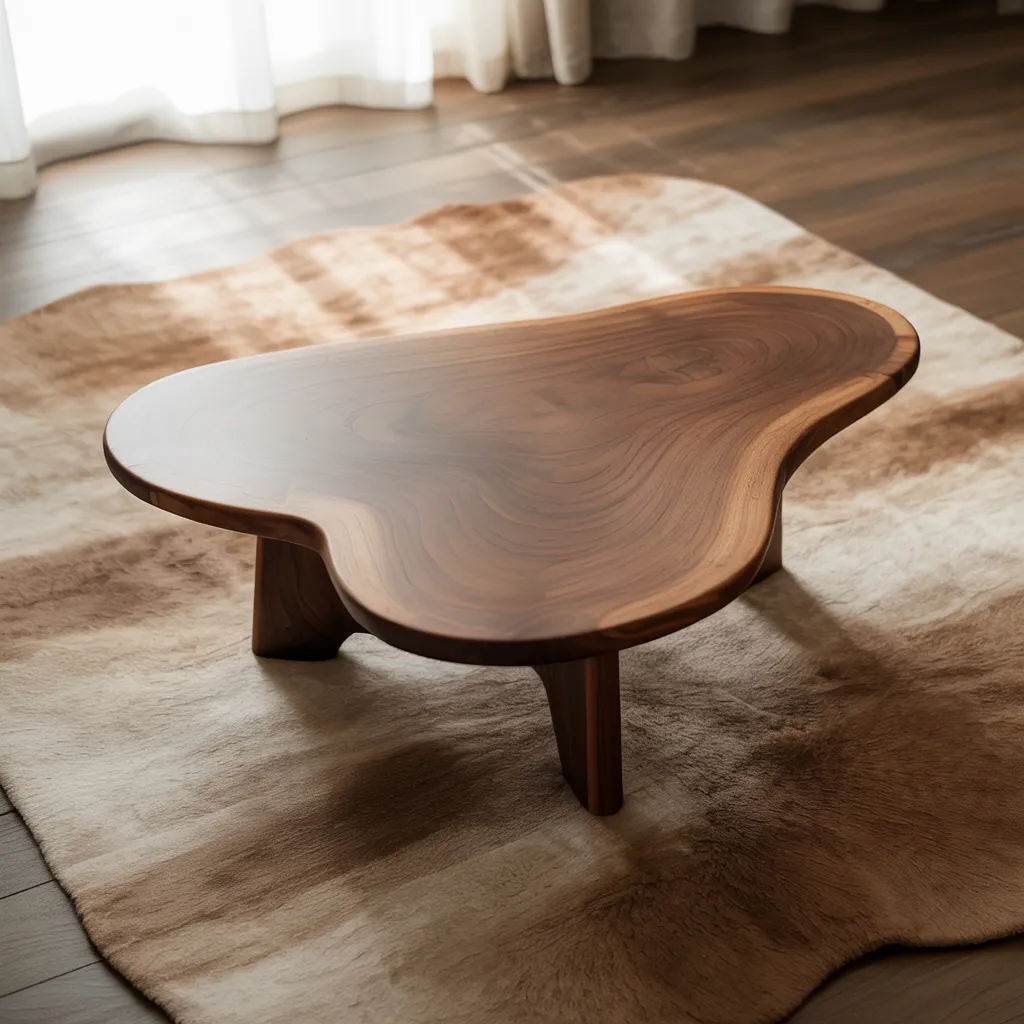
A low, sculptural coffee table with an asymmetrical, “pebble-like” silhouette sits on a natural hide rug in soft daylight. The emphasis is on honest materials and visible wood grain, with lots of open space around it so the form feels intentional rather than crowded—exactly the article’s point that the coffee table should act as a visual anchor, favoring organic shapes and natural wood character over rigid or mass-produced looks.
The Four Elements That Make a Room Feel Intentional
You don’t need expensive renovations to transform your living room—strategic sensory choices work faster. Four interconnected elements create that “designed with intention” feeling:
1. Signature fragrance – Scent creates invisible atmosphere and emotional resonance. Even a simple candle or essential oil diffuser shifts how a space feels.
2. Thoughtful lighting – Soft, layered lighting through aesthetic candles redefines how light moves through your space. Harsh overhead lighting flattens everything; ambient lighting soothes.
3. Statement rugs – Rugs define zones and ground furniture arrangements, preventing spaces from feeling scattered.
4. Carefully chosen objects – A few meaningful pieces spark interest without overwhelming. Think sculptural vases, interesting mirrors, or art books that reflect your genuine interests.
Building textural contrast: Layer natural materials like wool, linen, and stone with darker wood tones to prevent spaces from feeling flat or one-dimensional. Low furniture positioning and natural light optimization create proportions that feel balanced rather than chaotic.
Nothing should be arbitrary or decorative just for decoration’s sake. When these four elements work together, spaces shift from thrown-together to thoughtfully composed. That’s the magic of intentional layering.
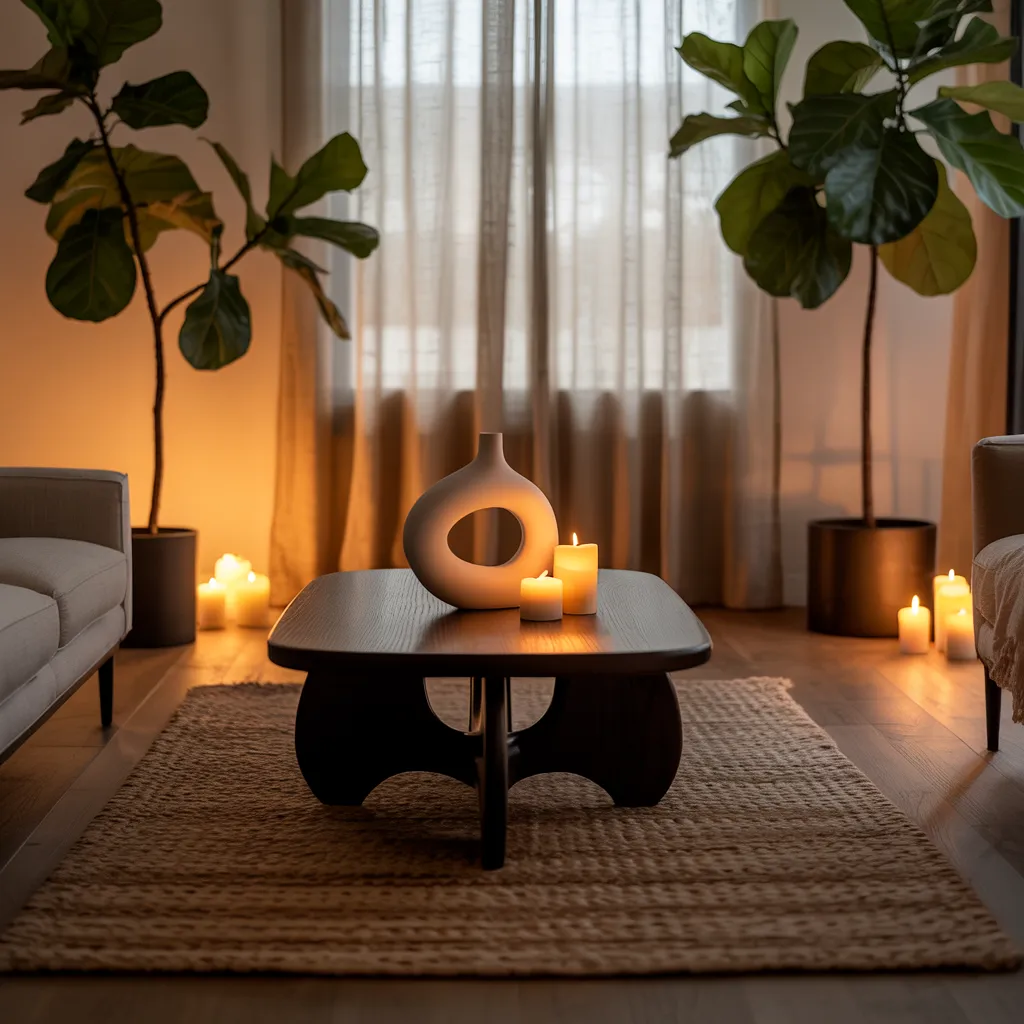
A calm living room scene centered on a low table holding a sculptural vase and a small cluster of lit candles, grounded by a textured rug and framed by greenery and soft curtains. It visually bundles the article’s “four elements” into one shot: fragrance (candles), gentle layered lighting (candlelight), a statement rug to define the zone, and a small number of carefully chosen objects that add personality without clutter.
How to Shop Like a Stylist: Quality Over Quantity
Professional stylists approach room curation like museum curators, not impulse shoppers. They select pieces with distinctive character: unusual mirrors with artistic frames, coffee table books reflecting genuine interests, throws with compelling texture.
The curator’s mindset means:
- Choosing fewer items with higher impact per piece
- Prioritizing honest materials—solid wood, natural fibers, organic forms—that age beautifully
- Sourcing vintage and handmade pieces for authenticity and provenance
- Every object must earn its presence by contributing meaningfully to the whole
This approach mirrors the Japanese principle of wabi-sabi, which treasures simplicity and reveals materials’ authentic character rather than obscuring it. Contemporary architects like Tadao Ando demonstrate how humble materials—concrete, natural wood, pure geometry—convey profound spatial presence.
Vintage and handmade items carry individuality that mass production can’t replicate. They tell stories through wear and imperfection, adding genuine depth to your environment. The result isn’t a decorated room following seasonal trends—it’s a space reflecting your authentic values and aesthetic preferences, evolving personally over years.
Shop intentionally, buy less frequently, and watch how quality compounds over time.
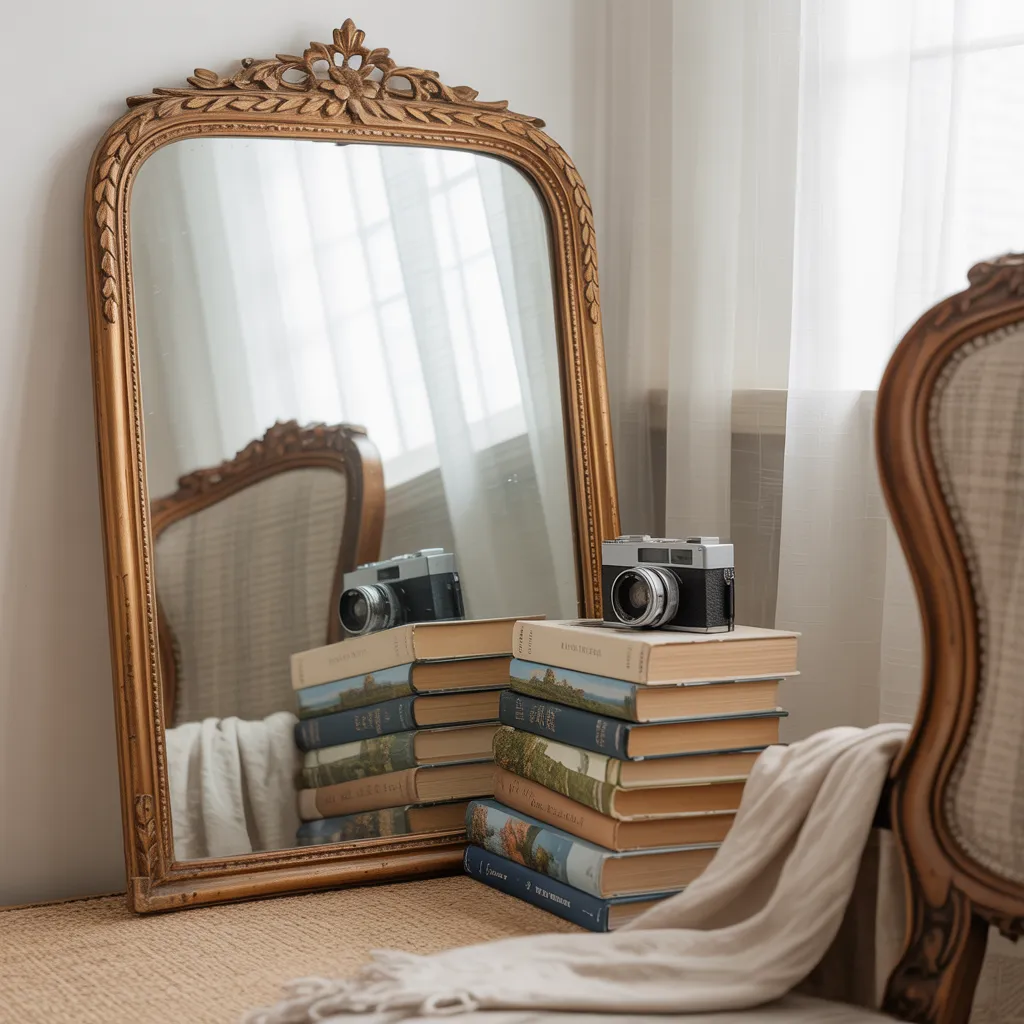
A tall, ornate vintage mirror leans against the wall beside a neat stack of books with a retro camera on top, softened by a draped textile and filtered daylight. In the article’s context, this is “shop like a stylist”: fewer, higher-impact pieces—an interesting mirror frame, books that reflect real interests, and vintage objects with story and patina (wabi-sabi energy) rather than lots of small décor.
The Japanese Living Room Principle That Changes Everything
Japanese design teaches one profound lesson: genuine presence matters infinitely more than abundance or visual noise. By combining lower-sitting furniture with maximized natural light and deliberate clutter elimination, you create an environment that feels fundamentally grounded and calm.
This isn’t minimalism for its own sake—it’s fundamentally about crafting spaces where you genuinely want to spend time. The Zen philosophy underlying Japanese design emphasizes freedom through simplicity, extending beyond aesthetics into how you actually live and feel.
The practical approach:
- Strip away excess and concentrate on quality, proportion, and honest materials
- Add warmth through natural textures, earthy tones (beige, soft greens), and indoor plants
- Include darker wood accents for visual interest while maintaining tranquility
- Keep spaces serene without feeling austere or unwelcoming
The transformation reveals what truly matters: not how impressive your room looks to visitors, but how peaceful it makes you feel when you’re actually in it. Contemporary warm minimalism proves that simplified spaces can feel inviting, not cold.
When you prioritize human wellbeing first and aesthetics second, something paradoxical happens—you end up creating the most beautiful results anyway. That’s the real secret: thoughtful design isn’t about impressing anyone. It’s about creating a sanctuary where you can genuinely be present.
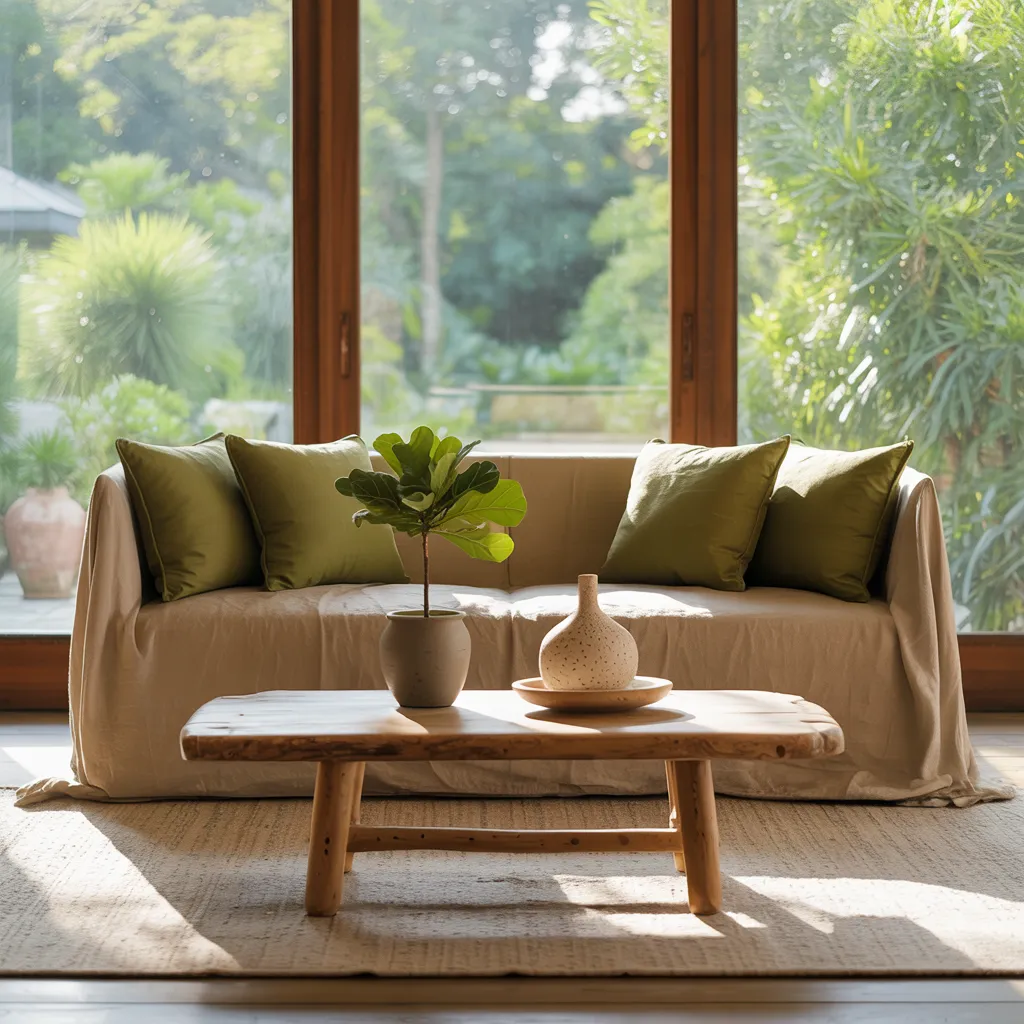
A minimal, airy living room with a low wood coffee table, simple ceramics, and a small plant sits in front of large windows opening onto lush greenery; the sofa is soft, neutral, and accented with muted green cushions. This illustrates the article’s “Japanese living room principle”: lower-sitting furniture, maximized natural light, and warmth through earthy tones and indoor plants—creating a grounded, serene space that feels inviting, not sterile.