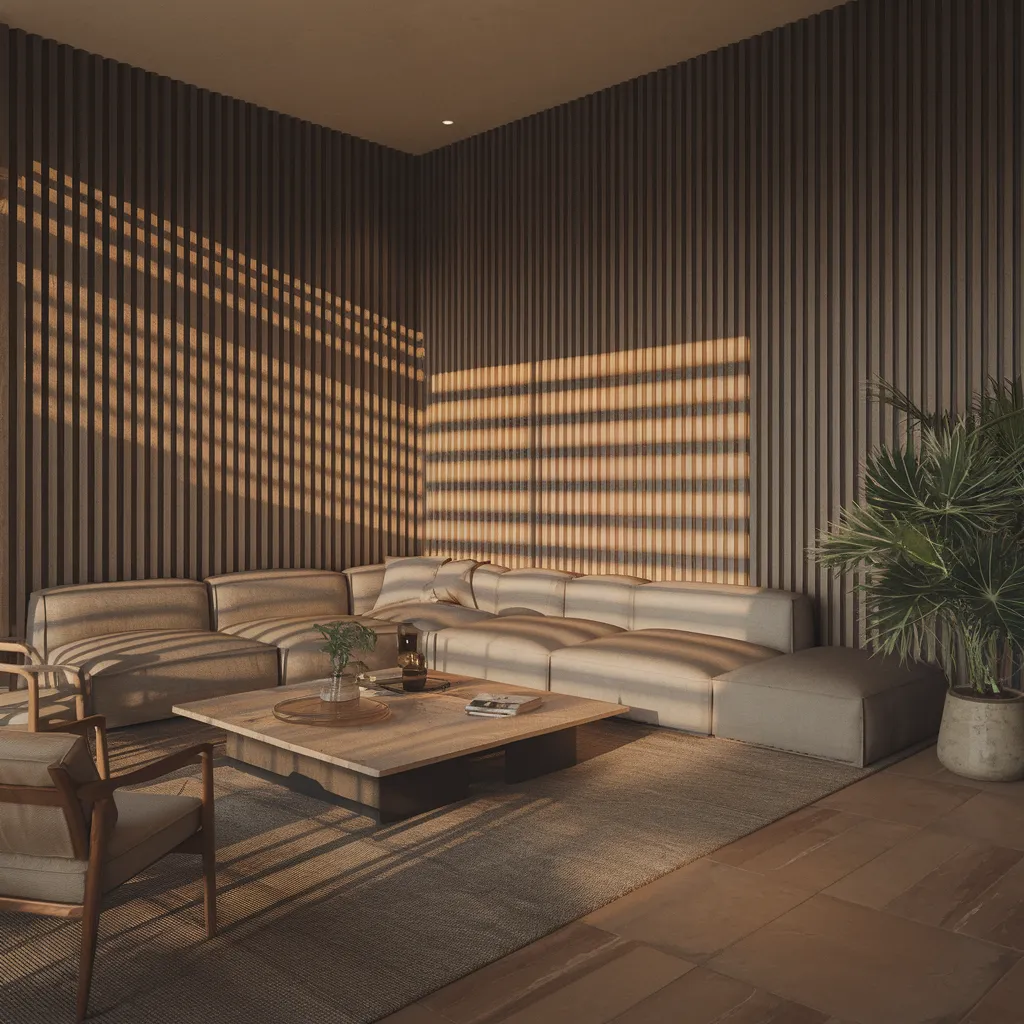
Discover the captivating world of slatted walls, where style and functionality converge to create a truly elevated living experience. Prepare to be inspired by the transformative power of these dimensional wonders.
Elevating Interiors: The Artful Allure of Slatted Walls
Walk into any high-end interior design showroom today, and you’ll notice something remarkable happening on the walls. While homeowners obsess over the perfect shade of white paint or hunt for statement artwork, professional designers are quietly implementing a texture technique that’s transforming ordinary spaces into architectural masterpieces. The secret? Slatted wood panels – a deceptively simple treatment that’s become the interior design world’s best-kept weapon for instant sophistication.
This Scandinavian-inspired approach isn’t just about adding wood to your walls; it’s about creating dimensional rhythm that draws the eye and adds warmth without overwhelming a space. Unlike traditional wood paneling that can feel heavy or dated, modern slatted treatments offer clean lines and geometric precision that work seamlessly with contemporary aesthetics. The vertical, horizontal, or even angled arrangements create shadow play throughout the day, making walls feel alive and dynamic rather than flat and forgettable.
What makes this technique particularly genius is its versatility. In a minimalist living room, horizontal slats can make ceilings appear higher while adding subtle texture. In a bedroom, vertical arrangements create an elegant headboard effect without the bulk of traditional furniture. Recent modern minimal interior projects demonstrate this perfectly – walnut cabinetry wrapping kitchen spaces and geometric wood cabinets around marble fireplaces establish clear visual anchor points without overwhelming the space. The key lies in the spacing – too tight, and you lose the dimensional effect; too wide, and the treatment becomes chaotic rather than calming.
This technique taps into fundamental design principles from the visual arts that help viewers understand and appreciate spatial composition. Professional designers love this approach because it solves multiple problems simultaneously. It adds architectural interest to builder-grade homes, provides acoustic benefits in open-plan spaces, and creates focal points that don’t compete with furniture or artwork. Most importantly, it achieves that coveted ‘expensive’ look that clients crave, often at a fraction of the cost of custom millwork or high-end wallpaper treatments. Like the Greeks and Romans who revolutionized interior spaces with coordinated decorative elements, today’s designers understand that walls should function as both structure and surface art.
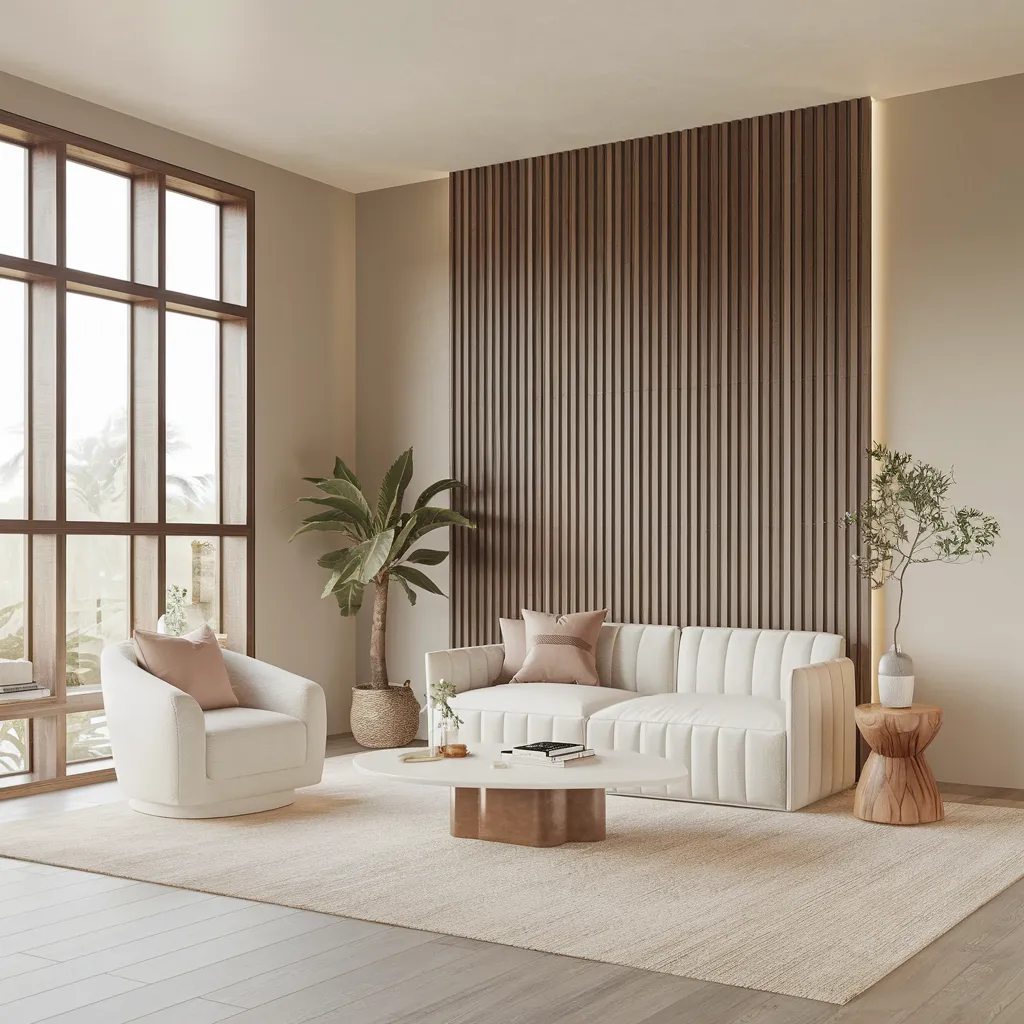
A neutral-toned living room showcases a mix of natural textures and soothing hues, reflecting a contemporary yet inviting style. White linen sofas and a plush, oversized armchair create an airy and relaxed seating area, complemented by natural fiber accents like a jute area rug and woven wood side table. Floor-to-ceiling windows allow ample natural light, while the standout feature is the warm wood slat wall paneling. This textured accent wall in rich, earthy tones adds visual depth and contrast against the cool beige surroundings. Organic decor elements like a potted tree and dried branches in ceramic vases soften the space with hints of nature for an overall calming and tranquil ambiance.
Why Your Walls Are Sabotaging Your Home’s Style (And How to Fix It)
The solution lies in understanding how texture affects our perception of space and luxury. For over 5,000 years, humans have recognized that painted and textured interior walls transform environments – from ancient examples at Ness of Brodgar to the templated Roman bath houses that established sophisticated interior design principles. Embossed wallpapers, for instance, catch and reflect light differently throughout the day, creating subtle variations that keep walls visually engaging. Three-dimensional panels add architectural weight that makes rooms feel more substantial and well-designed. Even simple techniques like strategic wood treatments can completely transform a space’s character by introducing natural texture that softens hard lines and adds warmth.
Color theory plays a crucial role in wall transformation success. Color combinations can make tiny rooms seem larger or smaller, affecting how humans think, feel, and perceive space. Different rooms demand different textural approaches based on their function and lighting conditions. In dining rooms with formal lighting, metallic accent walls create elegant shimmer that enhances evening entertaining. Bedrooms benefit from softer textures like fabric-covered panels that absorb sound and create cozy intimacy. Living areas work best with varied textures that create visual zones – perhaps a textured accent wall behind the sofa paired with smoother surfaces elsewhere.
The beauty of this approach lies in its accessibility. Small, well-designed upgrades can have massive impact without major renovations. Consider how grasscloth walls in a powder room or marble tile treatments in bathrooms instantly elevate the space. Even functional elements like storage containers and fixtures, when chosen thoughtfully, can enhance textural interest while improving daily routines.
The key is understanding that texture doesn’t have to be dramatic to be effective. Subtle knockdown textures can add just enough variation to eliminate that builder-grade flatness, while still maintaining a clean, contemporary feel. The goal isn’t to make walls the star of the show, but rather to create a sophisticated backdrop that elevates everything else in the room. When done correctly, textured walls make furniture look more expensive, artwork more impactful, and the entire space more thoughtfully designed.
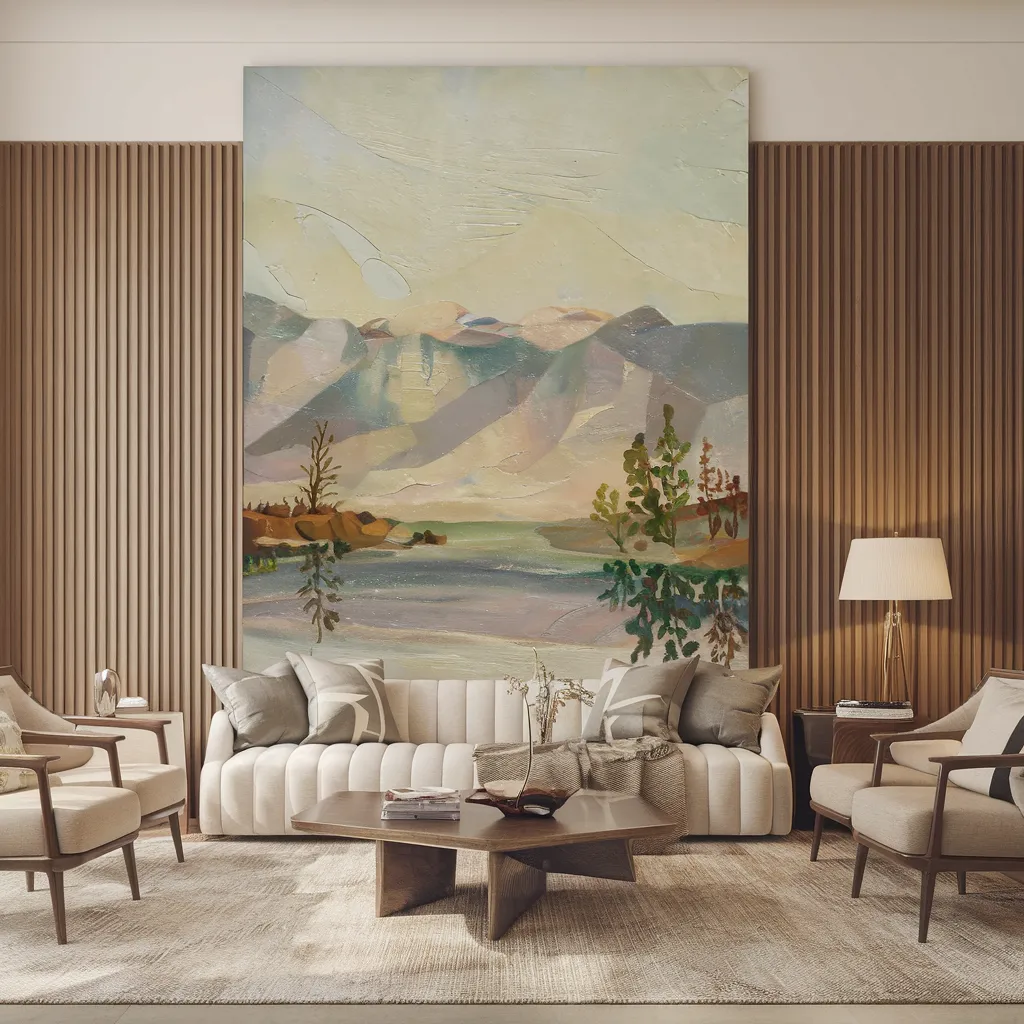
A textured wall with slatted wood paneling serves as the backdrop for a cozy living room with a modern rustic style. The space features beige upholstered furniture including a tufted sofa, armchairs, and a wood coffee table, complemented by muted colors and natural materials. An oversized abstract landscape painting in earthy tones of blues, grays, and greens dominates the wall, its brushstrokes evoking mountains and foliage against a hazy sky. Warm wood furnishings and plush textiles in neutral hues create a comfortable, inviting ambiance balanced by the linear texture of the wood wall paneling. The dominant palette combines natural sandy beiges, cool grays, and pops of muted green, reflecting an organic contemporary aesthetic.
The Gallery Wall Mistake That’s Ruining Your Room (Plus 5 Better Alternatives)
Before you reach for that hammer and picture hanging kit, consider this: the traditional gallery wall might be working against your room’s potential rather than enhancing it. While Pinterest is flooded with perfectly arranged photo collections, many homeowners discover that their carefully planned wall displays end up looking cluttered, overwhelming, or worse – cheap. The problem isn’t with the concept of wall art; it’s with the execution and the failure to consider how decorative elements interact with wall texture and room architecture.
Historically, walls have served dual purposes as both functional structures and decorative canvases. From ancient Indian architects who functioned as interior designers to the geometric nagash paintings in traditional Arabic homes, successful wall decoration has always considered the relationship between surface treatment and artistic elements. The first major mistake is treating walls as two-dimensional bulletin boards rather than architectural elements with their own character. When you add textured treatments like slatted wood or dimensional panels, traditional gallery walls can compete rather than complement the surface. The result is visual chaos where neither the texture nor the artwork can shine properly.
Smarter decorators are embracing alternative approaches that work in harmony with dimensional wall treatments. Leaning oversized frames on floating shelves creates layered depth while allowing flexibility to change displays seasonally. This technique works particularly well with textured walls because it doesn’t require penetrating the surface with multiple holes, preserving the integrity of treatments like wood panels or specialty wallpapers.
Themed collections with contrasting backdrops offer another sophisticated solution. Instead of cramming multiple small pieces together, select fewer, larger pieces that can breathe against textured surfaces. When working with slatted wood walls, for example, a single large-scale artwork or mirror can create stunning contrast between the linear texture and the smooth frame.
Incorporating three-dimensional decorative elements – sculptural pieces, floating shelves with carefully curated objects, or even architectural details like decorative molding – creates visual interest that complements rather than competes with textured walls. Modern minimalist approaches often feature oversized artwork as strong visual anchor points, allowing geometric elements and natural materials to coexist harmoniously.
The key is thinking of your wall as a complete design element rather than just a surface to fill with stuff. Professional designers understand that successful spaces establish clear zones through careful placement of focal points, ensuring each element serves both functional and aesthetic purposes. Like traditional majlis paintings that extend seamlessly from walls to doors and furniture, the most effective wall treatments create cohesive visual narratives rather than competing focal points.
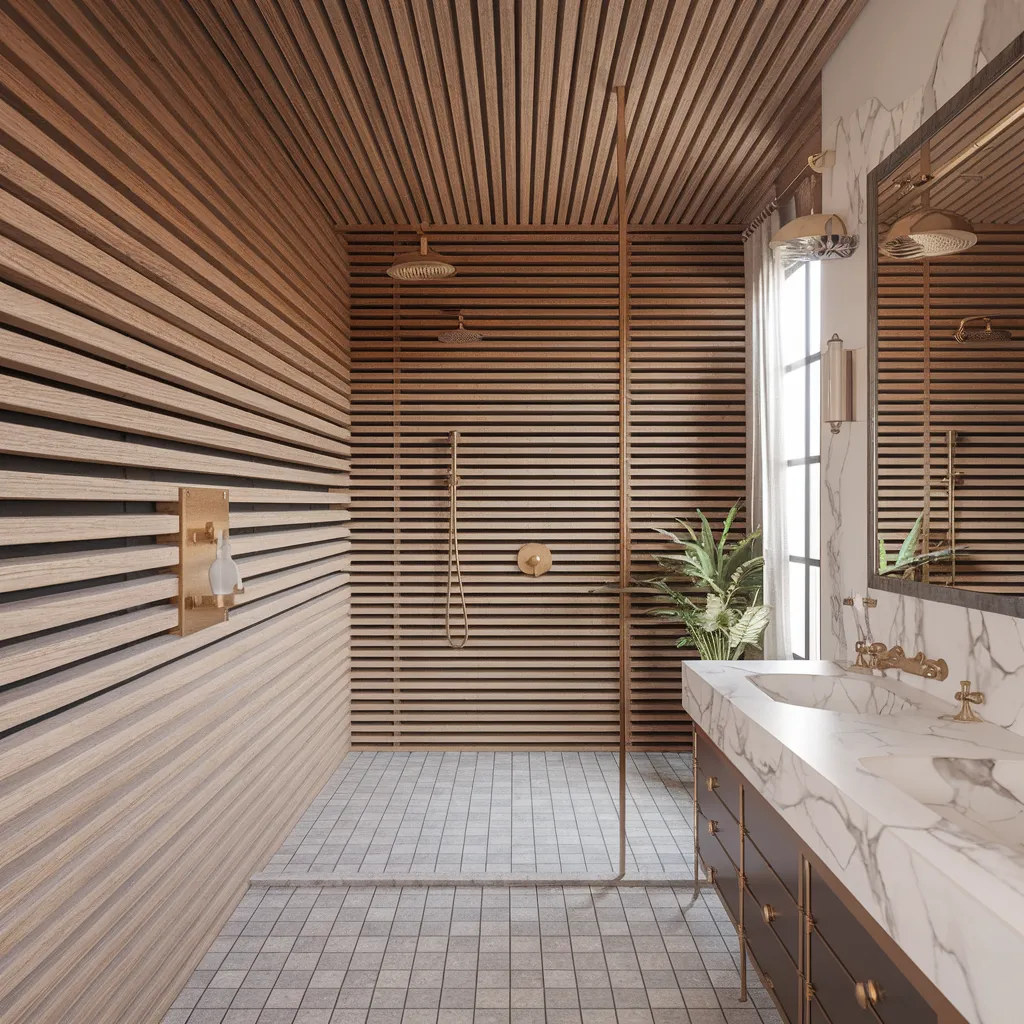
Intricate wood slat wall paneling covers the bathroom from floor to ceiling, creating a warm, textured ambiance. The strategic layering of different wood tones and slat widths lends a modern, sophisticated feel to this contemporary bathroom design. Natural materials like wood and marble dominate, with metallic brass accents for a luxurious touch. The neutral color palette allows the rich texture of the wood and veining in the marble countertop to take center stage. Clean lines, geometric shapes, and industrial-inspired light fixtures achieve an elevated yet minimalist aesthetic.
The Texture Combination That Multiplies Your Home’s Value
Real estate professionals have noticed a pattern: homes with thoughtfully textured walls consistently appraise higher and sell faster than comparable properties with standard painted surfaces. But the secret isn’t in choosing just one dramatic treatment – it’s in the strategic layering of textures that creates depth, sophistication, and that indefinable quality buyers recognize as ‘expensive.’
The most valuable approach combines structural elements with carefully curated decorative pieces. Imagine slatted wood panels as your foundational texture, providing architectural interest and modern appeal. Layer this with metallic accents – perhaps brass or copper details that catch light and add warmth. Finally, incorporate soft textures through textiles or artwork that provide contrast and comfort. This three-tier approach creates visual complexity that photographs beautifully and feels luxurious in person.
The psychology behind this layered approach is fascinating. When potential buyers enter a room with varied textures, their brains interpret the visual complexity as evidence of quality and attention to detail. This principle has roots in ancient design traditions – the Greeks and Romans understood that coordinated decorative elements, from mosaic floors to templated interiors, created spaces that conveyed status and sophistication. Flat, painted walls signal builder-grade construction, while thoughtfully textured surfaces suggest custom work and higher-end finishes. This perception translates directly into increased perceived value, often adding thousands to a home’s market appeal.
Professional design projects demonstrate this principle perfectly. Modern minimal interiors featuring walnut floating vanities, marble countertops, and brass hardware create sophisticated material palettes that feel both luxurious and cohesive. The combination of natural wood, stone surfaces, and metallic accents establishes a high-end aesthetic that buyers immediately recognize and value.
Color psychology plays a crucial supporting role in texture success. Strategic color choices can make rooms appear larger or smaller, directly impacting perceived value. When textured treatments incorporate colors that enhance space perception, the investment multiplies its return through both visual appeal and functional improvement.
Timing the investment in wall textures strategically can maximize returns. Focus on high-impact areas first – the main living spaces, master bedroom, and entryway where texture treatments will be most noticed and appreciated. A well-executed accent wall in the living room or a sophisticated textured treatment behind the bed can transform the entire feel of a home for a relatively modest investment.
The key is balance. Too much texture becomes overwhelming and dated, while too little leaves rooms feeling unfinished. The most successful combinations use a dominant texture (like wood slats or dimensional panels) paired with complementary elements that enhance rather than compete. When done correctly, these treatments don’t just look expensive – they create lasting value that continues to appreciate over time.
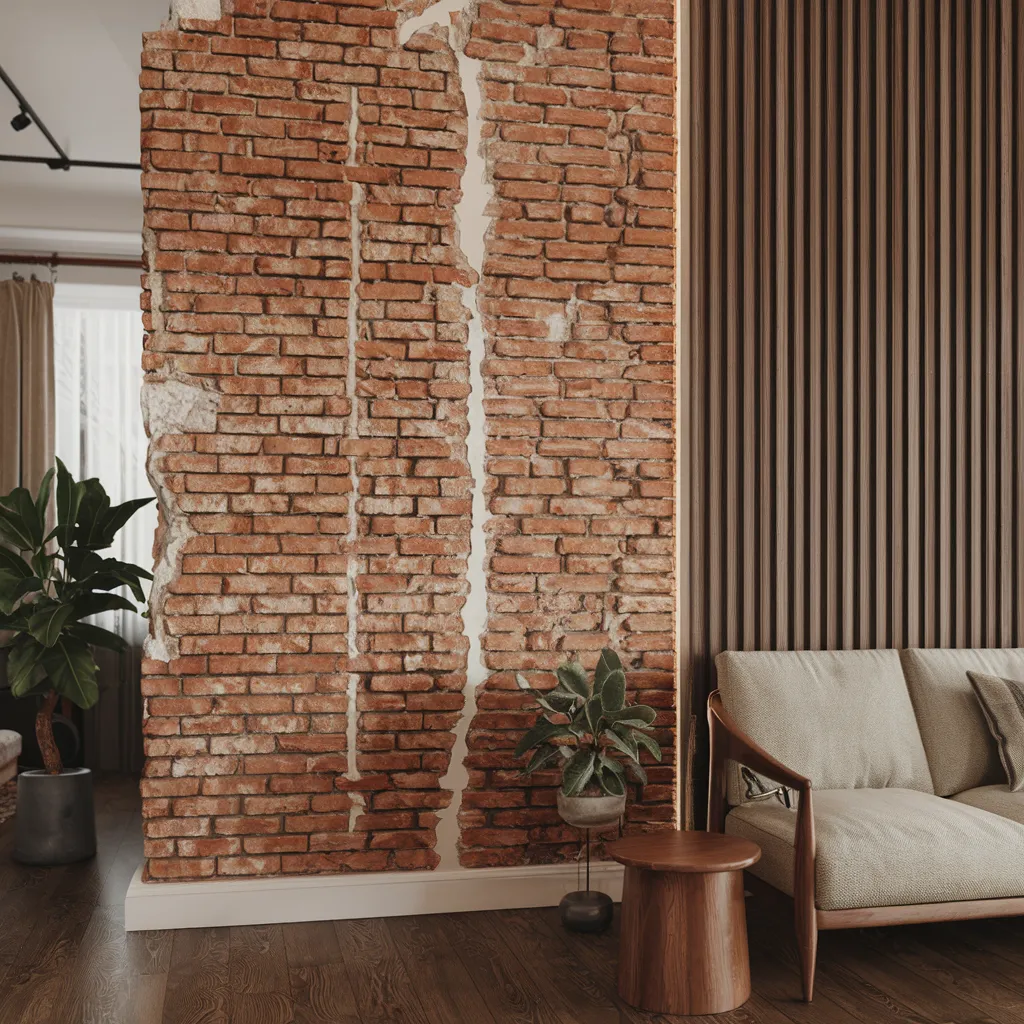
A striking exposed brick wall serves as the focal point, its rough texture and warm terracotta hues contrasting with sleek wood paneling and crisp white accents. The industrial rustic aesthetic blends raw materials like aged bricks and a potted plant with refined elements like a plush beige sofa and round wood side table. Neutral tones of beige, gray, and warm brick hues dominate the relaxed yet sophisticated palette, punctuated by touches of green foliage. The thoughtful combination of disparate textures – from the softness of linen upholstery to the ruggedness of the brickwork – creates a visual narrative that transcends predictable decor choices, culminating in a space that feels at once grounded and elevated.
What Happens When You Stop Following Wall Decor Rules
The most memorable interiors are often those that break conventional wisdom about how walls should be treated. While design magazines promote safe, predictable approaches, the spaces that truly captivate are those that dare to combine unexpected materials and techniques in ways that shouldn’t work – but absolutely do. This is where real innovation happens, and where homeowners can create truly unique environments that reflect their personality rather than following trends.
Consider the stunning effect of mixing knockdown textures with fabric-covered sections. Traditional thinking would suggest these treatments are too different to coexist, but when executed thoughtfully, the contrast between rough and smooth, hard and soft, creates visual tension that’s incredibly sophisticated. The key lies in finding the common thread – perhaps a shared color palette or complementary undertones that allow disparate textures to feel intentional rather than accidental.
Historical precedent supports this bold approach. Traditional Arabic majlis paintings demonstrate how successful rule-breaking creates lasting beauty – these geometric wall decorations extend boldly from walls to doors, staircases, and furniture, creating cohesive visual narratives that ignore conventional boundaries. The bright colors and heavy lines adapted from textile patterns prove that walls can successfully become works of art when designers have the courage to think beyond standard applications.
Brick elements combined with sleek panels represent another rule-breaking success story. The industrial roughness of exposed or painted brick provides earthy texture, while modern slatted wood or metal panels add clean, contemporary lines. This juxtaposition creates spaces that feel both grounded and forward-thinking, appealing to our desire for authenticity while embracing modern aesthetics.
Unconventional material combinations are pushing the boundaries of what we consider appropriate for interior walls. Imagine cork panels paired with metallic accents, or reclaimed wood combined with contemporary wallpaper treatments. These unexpected partnerships create rooms with distinct personality and memorable character that standard approaches simply cannot achieve.
The secret to successful rule-breaking lies in maintaining some unifying elements while allowing others to contrast dramatically. Professional designers often anchor bold combinations with neutral foundations – perhaps oversized sectionals in calming tones or geometric coffee tables that provide visual stability. The approach mirrors how modern minimal interiors successfully combine raw wood dining tables with sleek pendant fixtures, creating sophisticated tension between organic and manufactured elements.
Real examples of these bold approaches prove that breaking traditional wall decor rules can yield extraordinary results. A recent residential project combined distressed wood panels with smooth plaster sections and metallic tile accents, creating a space that felt both rustic and ultra-modern. Another successful design featured fabric-wrapped panels alongside concrete textures and brass details, resulting in a room that was simultaneously industrial and luxurious.
The lesson? The most stunning interiors happen when designers and homeowners have the courage to experiment beyond safe, predictable choices. When you stop following every conventional rule about wall treatments, you open the door to creating spaces that are truly your own – distinctive, memorable, and impossible to replicate from a catalog or Pinterest board. Small, well-designed upgrades combined with bold textural choices can transform ordinary rooms into extraordinary spaces that bring daily joy and lasting value.