Here’s something fascinating: guests form opinions about your home through scent before they even notice your décor. It happens instantly, almost subconsciously. That’s because olfactory memory—how our brains process and remember scents—is incredibly powerful. It connects directly to emotion and creates lasting impressions in ways visual elements alone can’t match. Homes that smell exceptional aren’t relying on heavy, artificial fragrances anymore. Instead, there’s a clear shift toward sophisticated, nature-inspired scents: tomato leaves, cannabis-inspired fragrances, and bright citrus blends that feel authentic rather than manufactured. Luxury brands like Malin + Goetz and Diptyque are leading this movement, showing that thoughtful fragrance is now just as important as your color palette or furniture choices. The best part? You don’t need expensive products or complicated systems to achieve this. It’s about choosing scents that align with your home’s personality and applying them strategically. That’s what transforms fragrance from an afterthought into a genuine design element.
The Scents Redefining ‘Home’ in 2026
Remember when candles meant vanilla or generic florals? Those days are shifting. Today’s most sophisticated homes feature unexpected aromatic choices that feel genuinely botanical rather than perfume-like. Think Sicilian orange that’s crisp and energizing, spearmint that feels fresh and clean, or strawberry with authentic fruit notes. The tomato leaf trend perfectly captures this direction—it smells like the green, slightly earthy scent you’d encounter in a garden at dawn. Intimate. Sophisticated. Completely unexpected. Brands like Boy Smells, Jo Malone, and Loewe are pioneering these forward-thinking options specifically designed for 2026 homes. What makes these trends so appealing? They’re less about “perfuming” your space and more about creating an environment that smells like itself—like fresh air, like nature, like authenticity. This approach works whether you’re decorating a minimalist apartment or a traditional house because these scents enhance rather than mask your home’s natural character.
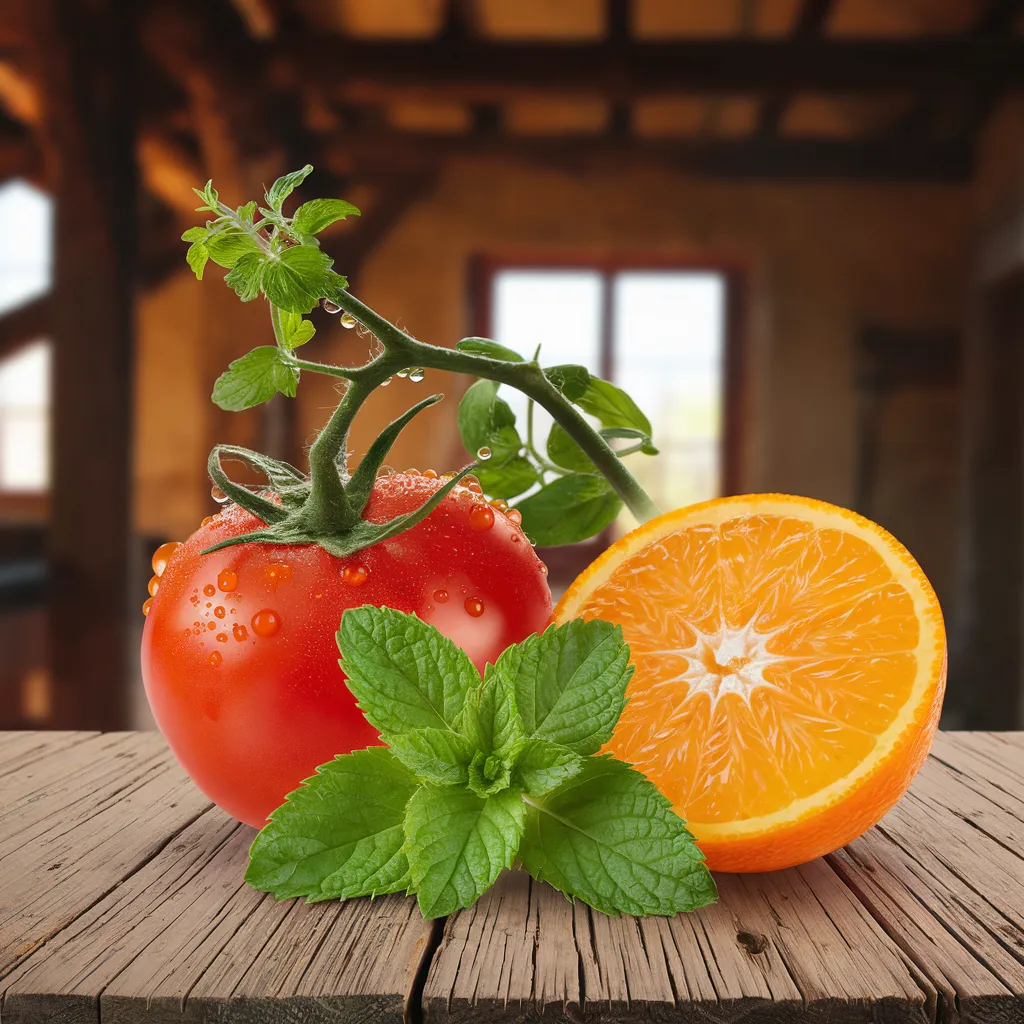
A ripe red tomato, dewy from the garden, sits alongside a plump orange, the two providing a vibrant still life against the rustic wooden surface beneath. Verdant mint leaves and a tomato plant’s tendrils complete the natural tableau, evoking an authentic botanical aroma. The warm terracotta tone of the tomato complements the juicy citrus orange, while shades of green from the herbs and vines provide crisp, earthy accents. This artfully composed image epitomizes the new sophistication in home fragrances – unexpected yet recognizable scents that capture the essence of nature itself, transcending artificial perfumes for a fresher, more intimate ambiance.
Creating Layered Fragrance: A Multi-Sensory Strategy
Here’s where most people get it wrong: one beautiful candle isn’t enough for true olfactory impact. The homes that consistently smell incredible use a layered fragrance approach, strategically combining different delivery methods throughout the space. The most effective combination includes scented candles in high-traffic areas, reed diffusers welcoming guests at entryways, wax melts in specific rooms where you want subtle fragrance, and fresh elements like garlands or scented ornaments that add visual appeal alongside scent. Simmer pots on your stove add another dimension—they fill your home with natural, evolving scents that feel organic and intentional. For extra impact, use room spray on soft furnishings like upholstered chairs, curtains, and throw pillows. These materials hold fragrance far longer than hard surfaces, creating lingering aromatic touchpoints throughout your space. The orchestrated effect? Fragrance meets guests at your door, welcomes them through each room, and creates memorable sensory moments without ever feeling overwhelming.
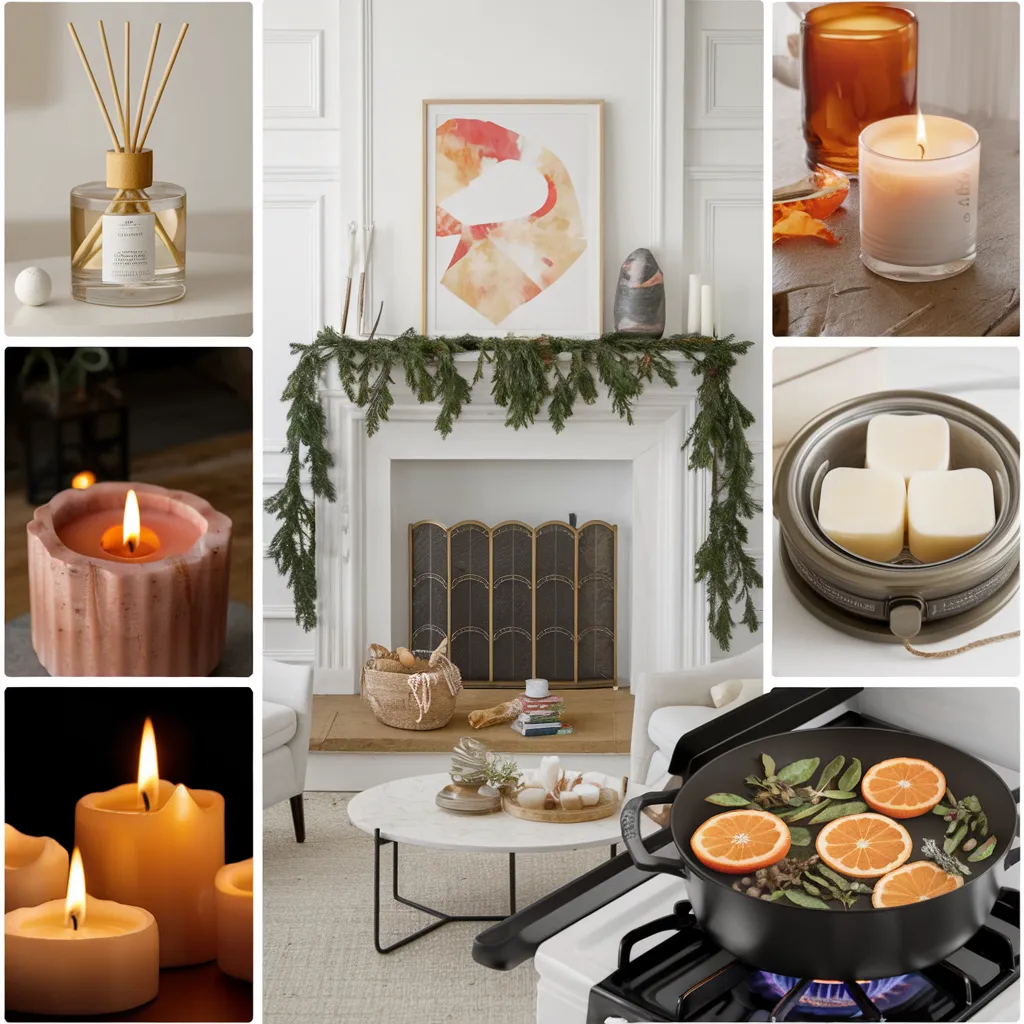
Reed diffuser emits warm gold tones on sleek glass bottle; candle radiates soft ambiance in amber glass vessel. Abstract painting with brushed red and orange shapes framed in gilded accents. Garland of lush evergreen drapes fireplace mantel below modern geometric fireguard; coffee table books and sculptures style rustic wood tray. Blended neutral palette of soft ivory, tan, gray showcases natural elements in cozy, contemporary living space. Candlelit terracotta pot emits rich flicker on wood surface. Molten wax votive in sculptural capiz vessel lends organic textural warmth. Medley of orange slices with verdant greenery simmers in heavy cast iron pan atop stove’s gas burner, filling space with delightful citrus aroma. Rustic meets modern in tactile mixed materials like ceramic, glass, metal displayed in warm neutral kitchen setting. Trio of creamy pillar candles emit soft incandescent glow within glass hurricane; patina spreads cozy luminescence in minimalist stoneware holder. Muted sepia tones of natural candle wax complement surrounding neutral hues in this edited, restrained vignette of simple well-crafted objects designed to create tranquil understated ambiance through clean lines and tonal variance.
Your 7-Step Fragrance Strategy: How to Plan Like a Luxury Home
Homes that consistently smell amazing aren’t leaving fragrance to chance. They follow a deliberate preparation sequence you can adopt:
- Step 1: Select Your Signature Scents Choose 2-3 trend scents that align with your personal style and home aesthetic. Consider seasonal rotations—fresh citrus for summer, warming spice blends for fall.
- Step 2: Invest in Delivery Methods Stock your toolkit: quality reed diffusers for entryways, wax melts for bedrooms or offices, fresh garlands for visual-olfactory impact, and effective room sprays for soft furnishings.
- Step 3: Incorporate Decorative Scent Select scented ornaments or garlands that work double-duty—enhancing your décor while delivering fragrance.
- Step 4: Prep Your Simmer Pot Recipes Mix fresh ingredients like citrus peels, herbs, and spices that create natural, evolving aromas throughout the day.
- Step 5: Position Candles Strategically Place them in high-traffic areas and near seating where guests naturally linger—entryways, living rooms, and bathrooms.
- Step 6: Establish a Rotation Schedule Refresh scents seasonally or monthly so your home never feels stale. This keeps the experience interesting and intentional.
- Step 7: Test Before Entertaining Try your complete fragrance strategy a few days before guests arrive. This ensures layered scents create the desired atmosphere without overwhelming.
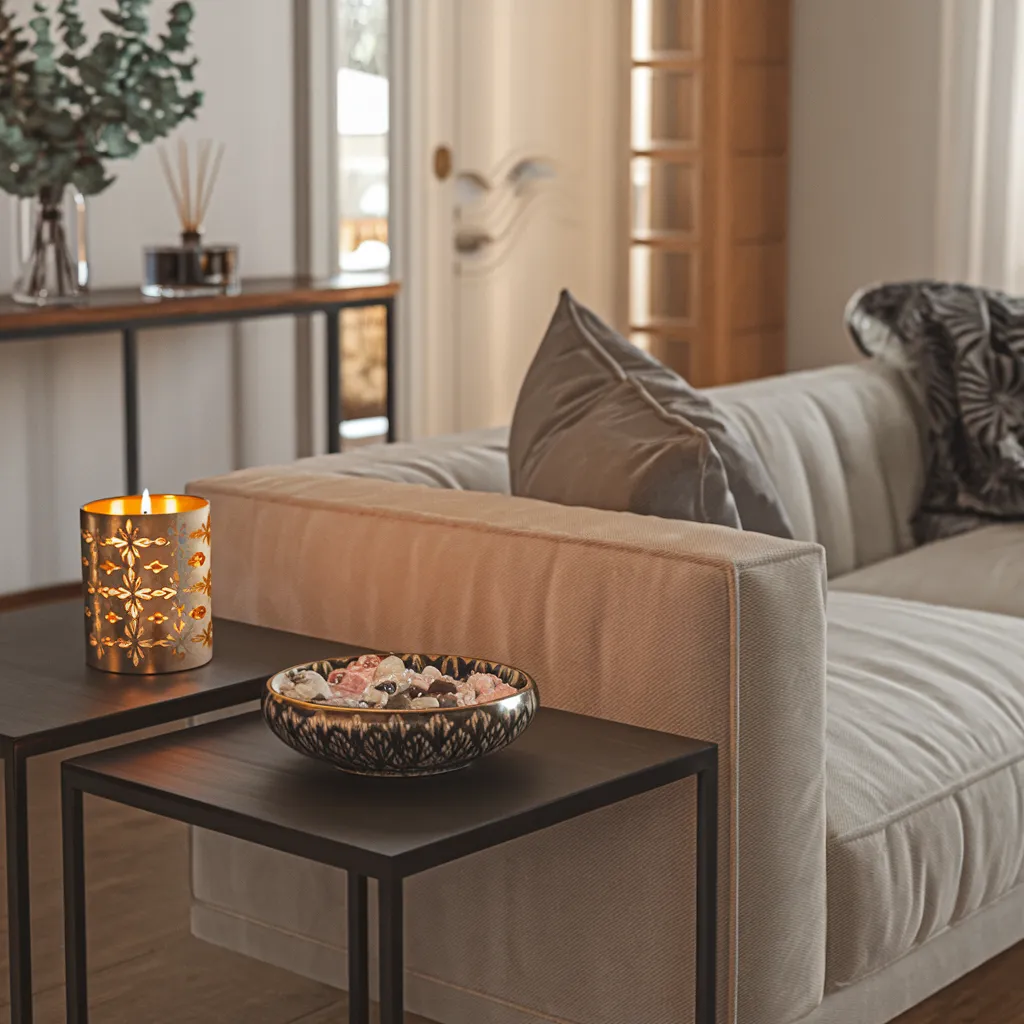
A cozy living area showcases an inviting neutral color palette of warm beiges and soft grays. A plush sofa upholstered in a muted tan fabric anchors the space, complemented by textured patterned throw pillows in earthy tones. Dark wood side tables provide contrast, one holding a glowing carved ceramic candle holder casting warm accents. An ornate ceramic bowl filled with potpourri adds a bohemian touch. The overall aesthetic blends contemporary and relaxed bohemian styles, utilizing natural materials like wood, linen, and ceramics to create a cozy, welcoming ambiance.