As we embrace the natural world more than ever, interior design is taking cues from the earthy, grounded tones that were all the rage in the 1970s. But this time around, designers are giving these nostalgic hues a contemporary twist, creating spaces that feel both warm and sophisticated.
The Earthy Allure: Embracing 1970s Hues in 2026
In a world that often feels chaotic and fast-paced, there’s something undeniably soothing about the rich, earthy color palette that defined the 1970s. From warm terracotta to muted sage greens, these hues have a way of grounding us, evoking a sense of calm and connection to nature. And in 2026, interior designers are finding fresh, modern ways to incorporate these nostalgic tones into contemporary spaces. There’s a certain nostalgia factor at play but we’re using these colors in a way that feels current and elevated, not dated.
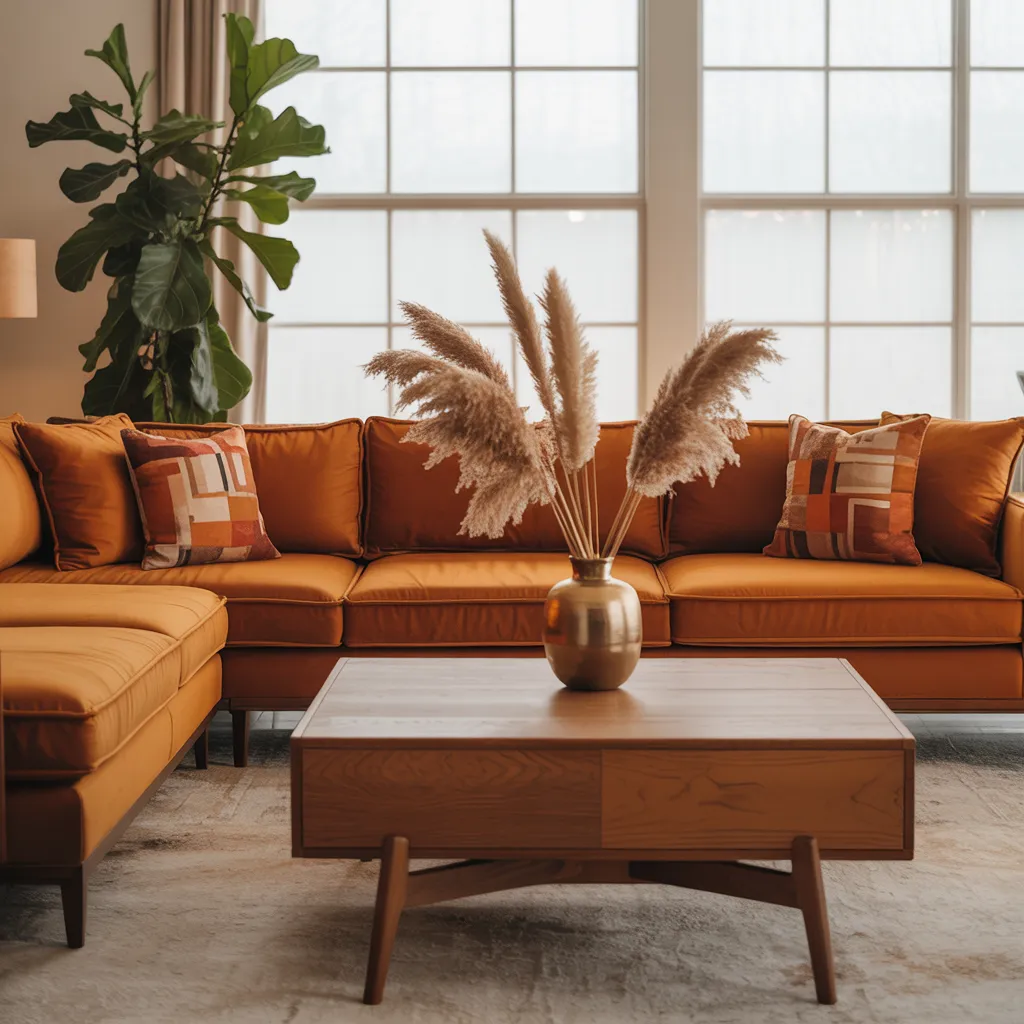
A spacious living room showcases a warm, contemporary aesthetic with a deep ochre sectional sofa as the focal point. The sofa is complemented by earthy-toned accent pillows featuring intricate patterning. A large potted fiddle-leaf fig plant adds an organic touch, while a dried pampas grass vase introduces soft, airy textures. The color palette blends rich terracotta and mustard tones with neutral beiges and warm wood accents. Mid-century inspired oak furnishings, such as the coffee table and side tables, provide a sleek, modern feel. Large paned windows allow ample natural light to drench the casual yet sophisticated space, highlighting the harmonious blend of earthy hues and cozy, inviting materials like plush upholstery and natural textiles.
Ochre Opulence: Warmth and Richness Revived
One of the standout hues of the ’70s, ochre, is making a major comeback. This warm, earthy shade of yellow-orange exudes a sense of coziness and richness, making it the perfect choice for creating inviting, layered spaces. Ochre has a way of enveloping a room in warmth – it’s the ideal backdrop for mixing in natural textures like wood, rattan, and leather. To keep the look fresh, pair ochre with crisp whites and pops of jewel-toned accents.
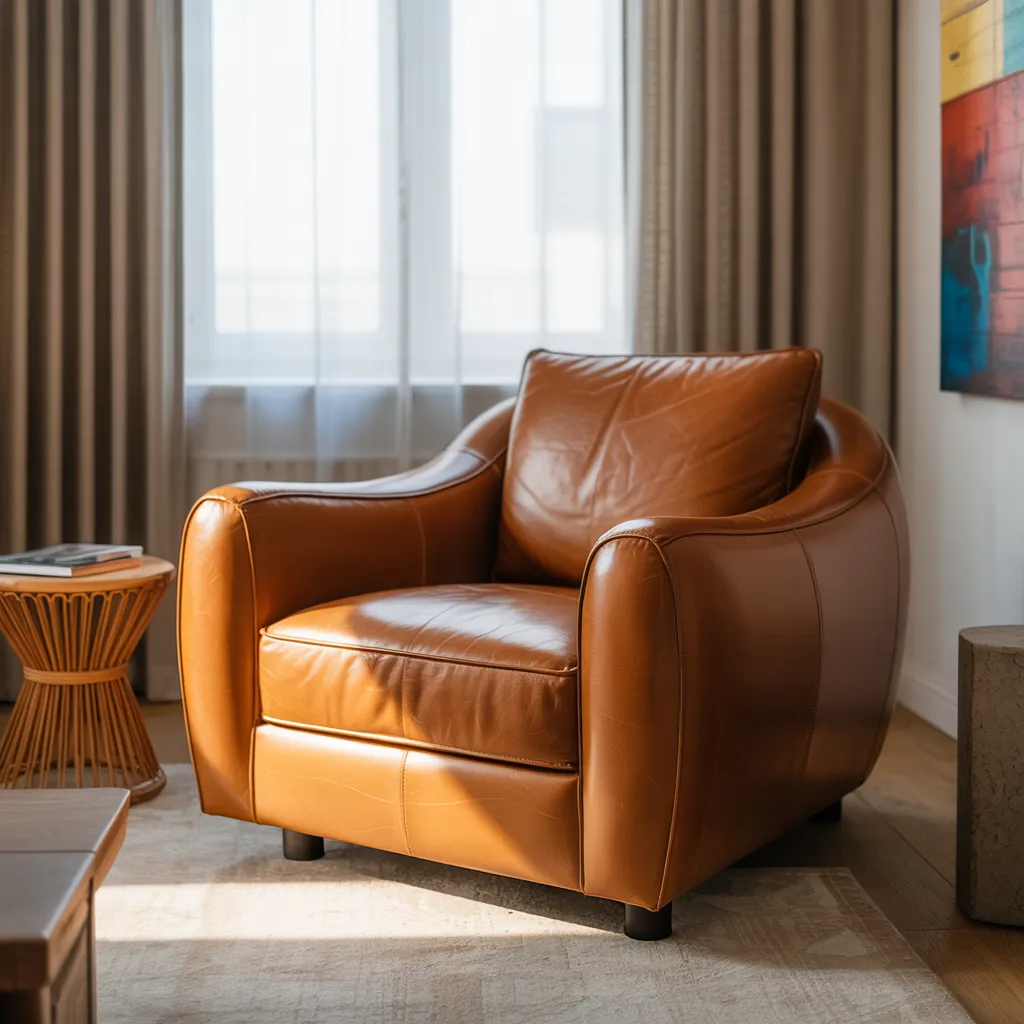
A luxurious leather armchair in rich caramel tones takes center stage, exuding warmth and sophistication. This contemporary interior showcases a harmonious blend of earth-toned hues, with neutral beige curtains providing a soft backdrop for the deep ochre accents. The room’s focal point is the sumptuous leather upholstery, complemented by wooden furnishings in warm, natural tones. A vibrant abstract artwork adds a vivid pop of color, while intricate rattan side tables introduce textural appeal. The overall ambiance is one of inviting comfort and modern elegance, skillfully layered with organic materials and an earthy, enveloping color palette.
Muted Gray-Green: A Serene Sanctuary
For those seeking a more subdued, tranquil vibe, muted gray-greens are the way to go. These soft, organic tones have an almost meditative quality, they create a sense of peace and respite from the outside world. Use gray-greens as the primary color for kitchen cabinetry or built-in shelving, then layering in warmer accents like wood tones and pops of mustard yellow. The result is a space that feels both calming and inviting.
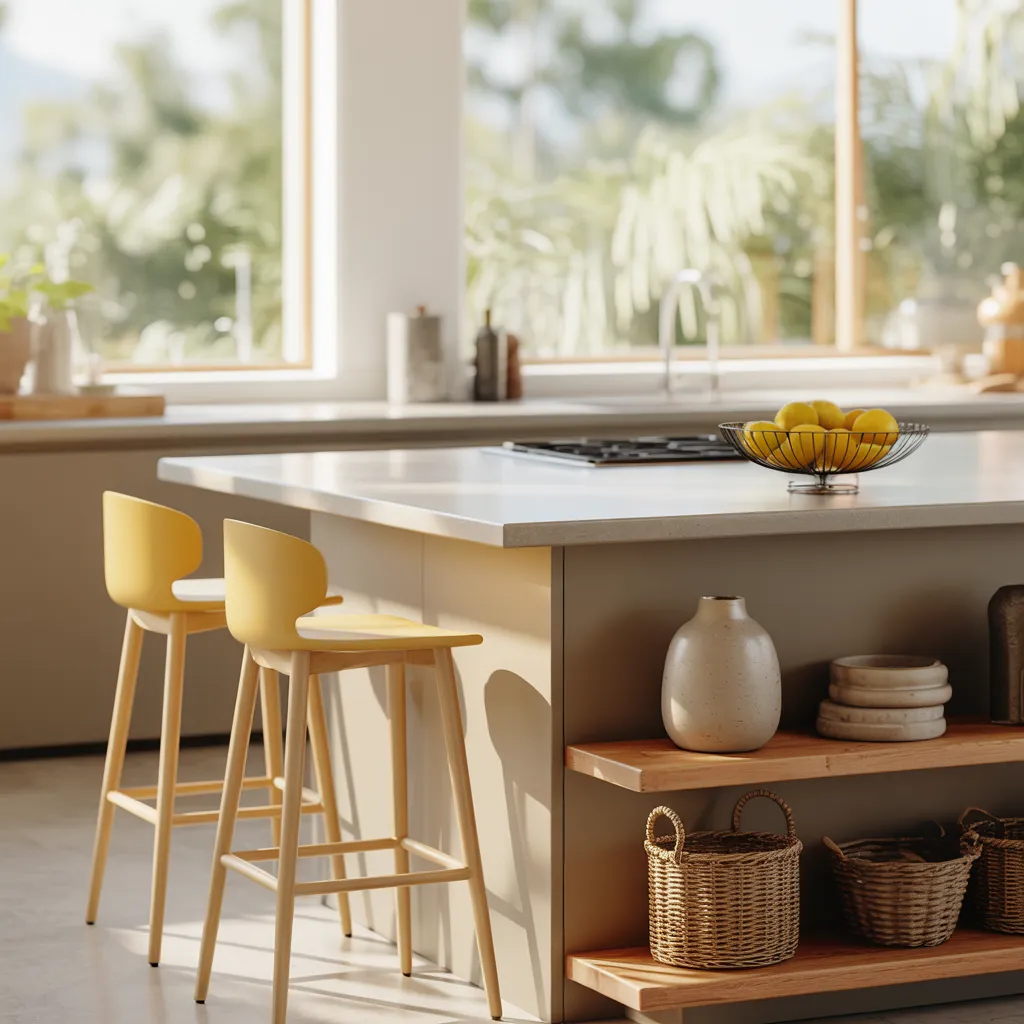
Sleek gray cabinets dominate this airy kitchen, exuding a serene and understated elegance. Natural light streams through expansive windows, casting a warm glow over the minimalist space. The clean lines and muted tones reflect a distinctly contemporary style. Smooth stone countertops and warm wood accents provide an organic contrast to the cool gray palette. Woven baskets and ceramic vases on open shelving add textural interest. Golden yellow bar stools and a bowl of lemons punctuate the neutral backdrop with vibrant pops of sunshine, breathing life into the calming, restorative ambiance.
Earthy Brown: Grounding Elegance
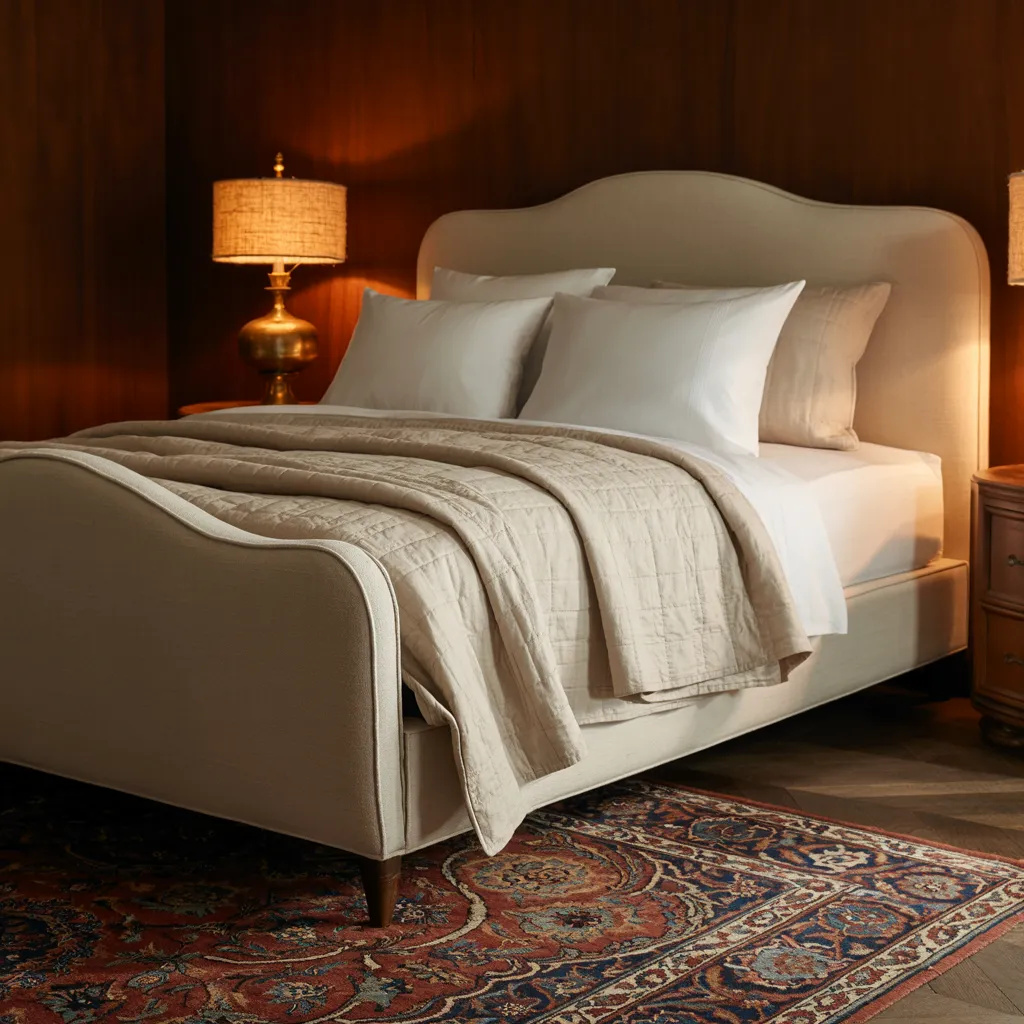
For those who crave a more sophisticated, elevated take on ’70s hues, rich earthy browns are the way to go. Brown gets a bad rap, but when done right, it can be incredibly chic and grounding. The key is to layer in lots of texture and contrast. Pairing deep chocolate browns with creamy neutrals, brass accents, and pops of pattern for a look that’s equal parts cozy and refined.
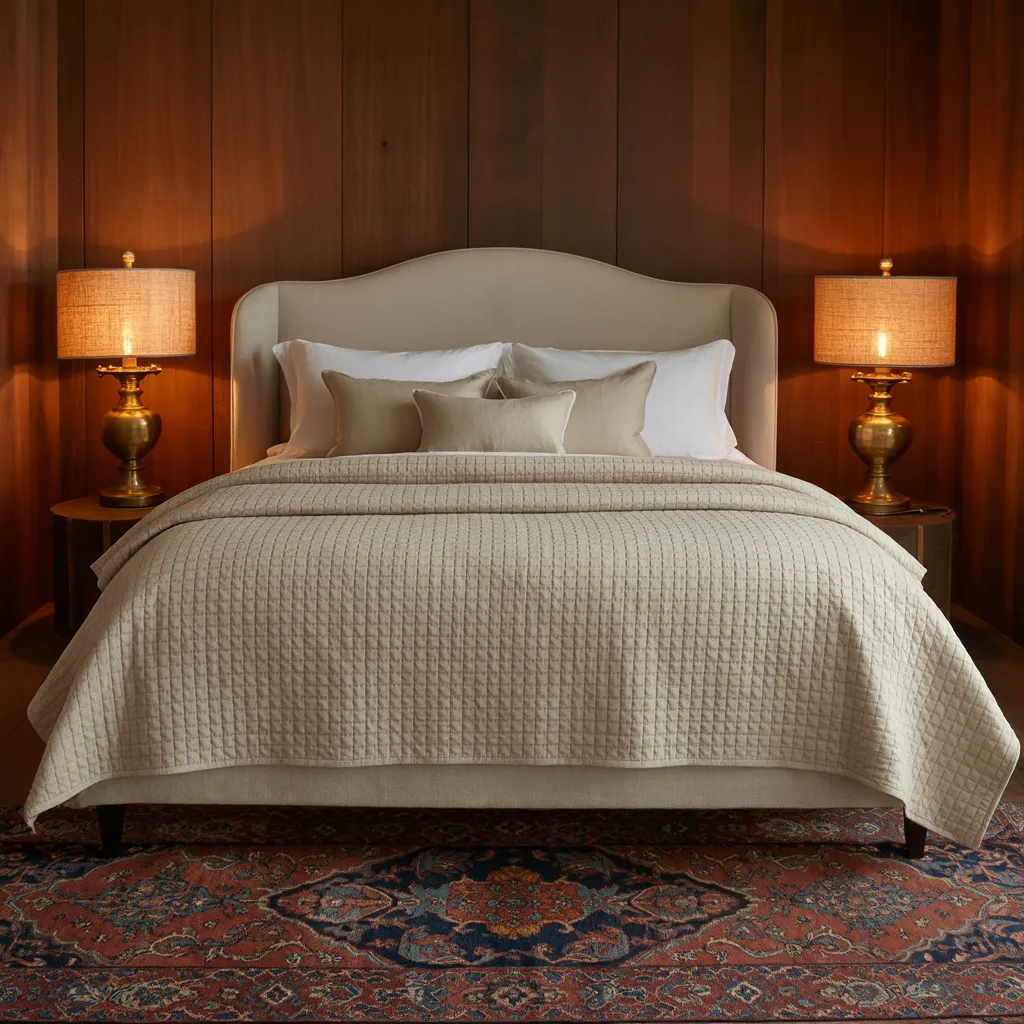
A luxurious upholstered bed takes center stage, adorned with creamy linens and a tailored quilt in soft beige tones. Crisp white pillows add textural depth against the curved headboard’s neutral hue. Vintage brass lamps with burlap shades emit a warm, cozy glow, while an ornate Persian rug anchors the space with its rich burgundy, navy, and earth-toned patterns. The soothing palette of warm browns and creamy neutrals exudes timeless sophistication, anchored by wood-paneled walls for an enveloping, grounded ambiance – a refined take on 1970s-inspired earthy tones accented by plush textiles and metallic touches.
Moss and Terracotta: Nature’s Vibrant Palette
For those who prefer a bolder, more saturated take on ’70s hues, the combination of rich terracotta and vibrant moss green is a showstopper. These colors have an almost primal, elemental quality. They instantly evoke the beauty of the natural world. To keep the look fresh, use these earthy tones as accent colors, paired with plenty of bright whites and natural textures. A terracotta accent wall or moss green tile can instantly energize a space. The end result is a space that feels lively, yet still grounded and serene.
A serene, plant-filled bathroom with a freestanding sandy-toned bathtub as the centerpiece. Lush ferns and trailing vines cascade from wall-mounted shelves, creating an earthy, botanical ambiance. The space showcases a contemporary organic aesthetic, featuring terracotta tiles, sage green accents, and warm wood textures. Smooth concrete floors and minimalist fixtures lend a modern, understated vibe. The dominant palette blends earthy terracotta, mossy greens, and warm neutrals, evoking a calming, natural sanctuary. Materials like ceramic tiles, unfinished wood, and lush greenery further enhance the organic, biophilic design scheme.